

Employee Recognition & Engagement Trends for 2026: Insights for Indian Businesses
As India’s workforce evolves rapidly, understanding employee recognition trends 2026 is critical for Indian businesses aiming to enhance motivation, loyalty, and performance. In 2026, tailored rewards, instant gratification, and meaningful engagement are shaping workplace cultures and channel partnerships alike. Businesses that embrace these insights can differentiate their employee and partner experience, driving sustained growth.
Market Context: Indian Workforce and Business Environment
India’s workforce has grown increasingly diverse and digitally savvy, with 84% of employees now prioritizing work-life balance and wellness. The rise of digital payments and platforms, especially UPI, enables seamless reward delivery. Indian companies face competition not only for customers but also for talent and channel partner loyalty. Hence, employee and channel incentives must adapt to changing expectations characterized by personalization, speed, and purpose alignment.
Emerging Trends in Employee Recognition & Engagement for 2026
Several key trends are influencing recognition programs in India:
- Holistic and Personalized Well-being: Beyond financial rewards, organizations are focusing on physical, mental, and financial well-being. Personalized wellness programs and experiential rewards like mindfulness subscriptions and wellness retreats are becoming common.
- Digital-First and Instant Gratification: With high digital adoption, employees and partners expect instant, seamless reward experiences. Digital vouchers, instant cashback, and gamification drive engagement through mobile platforms.
- Data-Driven Personalization Using AI: Leveraging data analytics helps tailor rewards to individual preferences and performance, increasing relevance and impact.
- Experiential and Skill-Based Rewards: Travel, learning, and exclusive experiences foster deeper loyalty and growth opportunities, particularly among high performers and key channel partners.
- Purpose-Driven Engagement: Aligning recognition with company values and social impact initiatives resonates with younger employees and partners, enhancing emotional engagement.
Implications for B2B Marketers, HR, and Channel Leaders
To leverage these 2026 employee recognition trends, B2B marketers and HR leaders should:
- Integrate wellness-focused rewards to address holistic employee needs.
- Adopt digital platforms for instant reward delivery and real-time engagement tracking.
- Use AI and analytics to customize incentives, improving program relevance.
- Incorporate experiential and skill development rewards to enhance retention and motivation.
- Embed social purpose in recognition programs to connect with modern workforce values.
RewardPort Perspective and Solution Approach
RewardPort specializes in creating tailored employee and channel partner incentive programs that align perfectly with these emerging trends. Our robust digital rewards platform supports instant gratification with seamless redemption through UPI, multi-brand vouchers, cashback, and movie or travel experiences. We offer gamification engines to enhance participation and engagement.
Our reward catalog includes holistic wellness options, experiential gifts like travel packages and learning subscriptions, and purpose-driven rewards enabling CSR activity participation or charity donations as recognition. Leveraging robust analytics, clients receive actionable insights to refine programs continuously.
Verified RewardPort Case-Study Learnings
While specific client details are confidential, RewardPort deployment of digital, instant-reward programs combined with gamification has consistently uplifted participation rates and repeat engagement in employee and channel incentive programs across sectors like FMCG and financial services. Our clients have leveraged multi-brand vouchers and experiential rewards to sustain motivation and loyalty, particularly among key distributors and high-performing employees.
Practical Recommendations for Implementation
For Indian businesses aiming to implement effective recognition programs aligned to 2026 trends:
- Audit employee and partner preferences: Use surveys and data analytics to understand reward preferences and engagement drivers.
- Adopt digital reward platforms: Prioritize instant redemption options and mobile-friendly interfaces.
- Design holistic reward bundles: Combine wellness, experiential, and instant digital rewards.
- Embed gamification: Use games and tiered recognition to sustain interest and fun.
- Align programs with values: Incorporate CSR and sustainability recognition to resonate emotionally.
- Leverage analytics: Monitor participation and feedback for ongoing program optimization.
Understanding and embracing employee recognition trends 2026 is vital for Indian businesses seeking enhanced employee engagement and channel partner loyalty. By combining digital-first delivery, personalized rewards, experiential options, and purpose-driven recognition, firms can create compelling programs that motivate and retain talent. RewardPort advanced digital platforms, extensive reward catalog, and analytic capabilities empower organizations to implement these forward-looking strategies effectively, driving measurable business results.
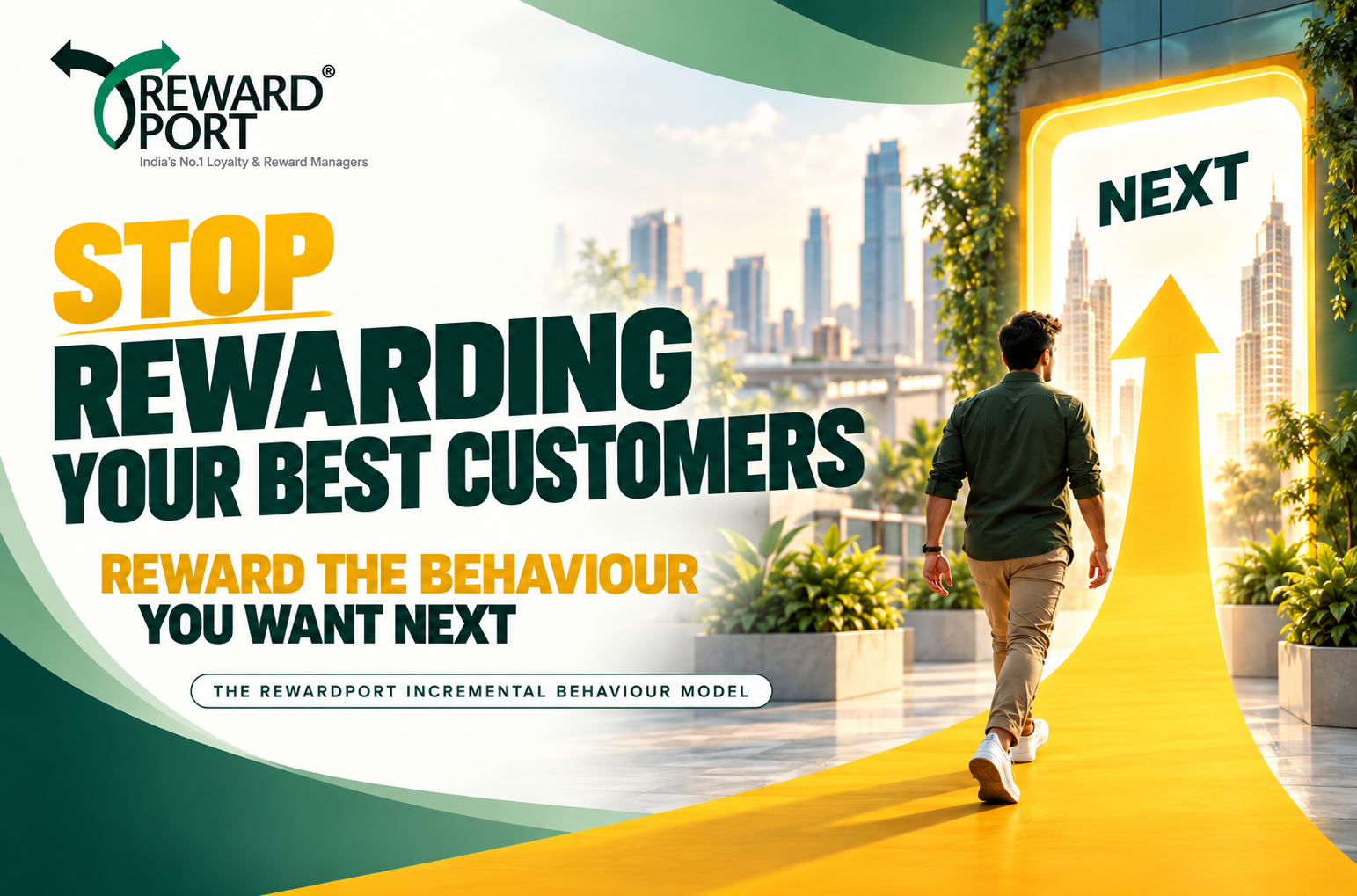
Stop Rewarding Your Best Customers: Reward the Behavior You Want Instead
Most loyalty programs reward customers for what they have already done. Better loyalty programs reward customers for what the brand wants them to do next.
That might mean making a second purchase, trying a new category, returning sooner, referring a friend, completing product education or increasing share of wallet.
The difference sounds small.
Commercially, it is enormous.
Because the real question behind loyalty program ROI is not:
“Did this customer buy?”
It is:
“Would this customer have bought anyway?”
The problem with rewarding your best customers
Imagine you run a coffee chain.
One customer visits you five mornings every week.
You introduce a loyalty program and start giving them points for every cup.
At the end of the month, they have earned free coffee.
Your loyalty dashboard looks excellent.
High engagement.
High frequency.
High redemption.
High member spend.
There is just one awkward question.
Did the loyalty program change anything?
If that customer was already going to visit five times a week, you may simply have given away margin on purchases you would have received anyway.
That does not mean loyal customers should not be recognized.
It means recognition and behavioral incentives are two different jobs.
And too many loyalty programs confuse them.
What should a loyalty program actually reward?
A loyalty program should ideally reward incremental behavior, meaning behavior that probably would not have happened without the intervention.
Examples include:
- turning a first-time customer into a second-time buyer
- getting an occasional buyer to purchase more frequently
- encouraging someone to try another product category
- recovering a customer who has stopped buying
- generating a genuine referral
- increasing a retailer’s range or secondary sales
- encouraging product training or participation
- getting customers to provide verified purchase information
- moving purchases toward a strategically important product or channel
The reward is not the objective.
The behavior is the objective.
The reward is one of the tools used to influence it.
That distinction should shape the entire program.
Why traditional loyalty metrics can be misleading
Loyalty teams understandably monitor transactions, points issued, redemptions, active members and member revenue.
Those numbers matter.
But they cannot always tell you whether the program caused the behavior.
BCG made this point particularly clearly in its July 2026 work on incrementality. It found that organizations using rigorous testing frequently discover that 20% to 40% of active marketing programs produce marginal or negative incremental lift, even though customers respond to them.
Source:
https://www.bcg.com/publications/2026/measuring-incrementality-in-next-best-action-programs
In other words, an offer can produce a conversion without actually causing the conversion.
Suppose you send a ₹500 reward to 10,000 customers who are statistically your most likely buyers.
A large percentage subsequently purchases.
The campaign looks successful.
But you selected people who were already highly likely to purchase.
How much of that revenue did the reward actually create?
Without a control group or another credible method of measuring incrementality, you may not know.
Loyalty ROI should start with one question
Before designing a reward, ask:
What behavior are we trying to change?
Not:
“What reward should we give?”
Not:
“How many points should customers earn?”
Not:
“Should we give vouchers or cashback?”
Those questions come later.
Start here:
What would we like this customer to do that they are unlikely to do without some intervention?
Once that behavior is clear, the incentive becomes much easier to design.
McKinsey has previously found that top-performing loyalty programs can increase revenue from customers who redeem points by 15% to 25% annually through increased purchase frequency, basket size, or both.
But the same research also warned that many established loyalty programs fail to create value.
The opportunity is therefore not to abandon loyalty.
It is to make loyalty more precise.
The RewardPort Incremental Behavior Model
A useful way to design a program is to move through five questions.
1. Baseline: What is the customer already doing?
Start by understanding normal behavior.
If a customer already purchases every week, simply rewarding the weekly transaction may add very little.
If another customer purchases once every three months, getting that person to return in six weeks represents a potentially meaningful behavioral change.
Without a baseline, almost every subsequent loyalty metric becomes harder to interpret.
2. Behavior: What do we want them to do next?
Define one specific action.
For example:
Consumer
First purchase → second purchase
Retailer
Stocks three SKUs → stocks five SKUs
Dealer
Registers → completes product training
Customer
Buys product A → tries product B
Dormant member
No purchase for 90 days → returns
Advocate
Happy customer → verified referral
Each creates a clearer reason for rewarding someone.
3. Friction: Why aren’t they doing it already?
Customers do not always need more money.
They may need:
- a reminder
- greater convenience
- recognition
- information
- reassurance
- progress toward something
- excitement
- access
- status
- a relevant experience
BCG’s loyalty research has similarly found that customers value more than monetary rewards alone and that relevance and experience influence program satisfaction.
Source:
https://www.bcg.com/publications/2023/loyalty-programs-need-to-continue-to-evolve
This is why automatically increasing cashback is not always the answer.
4. Incentive: What is the smallest meaningful intervention?
Only now should you choose the reward.
Different behaviors may call for very different incentives.
A ₹20 instant reward might be enough to encourage a small verified action.
A high-value experience might be better for a meaningful milestone.
Recognition may work better than cash for another audience.
A retailer challenge could combine progress, competition and a payout.
The objective is not to give the biggest reward.
It is to create enough perceived value to change behavior while maintaining attractive program economics.
5. Incrementality: Did behavior actually change?
Finally, measure the difference between:
What happened
and
What would probably have happened anyway.
This can be evaluated using holdout groups, controlled tests, matched audiences, historical baselines or more sophisticated modelling depending on the scale and sophistication of the program.
That is a better definition of loyalty ROI.
Recognition and incentives should not be confused
There is an important qualification to the headline of this article.
Your best customers absolutely deserve recognition.
They may deserve better service, priority access, exclusive experiences, status or surprise benefits.
That reinforces the relationship.
But constantly discounting every transaction of your most loyal customer is something else entirely.
Think of it this way:
| Customer situation | Traditional approach | Behavior-led approach |
|---|---|---|
| Already buys weekly | Give points every week | Recognize loyalty, then incentivize a new behavior |
| Buys one category | Reward same purchase | Reward trial of an adjacent category |
| High-spending dealer | Increase payout | Incentivize range, training or secondary sales |
| Dormant customer | Generic points | Give a targeted return mission |
| New customer | Reward first purchase heavily | Put stronger incentive behind the second purchase |
| Advocate | Give another purchase discount | Reward a verified referral |
The best programs can do both.
Recognize existing loyalty. Create incentives for incremental behavior.
Stop treating every customer action as equally valuable
Consider two customers.
Customer A spends ₹50,000 every year and would probably continue doing so without your loyalty program.
Customer B spends ₹10,000 but could realistically spend ₹20,000 if the brand could win a greater share of their purchases.
Which one deserves more incentive investment?
The obvious answer is not necessarily Customer A.
A smarter loyalty strategy looks at incremental opportunity, not simply historical spend.
That might mean allocating greater incentive budgets toward:
- customers close to making a second purchase
- customers whose frequency can realistically increase
- cross-category opportunities
- dormant but recoverable customers
- high-potential channel partners
- referrals with a high probability of converting
Loyal customers remain valuable.
But loyalty investment should follow opportunity, not habit.
Cashback is not the problem
Cashback is often criticized as being transactional.
That criticism misses the point.
Cashback can be extremely effective when attached to the right behavior.
So can points.
So can merchandise.
So can vouchers, movies, experiences, travel benefits, status or recognition.
The real question is:
What behavior is this reward buying?
₹100 cashback for a purchase someone was already going to make is very different from ₹100 cashback that causes a customer to try a new SKU, return sooner or complete a verified action.
The reward instrument may be identical.
The economics are completely different.
A simple loyalty ROI formula
At a basic level, brands should think about:
Incremental Value Created
minus
Reward Cost + Program Cost
= Incremental Program Contribution
The difficult part is not calculating the cost.
The difficult part is identifying the incremental value.
BCG has long argued that loyalty economics ultimately depend on whether the incremental margin generated by a program exceeds the cost of providing the benefits.
This is why redemption rates alone cannot tell you whether a loyalty program is working.
Neither can enrolments.
Neither can member revenue.
They describe activity.
Not necessarily causality.
What should loyalty teams measure instead?
The precise metrics depend on the objective, but useful measures can include:
Behavior metrics
- Purchase frequency
- Time to second purchase
- Category penetration
- Dormant customer reactivation
- Referral conversion
- Retailer range expansion
- Training completion
- Target achievement
Commercial metrics
- Incremental revenue
- Incremental gross margin
- Cost per incremental action
- Reward cost
- Customer lifetime value change
- Incremental share of wallet
Engagement metrics
- Participation
- Redemption
- Challenge completion
- Repeat engagement
- Reward preference
Control metrics
- Fraud rates
- Duplicate claims
- Invalid invoices
- Suspicious redemption behavior
- Cost leakage
The question behind every dashboard should remain the same:
What changed because the program existed?
What does this mean for consumer promotions?
Exactly the same principle applies.
A consumer promotion should not merely generate claims.
It should have a defined behavioral job.
For one brand, that might be trial.
For another, repeat purchase.
For another, collecting first-party consumer data.
For another, increasing basket size.
For another, driving referrals.
For another, moving customers toward a premium product.
QR codes, OTP validation, invoice parsing, cashback, gamification and rewards are the execution tools.
They should not become the strategy itself.
Where RewardPort fits
RewardPort’s approach to consumer promotions, loyalty and channel engagement begins with the behavior a brand wants to influence, then connects verification, engagement and an appropriate reward mechanism around it.
Depending on the program, qualifying actions can be validated through mechanisms such as QR, OTP, invoices, OCR or other approved transaction data.
Rewards can then range from cashback and vouchers to merchandise, cinema, travel and experiences.
The objective is not simply to issue rewards.
It is to build a measurable loop:
Define behavior → verify action → reward intelligently → measure response → improve the next intervention.
That is where loyalty begins to become growth infrastructure rather than an expense line.
The final question
Before approving your next loyalty campaign, remove the points, vouchers, cashback and rewards from the presentation.
Then look at what remains.
Can you clearly complete this sentence?
“We are investing in this program because we want this customer to ______.”
If the answer is not immediately obvious, the program probably needs more work.
Because the future of loyalty is not about rewarding more behavior.
It is about knowing which behavior is actually worth rewarding.
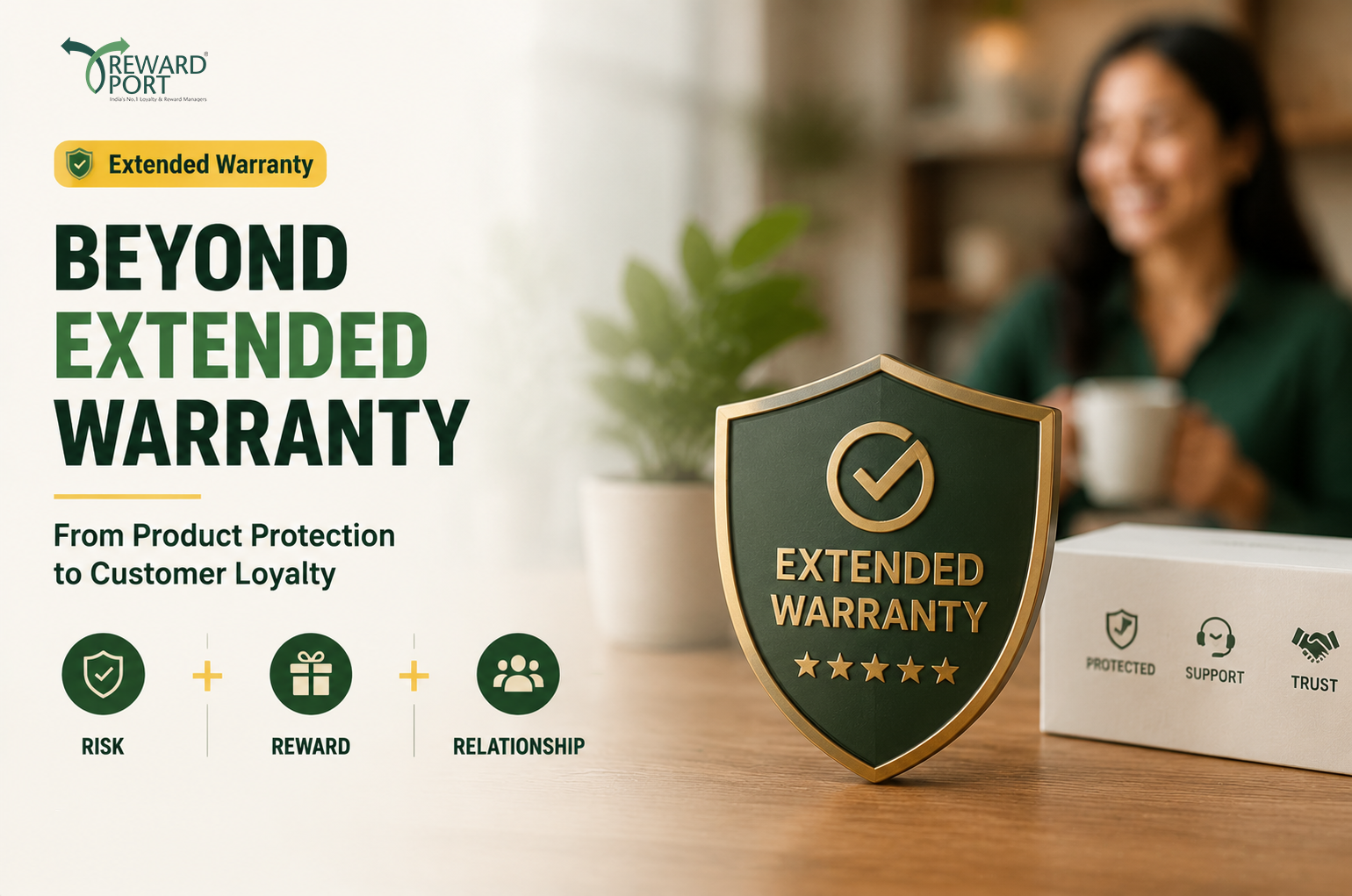
Can Extended Warranty Become Retail’s Next Loyalty Platform?
Extended warranty is changing.
What began as a relatively simple promise to cover repair risk is becoming broader, more flexible and more deeply connected to the ownership journey.
Samsung is expanding appliance protection into areas such as software support and scheduled maintenance. Godrej is using long-duration comprehensive warranty as a visible trust proposition. Apple has evolved device protection toward flexible, ongoing coverage models.
The next step may be even more important for retailers:
Can warranty evolve from a cost-of-failure product into a loyalty asset that creates value throughout ownership?
That means combining:
Risk + Reward + Relationship
The opportunity is to stop thinking about warranty purely as something customers use when a product fails and start exploring its potential as a post-purchase relationship layer.
Warranty Is Becoming a Marketing Proposition, Not Just a Service Promise
In April 2026, Godrej Appliances announced a five-year comprehensive warranty across a broad appliance portfolio and explicitly positioned the move around trust and loyalty.
That signals an important shift.
Warranty is no longer only something explained after a customer decides what to buy.
It can become part of the reason to buy.
When protection becomes visible at the consideration stage, it can communicate confidence, reassurance and commitment to the ownership experience.
Samsung Is Expanding What Protection Means
Samsung India expanded Samsung Care+ to cover more home appliances, including refrigerators, washing machines, air conditioners, microwaves and smart TVs.
Samsung also highlighted capabilities such as software-update and screen-malfunction protection, service tracking and scheduled-maintenance reminders.
The company also bundled a buy-one-year, get-two-years extended warranty offer around a refrigerator launch in April 2026.
The broader implication is important.
Warranty can simultaneously become:
Purchase Incentive → Service Promise → Ownership Experience → Marketing Differentiator
That takes protection beyond a back-end service function.
Apple Is Turning Protection Into a Relationship That Follows the Customer
Apple introduced AppleCare One in the US in July 2025, allowing customers to cover multiple devices under one monthly subscription and add or remove products as their ownership changes.
Apple subsequently expanded AppleCare+ coverage options in India, including monthly and annual plans and Theft and Loss protection for eligible iPhones.
The broader pattern is becoming clearer:
Protection is becoming more continuous, flexible, service-led and relationship-driven.
But there is still a fundamental challenge.
Most Warranty Programs Have One Structural Problem
They become most valuable when something goes wrong.
A customer pays for protection.
Then the customer, retailer and provider all hope it never needs to be used.
From a risk-management perspective, that makes sense.
From a loyalty perspective, however, it creates a missed opportunity.
The important question becomes:
What value could the customer receive while nothing is broken?
That is where warranty starts moving closer to loyalty.
From Risk to Risk + Reward + Relationship
A useful way to understand the evolution is through three stages.
Warranty 1.0: Risk
Something fails → Repair or replacement support according to the plan
Protection is the core value proposition.
Warranty 2.0: Risk + Service
Protection is supplemented with useful ownership support such as:
- Technical assistance
- Product guidance
- Service reminders
- Diagnostics
- Maintenance support
- Installation assistance
The relationship becomes more useful even before a major failure.
Warranty 3.0: Risk + Reward + Relationship
Now the ownership journey can potentially include positive value even when no claim occurs.
For example:
- Maintenance rewards
- Anniversary benefits
- Upgrade benefits
- Family benefits
- Assistance services
- Lifestyle privileges
- Referral recognition
- Trade-in benefits
- Next-purchase advantages
The warranty is no longer simply waiting for failure.
It becomes part of the customer’s ongoing relationship with the retailer or brand.
The Retailer Has an Advantage Individual Brands Do Not
Think about a typical household.
The television may come from Brand A.
The washing machine may come from Brand B.
The refrigerator may come from Brand C.
The air conditioner may come from Brand D.
But all four products could have been purchased from the same retailer.
That creates an interesting opportunity for consumer-durable retailers.
Instead of saying:
“Here is your extended warranty for this appliance.”
the retailer could potentially say:
“You are now part of our ownership program.”
The relationship shifts from one product to the household.
What Could a Modern Ownership Program Include?
A modern ownership relationship can be considered across five layers:
1. Protection
Protection remains the foundation.
Customers need confidence that the program will support them according to its defined terms when something goes wrong.
2. Assistance
Provide relevant support outside formal claims.
This might include product guidance, approved troubleshooting, maintenance information or service coordination.
3. Engagement
Create useful reasons for the customer to remain connected throughout the ownership lifecycle.
4. Reward
Introduce positive moments that recognize ownership, maintenance, milestones or other relevant behaviors.
5. Progression
Turn one protected product into a broader and potentially longer customer relationship.
Together, these create:
Protection → Assistance → Engagement → Reward → Progression
An Illustrative Refrigerator Ownership Journey
Consider how the experience around one appliance could evolve.
Day 1
Purchase + Protection Activated
Day 3
Installation Check + Digital Product Guide
Month 3
AI Assistance for Product Questions
Month 6
Preventive-Care Reminder
Month 12
Ownership Anniversary Benefit
Month 18
Family or Lifestyle Benefit
Month 24
Maintenance Prompt
Month 36
Upgrade Eligibility or Extension Offer
Anytime
Claims Coordination and Support
Next Appliance Purchase
Ownership Status Carries Forward
Protection remains central.
But protection becomes the entry point rather than the entire proposition.
Why Embed Rewards Into the Ownership Journey?
Because risk is largely invisible when everything works.
Rewards can create positive moments inside a product traditionally associated with negative events.
Imagine messages such as:
“Your appliance has completed one year. Here is an ownership benefit.”
“Your preventive service is complete. You have unlocked your next benefit.”
“You now have three products registered with us. Your household status has been upgraded.”
The psychological association changes.
Warranty stops being connected only with:
Breakdown → Claim → Repair
It can also become connected with:
Care → Recognition → Continuity
Rewards Cannot Compensate for Poor Protection
This distinction is critical.
No lifestyle benefit can compensate for:
- Poor claims handling
- Confusing exclusions
- Delayed repairs
- Weak service
- Poor customer communication
The hierarchy should always remain:
Trust First → Service → Engagement → Reward
Protection has to work before loyalty can be layered on top of it.
The Economics Could Also Change
Traditional warranty economics can be viewed simply as:
Warranty Revenue – Claims – Operating Cost
But an ownership relationship creates additional potential sources of value.
Ownership Relationship Economics
Protection Economics + Retention + Repeat Purchase + Referral + Service + Upgrade Value – Reward & Engagement Cost
This does not automatically make every ownership program profitable.
It does, however, create more ways for retailers to evaluate the investment.
Instead of measuring only the economics of claims, retailers can ask:
Does the protection relationship improve the economics of the customer lifecycle?
Retailers Should Think at Household Level, Not Product Level
Most warranties are organised around individual products.
Consumers live in households.
A retailer could potentially build a household ownership account that helps customers understand:
- Which products they own
- Which products are protected
- What requires service
- What protection expires next
- Which benefits are available
- Which upgrade opportunities exist
This creates a more useful relationship than treating every appliance as a disconnected warranty contract.
AI May Become Particularly Useful in the Ownership Journey
Customers frequently need assistance with:
- Product features
- Settings
- Connectivity
- Maintenance
- Error codes
- Troubleshooting
- Service requirements
A conversational AI layer could potentially identify the registered model, understand the relevant protection status, offer approved troubleshooting information and help determine whether service is required.
Where appropriate, it could then help move the customer into a service or support journey.
The goal should not be AI for its own sake.
It should be:
Faster understanding → Appropriate assistance → Better ownership experience
The Loyalty Opportunity Starts After the Sale
Retailers invest heavily in acquiring customers and getting them to the transaction.
Protection creates a legitimate reason for the retailer to remain connected after that transaction.
That makes extended warranty interesting not merely as an attach-rate product, but as a potential post-purchase relationship engine.
The customer has already bought.
The next opportunity is to build the relationship around ownership.
What Should Retailers Measure?
A broader ownership program requires a broader measurement framework.
Protection Metrics
- Attach rate
- Renewal
- Claims rate
- Claim acceptance
- Resolution time
- Servicing cost
- Customer satisfaction
Engagement Metrics
- Product registrations
- Active households
- Maintenance interactions
- Assistance usage
- Anniversary engagement
Reward Metrics
- Reward activation
- Redemption
- Reward cost
- Reward preference
- Cost per retained customer
Commercial Metrics
- Repeat purchase
- Category expansion
- Upgrade rate
- Referral rate
- Customer lifetime value
The central question becomes:
Does the protection program improve the economics of the customer relationship, not simply the economics of the claim?
A Practical Roadmap for Retailers
Phase 1: Improve Protection
Ensure the core protection proposition is clear, trustworthy and operationally sound.
Phase 2: Add Assistance
Introduce useful support throughout the ownership journey.
Phase 3: Build Ownership Identity
Connect products and customers into an ongoing ownership relationship.
Phase 4: Add Useful Engagement
Create relevant reasons to interact outside claims.
Phase 5: Add Rewards Selectively
Use rewards where they strengthen useful behaviours, milestones or relationship moments.
Phase 6: Measure Lifecycle Impact
Assess whether the program improves retention, repeat purchase, category expansion, referrals and overall customer value.
Where RewardCare Fits
RewardCare is designed around this broader concept of product ownership.
It can sit alongside an existing warranty provider and add layers such as:
- Activation
- Customer assistance
- Claims coordination
- AI-enabled product help
- Engagement
- Rewards
- Fulfilment
- Reporting
The larger idea is more important than the product name:
Protection becomes the anchor for an ongoing customer relationship.
This section should be fact-checked against RewardPort’s current RewardCare capabilities before publication, as specifically requested in the source brief.
The most successful warranty products have traditionally answered one question:
“What happens if something goes wrong?”
The next generation may need to answer another question too:
“What do I get while everything is going right?”
That creates a broader model:
Risk + Reward + Relationship
Risk creates reassurance.
Reward creates positive moments.
Relationship creates long-term value.
Extended warranty does not need to stop being a protection product.
But for retailers, protection could become the starting point for something much bigger.
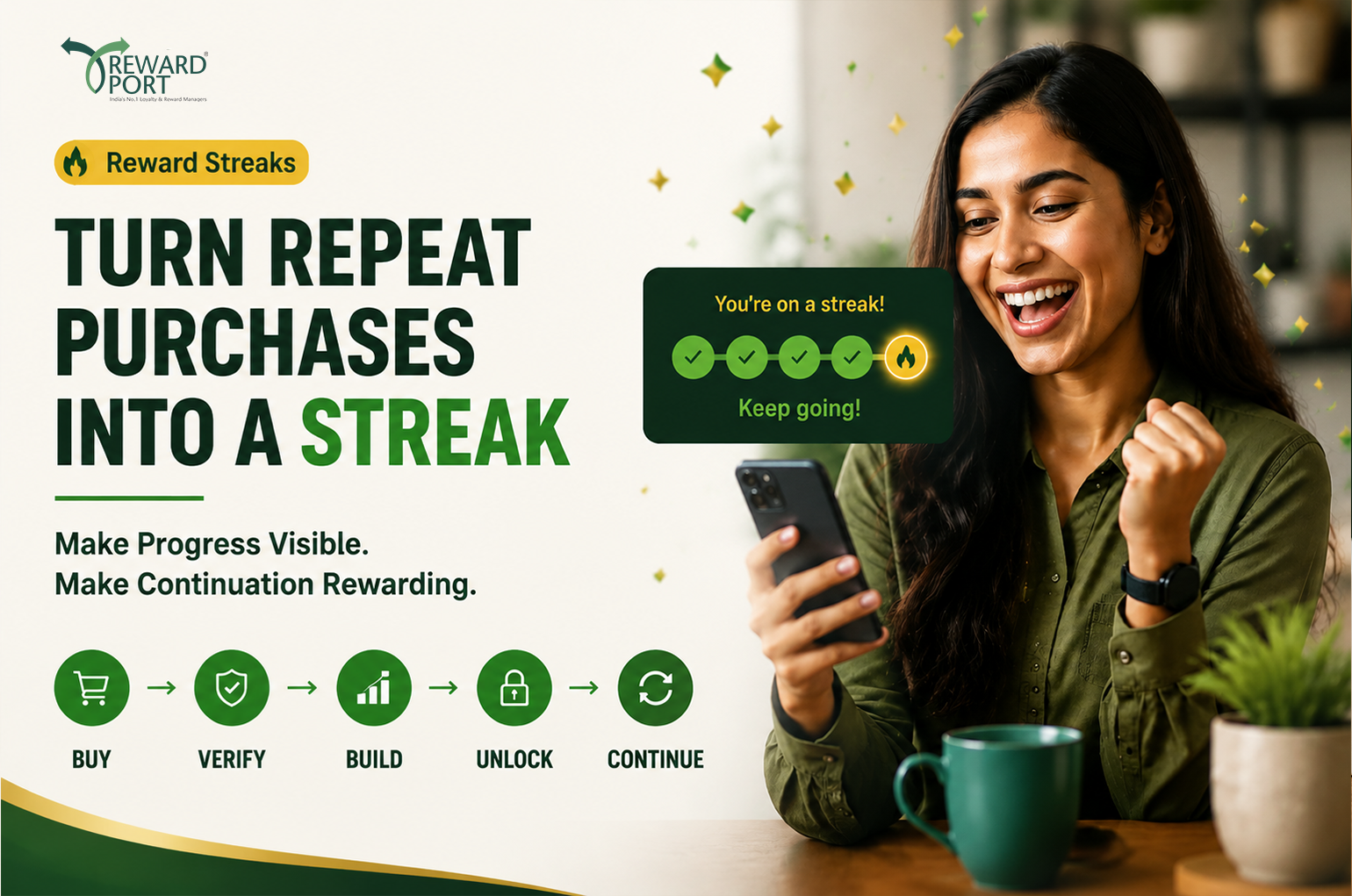
Reward Streaks: How Brands Can Turn Repeat Purchases Into a Habit Customers Want to Continue
Most consumer promotions reward a transaction.
A customer buys a product, scans a QR code, receives a cashback reward, and the interaction ends.
That can work when the objective is simply to stimulate one purchase.
But what if the brand wants the first purchase to become the beginning of a 30-day, 60-day, or 90-day relationship?
Instead of saying:
Buy. Get rewarded.
the brand can create a different journey:
Start. Continue. Progress. Unlock something better.
That is the idea behind Reward Streaks.
A Reward Streak is a loyalty mechanic that recognises customers for completing a desired behaviour repeatedly across a defined period. Rather than treating every transaction independently, it makes progress visible and gives customers a reason to keep going.
For repeat-purchase categories, this can turn an isolated promotion into a structured journey from first purchase to replenishment, retention, and category expansion.
Why Rewarding Every Purchase Is Not the Same as Building Repeat Behaviour
A flat cashback promotion treats every purchase as a separate event.
The customer buys once, receives the reward, and starts from zero again on the next purchase.
A streak introduces continuity.
The first model says:
“Here is something for buying.”
The second says:
“You have already made progress. Continue.”
That difference matters because visible progress can become a goal in itself.
Research published in the Journal of Consumer Research found across seven studies that highlighting an intact streak increased the likelihood that participants would continue the target behaviour compared with highlighting a broken streak.
For brands, the opportunity is not simply to copy the streak mechanics used by apps.
The more commercially useful question is:
What customer behaviour becomes more valuable when it is repeated?
What Exactly Is a Reward Streak?
A Reward Streak is a sequence of verified customer actions completed within predefined intervals, where continued progress unlocks increasingly relevant recognition or rewards.
For the mechanic to work, four things need to be true:
- There must be a behaviour worth repeating.
- The behaviour must be verifiable.
- Progress must be visible.
- Continuing should become more worthwhile.
The mechanic is therefore not simply a reward programme with another visual layer.
It is a structured behavioural journey.
The Reward Streak Loop
The core journey can be expressed simply:
Buy → Verify → Build → Unlock → Continue
Buy
The customer completes the desired purchase or qualifying action.
Verify
The brand confirms that the action genuinely occurred using an appropriate verification method.
Depending on the campaign, this might include a unique code, receipt verification, transaction data, or another approved evidence source.
Build
The verified action advances the customer’s visible progress.
The customer should understand where they are in the journey and what is required next.
Unlock
At meaningful milestones, the customer receives recognition, benefits, rewards, or access.
Continue
The next desired behaviour is made clear, giving the customer a reason to maintain the streak.
The objective is not simply to keep someone clicking or scanning.
It is to make repeat behaviour visible, understandable, and increasingly worthwhile.
A 90-Day Streak Does Not Mean Buying Every Day
One of the biggest mistakes brands can make is applying a digital-app definition of a streak to a physical consumer category.
A streak does not have to mean daily action.
The interval should reflect the natural purchase or usage cycle of the category.
For example:
- A shampoo bottle may last several weeks.
- A household consumable may be replenished monthly.
- A subscription may recur every month.
- A premium beauty product may be purchased every few months.
- A nutrition product may have a defined usage cycle.
A Reward Streak should therefore follow the customer’s natural journey, rather than forcing customers to follow an arbitrary promotional calendar.
The first design question should be:
How often does this behaviour naturally happen?
Only then should the streak window be decided.
Why Not Simply Give Cashback on Every Purchase?
Cashback can be effective when immediate value and simplicity are important.
But repeated flat cashback treats each transaction independently.
A streak creates visible momentum.
Consider the difference:
Flat Cashback
Purchase 1 → ₹20 Cashback
Purchase 2 → ₹20 Cashback
Purchase 3 → ₹20 Cashback
Each interaction stands alone.
Reward Streak
Purchase 1 → Streak Started
Purchase 2 → Progress Milestone
Purchase 3 → Better Unlock
Purchase 4 → Completion Benefit
The second model creates a sense of progression.
That progression can become part of the motivation.
Reward Streaks Are Not Simply Another Points Program
Traditional loyalty programs generally reward cumulative spending or transactions over an open-ended period.
Reward Streaks focus on continuity toward a specific objective.
The distinction is important.
Points may work well when customers transact frequently across a broad ecosystem and need flexibility in how value accumulates.
Streaks become particularly useful when the brand wants to establish a specific repeated behaviour.
For example:
- Replenish every month
- Complete three qualifying purchases
- Try a product consistently over a defined period
- Maintain a subscription
- Purchase across selected categories
- Complete a product-use journey
Neither mechanic is inherently better.
The correct choice depends on the behaviour the brand wants to create.
Three Illustrative Uses of Reward Streaks
1. A 90-Day Regimen Streak
A wellness or personal-care brand may want customers to continue using and repurchasing a product over a defined regimen period.
The journey could recognise the first purchase, replenishment, continued use, and completion.
2. A Household Continuity Streak
A recurring household service or subscription may encourage customers to maintain consecutive monthly participation.
The objective could be reducing lapses and increasing retention.
3. A Performance Routine Streak
A sports nutrition or similar category may reward customers for maintaining a verified purchase or usage routine aligned with the product’s natural cycle.
These are illustrative use cases, not RewardPort client case studies.
What Should Brands Reward at Each Stage?
The reward should evolve with the customer’s progress.
Early Stage
At the beginning, the priority is building trust and making progress visible.
Possible benefits include:
- Recognition
- Visible progress
- Small assured rewards
- Milestone acknowledgement
- Entry-level status
Middle Stage
As the customer builds continuity, rewards can become more meaningful.
Options may include:
- Digital vouchers
- Entertainment benefits
- Product-related benefits
- Relevant services
- Surprise unlocks
Completion Stage
Completion should feel meaningfully different from the first step.
Depending on the audience and economics, the brand may consider:
- Premium merchandise
- Higher-value vouchers
- Movies or entertainment
- Travel
- Experiences
- Exclusive access
- Special privileges
The principle is not simply to make every reward larger.
It is to make continued progress feel increasingly worthwhile.
What Happens When a Streak Breaks?
Streak mechanics can backfire if customers feel that one missed action destroys all their progress.
A broken streak can be demotivating.
Brands should therefore design recovery deliberately.
Possible approaches include:
Grace Periods
Allow a limited additional window for customers to complete the next qualifying action.
Streak Repair
Give customers an opportunity to restore the streak after completing a defined recovery action.
Pause Mechanisms
For categories with legitimate interruptions, customers may be able to temporarily pause progress under defined conditions.
Soft Resets
Instead of sending the customer back to zero, preserve part of their progress or status.
The recovery mechanic should reflect the category and commercial objective.
The goal is to encourage continuation without making the programme feel punitive.
Not Every Customer Wants to Play a Game
A Reward Streak does not require customers to feel as though they are participating in a game.
Gamification is optional.
Progress is the mechanic. Clarity is the experience.
A customer may simply see:
1 of 3 Purchases Completed
or
One More Purchase to Unlock Your Next Benefit
That can create sufficient motivation without badges, avatars, or complex game mechanics.
The programme should match the audience.
Eight Questions to Ask Before Launching a Reward Streak
Before building the mechanic, brands should answer eight questions:
1. What behaviour are we trying to change?
Define the commercial behaviour clearly.
2. What is the natural frequency of that behaviour?
Design the streak around the category’s real purchase or usage cycle.
3. How will the action be verified?
Use an appropriate evidence method for each qualifying action.
4. What should the customer see?
Progress should be visible and easy to understand.
5. What does each milestone unlock?
Define recognition and reward value before launch.
6. What happens when the streak breaks?
Build recovery rules rather than improvising later.
7. What happens when the streak finishes?
Completion should lead to a clear next step, benefit, or longer-term journey.
8. How will incrementality be measured?
The objective is to prove behavioural and commercial change—not simply count participants.
Reward Streak Measurement Scorecard
A strong Reward Streak programme should measure multiple layers.
Commercial Metrics
- Second-purchase rate
- Purchase frequency
- Replenishment rate
- Incremental units
- Average basket
- Retention
Streak Metrics
- Streak start rate
- Milestone completion
- Full completion
- Median streak length
- Break rate
- Recovery rate
Reward Metrics
- Reward cost per active participant
- Reward redemption
- Reward preference
- Cost per incremental behaviour
Operational Metrics
- Verification failures
- Fraud indicators
- Support contacts
- Fulfilment time
- Failed communications
The goal is not to produce the longest streak.
The goal is to produce economically valuable behavioural change.
Reward Streaks Can Create Better First-Party Intelligence
A one-time promotion tells a brand that someone participated once.
A Reward Streak can reveal a much richer journey:
Started → Replenished → Completed → Expanded Category → Responded to Reward
This creates a more useful picture of customer behaviour.
For example, the brand can begin understanding:
- Who starts but does not continue
- When customers typically replenish
- Which milestones produce the strongest response
- Which reward types influence continuation
- Which customers expand into another SKU or category
- Which customers recover after breaking a streak
This is where promotion design can begin becoming consumer intelligence infrastructure, rather than simply a reward expense.
Where Reward Streaks Fit in the Loyalty Journey
Brands should not begin with:
“Which reward should we give?”
They should begin with:
“Which behaviour should continue?”
Once that is clear, the programme can determine:
Behaviour → Verification → Progress → Milestone → Reward → Next Action
Reward Streaks are particularly relevant where continued behaviour has greater commercial value than a one-time transaction.
They can sit within consumer promotions, repeat-purchase campaigns, loyalty programmes, subscription journeys, product regimens, and other structured engagement initiatives.
How RewardPort Can Support Reward Streak Programs
RewardPort can help brands structure repeat-purchase campaigns around verified behaviour, progress visibility, milestone rewards, communication, fulfilment, and measurement.
Depending on the programme, RewardPort’s broader reward ecosystem can support multiple forms of value across different stages of the streak, including digital rewards, entertainment, merchandise, travel, and experiences.
The objective is not simply to issue more rewards.
It is to connect the reward to a specific behaviour, milestone, and next action.
For years, consumer promotions have largely asked:
What can we give customers for buying?
Reward Streaks introduce a different question:
What could we give customers a reason to continue?
The first purchase does not always need to be the end of the campaign.
Sometimes it can simply be the beginning of the streak.
FMCG Case Studies of Dealer Success in 2026: Insights and Strategies from RewardPort
In 2026, the dynamics of FMCG distribution in India continue to evolve rapidly. Dealer success is a pivotal factor that determines brand market share and growth, especially in a diverse and competitive landscape. Understanding the proven strategies and emerging trends that enable FMCG dealers to thrive helps brands optimise channel engagement, sales performance, and customer loyalty.
Market Context: The Role of Dealers in India’s FMCG Ecosystem
Dealers and distributors remain critical intermediaries for FMCG companies, especially in tier 2 and tier 3 cities and rural markets. Their influence extends beyond mere stockists to active partners in promoting, selling, and servicing products. The move towards digital transformation and data-driven marketing has created new opportunities and challenges for dealers to engage consumers and maximise sales.
Emerging Trends Shaping FMCG Dealer Success in 2026
Several key developments are defining dealer success across FMCG segments in India this year:
- Hyper-Personalised Channel Incentives and Performance Gamification: Data-backed, instant reward programs linked with gamified sales targets increase dealer motivation and enhance participation.
- Integrated Loyalty Programs for Dealers and Consumers: Cross-linked loyalty platforms that reward consumer purchases with benefits for dealers strengthen on-ground push and retention.
- Instant Cashback and UPI-Based Reward Systems: The adoption of digital incentive payouts via UPI enhances trust and accelerates dealer reward redemption.
- Experiential and Wellness Rewards: Beyond monetary rewards, experiential travel, health packages, and skill development create emotional loyalty among top-performing dealers.
- Data-Driven Consumer Promotions at Retail Outlets: AI-powered local consumer insights help dealers offer targeted promotions, reducing wastage and improving conversion.
Practical Implications for Channel and Trade Marketers
For B2B marketers, trade marketing teams, and channel leaders, deploying the right mix of incentives and loyalty initiatives is crucial. Programs must be tailored to dealer segments with clear targets and quick reward gratification to sustain interest. Leveraging digital platforms integrates analytics, campaign management, and reward fulfilment to increase transparency and ease of participation.
RewardPort Perspective: Delivering Channel Partner Incentive Excellence
RewardPort specialises in creating impactful dealer and distributor incentive programs aligned with FMCG business goals. We facilitate digital-first campaigns featuring instant gratification rewards such as cashback, multi-brand vouchers, and catalog-based experiential rewards. Our platforms support gamification and tiered loyalty to motivate dealers at scale while delivering rich data analytics to optimise program ROI.
For instance, our proven model includes:
- Dealer engagement campaigns featuring QR scan-to-win cashback prizes combining assured and draw-based rewards.
- Loyalty programs with points, tiers, and multipliers driving repeat purchases by dealers and trade partners.
- Channel partner rewards integrating travel, entertainment, and wellness categories expanding beyond purely transactional benefits.
- Instant UPI and digital wallet payouts reducing delays and improving dealer satisfaction.
Verified RewardPort Case Study Learnings
While specific client confidentiality restricts naming, RewardPort deployment of dealer loyalty programs in the FMCG sector has delivered measurable results such as increased active participation rates, stronger repeat order frequency, and higher reward redemption engagement. Our gamified incentive campaigns have consistently boosted dealer sales performance and channel push effectiveness across diverse product categories.
Recommendations for Implementing Successful Dealer Incentive Programs
To maximise FMCG dealer success in 2026, brands should consider the following framework:
- Segment Dealers and Define Clear KPIs: Tailor programs based on sales volume, geography, and product mix to enhance relevance.
- Use Digital Platforms for Instant Rewards: Implement instant cashback, points, and digital vouchers to maintain dealer motivation.
- Incorporate Experiential and Non-Cash Rewards: Add travel, wellness, and entertainment options to create emotional loyalty.
- Enable Data-Driven Consumer Promotions: Equip dealers with local consumer insights to tailor offers.
- Monitor, Analyse, and Iterate: Use campaign analytics to optimise reward structures and engagement.
FMCG dealer success in 2026 hinges on a strategic blend of personalised incentives, digital rewards, and emotional engagement. RewardPort channel partner incentive expertise offers FMCG brands in India comprehensive solutions that drive participation, accelerate sales, and build loyalty in their dealer networks. By embracing digital transformation and innovative reward strategies, brands can create sustainable dealer success stories that translate into broader market leadership.
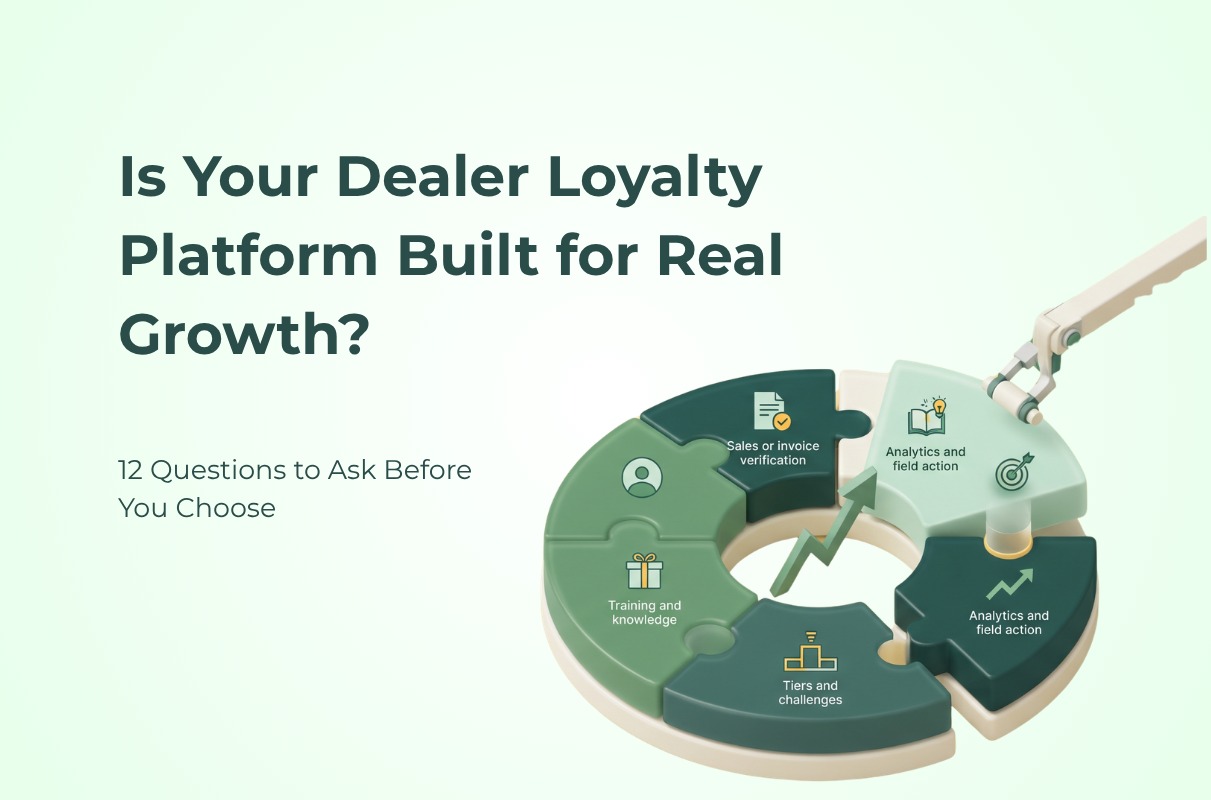
How to Choose a Dealer Loyalty Platform in India: A 12-Question Buyer’s Guide
Choosing a dealer loyalty platform should begin with one question:
Can this system influence and verify the business behaviours that actually matter?
A modern dealer loyalty platform should do much more than manage points, catalogues and dashboards. It should support partner identity, multi-tier rules, sales or activity validation, communication, training, challenges, relevant rewards, fraud controls, service operations, analytics and integration with the brand’s commercial systems.
Key Takeaways
- Begin with channel objectives and partner behaviour, not a feature checklist.
- Distinguish dealers, distributors, retailers, mechanics, contractors and influencers because they do not create value in the same way.
- Verify the source of every qualifying action before attaching a reward.
- Evaluate communication, capability building and operational support alongside payout technology.
- Select a partner that can convert program data into better actions for field teams and channel members.
What Is a Dealer Loyalty Platform?
A dealer loyalty platform is the operating system used by a brand to identify channel partners, communicate schemes, record and validate qualifying activities, calculate incentives, deliver rewards, resolve exceptions and analyse performance.
Depending on the industry and route to market, it may serve:
- Distributors
- Dealers
- Retailers
- Stockists
- Mechanics
- Contractors
- Architects
- Technicians
- Other trade influencers
Channel partners are independent businesses rather than a captive employee audience. That distinction matters because their participation must continually earn attention and demonstrate value.
Why Catalogue-Led Selection Produces Weak Programs
Many platform-selection conversations begin with questions such as:
How many vouchers are available?
Does the platform support points?
Can it make payouts?
Does it have a leaderboard?
These are legitimate questions, but they begin too late in the process.
A catalogue cannot correct unclear scheme communication.
A points engine cannot establish whether reported sales are valid.
A leaderboard cannot improve product knowledge by itself.
And an attractive app does not automatically solve duplicate membership, inactive partners, field-team adoption or disputed claims.
The better buying question is:
Can this system help us create, verify and improve the channel behaviour that produces growth?
The RewardPort Channel Growth Stack
The article proposes a seven-layer framework for evaluating a dealer loyalty platform.
1. Identity
The platform should create a reliable partner record covering role, geography, channel tier, business identity, language, consent and relevant hierarchy.
It should also be able to manage duplicate records, changes in ownership and inactive members.
2. Visibility
Brands need an approved source of truth for relevant activity.
Depending on the program, this could include:
- Primary sales
- Secondary sales
- Invoice uploads
- Unique product codes
- Target achievement
- Visibility evidence
- Training
- Referrals
3. Capability
Channel growth can depend on knowledge as much as stock.
Where relevant, the platform should support scheme explanation, product learning, question answering, quizzes, certifications or field-guided support.
4. Motivation
Rules, tiers, challenges, milestones, streaks and recognition should make the desired behaviour clear and attainable.
Gamification should support a commercial objective rather than create activity merely for its own sake.
5. Verification
The system should validate an action before calculating its reward value.
Depending on the program, verification could involve ERP or distributor data, invoice review, OCR-assisted bill parsing, QR or code validation, approved images, location signals or human review for exceptions.
6. Value
Rewards should fit both the partner segment and the effort required.
Depending on the program, options can include cashback, vouchers, merchandise, cinema, travel, experiences, business benefits or recognition.
The same reward catalogue does not necessarily need to be shown to every participant.
7. Intelligence
The platform should help brand, sales and channel teams understand participation, sales, learning, claims, risk, reward preferences and next actions.
The objective is to use program data to improve the next scheme, field conversation and partner intervention.
12 Questions to Ask Every Dealer Loyalty Platform Provider
1. Which Business Behaviours Can the Program Influence?
Ask the provider to connect platform capabilities directly with your objectives.
These might include:
- Incremental sales
- Product mix
- New-product trial
- Outlet coverage
- Training
- Display compliance
- Referrals
- Service quality
- Data capture
2. Can the Rules Reflect Our Actual Channel Structure?
Test whether the platform can accommodate distributors, dealers, retailers and influencer hierarchies, along with:
- Territories
- Product categories
- Tiers
- Overlapping roles
- Target periods
- Exclusions
- Approval levels
3. What Is the Source of Truth for Each Qualifying Action?
Do not accept “sales data” as a complete answer.
Establish whether qualification is based on:
- ERP
- DMS
- Distributor uploads
- Invoices
- QR codes
- Unique codes
- Image evidence
- Manual approval
- A reconciled combination of sources
4. How Are Duplicates, False Claims and Collusion Handled?
Ask for the fraud and exception framework.
It should consider duplicate identities, repeated invoices or codes, abnormal submission velocity, shared devices, suspicious clusters, rejected claims, override rights and audit trails.
5. How Will Partners Understand the Scheme?
Evaluate the complete communication journey, including:
- Onboarding
- Language
- WhatsApp or app communication
- Scheme explainers
- Balance visibility
- Reminders
- Expiry messages
- Grievance support
A complex scheme that partners do not understand can underperform regardless of the reward value.
6. Can the Platform Improve Partner Capability?
If product knowledge or selling quality matters, evaluate whether the platform can support appropriate learning journeys, text or voice assistance, quizzes, certifications and targeted content.
7. How Flexible Is the Incentive and Challenge Engine?
Test the platform’s ability to manage:
- Slabs
- Thresholds
- Tiers
- Accelerators
- Team challenges
- Limited-time missions
- Non-sales actions
- Approval flows
- Negative adjustments
- Rule changes and version history
8. How Are Rewards Matched to Different Partners?
Ask whether reward choice can vary according to:
- Tier
- Geography
- Role
- Achievement
- Preference
Also examine delivery times, expiry, cancellation, failed fulfilment and replacement handling.
9. What Will the Field Sales Team See and Do?
A dealer loyalty platform should not become an isolated marketing portal.
Field users may need visibility into:
- Partner status
- Scheme understanding
- Unresolved issues
- Learning gaps
- Opportunity signals
- Recommended actions
10. What Integrations Are Genuinely Required?
Map potential integrations across ERP, CRM, DMS, SFA, finance, messaging, KYC, payment, catalogue and analytics systems.
Separate launch-critical integrations from later enhancements so that the pilot does not become an endless technology project.
11. How Will the Program Be Operated After Launch?
Clarify responsibility for:
- Onboarding
- Data processing
- Claims
- Approvals
- Support
- Reward catalogue
- Communication
- Reconciliation
- Tax documentation
- Fraud review
- Reporting
- Change requests
12. How Will We Know Whether the Program Worked?
Agree on the metrics, baseline, comparison logic, reporting cadence and decision rights before launch.
The provider should be able to explain how campaign activity connects with commercial outcomes.
Dealer Loyalty Platform Comparison Scorecard
Score each area from 0 to 3:
0 = Absent | 1 = Largely manual/limited | 2 = Operationally adequate | 3 = Strong and configurable
| Evaluation Area | Weight | What Strong Looks Like |
|---|---|---|
| Objective & Rule Fit | 15% | Rules map to real channel behaviours and hierarchies |
| Data & Verification | 15% | Clear source of truth, validation and audit trail |
| Partner Experience | 10% | Simple onboarding, communication, balance and support |
| Capability Building | 10% | Targeted learning and knowledge support where required |
| Motivation Design | 10% | Flexible tiers, challenges, recognition and non-sales actions |
| Reward Architecture | 10% | Relevant choice, reliable fulfilment and segment control |
| Fraud & Governance | 10% | Preventive controls, exception process and role-based access |
| Analytics & Actions | 10% | Decision-ready views for brand, sales and field teams |
| Integration & Scale | 5% | Practical APIs, batch routes and performance fit |
| Service Operations | 5% | Clear SLAs, reconciliation, support and change management |
The weighting should change according to the use case.
For a high-value product-code program, verification and fraud may deserve greater weight. For a product-education program, capability building and field action may matter more.
Agency vs Software Platform vs Rewards Provider vs Integrated Operator
| Model | Strength | Common Limitation | Best Fit |
|---|---|---|---|
| Promotion/Loyalty Agency | Strategy, creative, communication and managed execution | May depend on separate technology or fulfilment systems | Brands requiring a managed campaign with limited integration |
| Software Platform | Rules, automation, APIs and direct administrative control | Brand may need to assemble strategy, operations, support and rewards separately | Teams with mature internal program operations |
| Rewards/Payout Provider | Fast access to value distribution | Can become a transaction layer without behaviour design or channel intelligence | Programs with already-defined rules and verified outcomes |
| Integrated Operator | Connects strategy, technology, verification, rewards, operations and analytics | Requires disciplined scoping to avoid unnecessary complexity | Brands seeking one accountable operating model |
The correct model depends on the organisation’s internal capabilities.
The important requirement is that no critical job is left without an owner.
A Phased Dealer Loyalty Platform Implementation Process
Phase 1: Channel Diagnosis
Interview sales, trade marketing, finance, technology, field teams and a sample of channel partners.
Document objectives, available data, current schemes, disputes and adoption barriers.
Phase 2: Behaviour and Economics Design
Define segments, qualifying actions, source of truth, baseline, incentive rules, caps, liability, exception handling and success measures.
Phase 3: Pilot Build
Launch with a bounded geography, partner group or product category.
Include actual operations and support—not merely a demonstration interface.
Phase 4: Adoption and Field Activation
Train field teams, simplify partner onboarding, communicate the value clearly and monitor where participants abandon or misunderstand the journey.
Phase 5: Evaluation and Scale
Compare commercial and behavioural performance with the agreed baseline.
Resolve data, rules and support issues before adding features or expanding nationally.
Dealer Loyalty Metrics That Matter
Commercial Metrics
- Incremental sales or contribution against baseline
- Product mix and target achievement
- Active outlet or partner coverage
- Cost per incremental outcome
Engagement Metrics
- Eligible versus enrolled partners
- Monthly active and transacting partners
- Challenge, learning and communication participation
- Repeat activity and tier progression
Operational Metrics
- Claim-processing time and approval rate
- Data latency and reconciliation errors
- Reward-delivery success and support-resolution time
- Field-team adoption and unresolved exceptions
Fraud & Governance Metrics
- Duplicate identities, invoices or codes
- Abnormal submission patterns
- Manual overrides and reasons
- Fraud loss and prevented liability
An Illustrative Building-Materials Scenario
Assume a building-materials brand wants to grow a new premium range through dealers and contractor influencers.
Billing alone will not reveal whether partners understand the product or recommend it correctly.
The program therefore rewards a combination of:
- Verified sales
- Product-learning completion
- Approved project referrals
- Selected visibility actions
Different activities use different evidence.
Sales come from approved commercial data. Learning comes from platform completion. Referrals require qualification. Visibility evidence follows a defined review process.
Dealers may receive tier progression and business-relevant benefits, while contractors may prefer smaller, faster rewards.
Field teams can see who is close to a milestone, who has a learning gap and where claims are being rejected.
Important: This is an illustrative design and not a published RewardPort case study.
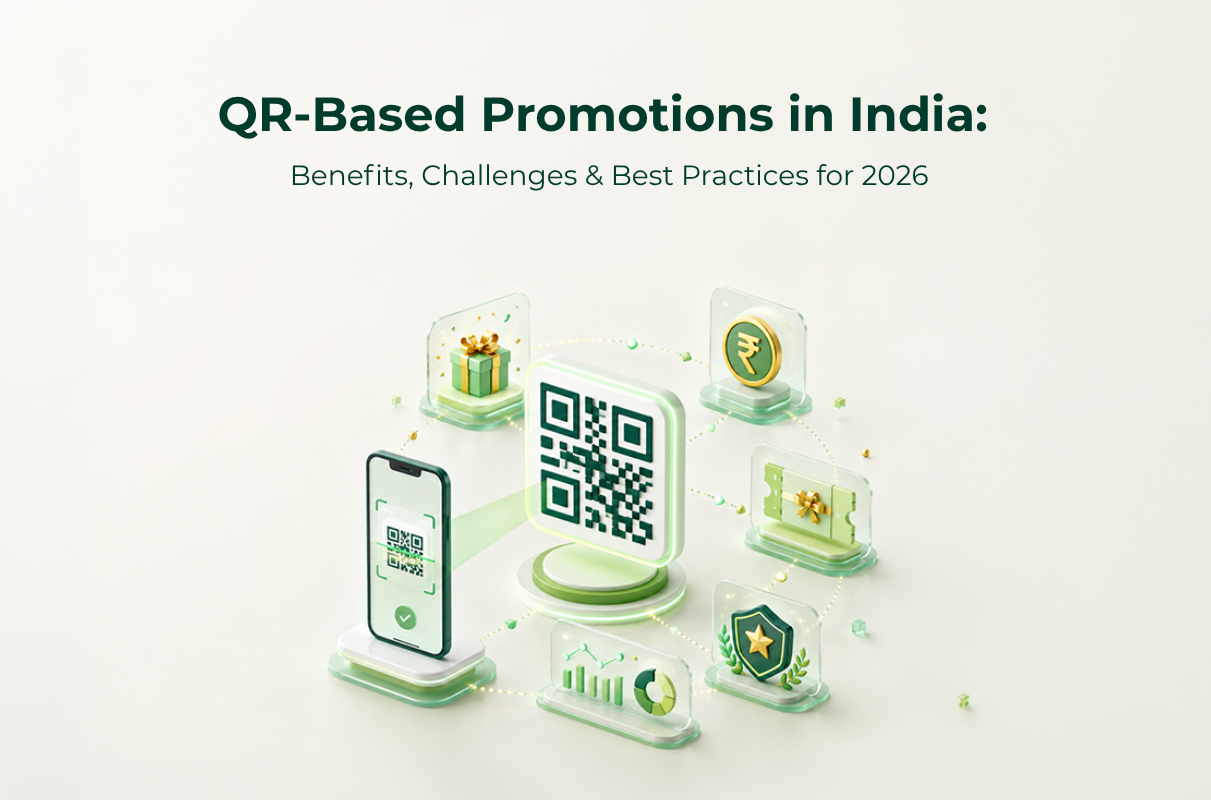
QR-Based Promotions in India: Benefits, Challenges & Best Practices for 2026
In the evolving landscape of Indian marketing, QR-based promotions have emerged as a pivotal tool for brands and businesses to engage consumers, partners, and employees. By 2026, leveraging QR technology effectively represents a significant opportunity for marketers to drive participation, sales, and loyalty. This article explores why QR-based promotions matter for Indian businesses, the latest market dynamics, challenges, and best practices, all from RewardPort perspective.
Understanding the Market Context and Consumer Behavior
India’s deep adoption of digital payments, primarily propelled by the Unified Payments Interface (UPI), has created a fertile ground for QR-based interactions. Consumers are highly accustomed to scanning QR codes for everyday transactions, which sets a natural stage for brands to integrate promotions and loyalty programs seamlessly. This mass familiarity extends from urban metros to Tier 2 and Tier 3 cities, making QR-based promotions a cost-effective way to reach a broad demographic.
Moreover, QR codes enable real-time data collection on consumer preferences, purchase patterns, and geographic insights, empowering marketers with actionable analytics for personalized offers. These insights help shape consumer promotions and loyalty campaigns that resonate more effectively with their target audiences.
Emerging Trends in QR-Based Promotions for 2026
Looking ahead, several key trends are shaping QR-based promotions in India:
- Enhanced Reward Variety: Beyond instant cashback and digital vouchers, brands are increasingly offering experiential rewards such as movie tickets, dining vouchers, and wellness subscriptions, tapping into evolving consumer expectations.
- Instant Gratification: QR codes facilitate immediate reward redemption, critical for generating quick participation and loyalty, especially in consumer and employee engagement programs.
- Integrated Digital Ecosystems: QR scanning is becoming seamlessly integrated with CRM and ERP systems to harmonize channel partner incentive schemes, dealer rewards, and sales incentive management on a single platform.
Challenges Indian Businesses Face with QR-Based Promotions
Despite the benefits, there are notable challenges to consider:
- Digital Divide and Connectivity Gaps: Uneven smartphone penetration and internet access in rural India can limit campaign reach and inclusivity.
- Consumer QR Fatigue and Security Concerns: Overexposure to QR campaigns or fears about fraudulent codes can reduce trust and participation.
- Technological Integration Complexity: Combining QR campaigns with diverse reward catalogs like cashback, multi-brand vouchers, and experiential rewards requires robust backend infrastructure.
Practical Implications for B2B and Trade Marketers
Marketers, brand managers, and channel leaders must design QR-based promotions that balance clear value propositions with seamless user experiences. For channel incentivization, QR codes printed on product packaging or invoices can allow dealers and retailers to instantly claim rewards, boosting transparency and motivation. For consumer promotions, QR scans can trigger immediate discounts, loyalty points, or sweepstakes entries.
RewardPort Perspective and Solution Approach
RewardPort leverages its expertise through digital reward fulfillment platforms and a diverse reward catalog to support impactful QR-based promotions. Our offerings include instant gratification rewards, cashback and UPI-based incentives, multi-brand vouchers, and entertainment options like movie tickets and travel experiences, aligning with Indian consumer preferences.
We also support integrated channel partner incentive programs where QR codes enable performance tracking and real-time rewards, enhancing dealer and distributor engagement. Our gamification engine and WhatsApp redemption flows further enrich user experiences, making QR-based promotions more interactive and accessible across customer and channel touchpoints.
Verified RewardPort Case-Study Learnings
RewardPort has facilitated multiple brand promotions employing QR scan-to-win campaigns and instant cashback rewards that have driven repeat purchases and higher engagement. For example, a festive QR Scan-to-Win campaign combining digital vouchers, OTT subscriptions, and travel prizes yielded a measurable uplift in sales and customer participation. Such campaigns highlight the effectiveness of instant gratification and diversified rewards in maintaining consumer interest in QR promotions.
Best Practices and Implementation Framework
- Clear and Incentive-Driven CTAs: Clearly communicate rewards via the QR code to overcome consumer hesitation and QR fatigue.
- Mobile-Optimized and Multilingual Support: Provide streamlined scanning and redemption experiences accessible to diverse Indian audiences.
- Robust Security Measures: Use verified QR codes to build trust and mitigate fraud concerns.
- Data-Driven Personalization: Leverage real-time analytics to tailor offers dynamically, boosting relevance and ROI.
- Reward Variety: Combine instant cashback, experiential, and wellness rewards to appeal to different consumer segments.
Implementing these strategies within RewardPort integrated digital platforms ensures scalable, measurable, and audience-aligned campaigns.
QR-based promotions stand as a cornerstone tactic in India’s marketing ecosystem for 2026 and beyond. By understanding benefits and challenges and adhering to best practices, businesses can significantly enhance consumer and partner engagement while driving sales and loyalty. RewardPort specialized digital reward solutions and strategic insights equip Indian brands and channel leaders to harness the full potential of QR-based promotions with measurable outcomes and sustainable growth.