
How Should Gig Workers Be Rewarded Beyond Cash Incentives?
Gig workers do not need another generic points program.
They need a benefit architecture that reflects the realities of variable income, long working hours, family responsibilities, occupational risk and limited access to employer-style benefits.
Cash incentives still matter. For many workers, they may remain the most immediately useful form of reward.
But the strongest programs can go further by combining:
Income + Protection + Everyday Value + Family + Aspiration
The goal is not to replace cash. It is to create a broader definition of value around the worker relationship.
Key Takeaways
- Gig-worker reward programs should begin with worker economics, not a rewards catalogue.
- Cash incentives remain important for productivity and peak-hour behaviour, but should not be the only form of recognition.
- India’s regulatory direction is moving toward more formal social protection for gig and platform workers.
- Relevant non-cash benefits can include health, accident protection, everyday savings, family experiences, mobility support and access to public welfare.
- Benefits should be portable and easy to understand because workers may operate across multiple platforms.
- Incentives should reward valuable behaviour without creating unsafe pressure to work excessive hours.
India Is Starting to Rethink What a Gig Worker Should Receive
For years, the gig economy has largely optimised the task:
Deliver this order.
Complete this ride.
Finish this installation.
Meet this target.
Log in during peak hours.
Incentives naturally followed the same structure:
Do more work → Earn more money
That model is simple and useful.
But it is increasingly incomplete.
The Code on Social Security, 2020, which came into force on 21 November 2025, formally recognises gig and platform workers within India’s social-security framework. Government material states that eligible social-security measures can include areas such as life and disability cover, accident insurance, health and maternity benefits, old-age protection and other notified benefits.
The direction is important.
A gig worker is gradually being viewed not merely as a unit of available labour, but as a person who needs greater security, continuity and dignity around work.
That should influence reward design too.
Cash Is Necessary. But Cash Alone Is Not a Benefits Strategy.
For someone with variable income, immediate cash can be more valuable than almost any reward.
Cash incentives can be useful for:
- Peak periods
- Task milestones
- Service quality
- Difficult routes
- Attendance
- Undersupplied areas
But there is an important distinction.
An incentive asks:
“What will make me complete this next task?”
A benefits program asks:
“Why is this platform worth continuing to work with?”
The two should not be confused.
A strong gig-worker proposition may need both.
The Biggest Mistake: Designing Gig-Worker Rewards Like Employee Rewards
Gig workers can face a very different economic reality from conventional employees.
Depending on the work model, this may include:
- Variable monthly income
- No guaranteed hours
- Multiple platform relationships
- Road or occupational risk
- Personal vehicle or equipment costs
- Family responsibilities
- High dependence on daily cash flow
So the starting question should not be:
“What rewards do we have?”
It should be:
“What would meaningfully improve this worker’s life or working economics?”
That leads to a different framework.
A Five-Layer Framework for Gig-Worker Benefits
Income → Protection → Everyday Value → Family → Aspiration
Each layer answers a different worker need.
1. Income
Good incentive design should be:
Simple. Predictable. Timely. Achievable.
Possible mechanisms can include:
- Task-completion bonuses
- Milestone incentives
- Peak-hour rewards
- Quality bonuses
- Consistency rewards
- Referral incentives
- Limited-period challenges
But there should always be an important safeguard.
Incentives should never encourage unsafe behaviour such as speeding, excessive hours or skipping reasonable rest.
More productivity is not valuable if the incentive mechanic creates avoidable risk.
2. Protection
Protection may be one of the most important non-cash layers.
Depending on the worker and program, this can include:
- Personal accident cover
- Disability protection
- Hospital support
- Health benefits
- Family health access
- Emergency assistance
The Union Budget 2025–26 announced registration of online platform workers on the e-Shram portal, identity cards and healthcare coverage under Ayushman Bharat PM-JAY for eligible platform workers.
By December 2025, the Ministry of Labour & Employment said approximately 5.12 lakh platform workers were registered on e-Shram.
This creates an important principle for private benefit programs.
They do not always need to duplicate government entitlements.
They could instead help workers:
Understand → Discover Eligibility → Register → Navigate Documentation → Access Benefits
Supplementary benefits can then be considered where meaningful gaps remain.
Sometimes the most valuable benefit is helping someone access something they were already entitled to.
3. Everyday Value
A ₹500 aspirational reward may sound attractive.
But repeatedly saving ₹50 on something a worker already needs could sometimes create greater real-world value.
Relevant categories may include:
- Fuel
- Mobile recharge
- Vehicle servicing
- Tyres
- Food
- Groceries
- Pharmacy
- Utilities
- Insurance
- Education
- Financial services
Consider a delivery or ride worker.
Fuel is a cost of work.
Vehicle maintenance is a cost of work.
Mobile data is a cost of work.
Reducing those expenses effectively improves disposable income.
So the right question isn’t simply:
“What is the reward worth?”
It is:
“What is the worker actually saving?”
4. Family
This is an often-underused part of worker benefit design.
Workers have families.
And a benefit that extends to the household can have disproportionately high perceived value because it turns an individual work benefit into something shared.
Potential benefit areas could include:
- Cinema
- Local attractions
- Children’s activities
- Family meals
- Festive benefits
- Pilgrimage access
- Local experiences
- School-related savings
- Family health services
The underlying principle is more important than any specific benefit:
“Because of my work, my family gets something too.”
That can create a very different emotional relationship with the platform.
5. Aspiration
Gig workers are not only trying to earn today.
Many are also trying to move forward.
An aspiration layer can potentially include:
- Skills development
- Digital training
- Financial literacy
- Certifications
- Savings education
- Vehicle ownership pathways
- Recognition
- Status
- Meaningful experiences
But status should provide genuine value.
A digital badge that changes nothing for the worker is unlikely to create meaningful loyalty.
Progress should feel like progress.
The Gig Worker Value Stack
A simple framework for designing the complete experience is:
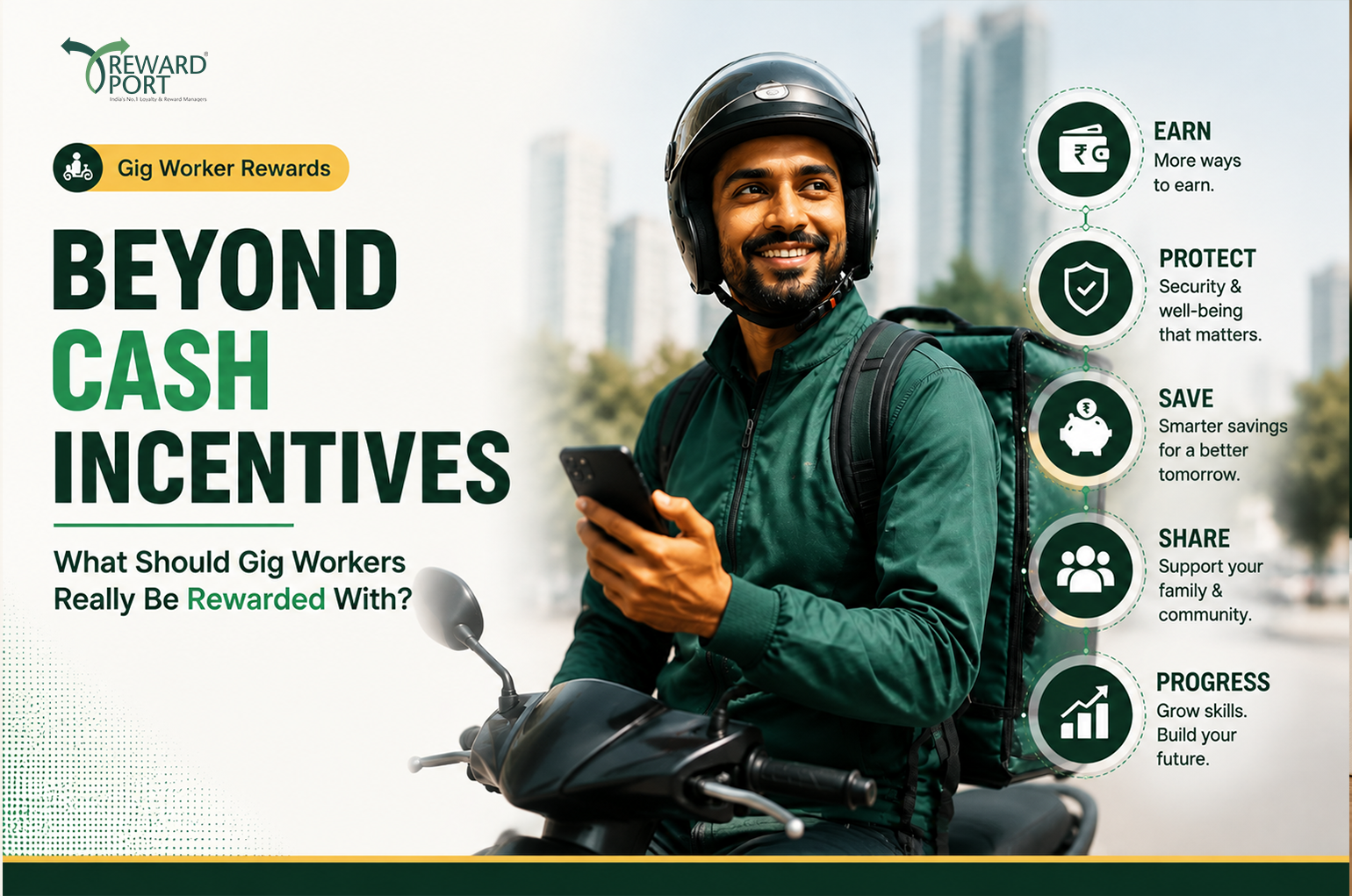
Earn → Protect → Save → Share → Progress
Earn
Help workers increase income fairly.
Protect
Reduce exposure to catastrophic financial risk.
Save
Improve everyday working economics.
Share
Extend meaningful value to the worker’s family.
Progress
Create pathways toward aspiration and mobility.
Together, these layers create a broader value proposition than cash incentives alone.
One Worker Does Not Equal One Worker Type
The term gig worker covers very different people.
A food delivery partner is not necessarily economically similar to:
- A taxi driver
- A Beauty professional
- An electrician
- A warehouse worker
- A field salesperson
- A tutor
- A freelance designer
Their working costs, risks, schedules, income patterns and aspirations may all be different.
That means benefits should be designed around actual worker economics, rather than a single generic gig-worker persona.
Portability Will Become Increasingly Important
Gig workers may work across multiple platforms.
Government policy is already moving toward portability.
Under the emerging framework described in the source material, workers registered on e-Shram receive an Aadhaar-linked identity intended to help make social-security benefits portable even when they switch platforms.
This concept should influence private programs too.
Foundational benefits increasingly need to feel:
Worker-Centric
rather than exclusively:
Platform-Centric
Reward Behaviour — But Don’t Turn Everything Into a Game
Gamification can increase participation.
But not every behaviour should become a leaderboard.
Imagine a leaderboard celebrating the worker who completes the maximum number of jobs.
It may initially look motivating.
But what if it indirectly encourages excessive hours or unsafe behaviour?
Every gig-worker incentive should therefore pass one simple test:
Does this mechanic encourage the behaviour we want without creating a behaviour we don’t want?
Useful behaviours to recognise could include:
- Service quality
- Training completion
- Safety
- Documentation compliance
- Reliability
- Retention
- Referrals
Not just volume.
Recognition Should Be More Human
Platforms can easily reduce workers to dashboards and performance metrics.
Recognition provides an opportunity to do something different.
Milestones can acknowledge genuine achievement:
One year with the platform.
1,000 successful jobs.
100 five-star reviews.
Safety milestone achieved.
Training certification completed.
These milestones could trigger appropriate recognition, family benefits, status or experiences.
The important idea is to recognise the person behind the metric.
Six Questions Companies Should Ask Before Designing a Program
1. Who exactly are the workers?
Understand the worker segments rather than treating everyone identically.
2. What creates financial pressure?
Identify the everyday costs that affect the worker’s economics.
3. Which risks matter most?
Consider occupational, health, accident and income-related risks relevant to the worker group.
4. What benefits already exist?
Understand existing government, platform or third-party support before adding another layer.
5. What behaviour is the platform trying to improve?
Define the desired outcome before choosing the incentive.
6. What benefit produces the highest perceived value per rupee?
Optimise for usefulness, not catalogue size.
A ₹1,000 Reward Budget Can Be Used Very Differently
A simple ₹1,000 voucher can be useful.
But its impact may be short-lived.
The same theoretical budget could potentially be distributed across several forms of value, such as:
Protection Contribution + Fuel/Recharge Savings + Family Experience + Recognition + Government-Benefit Navigation
The exact economics will differ by program and worker segment.
The principle is:
Maximise actual utility, not simply the number of benefits offered.
How Should Success Be Measured?
The success of a gig-worker benefit program should not be measured only by how many rewards were distributed.
Worker Metrics
- Retention
- Satisfaction
- Benefit adoption
- Savings
- Protection enrolment
- Training completion
- Family-benefit usage
Platform Metrics
- Availability
- Quality
- Customer satisfaction
- Referral rate
- Attrition
- Training compliance
Safety Metrics
- Working hours
- Accident incidents
- Safe-driving behaviour
- Fatigue-related patterns
Economic Metrics
- Benefit cost per active worker
- Retention value
- Incremental productivity
- Recruitment savings
- Referral acquisition cost
Ultimately, the question is:
Did the benefits make working with the platform meaningfully better?
What Companies Should Not Do
- Do not disguise earnings as rewards.
- Do not create impossible targets.
- Do not encourage unsafe productivity.
- Do not offer benefits workers cannot realistically use.
- Do not make access unnecessarily complicated.
A rewards program should improve the worker relationship, not create another layer of friction or pressure.
India’s gig economy is becoming more formal.
Social-security regulation is expanding. Healthcare access and portable identities are becoming increasingly important parts of the conversation.
The old question was:
“How much should we pay per task?”
That will always matter.
But companies increasingly need to answer another question:
“What is the total value of working with us?”
A useful model is:
Earn → Protect → Save → Share → Progress
Cash helps workers today.
Protection reduces tomorrow’s risk.
Savings improve everyday economics.
Family benefits make work feel more meaningful.
Aspiration gives workers a reason to believe the relationship can lead somewhere.
That is a much broader—and potentially more useful—definition of reward than simply paying another bonus.
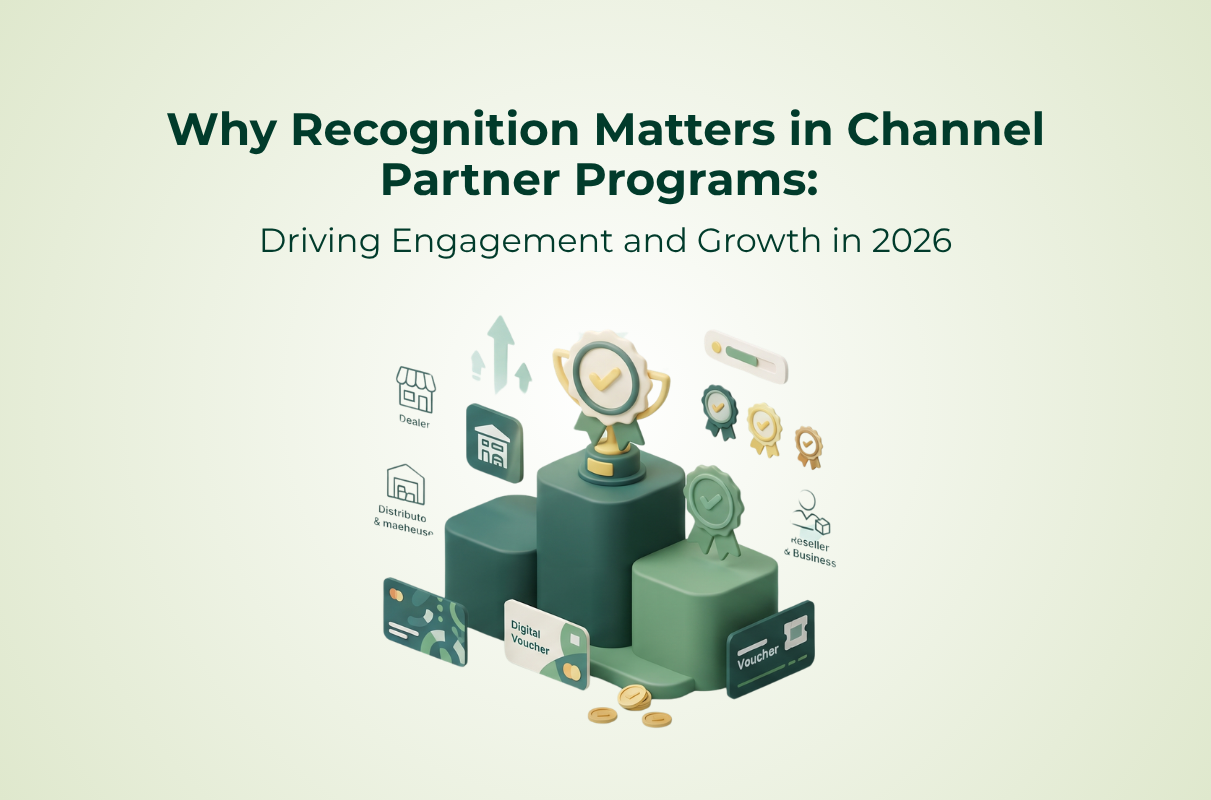
Why Recognition Matters in Channel Partner Programs: Driving Engagement and Growth in 2026
In the dynamic Indian market of 2026, channel partner programs remain a cornerstone for businesses looking to expand reach and increase sales. Recognition in channel partner programs is essential for motivating distributors, dealers, and resellers to perform at their best. This article explores why Indian businesses must prioritise recognition, how market trends shape these programs, and how RewardPort specialised solutions empower brands to engage their channel partners effectively.
Market Context and Industry Developments
The Indian trade ecosystem is becoming increasingly competitive with a sharp focus on digital transformation and data-driven decision-making. Channel partners, including dealers and distributors, are no longer passive recipients of orders but active collaborators. Empowered by technology, they expect timely recognition, rewards, and meaningful incentives linked directly to their performance metrics.
Research indicates that businesses with robust partner recognition programs experience higher channel engagement and overall sales uplift. In India, where relationships and personalised engagement play a significant role, recognising channel partners’ contributions is vital to maintaining strong, loyal collaborations.
Emerging Trends in 2026
Looking ahead, the most successful channel programs blend traditional incentive methods with digital innovations. Emerging trends include gamification elements that add fun and competition, instant gratification rewards that provide immediate motivation, and tiered loyalty programs that encourage sustained engagement through progressively attractive benefits.
Moreover, multi-reward catalogues featuring travel, entertainment, cashback, and digital vouchers offer partners personalised choices that align with their preferences and lifestyle. Such variety increases the perceived value of the incentives and deepens emotional connections with the brand.
Practical Implications for B2B and Channel Leaders
For marketers and sales leaders, integrating recognition into channel programs means designing rewards that are timely, relevant, and easy to redeem. Instant rewards like cashback or digital vouchers ensure quick gratification, while tiered and referral-based incentives drive long-term loyalty and network expansion.
Trade marketing teams can further leverage data analytics to track participation, identify high performers, and tailor communications that reinforce the importance of recognition. HR leaders can also use these insights to align employee incentives with channel performance, fostering a unified sales culture across internal and external teams.
RewardPort Perspective and Solutions
RewardPort expertise in channel partner incentive programs enables brands to design scalable, measurable, and engaging recognition campaigns. Our platform supports diverse execution methods such as dealer rewards, instant cashback, gamification, and multi-brand vouchers, all integrated with CRM and ERP systems to ensure seamless operations and measurable ROI.
We offer a rich reward catalogue spanning travel, entertainment, cashback, essentials, and digital gift vouchers, allowing customization to partner demographics and preferences. For example, our Travel Club and Channely modules have empowered clients to increase dealer motivation and channel activation effectively.
Verified RewardPort Case Study Insights
One verified RewardPort case involved a leading FMCG brand that used a tiered dealer incentive program incorporating travel vouchers and instant cashback. The campaign resulted in increased participation rates, enhanced repeat sales, and positive dealer feedback on reward satisfaction and ease of redemption. This underscores the strategic value of recognition when aligned with partners’ aspirations and operational simplicity.
Recommendations and Implementation Framework
To implement an effective recognition strategy in channel partner programs, consider these steps:
- Identify key performance indicators directly linked to business goals.
- Design a mix of instant and tiered rewards to balance short-term motivation with long-term loyalty.
- Leverage gamification and digital redemption platforms to increase engagement and ease of use.
- Use data analytics to continuously monitor participation, reward effectiveness, and adjust programs dynamically.
- Ensure communication is clear and frequent, reinforcing the value of partner achievements and upcoming rewards.
Recognition in channel partner programs is a powerful driver of engagement, loyalty, and sales performance in the Indian market of 2026 and beyond. By implementing well-structured recognition strategies supported by RewardPort innovative solutions, businesses can foster stronger partner relationships and achieve measurable growth. Prioritising recognition not only aligns partners with brand objectives but also creates a motivated network that drives sustained business success.
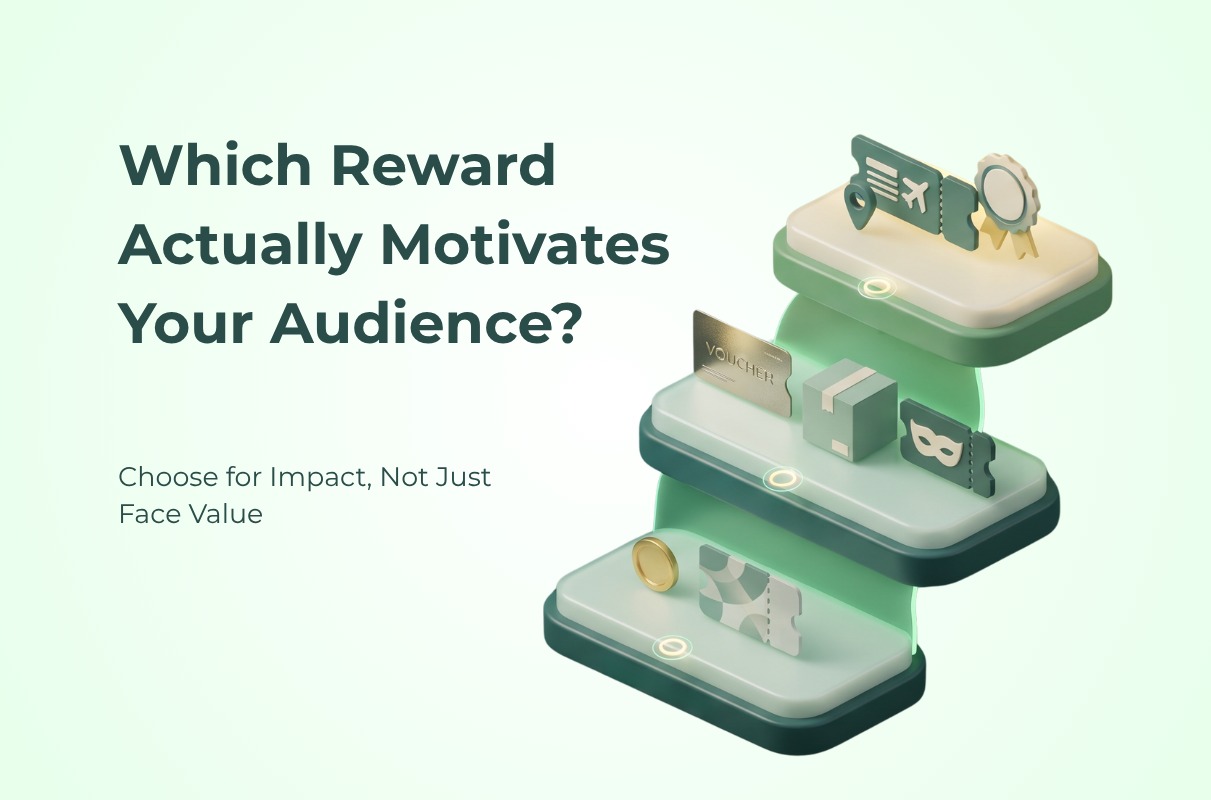
Cashback vs Vouchers vs Merchandise vs Experiences: How Brands Should Choose the Right Reward
There is no universally best reward.
Cashback is strong when certainty, speed and simple value matter. Vouchers add choice and category relevance. Merchandise creates visibility and ownership. Experiences can generate aspiration and memory.
The right reward is the one that best fits the audience, required behaviour, timing, perceived value, delivery effort, fraud risk and commercial objective.
Key Takeaways
- Choose the behavior first and the reward second.
- Compare perceived value, not only procurement cost or face value.
- Use different reward types for different segments, milestones and levels of effort.
- Design fulfilment, expiry, support and fraud controls as part of the reward proposition.
- More reward choice can be valuable, but only when the experience remains simple to understand.
What Is Reward Architecture?
Reward architecture is the structured process of deciding:
What value should we offer, to whom, for which behavior, at what point in the journey and under which economic and operational rules?
It includes much more than selecting items from a reward catalogue.
A complete reward architecture considers:
- Audience and segment
- Target behavior
- Eligibility and verification
- Reward type and value
- Certainty, choice and timing
- Tiers, milestones and progression
- Caps, expiry and liability
- Delivery, support and replacement
- Fraud controls
- Measurement and optimization
A catalogue answers:
“What can we give?”
Reward architecture answers:
“What should we give to create the intended outcome?”
Why the Cheapest Reward Can Be Expensive
Brands sometimes select rewards by unit cost alone.
That can create weak participation, low relevance, support complaints or a high nominal-value offer that very few people can actually use.
The opposite mistake is assuming that face value equals motivational power.
₹500 in immediate cashback, a ₹500 voucher, merchandise costing ₹500 and an experience promoted at ₹500 do not necessarily feel identical to the recipient.
They differ in:
- Certainty
- Flexibility
- Salience
- Effort
- Memory
- Delivery risk
The commercial objective should therefore be to optimise motivation per rupee of total program cost, rather than simply minimising the purchase price of the reward.
The RewardPort VALUE Fit Framework
RewardPort’s article proposes the VALUE Fit Framework for evaluating rewards across five dimensions.
V — Value Perception
How valuable will the audience believe the reward is?
Consider:
- Relevance
- Exclusivity
- Visibility
- Utility
- Emotional appeal
Do not judge the reward only by its face value.
A — Action Fit
Does the reward match the effort, risk and importance of the required behaviour?
A small verified action may require fast, accessible micro-value.
A significant annual achievement may justify recognition or a more aspirational reward.
L — Logistics & Liability
How difficult and costly will the reward be to deliver reliably?
Consider:
- Procurement
- Inventory
- Fulfilment
- Expiry
- Replacement
- Support
- Breakage
- Financial liability
U — User Choice
How much choice should the participant receive?
Too little choice can reduce relevance.
Too much choice can create complexity and decision friction.
The appropriate level depends on the audience and program.
E — Experience & Emotion
What will the participant remember about receiving and using the reward?
A reward can provide functional value, emotional value, recognition or aspiration.
The correct balance depends on the behaviour and audience.
Cashback vs Vouchers vs Merchandise vs Experiences
Each reward format performs a different role.
Cashback
Best suited when:
- Certainty matters
- Speed matters
- The action is frequent
- The audience understands monetary value easily
- Simple communication is important
Strengths
Cashback is straightforward and liquid. Participants understand the value immediately, making it useful when the program requires a clear connection between action and reward.
Watch-outs
Cashback can become purely transactional if used without broader engagement or progression.
Brands should also consider payout failures, verification, support, liability and fraud controls.
Digital Vouchers
Best suited when:
- Choice matters
- The audience has varied preferences
- Digital fulfilment is desirable
- The brand wants more control than unrestricted cash provides
Strengths
Vouchers can combine relatively simple digital delivery with choice across categories or brands.
They can also be segmented by audience, achievement or value band.
Watch-outs
Brands need to consider:
- Expiry
- Redemption restrictions
- Availability
- Failed delivery
- Replacement
- Customer support
A large catalogue does not automatically create a better reward experience.
Merchandise
Best suited when:
- Tangibility matters
- Recognition matters
- The reward should remain visible after earning
- Achievement is significant enough to justify physical fulfilment
Strengths
Merchandise creates ownership and can make an achievement more tangible.
Unlike purely digital value, a physical reward may continue to remind the participant of the milestone after the campaign has ended.
Watch-outs
Merchandise introduces additional operational requirements such as:
- Inventory
- Shipping
- Address accuracy
- Product availability
- Returns
- Replacement
- Damage
- Delivery timelines
These costs need to be included when evaluating the true economics of the reward.
Experiences
Best suited when:
- Aspiration matters
- Emotional engagement is important
- The achievement is significant
- The brand wants the reward to create a memorable moment
Strengths
Experiences can include categories such as:
- Travel
- Cinema
- Entertainment
- Attractions
- Dining
- Leisure activities
They can create a different form of value from purely monetary rewards.
Watch-outs
An experience is valuable only when the recipient can realistically use it.
Brands therefore need to communicate:
- Availability
- Booking requirements
- Geography
- Validity
- Exclusions
- Eligibility
- Redemption conditions
clearly.
Reward Comparison at a Glance
| Reward Type | Core Strength | Particularly Useful When | Key Operational Consideration |
|---|---|---|---|
| Cashback | Certainty and simplicity | Immediate action needs reinforcement | Verification, payout and fraud |
| Vouchers | Choice and flexibility | Audience preferences vary | Expiry, availability and support |
| Merchandise | Tangibility and ownership | Recognition should remain visible | Inventory, logistics and replacement |
| Experiences | Aspiration and memory | Milestones deserve emotional value | Availability, booking and restrictions |
The key point is not to declare one format the winner.
The question is:
Which format best fits the behaviour you want to create?
Should Brands Use One Reward Type or a Reward Portfolio?
A single reward type can be appropriate when the audience and desired behaviour are straightforward.
But many programs contain multiple behaviours and achievement levels.
For example, a program might use:
Frequent Action → Small, immediate value
Milestone Achievement → Greater choice
Major Achievement → Aspirational reward or recognition
This allows the value of the reward to progress with the value of the behaviour.
However, more choice is not automatically better.
The reward journey should remain easy for participants to understand.
How to Choose the Right Reward
Before selecting the reward, answer these questions:
1. Who is the audience?
Consumer, dealer, distributor, employee or another stakeholder?
2. What behaviour are we rewarding?
Trial, repeat purchase, referral, sales achievement, learning, retention or another verified action?
3. How much effort does the action require?
The reward should feel proportionate.
4. Does certainty or excitement matter more?
Some behaviours benefit from assured value. Others may support progression, recognition or aspirational rewards.
5. How quickly should the reward arrive?
Immediate gratification and delayed milestone recognition serve different purposes.
6. How much choice does the audience need?
Choice can improve relevance, but too many options can introduce friction.
7. What is the true cost?
Include more than procurement.
Consider fulfilment, technology, communication, support, replacement, fraud and liability.
8. Can the reward be delivered reliably?
A compelling offer that repeatedly fails during redemption can damage the program experience.
Reward Economics: Look Beyond Face Value
Brands should distinguish between:
Procurement Cost — What the reward costs the program.
Communicated Value — What value is presented to the participant.
Perceived Value — How valuable the participant personally considers it.
Usable Value — How much value the participant can realistically obtain after considering availability and conditions.
These are not always the same.
That is particularly important for merchandise and experiences, where usability, restrictions and fulfilment can materially affect the participant’s experience.
Reward Fit Should Change Across the Journey
Different moments can require different forms of motivation.
Acquisition or Trial
Simple, understandable rewards can reduce hesitation and encourage the first action.
Repeat Behaviour
Frequent rewards, progression or accumulated value can encourage continued participation.
Milestones
Higher-value vouchers, merchandise or experiences can recognise a more meaningful achievement.
Loyalty & Recognition
Aspirational benefits, experiences or exclusive access can help differentiate major achievements from routine transactions.
The reward should therefore be treated as part of the behavioural journey, not as an item added after the campaign mechanic has already been designed.
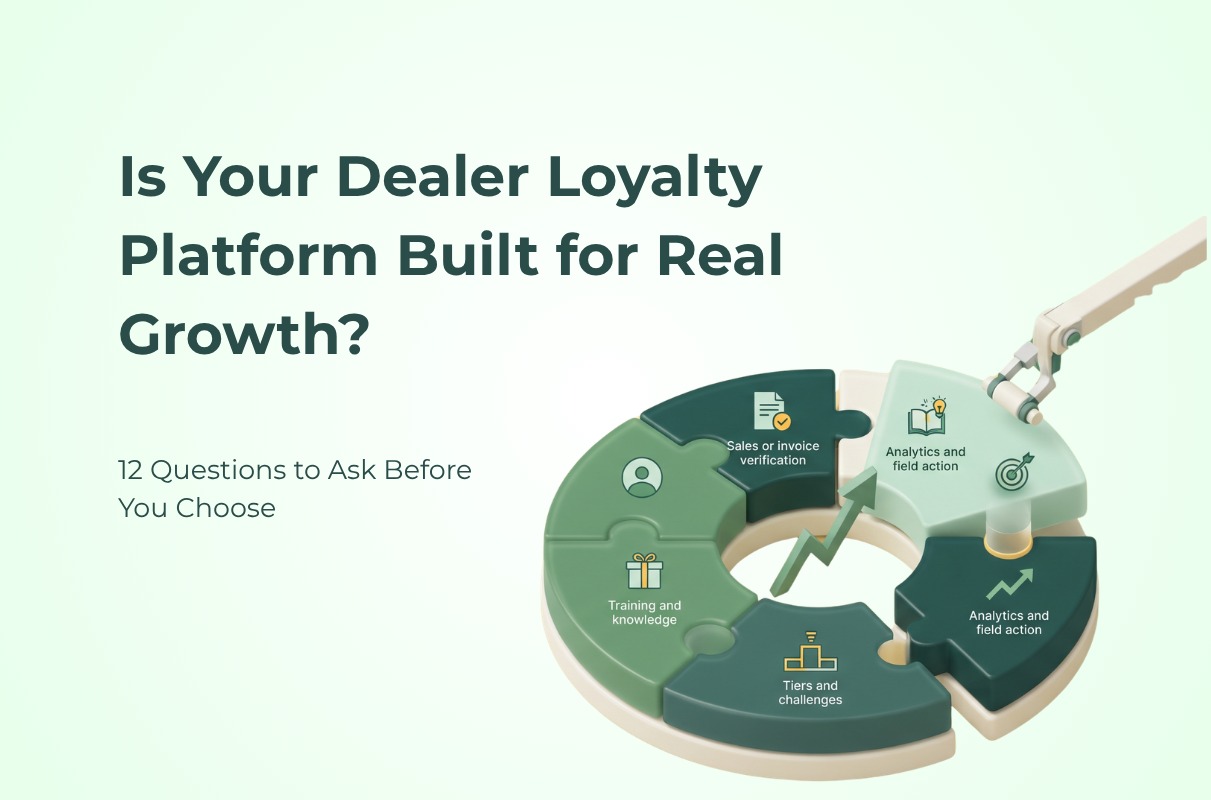
How to Choose a Dealer Loyalty Platform in India: A 12-Question Buyer’s Guide
Choosing a dealer loyalty platform should begin with one question:
Can this system influence and verify the business behaviours that actually matter?
A modern dealer loyalty platform should do much more than manage points, catalogues and dashboards. It should support partner identity, multi-tier rules, sales or activity validation, communication, training, challenges, relevant rewards, fraud controls, service operations, analytics and integration with the brand’s commercial systems.
Key Takeaways
- Begin with channel objectives and partner behaviour, not a feature checklist.
- Distinguish dealers, distributors, retailers, mechanics, contractors and influencers because they do not create value in the same way.
- Verify the source of every qualifying action before attaching a reward.
- Evaluate communication, capability building and operational support alongside payout technology.
- Select a partner that can convert program data into better actions for field teams and channel members.
What Is a Dealer Loyalty Platform?
A dealer loyalty platform is the operating system used by a brand to identify channel partners, communicate schemes, record and validate qualifying activities, calculate incentives, deliver rewards, resolve exceptions and analyse performance.
Depending on the industry and route to market, it may serve:
- Distributors
- Dealers
- Retailers
- Stockists
- Mechanics
- Contractors
- Architects
- Technicians
- Other trade influencers
Channel partners are independent businesses rather than a captive employee audience. That distinction matters because their participation must continually earn attention and demonstrate value.
Why Catalogue-Led Selection Produces Weak Programs
Many platform-selection conversations begin with questions such as:
How many vouchers are available?
Does the platform support points?
Can it make payouts?
Does it have a leaderboard?
These are legitimate questions, but they begin too late in the process.
A catalogue cannot correct unclear scheme communication.
A points engine cannot establish whether reported sales are valid.
A leaderboard cannot improve product knowledge by itself.
And an attractive app does not automatically solve duplicate membership, inactive partners, field-team adoption or disputed claims.
The better buying question is:
Can this system help us create, verify and improve the channel behaviour that produces growth?
The RewardPort Channel Growth Stack
The article proposes a seven-layer framework for evaluating a dealer loyalty platform.
1. Identity
The platform should create a reliable partner record covering role, geography, channel tier, business identity, language, consent and relevant hierarchy.
It should also be able to manage duplicate records, changes in ownership and inactive members.
2. Visibility
Brands need an approved source of truth for relevant activity.
Depending on the program, this could include:
- Primary sales
- Secondary sales
- Invoice uploads
- Unique product codes
- Target achievement
- Visibility evidence
- Training
- Referrals
3. Capability
Channel growth can depend on knowledge as much as stock.
Where relevant, the platform should support scheme explanation, product learning, question answering, quizzes, certifications or field-guided support.
4. Motivation
Rules, tiers, challenges, milestones, streaks and recognition should make the desired behaviour clear and attainable.
Gamification should support a commercial objective rather than create activity merely for its own sake.
5. Verification
The system should validate an action before calculating its reward value.
Depending on the program, verification could involve ERP or distributor data, invoice review, OCR-assisted bill parsing, QR or code validation, approved images, location signals or human review for exceptions.
6. Value
Rewards should fit both the partner segment and the effort required.
Depending on the program, options can include cashback, vouchers, merchandise, cinema, travel, experiences, business benefits or recognition.
The same reward catalogue does not necessarily need to be shown to every participant.
7. Intelligence
The platform should help brand, sales and channel teams understand participation, sales, learning, claims, risk, reward preferences and next actions.
The objective is to use program data to improve the next scheme, field conversation and partner intervention.
12 Questions to Ask Every Dealer Loyalty Platform Provider
1. Which Business Behaviours Can the Program Influence?
Ask the provider to connect platform capabilities directly with your objectives.
These might include:
- Incremental sales
- Product mix
- New-product trial
- Outlet coverage
- Training
- Display compliance
- Referrals
- Service quality
- Data capture
2. Can the Rules Reflect Our Actual Channel Structure?
Test whether the platform can accommodate distributors, dealers, retailers and influencer hierarchies, along with:
- Territories
- Product categories
- Tiers
- Overlapping roles
- Target periods
- Exclusions
- Approval levels
3. What Is the Source of Truth for Each Qualifying Action?
Do not accept “sales data” as a complete answer.
Establish whether qualification is based on:
- ERP
- DMS
- Distributor uploads
- Invoices
- QR codes
- Unique codes
- Image evidence
- Manual approval
- A reconciled combination of sources
4. How Are Duplicates, False Claims and Collusion Handled?
Ask for the fraud and exception framework.
It should consider duplicate identities, repeated invoices or codes, abnormal submission velocity, shared devices, suspicious clusters, rejected claims, override rights and audit trails.
5. How Will Partners Understand the Scheme?
Evaluate the complete communication journey, including:
- Onboarding
- Language
- WhatsApp or app communication
- Scheme explainers
- Balance visibility
- Reminders
- Expiry messages
- Grievance support
A complex scheme that partners do not understand can underperform regardless of the reward value.
6. Can the Platform Improve Partner Capability?
If product knowledge or selling quality matters, evaluate whether the platform can support appropriate learning journeys, text or voice assistance, quizzes, certifications and targeted content.
7. How Flexible Is the Incentive and Challenge Engine?
Test the platform’s ability to manage:
- Slabs
- Thresholds
- Tiers
- Accelerators
- Team challenges
- Limited-time missions
- Non-sales actions
- Approval flows
- Negative adjustments
- Rule changes and version history
8. How Are Rewards Matched to Different Partners?
Ask whether reward choice can vary according to:
- Tier
- Geography
- Role
- Achievement
- Preference
Also examine delivery times, expiry, cancellation, failed fulfilment and replacement handling.
9. What Will the Field Sales Team See and Do?
A dealer loyalty platform should not become an isolated marketing portal.
Field users may need visibility into:
- Partner status
- Scheme understanding
- Unresolved issues
- Learning gaps
- Opportunity signals
- Recommended actions
10. What Integrations Are Genuinely Required?
Map potential integrations across ERP, CRM, DMS, SFA, finance, messaging, KYC, payment, catalogue and analytics systems.
Separate launch-critical integrations from later enhancements so that the pilot does not become an endless technology project.
11. How Will the Program Be Operated After Launch?
Clarify responsibility for:
- Onboarding
- Data processing
- Claims
- Approvals
- Support
- Reward catalogue
- Communication
- Reconciliation
- Tax documentation
- Fraud review
- Reporting
- Change requests
12. How Will We Know Whether the Program Worked?
Agree on the metrics, baseline, comparison logic, reporting cadence and decision rights before launch.
The provider should be able to explain how campaign activity connects with commercial outcomes.
Dealer Loyalty Platform Comparison Scorecard
Score each area from 0 to 3:
0 = Absent | 1 = Largely manual/limited | 2 = Operationally adequate | 3 = Strong and configurable
| Evaluation Area | Weight | What Strong Looks Like |
|---|---|---|
| Objective & Rule Fit | 15% | Rules map to real channel behaviours and hierarchies |
| Data & Verification | 15% | Clear source of truth, validation and audit trail |
| Partner Experience | 10% | Simple onboarding, communication, balance and support |
| Capability Building | 10% | Targeted learning and knowledge support where required |
| Motivation Design | 10% | Flexible tiers, challenges, recognition and non-sales actions |
| Reward Architecture | 10% | Relevant choice, reliable fulfilment and segment control |
| Fraud & Governance | 10% | Preventive controls, exception process and role-based access |
| Analytics & Actions | 10% | Decision-ready views for brand, sales and field teams |
| Integration & Scale | 5% | Practical APIs, batch routes and performance fit |
| Service Operations | 5% | Clear SLAs, reconciliation, support and change management |
The weighting should change according to the use case.
For a high-value product-code program, verification and fraud may deserve greater weight. For a product-education program, capability building and field action may matter more.
Agency vs Software Platform vs Rewards Provider vs Integrated Operator
| Model | Strength | Common Limitation | Best Fit |
|---|---|---|---|
| Promotion/Loyalty Agency | Strategy, creative, communication and managed execution | May depend on separate technology or fulfilment systems | Brands requiring a managed campaign with limited integration |
| Software Platform | Rules, automation, APIs and direct administrative control | Brand may need to assemble strategy, operations, support and rewards separately | Teams with mature internal program operations |
| Rewards/Payout Provider | Fast access to value distribution | Can become a transaction layer without behaviour design or channel intelligence | Programs with already-defined rules and verified outcomes |
| Integrated Operator | Connects strategy, technology, verification, rewards, operations and analytics | Requires disciplined scoping to avoid unnecessary complexity | Brands seeking one accountable operating model |
The correct model depends on the organisation’s internal capabilities.
The important requirement is that no critical job is left without an owner.
A Phased Dealer Loyalty Platform Implementation Process
Phase 1: Channel Diagnosis
Interview sales, trade marketing, finance, technology, field teams and a sample of channel partners.
Document objectives, available data, current schemes, disputes and adoption barriers.
Phase 2: Behaviour and Economics Design
Define segments, qualifying actions, source of truth, baseline, incentive rules, caps, liability, exception handling and success measures.
Phase 3: Pilot Build
Launch with a bounded geography, partner group or product category.
Include actual operations and support—not merely a demonstration interface.
Phase 4: Adoption and Field Activation
Train field teams, simplify partner onboarding, communicate the value clearly and monitor where participants abandon or misunderstand the journey.
Phase 5: Evaluation and Scale
Compare commercial and behavioural performance with the agreed baseline.
Resolve data, rules and support issues before adding features or expanding nationally.
Dealer Loyalty Metrics That Matter
Commercial Metrics
- Incremental sales or contribution against baseline
- Product mix and target achievement
- Active outlet or partner coverage
- Cost per incremental outcome
Engagement Metrics
- Eligible versus enrolled partners
- Monthly active and transacting partners
- Challenge, learning and communication participation
- Repeat activity and tier progression
Operational Metrics
- Claim-processing time and approval rate
- Data latency and reconciliation errors
- Reward-delivery success and support-resolution time
- Field-team adoption and unresolved exceptions
Fraud & Governance Metrics
- Duplicate identities, invoices or codes
- Abnormal submission patterns
- Manual overrides and reasons
- Fraud loss and prevented liability
An Illustrative Building-Materials Scenario
Assume a building-materials brand wants to grow a new premium range through dealers and contractor influencers.
Billing alone will not reveal whether partners understand the product or recommend it correctly.
The program therefore rewards a combination of:
- Verified sales
- Product-learning completion
- Approved project referrals
- Selected visibility actions
Different activities use different evidence.
Sales come from approved commercial data. Learning comes from platform completion. Referrals require qualification. Visibility evidence follows a defined review process.
Dealers may receive tier progression and business-relevant benefits, while contractors may prefer smaller, faster rewards.
Field teams can see who is close to a milestone, who has a learning gap and where claims are being rejected.
Important: This is an illustrative design and not a published RewardPort case study.
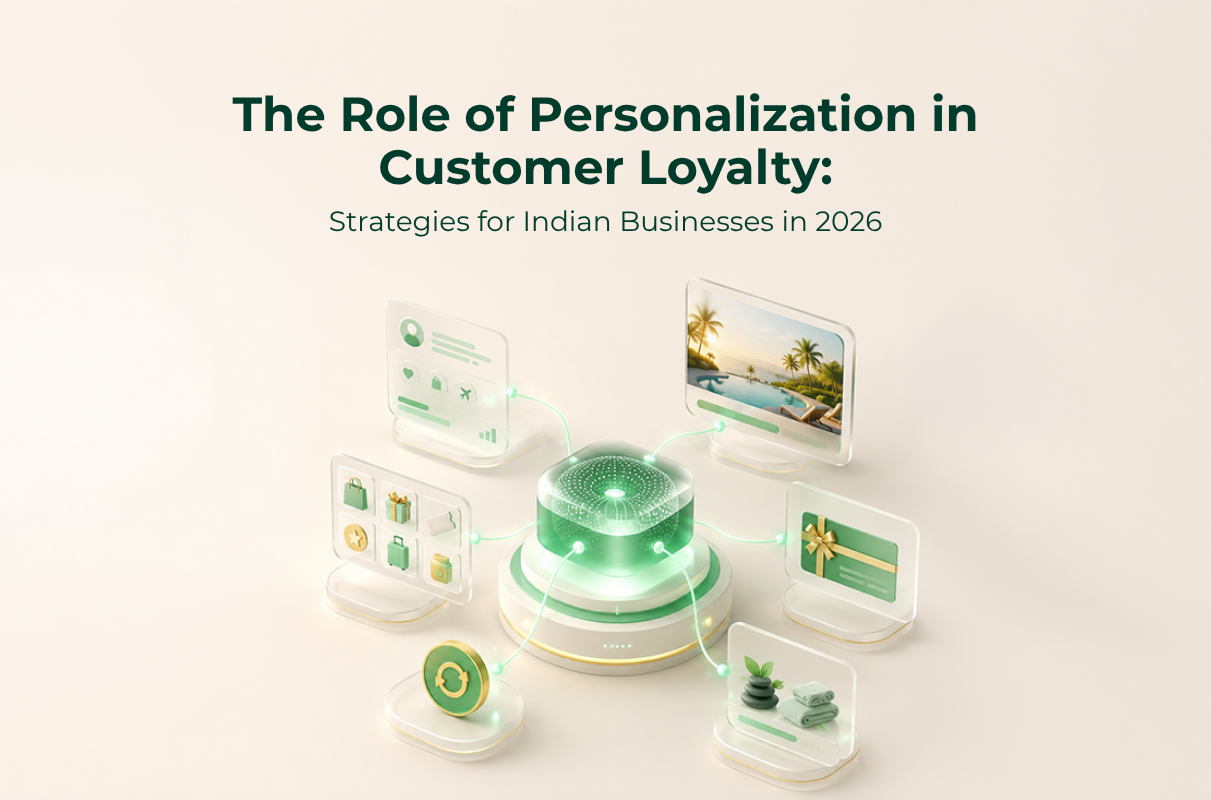
The Role of Personalization in Customer Loyalty: Strategies for Indian Businesses in 2026
In India’s rapidly evolving market, personalization in customer loyalty has emerged as a critical differentiator for brands looking to build lasting customer relationships. As consumers demand experiences tailored to their individual needs, businesses must adapt their loyalty programs and promotions to stay relevant and competitive in 2026 and beyond.
Market Context and Consumer Behaviour in India
Recent studies show that 73% of Indian consumers expect personalised experiences across all brand interactions. This reflects a broad shift from generic offers to hyper-personalised engagements that recognise customer preferences, behaviours, and context. Mobile-first approaches leveraging location, time, and past purchase data further drive effective personalised promotions.
Simultaneously, Indian consumers are becoming more privacy conscious, demanding transparency around data collection and a clear value exchange for sharing information. Brands that respect this expectation build stronger trust, forming a foundation for successful loyalty programs.
Emerging Trends for 2026
Several trends shape the personalization landscape in customer loyalty:
- Living Loyalty: Loyalty programs evolve into continuous engagement platforms offering dynamic content, exclusive access, and tailored experiences.
- AI-Driven Real-Time Offers: Use of artificial intelligence to deliver precise promotions based on deeply analysed customer data.
- Instant Digital Rewards: Preferences lean toward cashback, UPI-based rewards, and instantly redeemable digital vouchers facilitating immediate gratification.
- Personalized Channel Partner Incentives: Dealers and distributors benefit from customised sales targets, gamified incentives, and real-time performance dashboards, driving motivation and loyalty.
- Experience and Wellness Rewards: Increasing demand among premium segments for lifestyle-aligned experiential and wellness rewards.
Implications for B2B Marketers and Channel Leaders
For B2B marketers, trade marketers, and channel sales leaders, personalization extends beyond consumer rewards to partner engagement. Using data analytics to tailor incentive programs helps reinforce dealer loyalty and sales performance. Gamification and digital engagement platforms enable brand partners to interact with personalised training and challenges that encourage consistent performance improvements.
HR leaders and loyalty managers find personalization vital in employee rewards, motivating teams with relevant, instant gratification options encompassing multi-brand vouchers, experiential rewards, and wellness offerings.
RewardPort Perspective and Solution Approach
At RewardPort, we specialise in designing consumer promotions and loyalty programs that incorporate hyper-personalization to maximise engagement and business outcomes. Our solutions include:
- AI-enabled personalised campaigns delivering offers tailored by purchase history, location, and behavioural data.
- Multi-channel reward fulfillment combining instant cashback, digital vouchers, and experiential rewards aligned to customer preferences.
- Dealer and channel partner incentive programs leveraging real-time performance tracking and gamification to customise targets and incentives.
- Employee rewards programs focussed on personalised recognition through flexible reward catalogues spanning travel, entertainment, food, and wellness categories.
These capabilities allow brands to implement living loyalty ecosystems that foster repeat purchase, channel activation, and employee motivation with measurable ROI.
Verified RewardPort Case Study Highlights
While specific client confidentiality limits detailed disclosure, RewardPort has successfully enabled campaigns featuring:
- Gift with purchase models combined with monthly movie ticket rewards to significantly boost repeat sales among Indian consumers.
- Dealer loyalty programs integrating points systems with quarterly redemption options, enhancing trade engagement and channel push performance.
- Employee incentive programs utilising multi-brand voucher catalogs for personalised rewards, achieving higher motivation and retention.
Practical Recommendations and Implementation Framework
Brands seeking to leverage personalization in customer loyalty effectively should consider the following steps:
- Data Segmentation and Analytics: Gather and analyse customer and partner data to segment audiences accurately.
- Personalised Communication: Deploy AI-driven communications across digital and mobile channels for timely, relevant touchpoints.
- Flexible Reward Options: Offer a choice of instant cashback, digital vouchers, and experiential rewards to match diverse preferences.
- Channel and Employee Integration: Extend personalized incentives to dealers, distributors, and employees to create a comprehensive loyalty ecosystem.
- Transparency and Trust: Communicate data privacy policies clearly and ensure customers perceive real value in sharing data.
- Continuous Measurement: Use campaign analytics to track participation, engagement, and ROI for ongoing optimization.
Personalization in customer loyalty is no longer a luxury but a strategic imperative for Indian businesses in 2026. By delivering tailored experiences, flexible rewards, and transparent engagement, brands can build deeper loyalty bonds, enhance sales performance, and drive sustained growth. RewardPort expertise and technology platforms empower marketers and channel leaders to implement these personalized loyalty strategies effectively, ensuring measurable business impact.
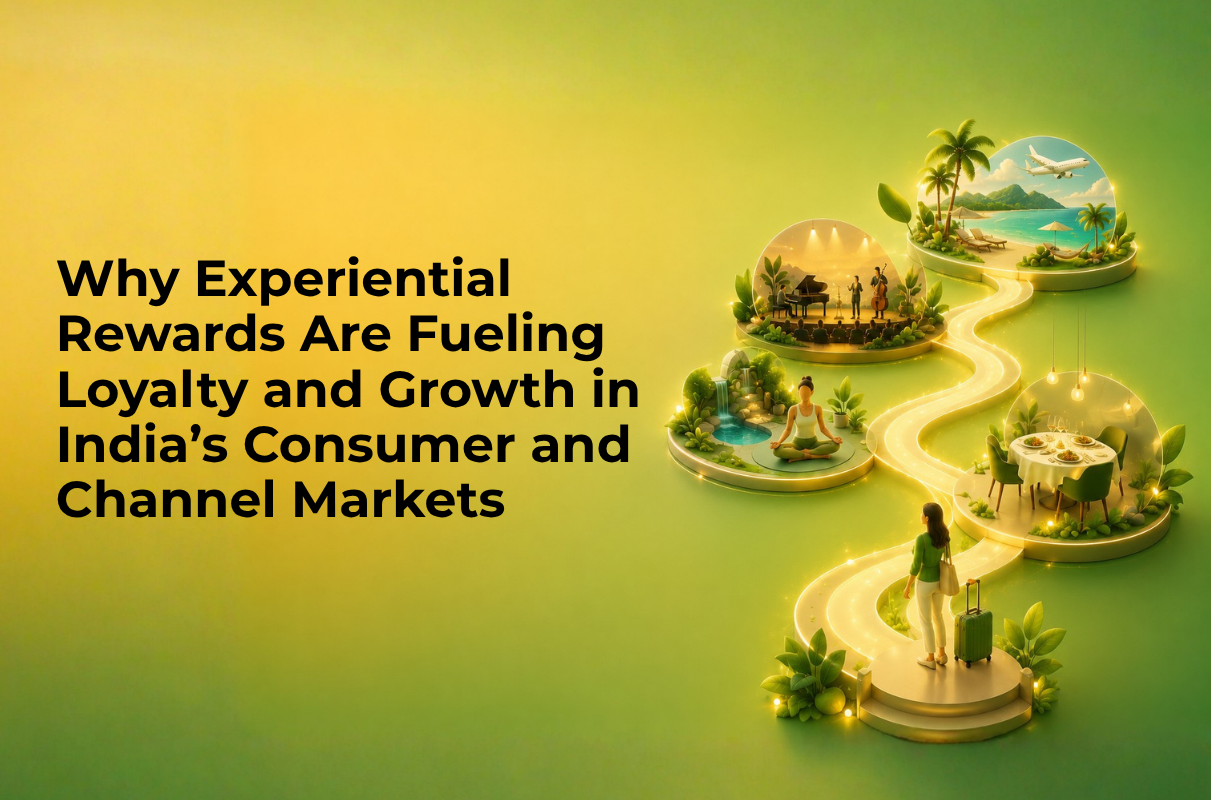
Why Experiential Rewards Are Fueling Loyalty and Growth in India’s Consumer and Channel Markets
India’s evolving consumer landscape and vibrant B2B sectors are experiencing a profound shift in reward preferences. From branded consumer promotions to dealer incentives and employee engagement, experiential rewards are becoming the preferred choice for brands striving to connect emotionally and boost long-term loyalty. This article explores why experiential rewards are growing rapidly in India, the cultural and economic drivers behind this trend, and how RewardPort is uniquely positioned to deliver impactful programs that foster engagement and growth.
The Rising Demand for Meaningful Experiences
Indian consumers, especially Millennials and Gen Z, prioritize experiences over mere possessions. This generational shift drives demand for rewards that offer personal growth, wellness, and memorable moments rather than just cashbacks or discounts. The aspirational middle class’s increasing disposable income further enables brands to offer high-value experiential rewards such as bespoke travel, wellness retreats, adventure sports, and exclusive events. These experiences resonate deeply, creating emotional bonds that pure transactional rewards often fail to achieve.
Deeper Engagement and Brand Loyalty Through Experiential Rewards
Experiential rewards foster stronger and longer-lasting emotional connections with brands. RewardPort draws on case studies from sectors like FMCG and consumer electronics where gifting travel or entertainment vouchers led to significant uplifts in repeat purchases and brand advocacy. For instance, campaigns offering movie tickets or curated dining experiences as assured gifts enhanced customer satisfaction and repeat buying patterns, proving that experiential incentives directly contribute to loyalty.
Differentiation in a Crowded Market
In the highly competitive Indian market, brands leverage experiential rewards as a key differentiator. RewardPort’s approach often includes curated reward catalogs featuring over 3,000 travel destinations (VacPac), premium movie experiences (CineRewardz), and curated dining and wellness options, ensuring a wide variety of culturally relevant and aspirational rewards. These distinctive rewards help brands stand out in cluttered campaigns, making promotions more appealing and memorable for both consumers and channel partners.
Motivating Channel Partners and Employees with Aspirational Experiences
B2B incentive programs benefit significantly from experiential rewards. RewardPort’s Dealer and Channel Partner Incentive Programs use travel clubs, exclusive events, and luxury stays through AirPac and Travel Club modules, markedly increasing partner motivation and performance. Similarly, employee incentive programs offering gift vouchers and experience-based rewards have shown improved morale and productivity. These rewards fulfill not just financial goals but also emotional and social aspirations, strengthening loyalty and commitment.
Social Media Amplification and Organic Promotion
Experiential rewards offer strong social media shareability, transforming recipients into brand advocates. RewardPort campaigns have successfully integrated social sharing mechanisms, resulting in organic amplification and extended campaign reach. When winners share their travel or dining experiences online, it elevates brand perception and attracts new customers with authentic endorsements.
The Wellness and Personal Development Wave
A growing trend in India is the focus on health, well-being, and skill development as reward categories. RewardPort catalog includes spa, salon, fitness memberships, and meditation app subscriptions aligning perfectly with this cultural shift towards holistic living. These rewards appeal to health-conscious consumers and professionals, adding a personal development dimension to loyalty and incentive programs.
RewardPort Perspective on the Experiential Rewards Surge
Experiential rewards are not just a fleeting trend but a strategic imperative for brands wanting to build sustained engagement in India’s dynamic markets. RewardPort expertise and diverse reward catalog empower brands to design culturally relevant, aspirational, and emotionally engaging programs that drive sales, loyalty, and advocacy. As the experience economy expands through 2026 and beyond, leveraging experiential rewards will become essential to winning customer, partner, and employee hearts alike.
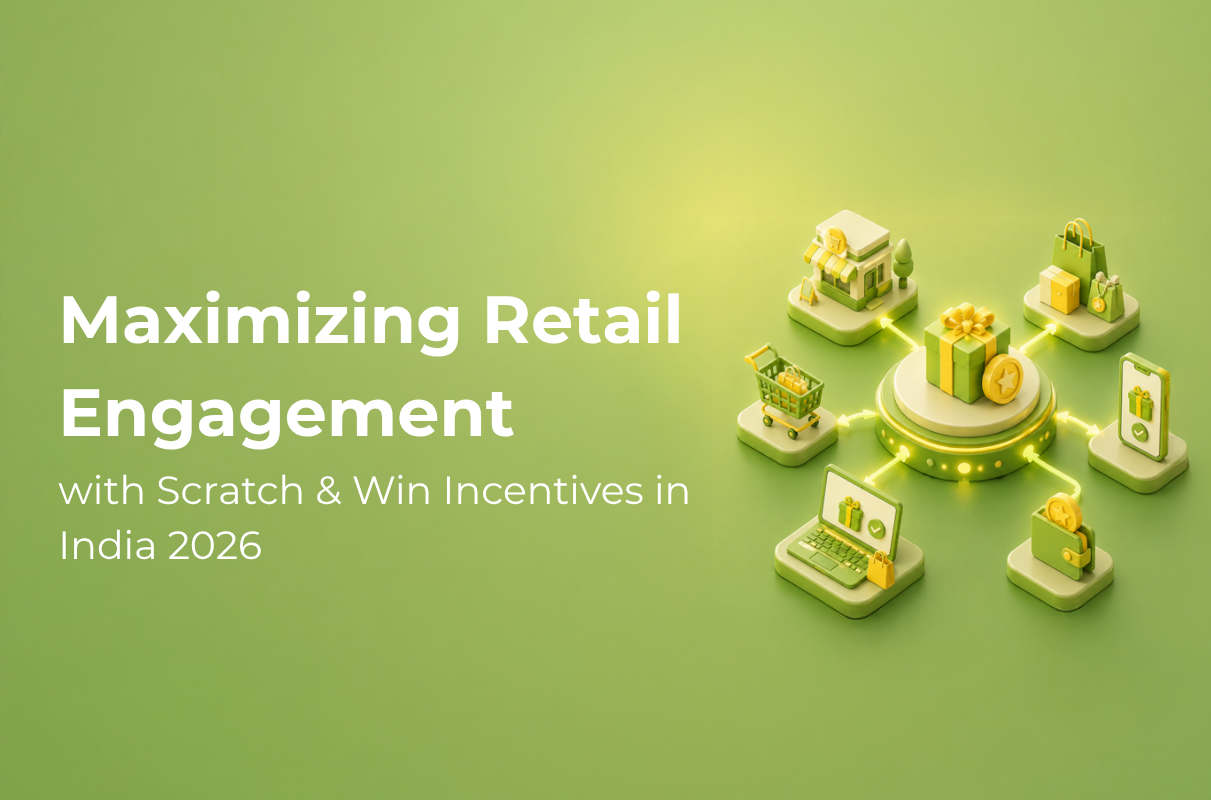
Maximizing Retail Engagement with Scratch & Win Incentives in India 2026
Explore how scratch & win incentives drive retail growth in India 2026, leveraging RewardPort proven strategies and rewards catalog.
Maximizing Retail Engagement with Scratch & Win Incentives in India 2026
As retail dynamics continue to evolve in India, 2026 is shaping up to be a pivotal year for consumer engagement strategies. One of the most impactful tools in the marketer’s arsenal today is the scratch & win incentive—a proven method to capture attention, drive trial, and boost repeat purchases at retail outlets. With India’s growing middle class and digital adoption accelerating, scratch & win campaigns are increasingly sophisticated, blending offline excitement with seamless digital redemption experiences.
Why Scratch & Win Incentives Matter for Retailers in 2026
Scratch & win promotions create instant gratification and surprise elements that resonate well with Indian consumers. They effectively increase footfall, encourage purchasing larger basket sizes, and foster brand loyalty by offering assured prizes along with grand rewards. In 2026, these campaigns also serve as powerful data collection channels, helping retailers understand customer preferences and tailor future marketing efforts.
Emerging Trends in Scratch & Win Campaigns for Indian Retail
Technology integration is driving innovation in scratch & win rewards, enabling hybrid offline-online experiences. QR-linked scratch cards allowing instant win notifications via smartphones are gaining popularity, catering to India’s tech-savvy consumer base. Additionally, incorporating gamification elements enhances engagement duration, while tiered prize structures sustain excitement throughout the campaign period.
RewardPort Perspective: Delivering Impactful Scratch & Win Solutions
At RewardPort, we specialize in crafting scratch & win campaigns with assured and grand prizes tailored to retailer and consumer needs. Our expertise spans over 11,000+ programs annually across India, leveraging a vast rewards catalog that includes travel vouchers, entertainment options like movie tickets and OTT subscriptions, food rewards such as pizza and coffee vouchers, health and wellness gifts, and more.
Our approach ensures campaigns balance fun and achievable rewards with strategic business objectives—whether driving acquisition, trial, repeat purchase, or brand loyalty. For example, our festive QR Scan-to-Win campaign for a renowned snack brand combined assured cashback with grand appliance draws, leading to significant repeat purchase uplift and engagement.
Best Practices for Retailers Implementing Scratch & Win in 2026
Retailers should focus on clear, transparent campaign rules and engaging communication through multiple channels to maximize participation. Partnering with experienced platforms like RewardPort facilitates seamless campaign management, fraud prevention, and real-time reporting.
Customization based on regional preferences and purchase behavior enhances relevance, while instant rewards encourage prompt redemption, generating positive brand sentiment. Transparent tracking and robust data analytics enable continuous campaign optimization and deeper consumer insights.
Unlocking Growth Potential with Scratch & Win Incentives
Scratch & win incentives remain a cornerstone promotion for Indian retailers in 2026, marrying excitement with strategic business outcomes. Leveraging RewardPort specialized solutions and rich rewards catalog empowers brands to engage customers effectively, boost sales, and build long-term loyalty in a competitive market.
Contests as a Strategic Loyalty Tool for Trade Engagement in India’s Growing Market
Explore how contests drive trade engagement through instant rewards, tiered loyalty, and WhatsApp communication to boost retailer participation in India.
Contests as a Strategic Loyalty Tool for Trade Engagement in India’s Growing Market
The landscape of trade engagement in India has evolved dramatically, emphasizing not just participation but sustained loyalty. Contests remain a powerful tool within this ecosystem, but their design and execution are shifting to meet modern expectations of trade partners. In 2026, brands and channel leaders must rethink contests as integrated loyalty mechanisms that foster ongoing engagement, integrate instant gratification, and leverage digital communication channels like WhatsApp.
The Changing Role of Contests in Trade Loyalty
Traditional contests usually resulted in sporadic engagement spikes among distributors and retailers without long-term retention. However, the current trend favors continuous engagement models that gamify the experience, turning everyday sales activities into repeated opportunities for rewards. RewardPort approach mirrors this evolution, favoring gamification and tiered loyalty programs over one-off contests. These models have proven to generate higher participation and improve trade partner retention.
Instant Rewards: The New Expectation
One of the most crucial insights from RewardPort data and Indian market analysis is the importance of instant rewards. Trade partners, especially retailers, expect immediate gratification—whether through instant UPI payouts or instant gift cards. RewardPort Cashback Engine and WhatsApp Redemption Flow modules facilitate these instant rewards, significantly boosting participation rates by 3 to 5 times compared to traditional delayed reward schemes. This immediacy combats the frustration associated with long approval cycles and deferred benefits.
Tiered Loyalty Programs: Sustaining Aspirational Contest Structures
Tiered loyalty programs outperform flat contests by creating ongoing aspirational competition. Retailers climb through gold, platinum, and other tiers, incentivized by progressively better rewards and recognition. Brands using RewardPort Loyalty Programs module report up to 41% higher trade retention, with top-tier retailers contributing multiple times the sales volume of lower tiers. This structure transforms contests into continuous growth journeys rather than isolated winning moments.
Localized Contest Design for Maximum ROI
India’s diverse regional markets demand localized contest mechanics. Regional incentives deliver 29–45% higher ROI by aligning with local buying cycles and festivals, as indicated in EY FMCG studies. RewardPort layered campaign design and regional customization capabilities make it easier for brands to launch hyper-local contests that resonate deeply with trade partners, outperforming generic pan-India initiatives.
Leveraging WhatsApp for Trade Communication and Participation
WhatsApp has become the preferred channel for communication in channel partner contests, with 96% of retailers favoring it for scheme updates. WhatsApp-based reminders and reward notifications increase participation 2-3 times over traditional channels. RewardPort WhatsApp-to-win and redemption flows integrate seamlessly with contest frameworks, ensuring timely and effective communication that drives consistent engagement.
RewardPort Perspective: Integrating Contests into Holistic Loyalty Strategies
At RewardPort, we advocate contests as one element within a comprehensive loyalty ecosystem. Our plug-and-play modules—ranging from Gamification and Scratch & Win to Cashback and Loyalty Programs—are designed to create multi-touchpoint engagement. For example, Philips leveraged gift-with-purchase contests combined with movie ticket rewards, yielding boosted sales and sustained retailer interest. Similarly, Bikaji’s festive QR Scan-to-Win contests offering a mix of OTT, pizza, and travel prizes drove a significant uplift during peak seasons. The data tells us that contests must evolve from transactional checklist activities to dynamic, habit-forming incentivization that recognizes consistent behavior and tier accomplishment. Brands reducing trade spend by 15-20% without losing retailer engagement are those replacing simple discounting contests with earnable rewards and instant gratification modules, underscoring RewardPort leadership in this space.
In the rapidly evolving Indian trade ecosystem, contests remain a vital loyalty tool but require strategic modernization. By leveraging instant rewards, tiered structures, localized mechanics, and WhatsApp-based engagement—supported by RewardPort robust digital solutions—brands can maximize ROI and foster deeper, longer-lasting trade partner loyalty in 2026 and beyond.
Experiential Dealer Incentives in 2026: Driving Channel Engagement with RewardPort Solutions
Discover top trends in experiential dealer incentives for 2026 in India with RewardPort proven solutions in travel, gamification, cashback, and loyalty programs.
Experiential Dealer Incentives in 2026: Driving Channel Engagement with RewardPort Solutions
Dealer incentives are evolving beyond traditional discount-based schemes to embrace more experiential and impactful strategies that deeply engage channel partners. As we move into 2026, the Indian market sees a significant shift toward personalized, gamified, and travel-linked rewards that motivate dealers to perform while fostering loyalty and deeper brand connections. RewardPort, with its expertise in consumer promotions, loyalty programs, and channel incentives, is at the forefront of these trends, helping brands activate dealer networks with innovative, scalable solutions.
The New Landscape of Dealer Incentives in India
The Indian dealer ecosystem in 2026 demands incentives that go beyond price cuts and cashbacks. Dealers seek recognition, memorable experiences, and rewards that resonate with their aspirations and operational goals. Experiential incentives, such as travel rewards and branded gamified campaigns, create emotional engagement, improve morale, and encourage repeat selling behaviors. These incentives are transforming dealer relationships into partnerships, fostering a competitive yet collaborative channel environment.
Key Trends Shaping Experiential Dealer Incentives in 2026
One of the dominant trends is the integration of travel incentives as recognition rewards. For instance, RewardPort AirPac and VacPac travel clubs provide dealers and channel partners with access to thousands of holiday destinations and airline options, turning incentives into coveted lifestyle benefits. This trend taps into dealers’ desire for premium, aspirational rewards that money alone cannot buy. Another rising trend is gamification. RewardPort Gamification Engine offers over 100 branded digital and offline games, such as spin-the-wheel and scratch & win formats, enabling dealers to engage in a fun and competitive environment. These methods encourage consistent participation with instant gratification elements like assured prizes and tier-based bonuses, fostering a dynamic incentive culture. Cashback campaigns and tiered loyalty programs continue to drive repeat engagement. Drawing from RewardPort successful case with Infra Market, quarterly point-based loyalty programs with manageable redemption opportunities have shown substantial trade engagement growth. Combined with instant cashback options, these strategies balance excitement and reward accessibility. Channel partner incentives increasingly leverage customized engagement platforms like RewardPort Channely, which integrates with CRM and ERP systems for seamless tracking and automation. This ensures transparency, timely reward distribution, and data-driven program optimizations that maximize dealer satisfaction and performance.
RewardPort Proven Execution Models and Case Studies
Brands like Philips, VIP Bags, and Infra Market illustrate the effectiveness of these trends integrated with RewardPort technology and catalog. Philips boosted sales via gift-with-purchase campaigns tied to free monthly movie tickets, blending product trials with experiential rewards. VIP Bags’ use of AirPac travel incentives called “Hello Holidays” led to stock-outs and sales growth by offering aspirational leisure rewards. Infra Market’s dealer loyalty points program combined with quarterly redemptions through RewardPort multi-brand vouchers led to tangible improvements in trade partner engagement and motivation. These cases demonstrate the power of mixing points, tiers, gamification, and aspirational rewards to sustain enthusiasm and performance across dealer networks.
Why Indian Brands Choose RewardPort for 2026 and Beyond
RewardPort comprehensive reward catalog and modular execution methods empower brands to tailor dealer incentives to diverse sector needs and dealer profiles. The catalog includes travel (VacPac, AirPac), entertainment (movie and OTT subscriptions), food (dining and coffee vouchers), health & wellness, essentials, cashback, and merchandise rewards. The plug-and-play approach means fast deployment of campaigns with robust tracking, analytics, and redemption ease, critical for dynamic Indian markets. The seamless integration with sales and distributor systems minimizes administrative load and maximizes transparency. By choosing RewardPort, brands harness expert-led strategies and goal-focused execution that elevate dealer incentives from transactional to experiential partnerships, driving channel loyalty and business growth.
As India’s dealer networks become more dynamic and discerning, experiential incentives that offer aspiration, fun, and repeat engagement will dominate 2026. RewardPort integrated solutions—combining travel rewards, gamification, cashback, and tiered loyalty—equip brands to meet these evolving demands effectively. By fostering deeper emotional connections with dealers through innovative, well-executed incentive programs, Indian businesses can unlock sustained channel loyalty and superior business outcomes in the years ahead.

DEALER INCENTIVE TRENDS From Gifts to ROI: Three Signals Reshaping How FMCG Brands Reward Their Channel
Why outcome-based rewards, AI-enabled engagement, and real-time payouts are redefining dealer loyalty programs across India’s FMCG ecosystem
DEALER INCENTIVE TRENDS
From Gifts to ROI: Three Signals Reshaping How FMCG Brands Reward Their Channel
The conversation around dealer and distributor incentives has quietly turned a corner. In the last fortnight alone, three published signals — an India-specific market report, a refreshed best-practice playbook from a leading global incentive vendor, and a quarterly partner-program update from one of the world’s largest tech companies — point in the same direction: channel reward programs are being rebuilt around outcomes, real-time visibility, and AI-assisted partner enablement. For FMCG sales and marketing leaders, the implications are immediate.
1. India’s ₹26,800 crore channel loyalty market is shifting from “gifts” to ROI
Almonds Ai’s newly released Channel Loyalty Report 2026, covered last week by IndianTelevision.com, sizes the Indian B2B channel loyalty market at ₹26,800 crore growing at a 15% CAGR. The headline finding: brands are abandoning the old enrolment-and-gift playbook in favour of programs that track behaviour, productivity and measurable business impact. Drawing on inputs from 1,000+ brand leaders and 8,000+ channel partners, the report also flags severe app fatigue — over 60% of partners say they would prefer a single, common app for all the schemes they qualify for. For an FMCG brand running parallel SKU pushes, festive promotions and slab-based incentives, that is a clear instruction to consolidate program experience and prove ROI scheme by scheme, not just at year-end.
2. The new global best practice: outcome-based incentives with real-time visibility
Refreshed in late April, 360insights’ “22 Channel Incentives That Motivate Channel Partners” makes the case bluntly: most incentive programs fail because they reward activity (logins, claims filed, training completed) rather than outcomes (sell-through, attach, retention). The piece, alongside an April 2026 Computer Market Research guide on partner motivation, converges on three operational principles that are quickly becoming table stakes: tie payouts to measurable outcomes, give partners real-time visibility into where they stand against targets, and clear payouts within 30 days of qualification using methods partners actually want — bank transfer, UPI, vouchers. Anything less and the program loses credibility, especially once you cross 50 active partners and spreadsheets stop coping.
3. AI is moving from a buzzword to a working layer inside partner programs
The Microsoft Marketplace Partner Digest — April 2026 is worth reading even if you never touch the Microsoft ecosystem. Two moves stand out: an AI-powered listing-optimisation capability inside App Advisor that gives partners instant, personalised guidance on improving their offers, and an expansion of Marketplace Rewards eligibility to channel partners enrolled in multi-party private offers. Translated for FMCG: the largest software vendor in the world has decided that helping partners win is now an AI-assisted, always-on service — not an annual training event. Expect the same pattern in consumer goods within 12-18 months, starting with AI-prompted next-best actions for distributors and field reps, and progressing into auto-generated dealer-level scheme recommendations.
What this means for channel partner programs
Stitched together, the three signals describe a clear new operating model for dealer engagement. The era of running incentive schemes on PDFs, end-of-month claim forms and ad-hoc gifts is closing. Brands that win the next cycle will treat their channel program as a connected product: one app for the dealer, outcome-linked rewards, payouts in days not quarters, and AI nudging both the brand team and the dealer toward the next high-impact action. The friction points that historically slowed programs down — onboarding, KYC, claim verification, payout reconciliation — are exactly where modern platforms now compete, and they are becoming the difference between a scheme that lands and one that quietly under-delivers.
The takeaway
If you run a dealer or distributor program in FMCG, building materials, automotive, electronics or pharma, audit your current setup against three questions: Can a dealer see their real-time progress against every active scheme on a single screen? Are you paying outcomes, not activity? And can your team launch, modify and close a scheme in days, not months? If the answer to any of those is “no”, the trend lines say you are already behind.
If you’re rethinking how you reward and engage your dealer network, Channely was built for exactly this. Powered by RewardPort, it simplifies dealer onboarding, automates incentive payouts, and gives you real-time visibility across the entire channel — mobile-first for dealers, dashboard-driven for the brand team. See how it works at channely.in.
Sources
- IndianTelevision.com on Almonds Ai Channel Loyalty Report 2026 — https://indiantelevision.com/television/indias-rs-26800-crore-channel-loyalty-market-shifts-to-roi-almonds-ai-report/
- 360insights blog (April 2026 update) — https://www.360insights.com/blog/channel-incentives-that-motivate-channel-partners
- Computer Market Research — 2026 Guide to Partner Motivation — https://computermarketresearch.com/what-are-channel-incentives-the-2026-guide-to-partner-motivation/
Microsoft Marketplace Partner Digest — April 2026 — https://techcommunity.microsoft.com/blog/marketplace-blog/microsoft-marketplace-partner-digest–april-2026/4510353
Effective Strategies to Boost Repeat Dealer Orders for Sustainable Channel Growth
Discover proven strategies to increase repeat dealer orders through loyalty programs, incentives, and rewards tailored for Indian trade channels.
Effective Strategies to Boost Repeat Dealer Orders for Sustainable Channel Growth
In the dynamic landscape of Indian trade channels, sustaining dealer engagement and encouraging repeat orders is pivotal for ongoing business growth. Repeat dealer orders not only stabilize revenue streams but also deepen brand loyalty and market penetration. As specialists in consumer promotions, loyalty, and channel incentives, RewardPort understands that tailored strategies aligned with dealer motivations can significantly enhance order frequency and volume.
Understanding the Importance of Repeat Dealer Orders
Repeat orders from dealers reflect trust and satisfaction in product performance and supplier relationships. Dealers serve as essential intermediaries to reach diverse consumer bases, and their continued business signals healthy channel dynamics. However, repeat ordering requires consistent engagement through value-driven incentives, streamlined processes, and recognition of dealer loyalty.
Current Trends in Dealer Incentive Programs in India
As we advance into 2026, Indian trade marketing is witnessing an increased adoption of technology-driven and gamified dealer incentive programs. These initiatives focus on instant gratification, transparent tracking, and multi-tier rewards that match dealer volumes and tenure. Mobile-friendly platforms and seamless CRM/ERP integration have become fundamental for real-time engagement and redemption, driving higher participation levels.
RewardPort Perspective: Tailored Channel Partner Incentive Programs
RewardPort channel partner incentive programs leverage plug-and-play modules like Channely that integrate with dealer CRMs and ERPs to automate point accruals, tiers, and redemptions. Programs anchored on clear milestones—such as quarterly volume targets rewarded with travel club trips, multi-brand vouchers, or instant cashback—resonate well with Indian dealers, driving repeat buy rates.
Case studies within RewardPort portfolio highlight how dealer loyalty points combined with quarterly redemption windows deliver measurable trade engagement growth. By offering flexible rewards from categories such as travel (VacPac, AirPac), entertainment (movie tickets, OTT subscriptions), and essentials (recharges, bill payments), these programs cater to diverse dealer demographics across India.
Incentive Program Models That Drive Repeat Orders
1. Loyalty Points with Tiered Rewards: Encouraging dealers to hit higher tiers unlocks greater benefits, motivating consistent ordering.
2. Instant Cashback and Assured Rewards: Immediate rewards on each order incentivize dealers to reorder quickly.
3. Gamification and Contest Elements: Incorporating games such as scratch & win or spin the wheel adds excitement and sustained engagement.
4. Referral and Channel Push Programs: Rewarding dealers for onboarding sub-dealers or additional buyer accounts expands channel reach and repeat orders.
Leveraging Reward Catalogs for Dealer Satisfaction and Retention
The richness of RewardPort catalog allows customization of dealer rewards aligned with their preferences—be it travel experiences, movie tickets, food vouchers, health and wellness benefits, or essential services. This diversity ensures appeal to dealer segments ranging from small retailers to large distributors, facilitating higher redemption rates and loyalty.
Implementing Future-Ready Dealer Incentives
In India’s competitive trade environment, channel partners seek tangible value beyond product pricing. RewardPort expertise in deploying integrated, data-driven incentive programs empowers businesses to cultivate enduring relationships with dealers. Strategically designed loyalty programs and reward catalogs focused on Indian dealer preferences assure increased repeat orders, enhanced brand equity, and sustainable sales growth from 2026 onward.
MNC-Led Dealer Incentive Trends to Follow in 2026: Boosting Engagement and Sales with RewardPort Solutions
Explore key MNC-led dealer incentive trends for 2026 in India, featuring AI personalization, gamification, and digital payouts to drive sales and loyalty.
MNC-Led Dealer Incentive Trends to Follow in 2026: Boosting Engagement and Sales with RewardPort Solutions
In 2026, multinational corporations (MNCs) leading dealer incentive programs in India are expanding their strategies to leverage data-driven personalization, gamification, and instant digital payouts. These trends align with the rapid evolution of the Indian market and changing dealer expectations. From FMCG to automotive sectors, incentives are transforming to deepen engagement, improve motivation, and amplify sales through innovative, tech-enabled reward systems.
The Rising Influence of AI and Personalization in Dealer Incentives
Data analytics and AI-driven platforms are now integral for crafting personalized dealer incentive programs. MNCs use real-time data to tailor rewards such as cashback, branded travel packages, exclusive business support, and wellness benefits according to dealer performance and preferences. At RewardPort, we emphasize AI-powered segmentation and customized catalog recommendations from our extensive rewards portfolio—including travel vouchers from AirPac and VacPac, wellness experiences, and multi-brand gift vouchers—to make incentives more relevant and impactful. This strategic personalization helps dealers feel valued and drives repeat engagement, which studies show can increase sales contributions by 20-30%.
Gamification and Digital Engagement to Drive Active Participation
Gamification remains a top trend among MNC-led dealer incentive programs. Interactive elements like leaderboards, scratch & win contests, and branded digital games forge an engaging experience that goes beyond monetary rewards. RewardPort Gamification Engine, with over 100 branded game templates, enables MNCs to embed fun and competitive elements seamlessly within dealer programs. Mobile apps with real-time scoring and rewards notifications increase dealer interaction frequency, nurturing continuous motivation. This approach also helps MNCs collect valuable behavioral data to refine their campaigns dynamically.
Instant Digital Payouts for FMCG and Beyond
The FMCG sector in India is witnessing a notable shift towards digital payout platforms for retailer and dealer incentives, driven by the need for speed, transparency, and accountability. Digital payouts, including instant cashback and mobile wallet transfers, streamline the reward redemption process and reduce administrative bottlenecks. RewardPort Cashback Engine supports tiered and instant cashback offerings, seamlessly integrated with dealers’ digital wallets, and can be combined with multi-reward campaigns for added excitement and loyalty.
Experiential and Tiered Rewards for Long-Term Loyalty
MNCs are increasingly adopting tiered incentive structures where dealers accumulate points based on sales and qualitative performance metrics, unlocking higher-value experiential rewards at each tier. Travel incentives via AirPac and VacPac, health and wellness rewards like spa vouchers, and opportunities for skill development and networking are becoming common perks. These rewards offer emotional and aspirational motivation, supporting sustained dealer loyalty beyond transactional incentives. RewardPort tier management features enable smooth tracking and redemption of such tier-based rewards.
Case Studies and Learnings from Leading Brands
Several MNCs and leading Indian brands exemplify these trends. Asian Paints’ “Color Next” program uses points for premium trips and gadgets combined with a training app, resulting in gamified sales growth. Tata Steel’s “Aashiyana” program offers cashback and health benefits with AI customization to deepen engagement. Samsung leverages sales points and leaderboards for both financial and professional motivation among its dealer base. Hero MotoCorp’s “Hero Connect” ties consistent performance with AI-personalized rewards and branded events, boosting dealer enthusiasm and retention. These successes reflect RewardPort expertise in deploying multi-channel, multi-reward, and tech-integrated incentive programs across sectors.
RewardPort Perspective: Enabling Future-Ready Dealer Programs
At RewardPort, we believe the future of MNC-led dealer incentives lies in marrying data intelligence with rich, diverse rewards. Our plug-and-play modules—from Freebucks points and Pay system for instant redemptions, RewardOne’s voucher engine with custom rules, to Channely’s channel partner CRM integration—offer end-to-end solutions for sophisticated dealer incentive needs. Leveraging our vast rewards catalog catering India-first experiences, we help brands engage their dealer networks with meaningful rewards that drive measurable business outcomes.
Dealer incentive programs led by MNCs in India are rapidly evolving to meet the dynamics of 2026 with a strong focus on AI personalization, gamification, instant digital payouts, and tiered experiential rewards. RewardPort comprehensive suite of solutions and rewards catalog positions brands to implement these trends effectively, driving enhanced dealer motivation, loyalty, and ultimately, business growth across sectors.