
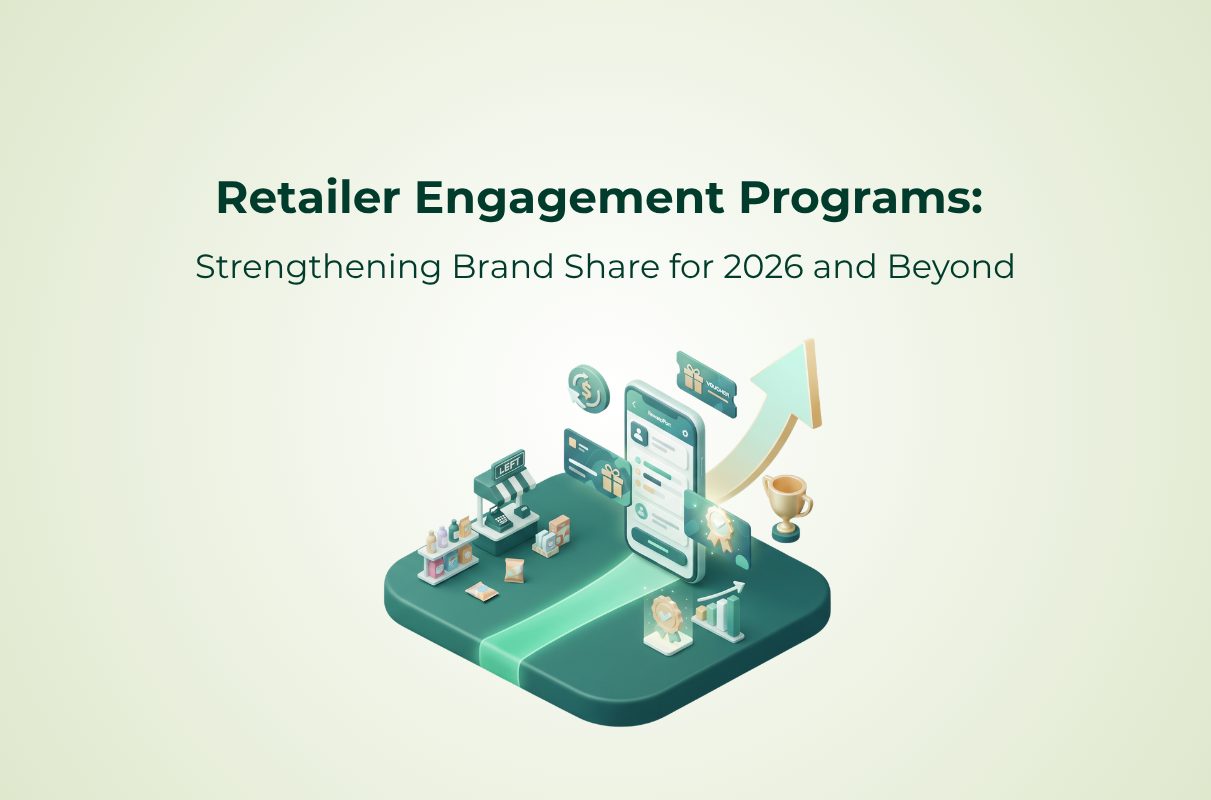
Retailer Engagement Programs: Strengthening Brand Share for 2026 and Beyond
In India’s dynamic retail market, strengthening brand share is increasingly reliant on effective retailer engagement programs. As businesses face intense competition and evolving consumer expectations, engaging retailers—not just end consumers—has become vital to sustaining and growing a brand’s presence on the shelf. Retailers act as critical influencers of purchase decisions, and well-crafted engagement strategies empower them to drive brand loyalty, advocacy, and sales performance.
Market Context and Consumer Behaviour in India
The Indian retail landscape is undergoing rapid transformation, marked by the growth of modern trade, increasing digital penetration, and diversified consumer preferences. Retailers, ranging from large chains to local Kirana stores, navigate complex challenges including inventory management, competitive pressure, and demand variability. Their engagement and motivation directly impact product visibility and sales acceleration.
Data from recent Indian retail studies highlight that retailers favor programs that are simple to access, offer instant rewards, and provide tangible business benefits. They also appreciate initiatives that improve their product knowledge and customer handling capabilities, boosting trust and long-term partnership potential with brands.
Trends Shaping Retailer Engagement Programs in 2026
Several emerging trends define the future of retailer engagement programs in India:
- AI-Driven Personalization: Brands are leveraging AI to tailor incentives and communications to individual retailer needs, improving relevance and effectiveness.
- Instant Digital Rewards: Instant cashback via UPI, digital vouchers for essentials, and experiential rewards create immediate motivation.
- Omnichannel Program Integration: Unified digital platforms allow retailers to track performance, redeem rewards, and access training resources seamlessly.
- Wellness and ESG Initiatives: Innovative programs include wellness benefits and sustainability-linked rewards, aligning brand values with those of retailers.
- Gamification Strategies: Leaderboards, badges, and tiered challenges enhance participation and product knowledge among retailers.
- Data-Driven Support: Analytics provide tailored market insights and proactive assistance to help retailers optimize sales.
Practical Implications for B2B Marketers and Channel Leaders
Marketers and channel leaders must design retailer engagement programs that transcend transactional interactions. Key practical considerations include:
- Easy Access and Instant Gratification: Retailers prefer programs with instant digital rewards, reducing friction and boosting participation.
- Engaging Content and Gamification: Interactive content and gamified elements support retailer training and sales contests, increasing engagement and brand familiarity.
- Multi-Channel Communication: Using apps, portals, and on-ground touchpoints ensures consistent retailer experiences and better data collection.
- Reward Catalog Diversity: Offering a broad mix of rewards—from essential vouchers to entertainment and travel incentives—addresses diverse retailer preferences.
- Measurable ROI and Analytics: Implementing technology platforms that track retailer engagement metrics enables data-driven program refinement and transparent ROI demonstration.
RewardPort’s Perspective and Solution Approach
At RewardPort, we specialise in delivering customised retailer engagement programs that align closely with contemporary market demands. Our digital reward fulfilment platform supports instant cashback, multi-brand vouchers, and experiential rewards that resonate with retailers’ needs for immediacy and relevance.
Our gamification engine introduces branded games, tiered challenges, and interactive leaderboards, proven to boost training participation and sales motivation. We also emphasise omnichannel integration through portals and mobile platforms, providing seamless access to campaign details and reward redemption.
Crucially, RewardPort analytics capabilities enable marketers to monitor participation, redemption trends, and overall program performance—delivering actionable insights that drive continuous improvement in brand share outcomes.
Verified RewardPort Case Study Insights
While specific clients remain confidential, RewardPort campaign implementations have demonstrated impactful learnings:
- A consumer electronics brand employed a gift-with-purchase model combined with monthly digital movie tickets to incentivise retailer push. This resulted in increased speed of sales and deeper retailer engagement.
- A premium FMCG client leveraged a QR Scan-to-Win instant cashback campaign among retailers, linking successful redemptions to enhanced product trials and repeat orders.
- Channel partner incentive programs integrating digital reward catalogs and tiered challenges boosted dealer motivation and increased brand visibility in competitive markets.
Recommendations for Implementing Effective Retailer Engagement Programs
To build and sustain retailer programs that strengthen brand share, marketers should:
- Deploy instant digital rewards complemented by experiential incentives to balance motivation and emotional connection.
- Integrate gamification elements to enhance learning and participation in training and sales contests.
- Leverage data analytics to offer personalised support and identify retailer-specific opportunities or roadblocks.
- Ensure seamless omnichannel access to program information and reward redemption to maintain high retailer satisfaction.
- Diversify reward options within the catalog to appeal to varied retailer profiles and preferences.
Effective retailer engagement programs are pivotal for Indian brands aiming to expand and consolidate brand share in 2026 and beyond. By embracing instant digital rewards, gamification, data-driven insights, and omnichannel delivery, brands can forge stronger, mutually beneficial retailer partnerships. RewardPort expertise and technology solutions are uniquely positioned to support such strategic efforts, helping businesses unlock measurable growth through empowered and loyal retail networks.
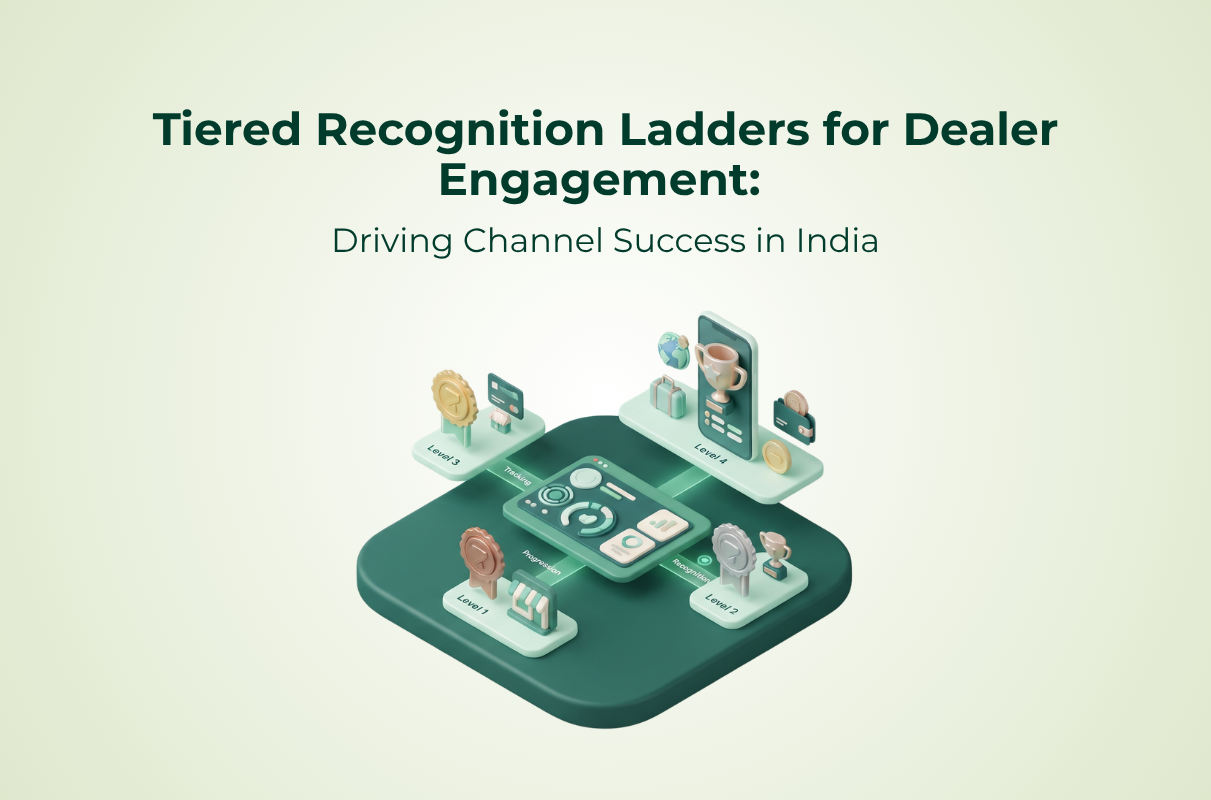
Tiered Recognition Ladders for Dealer Engagement: Driving Channel Success in India
In the rapidly evolving Indian market, tiered recognition ladders have become a vital strategy for businesses aiming to deepen dealer engagement and channel partner loyalty. These structured reward systems motivate dealers to achieve higher performance levels by offering incremental benefits that recognize loyalty and sales achievements. For organisations looking to strengthen their sales ecosystem, leveraging tiered recognition ladders aligned with contemporary incentives and technology can significantly enhance participation, repeat business, and overall channel vitality.
Market Context and Dealer Behaviour in India
The dynamic Indian distribution landscape is characterised by a highly fragmented channel with diverse dealer profiles. Dealers play a pivotal role in bridging branded products to the consumer market, making their motivation a critical success factor for businesses. Current market developments highlight a shift towards more personalised and performance-driven engagement models. Dealers today expect prompt, relevant rewards and digital engagement tools that integrate seamlessly with their sales routines. Trends point to upgraded CRM integrations and incentive programs powered by technology to deliver real-time rewards and insights.
Emerging Trends for 2026 and Beyond
By 2026, the industry is witnessing a surge in gamification and tiered loyalty models that allow dealers to ascend recognition ladders based on predefined KPIs such as sales volume, coverage expansion, or training completion. Digital reward fulfilment platforms have become essential, enabling instant gratification and rewarding incremental milestones. Multi-category reward catalogues, including travel, entertainment, multi-brand vouchers, and cashback, offer dealers choices tailored to their preferences. Additionally, hybrid incentive programs combining assured rewards with skill-building and recognition components are gaining traction.
Implications for B2B Marketers, HR, and Channel Leaders
Implementing tiered recognition ladders empowers channel leaders to segment dealers by performance tiers and design customised engagement strategies that increase motivation and loyalty. For trade marketers and HR leaders, such systems support structured career and reward pathways for dealers, which contribute to reduced attrition and higher productivity. Optimised dealer incentives linked to well-tracked KPIs improve measurable ROI, fostering transparent communication and ongoing engagement.
RewardPort Perspective and Solution Approach
At RewardPort, we understand the nuances of dealer engagement through tiered recognition ladders. Our dealer and distributor rewards programs leverage digital platforms and gamification engines to craft interactive, tier-based incentives that drive consistent dealer performance. We integrate instant digital rewards, multi-brand vouchers, cashback mechanisms, and experiential rewards from categories like travel and entertainment to suit dealer preferences. Our platforms offer seamless tracking, analytics, and participation insights, ensuring transparency and program optimisation.
Verified RewardPort Case Study Learnings
RewardPort has successfully deployed tiered loyalty programs for Indian FMCG and appliance brands, resulting in expanded dealer participation and uplifted sales. Our multi-tier dealer incentives included points accumulation with tier-based bonuses and redemption options using multi-brand vouchers and experiential rewards. One campaign demonstrated a tangible increase in repeat purchase rates and dealer motivation, showcasing how tiered recognition fosters sustained engagement and channel activation.
Recommendations for Implementing Tiered Recognition Ladders
- Define clear performance tiers: Establish achievable and transparent criteria based on sales targets, product knowledge, or market activation.
- Leverage technology platforms: Use digital portals and mobile apps to facilitate real-time tracking, participation, and instant reward fulfilment.
- Curate relevant reward catalogues: Balance aspirational rewards like travel and experiences with practical essentials and cashback options.
- Integrate gamification: Enhance engagement with leaderboards, challenges, and milestone badges that make participation enjoyable and competitive.
- Monitor and optimise: Use data analytics to track dealer activity, tailor communications, and refine reward structures for maximum impact.
Tiered recognition ladders are a strategic imperative for Indian businesses seeking to energise dealer engagement and channel performance. By systematically recognising and rewarding dealers at multiple levels, brands can unlock higher sales, foster loyalty, and build more resilient distribution networks. RewardPort expertise and solutions enable organisations to design and deploy sophisticated tiered dealer incentives aligned with modern preferences and technology, ensuring measurable benefits well into 2026 and beyond.
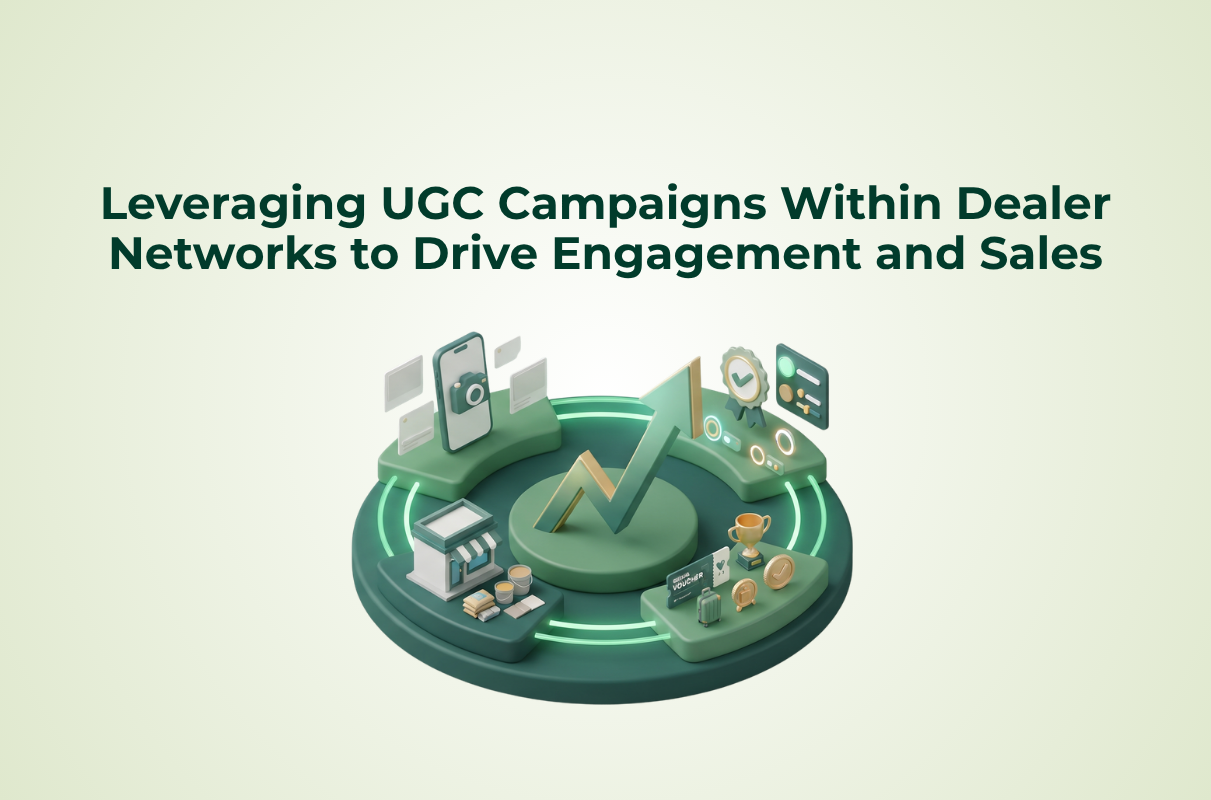
Leveraging UGC Campaigns Within Dealer Networks to Drive Engagement and Sales
User-generated content (UGC) campaigns are rapidly becoming a pivotal strategy for Indian businesses aiming to energize their dealer networks and strengthen brand advocacy. Within dealer networks, UGC campaigns unlock authentic engagement by encouraging dealers and their customers to participate actively in brand storytelling. From 2026 onward, this approach is shaping how companies build stronger channel connections, improve sales metrics, and gain measurable ROI in an increasingly digital and competitive landscape.
The Growing Importance of UGC Campaigns in Indian Dealer Networks
In India’s diverse and expanding retail ecosystem, dealer networks form the backbone of distribution and sales. Engaging these networks effectively requires innovative approaches that go beyond traditional incentives. UGC campaigns empower dealers to create and share authentic content, which resonates more deeply with local consumers. According to industry observations, consumers trust content from peers and dealers more than traditional advertising, making UGC a highly credible marketing tool especially valuable in markets with varied regional preferences.
2026 Trends Shaping UGC and Dealer Network Engagement
Looking ahead, Indian dealer networks will see a strong push towards digitalisation and user participation driven by mobile penetration and social media expansion. Key trends influencing UGC campaigns include:
- Gamification and Instant Rewards: Tying UGC submissions to gamified challenges and instant gratification campaigns boosts participation and excitement.
- Multi-Platform Integration: UGC collected via WhatsApp, QR codes, and social media integrates seamlessly with dealer CRM systems for better tracking and engagement.
- Tiered Incentives for Dealers: Structured reward programs offering escalating benefits based on participation quality and volume motivate sustained content creation.
- Localized Content Focus: Content tailored to regional languages and cultural contexts increases relevance and dealer pride.
Implications for B2B Marketers and Channel Leaders
For trade marketers, brand managers, and channel leaders, UGC campaigns present multiple benefits. They serve as organic brand endorsements, deepen dealer loyalty, and drive traffic to retail points. Tracking UGC participation helps identify top-performing dealers and enables customised support to boost weaker nodes. Sales incentive programs aligned with UGC also encourage upselling and repeat business, while employee engagement can be elevated by recognising dealers’ contributions as part of broader incentive structures.
RewardPort Strategic Approach to UGC Campaigns Within Dealer Networks
At RewardPort, we recognise the strategic potential of UGC campaigns in channel marketing. Our solutions are designed to harness this potential through:
- Dealer & Channel Partner Incentive Programs: Customised reward programs that motivate and recognise quality UGC contributions.
- Gamification Engine: Integration of branded gamified challenges that make content creation fun and rewarding.
- Instant Gratification and Cashback Campaigns: Immediate rewards using digital vouchers and UPI-based cashback to maintain momentum.
- Multi-Brand Vouchers and Experience Rewards: Offering choice—from travel and entertainment to essentials—aligns with diverse dealer preferences.
- Robust Campaign Analytics: Real-time tracking of participation and content performance ensures data-driven optimisation.
Verified RewardPort Case Study Learnings
One of RewardPort notable executions with a leading FMCG brand involved a dealer network UGC campaign tying content submissions to points and tiered rewards. This approach resulted in a 27% increase in active dealer participation and a measurable uplift in repeat orders. The campaign combined instant gratification rewards with experience-based incentives such as movie and travel vouchers—proving effective for building emotional connections and sustained engagement.
Practical Recommendations for Implementing UGC Campaigns in Dealer Networks
To maximise impact, Indian businesses should consider these key steps:
- Define Clear Objectives: Align UGC campaigns with specific goals like increasing footfall, boosting repeat purchase, or enhancing brand visibility.
- Incorporate Multi-Channel Engagement: Use SMS, WhatsApp, and QR codes for easy content uploading and sharing.
- Leverage Gamification: Integrate games or contests that reward content creation to sustain enthusiasm.
- Personalise Rewards: Offer dealer-preferred incentives including cashback, multi-brand vouchers, and experiential rewards.
- Utilise Analytics: Track participation, reward redemption, and correlation with sales to iterate and improve.
- Communicate Regularly: Use newsletters and social media updates to maintain excitement and recognise top contributors.
UGC campaigns within dealer networks represent a powerful tool for Indian businesses to enhance dealer engagement, build authentic brand advocacy, and drive measurable sales outcomes. As we move into 2026 and beyond, integrating these campaigns with RewardPort incentives and digital reward fulfilment platforms provides a scalable, data-driven way to energise channel ecosystems. Incorporating UGC campaigns within dealer networks in your strategy can deliver significant competitive advantage, deeper relationships, and sustainable growth.
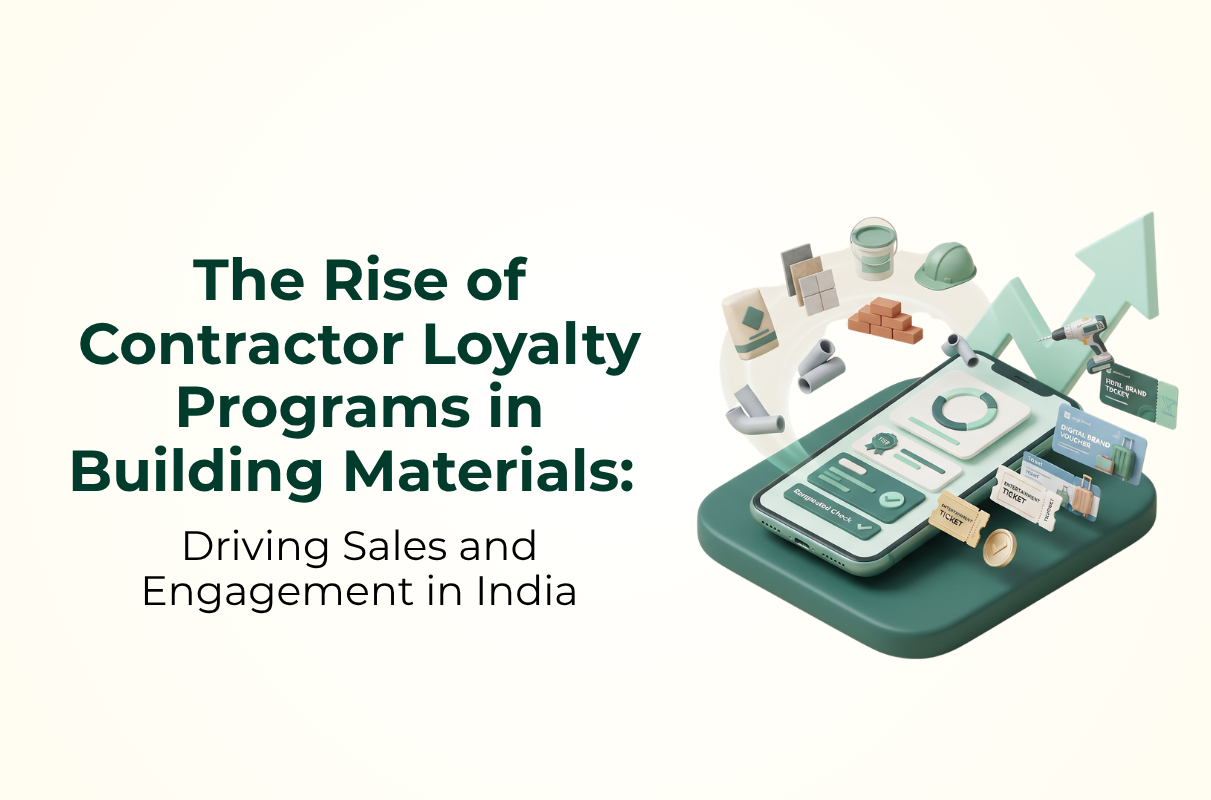
The Rise of Contractor Loyalty Programs in Building Materials: Driving Sales and Engagement in India
In India’s expansive building materials sector, contractor loyalty programs have emerged as pivotal strategies to strengthen ties with contractors and trade partners. These programs are not only reshaping how businesses engage this important audience but are also delivering measurable increases in sales performance and channel activation. For B2B marketers, trade marketers, brand managers, HR leaders, and channel teams, understanding this trend is essential in 2026 and beyond.
Market Context and Industry Developments
The Indian construction and building materials market is projected to grow robustly with increased infrastructure projects, government initiatives like Smart Cities, and urban housing demands. Contractors, key decision-makers and influencers in purchase cycles, demand tailored engagement approaches that reward loyalty and incentivize repeat business.
Traditional promotional methods are evolving, with contractors favoring programs that offer instant gratification, easy redemption, and relevant rewards. More companies are leveraging digital platforms to track participation and deliver rewards at scale, enhancing motivation and loyalty among contractors.
Emerging Trends in 2026
Key trends shaping contractor loyalty programs in building materials in 2026 include:
- Personalized Rewards: Custom rewards that align with contractor preferences such as power tools, multi-brand vouchers, travel, and entertainment
- Gamification and Instant Gratification: Incorporating gamified elements and instant win campaigns to boost enthusiasm and participation
- Digital Integration: Using mobile app-based tracking and redemption to streamline program interaction
- Cashback and UPI-based Rewards: Growing acceptance of cashbacks that improve liquidity and incentivize continued purchases
- Channel Partner Incentive Alignment: Programs that integrate dealer-distributor incentives with on-ground contractor engagement
Implications for Marketers and Channel Leaders
Marketers and channel leaders must adopt a multi-layered loyalty approach focusing on contractor segmentation, ease of participation, and reward relevance. The goal is to boost program engagement and foster long-term loyalty that delivers upsells, repeat purchase, and advocacy.
Additionally, real-time data analytics and campaign performance tracking help fine-tune rewards and communications, aligning incentives closely with business goals.
RewardPort Perspective and Solution Approach
At RewardPort, we specialise in channel partner incentive programs that adapt well to contractor loyalty needs in building materials. Our solutions feature:
- Dealer & Channel Partner Incentive Programs: Seamlessly integrated with CRM/ERP systems for automated participation and redemption.
- Instant or Tiered Cashback Campaigns: To incentivize frequent purchases and higher volumes.
- Multi-Brand Vouchers & Travel Rewards: Versatile reward catalogs catering to contractor preferences for flexibility.
- Gamification Engines & Digital Rewards: Enhancing enjoyment and motivation with branded games and instant wins.
- Campaign Analytics: Detailed insights into engagement and ROI to optimize ongoing campaigns.
Our technology platforms enable efficient campaign execution, tracking, and reward fulfilment ensuring transparent and satisfying user experiences.
Verified RewardPort Case-Study Insights
While specific building materials contractor programs are evolving, RewardPort experience with dealer loyalty and channel partner incentives in adjacent sectors demonstrates success in driving trade engagement. These programs have resulted in stronger participation through instant redemption rewards and gamification, leading to measurable sales uplift and improved brand salience.
Implementation Recommendations
1. Conduct contractor segmentation based on purchase behaviour and preferences.
2. Design tiered rewards combining instant gratification and aspirational prizes.
3. Integrate digital tracking for real-time monitoring of transactions.
4. Leverage multi-category rewards from travel to electrical appliances to enhance appeal.
5. Employ gamification to increase participation and extend program life.
6. Use campaign analytics to adapt and optimize incentives continuously.
The rise of contractor loyalty programs in building materials is a significant opportunity for Indian businesses looking to deepen engagement and drive sales. By adopting tailored, digitally enabled, and rewards-driven programs, companies can boost contractor motivation, improve repeat purchase rates, and activate their channel more effectively. RewardPort expertise and versatile incentive solutions are well positioned to support these evolving needs in 2026 and beyond.
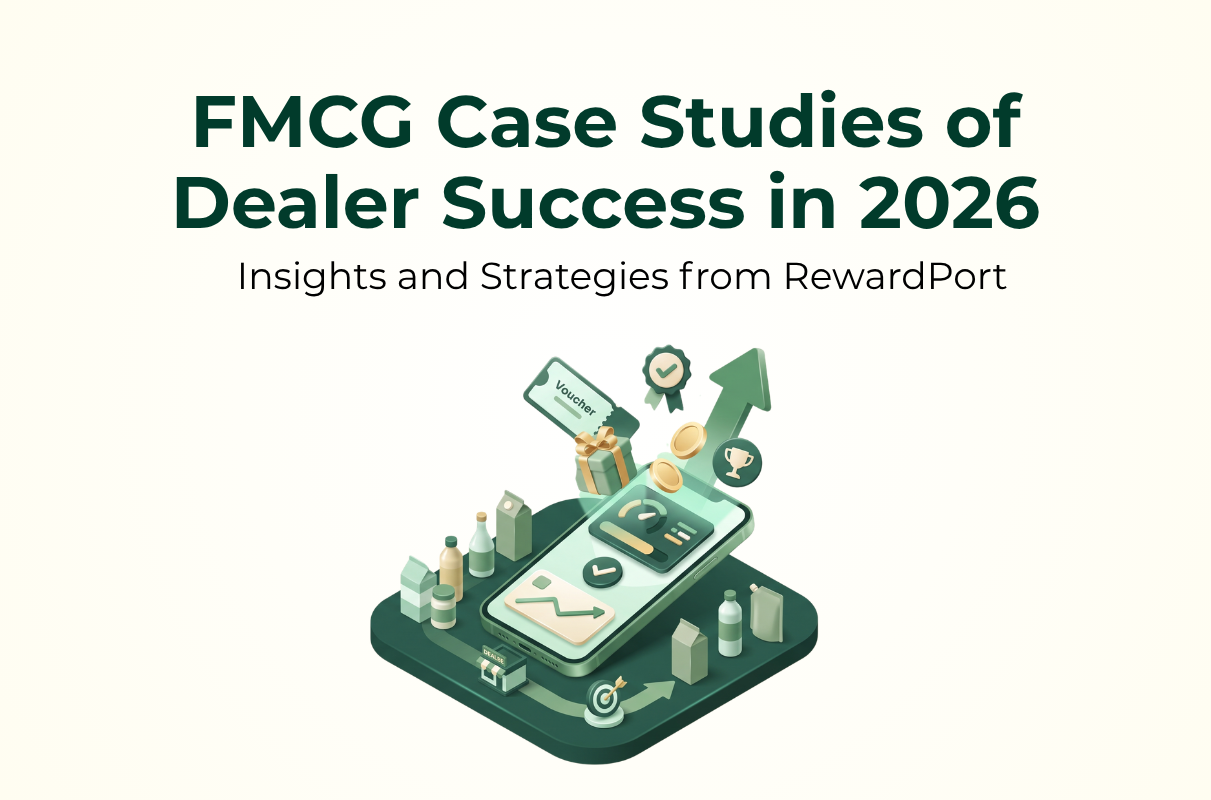
FMCG Case Studies of Dealer Success in 2026: Insights and Strategies from RewardPort
In 2026, the dynamics of FMCG distribution in India continue to evolve rapidly. Dealer success is a pivotal factor that determines brand market share and growth, especially in a diverse and competitive landscape. Understanding the proven strategies and emerging trends that enable FMCG dealers to thrive helps brands optimise channel engagement, sales performance, and customer loyalty.
Market Context: The Role of Dealers in India’s FMCG Ecosystem
Dealers and distributors remain critical intermediaries for FMCG companies, especially in tier 2 and tier 3 cities and rural markets. Their influence extends beyond mere stockists to active partners in promoting, selling, and servicing products. The move towards digital transformation and data-driven marketing has created new opportunities and challenges for dealers to engage consumers and maximise sales.
Emerging Trends Shaping FMCG Dealer Success in 2026
Several key developments are defining dealer success across FMCG segments in India this year:
- Hyper-Personalised Channel Incentives and Performance Gamification: Data-backed, instant reward programs linked with gamified sales targets increase dealer motivation and enhance participation.
- Integrated Loyalty Programs for Dealers and Consumers: Cross-linked loyalty platforms that reward consumer purchases with benefits for dealers strengthen on-ground push and retention.
- Instant Cashback and UPI-Based Reward Systems: The adoption of digital incentive payouts via UPI enhances trust and accelerates dealer reward redemption.
- Experiential and Wellness Rewards: Beyond monetary rewards, experiential travel, health packages, and skill development create emotional loyalty among top-performing dealers.
- Data-Driven Consumer Promotions at Retail Outlets: AI-powered local consumer insights help dealers offer targeted promotions, reducing wastage and improving conversion.
Practical Implications for Channel and Trade Marketers
For B2B marketers, trade marketing teams, and channel leaders, deploying the right mix of incentives and loyalty initiatives is crucial. Programs must be tailored to dealer segments with clear targets and quick reward gratification to sustain interest. Leveraging digital platforms integrates analytics, campaign management, and reward fulfilment to increase transparency and ease of participation.
RewardPort Perspective: Delivering Channel Partner Incentive Excellence
RewardPort specialises in creating impactful dealer and distributor incentive programs aligned with FMCG business goals. We facilitate digital-first campaigns featuring instant gratification rewards such as cashback, multi-brand vouchers, and catalog-based experiential rewards. Our platforms support gamification and tiered loyalty to motivate dealers at scale while delivering rich data analytics to optimise program ROI.
For instance, our proven model includes:
- Dealer engagement campaigns featuring QR scan-to-win cashback prizes combining assured and draw-based rewards.
- Loyalty programs with points, tiers, and multipliers driving repeat purchases by dealers and trade partners.
- Channel partner rewards integrating travel, entertainment, and wellness categories expanding beyond purely transactional benefits.
- Instant UPI and digital wallet payouts reducing delays and improving dealer satisfaction.
Verified RewardPort Case Study Learnings
While specific client confidentiality restricts naming, RewardPort deployment of dealer loyalty programs in the FMCG sector has delivered measurable results such as increased active participation rates, stronger repeat order frequency, and higher reward redemption engagement. Our gamified incentive campaigns have consistently boosted dealer sales performance and channel push effectiveness across diverse product categories.
Recommendations for Implementing Successful Dealer Incentive Programs
To maximise FMCG dealer success in 2026, brands should consider the following framework:
- Segment Dealers and Define Clear KPIs: Tailor programs based on sales volume, geography, and product mix to enhance relevance.
- Use Digital Platforms for Instant Rewards: Implement instant cashback, points, and digital vouchers to maintain dealer motivation.
- Incorporate Experiential and Non-Cash Rewards: Add travel, wellness, and entertainment options to create emotional loyalty.
- Enable Data-Driven Consumer Promotions: Equip dealers with local consumer insights to tailor offers.
- Monitor, Analyse, and Iterate: Use campaign analytics to optimise reward structures and engagement.
FMCG dealer success in 2026 hinges on a strategic blend of personalised incentives, digital rewards, and emotional engagement. RewardPort channel partner incentive expertise offers FMCG brands in India comprehensive solutions that drive participation, accelerate sales, and build loyalty in their dealer networks. By embracing digital transformation and innovative reward strategies, brands can create sustainable dealer success stories that translate into broader market leadership.
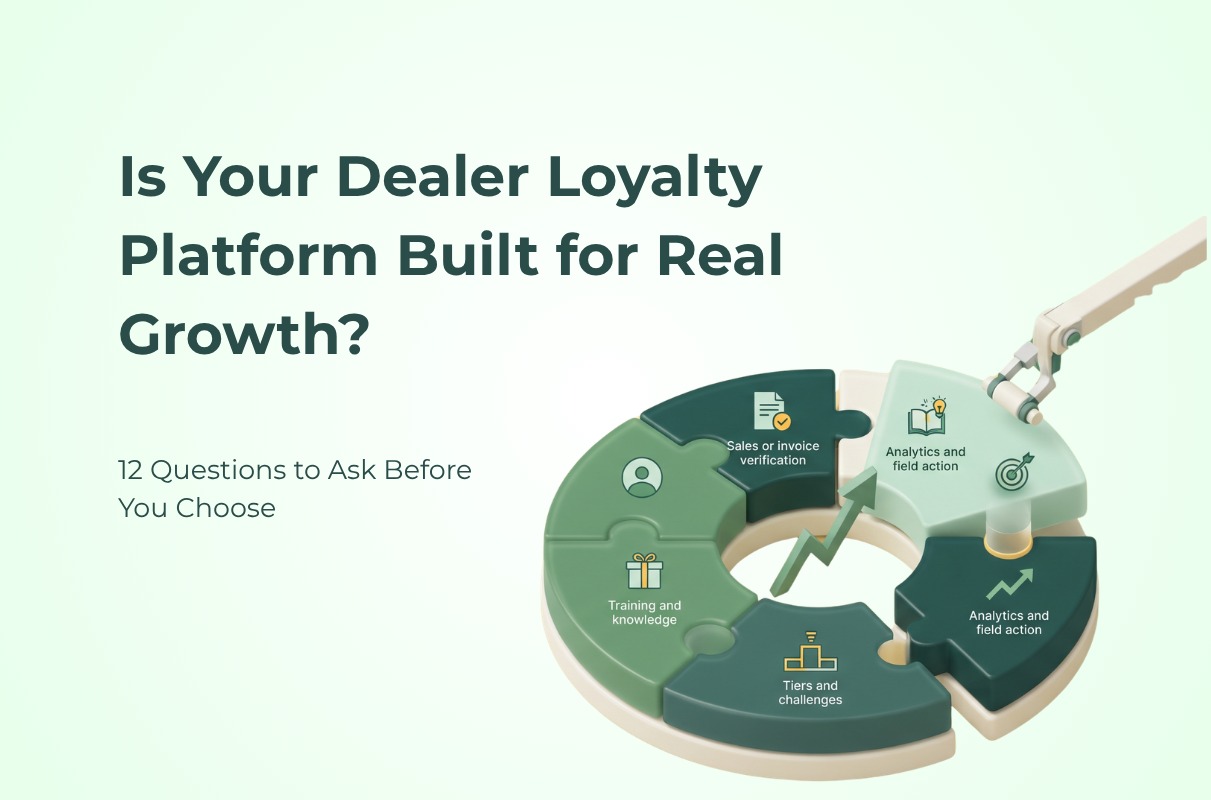
How to Choose a Dealer Loyalty Platform in India: A 12-Question Buyer’s Guide
Choosing a dealer loyalty platform should begin with one question:
Can this system influence and verify the business behaviours that actually matter?
A modern dealer loyalty platform should do much more than manage points, catalogues and dashboards. It should support partner identity, multi-tier rules, sales or activity validation, communication, training, challenges, relevant rewards, fraud controls, service operations, analytics and integration with the brand’s commercial systems.
Key Takeaways
- Begin with channel objectives and partner behaviour, not a feature checklist.
- Distinguish dealers, distributors, retailers, mechanics, contractors and influencers because they do not create value in the same way.
- Verify the source of every qualifying action before attaching a reward.
- Evaluate communication, capability building and operational support alongside payout technology.
- Select a partner that can convert program data into better actions for field teams and channel members.
What Is a Dealer Loyalty Platform?
A dealer loyalty platform is the operating system used by a brand to identify channel partners, communicate schemes, record and validate qualifying activities, calculate incentives, deliver rewards, resolve exceptions and analyse performance.
Depending on the industry and route to market, it may serve:
- Distributors
- Dealers
- Retailers
- Stockists
- Mechanics
- Contractors
- Architects
- Technicians
- Other trade influencers
Channel partners are independent businesses rather than a captive employee audience. That distinction matters because their participation must continually earn attention and demonstrate value.
Why Catalogue-Led Selection Produces Weak Programs
Many platform-selection conversations begin with questions such as:
How many vouchers are available?
Does the platform support points?
Can it make payouts?
Does it have a leaderboard?
These are legitimate questions, but they begin too late in the process.
A catalogue cannot correct unclear scheme communication.
A points engine cannot establish whether reported sales are valid.
A leaderboard cannot improve product knowledge by itself.
And an attractive app does not automatically solve duplicate membership, inactive partners, field-team adoption or disputed claims.
The better buying question is:
Can this system help us create, verify and improve the channel behaviour that produces growth?
The RewardPort Channel Growth Stack
The article proposes a seven-layer framework for evaluating a dealer loyalty platform.
1. Identity
The platform should create a reliable partner record covering role, geography, channel tier, business identity, language, consent and relevant hierarchy.
It should also be able to manage duplicate records, changes in ownership and inactive members.
2. Visibility
Brands need an approved source of truth for relevant activity.
Depending on the program, this could include:
- Primary sales
- Secondary sales
- Invoice uploads
- Unique product codes
- Target achievement
- Visibility evidence
- Training
- Referrals
3. Capability
Channel growth can depend on knowledge as much as stock.
Where relevant, the platform should support scheme explanation, product learning, question answering, quizzes, certifications or field-guided support.
4. Motivation
Rules, tiers, challenges, milestones, streaks and recognition should make the desired behaviour clear and attainable.
Gamification should support a commercial objective rather than create activity merely for its own sake.
5. Verification
The system should validate an action before calculating its reward value.
Depending on the program, verification could involve ERP or distributor data, invoice review, OCR-assisted bill parsing, QR or code validation, approved images, location signals or human review for exceptions.
6. Value
Rewards should fit both the partner segment and the effort required.
Depending on the program, options can include cashback, vouchers, merchandise, cinema, travel, experiences, business benefits or recognition.
The same reward catalogue does not necessarily need to be shown to every participant.
7. Intelligence
The platform should help brand, sales and channel teams understand participation, sales, learning, claims, risk, reward preferences and next actions.
The objective is to use program data to improve the next scheme, field conversation and partner intervention.
12 Questions to Ask Every Dealer Loyalty Platform Provider
1. Which Business Behaviours Can the Program Influence?
Ask the provider to connect platform capabilities directly with your objectives.
These might include:
- Incremental sales
- Product mix
- New-product trial
- Outlet coverage
- Training
- Display compliance
- Referrals
- Service quality
- Data capture
2. Can the Rules Reflect Our Actual Channel Structure?
Test whether the platform can accommodate distributors, dealers, retailers and influencer hierarchies, along with:
- Territories
- Product categories
- Tiers
- Overlapping roles
- Target periods
- Exclusions
- Approval levels
3. What Is the Source of Truth for Each Qualifying Action?
Do not accept “sales data” as a complete answer.
Establish whether qualification is based on:
- ERP
- DMS
- Distributor uploads
- Invoices
- QR codes
- Unique codes
- Image evidence
- Manual approval
- A reconciled combination of sources
4. How Are Duplicates, False Claims and Collusion Handled?
Ask for the fraud and exception framework.
It should consider duplicate identities, repeated invoices or codes, abnormal submission velocity, shared devices, suspicious clusters, rejected claims, override rights and audit trails.
5. How Will Partners Understand the Scheme?
Evaluate the complete communication journey, including:
- Onboarding
- Language
- WhatsApp or app communication
- Scheme explainers
- Balance visibility
- Reminders
- Expiry messages
- Grievance support
A complex scheme that partners do not understand can underperform regardless of the reward value.
6. Can the Platform Improve Partner Capability?
If product knowledge or selling quality matters, evaluate whether the platform can support appropriate learning journeys, text or voice assistance, quizzes, certifications and targeted content.
7. How Flexible Is the Incentive and Challenge Engine?
Test the platform’s ability to manage:
- Slabs
- Thresholds
- Tiers
- Accelerators
- Team challenges
- Limited-time missions
- Non-sales actions
- Approval flows
- Negative adjustments
- Rule changes and version history
8. How Are Rewards Matched to Different Partners?
Ask whether reward choice can vary according to:
- Tier
- Geography
- Role
- Achievement
- Preference
Also examine delivery times, expiry, cancellation, failed fulfilment and replacement handling.
9. What Will the Field Sales Team See and Do?
A dealer loyalty platform should not become an isolated marketing portal.
Field users may need visibility into:
- Partner status
- Scheme understanding
- Unresolved issues
- Learning gaps
- Opportunity signals
- Recommended actions
10. What Integrations Are Genuinely Required?
Map potential integrations across ERP, CRM, DMS, SFA, finance, messaging, KYC, payment, catalogue and analytics systems.
Separate launch-critical integrations from later enhancements so that the pilot does not become an endless technology project.
11. How Will the Program Be Operated After Launch?
Clarify responsibility for:
- Onboarding
- Data processing
- Claims
- Approvals
- Support
- Reward catalogue
- Communication
- Reconciliation
- Tax documentation
- Fraud review
- Reporting
- Change requests
12. How Will We Know Whether the Program Worked?
Agree on the metrics, baseline, comparison logic, reporting cadence and decision rights before launch.
The provider should be able to explain how campaign activity connects with commercial outcomes.
Dealer Loyalty Platform Comparison Scorecard
Score each area from 0 to 3:
0 = Absent | 1 = Largely manual/limited | 2 = Operationally adequate | 3 = Strong and configurable
| Evaluation Area | Weight | What Strong Looks Like |
|---|---|---|
| Objective & Rule Fit | 15% | Rules map to real channel behaviours and hierarchies |
| Data & Verification | 15% | Clear source of truth, validation and audit trail |
| Partner Experience | 10% | Simple onboarding, communication, balance and support |
| Capability Building | 10% | Targeted learning and knowledge support where required |
| Motivation Design | 10% | Flexible tiers, challenges, recognition and non-sales actions |
| Reward Architecture | 10% | Relevant choice, reliable fulfilment and segment control |
| Fraud & Governance | 10% | Preventive controls, exception process and role-based access |
| Analytics & Actions | 10% | Decision-ready views for brand, sales and field teams |
| Integration & Scale | 5% | Practical APIs, batch routes and performance fit |
| Service Operations | 5% | Clear SLAs, reconciliation, support and change management |
The weighting should change according to the use case.
For a high-value product-code program, verification and fraud may deserve greater weight. For a product-education program, capability building and field action may matter more.
Agency vs Software Platform vs Rewards Provider vs Integrated Operator
| Model | Strength | Common Limitation | Best Fit |
|---|---|---|---|
| Promotion/Loyalty Agency | Strategy, creative, communication and managed execution | May depend on separate technology or fulfilment systems | Brands requiring a managed campaign with limited integration |
| Software Platform | Rules, automation, APIs and direct administrative control | Brand may need to assemble strategy, operations, support and rewards separately | Teams with mature internal program operations |
| Rewards/Payout Provider | Fast access to value distribution | Can become a transaction layer without behaviour design or channel intelligence | Programs with already-defined rules and verified outcomes |
| Integrated Operator | Connects strategy, technology, verification, rewards, operations and analytics | Requires disciplined scoping to avoid unnecessary complexity | Brands seeking one accountable operating model |
The correct model depends on the organisation’s internal capabilities.
The important requirement is that no critical job is left without an owner.
A Phased Dealer Loyalty Platform Implementation Process
Phase 1: Channel Diagnosis
Interview sales, trade marketing, finance, technology, field teams and a sample of channel partners.
Document objectives, available data, current schemes, disputes and adoption barriers.
Phase 2: Behaviour and Economics Design
Define segments, qualifying actions, source of truth, baseline, incentive rules, caps, liability, exception handling and success measures.
Phase 3: Pilot Build
Launch with a bounded geography, partner group or product category.
Include actual operations and support—not merely a demonstration interface.
Phase 4: Adoption and Field Activation
Train field teams, simplify partner onboarding, communicate the value clearly and monitor where participants abandon or misunderstand the journey.
Phase 5: Evaluation and Scale
Compare commercial and behavioural performance with the agreed baseline.
Resolve data, rules and support issues before adding features or expanding nationally.
Dealer Loyalty Metrics That Matter
Commercial Metrics
- Incremental sales or contribution against baseline
- Product mix and target achievement
- Active outlet or partner coverage
- Cost per incremental outcome
Engagement Metrics
- Eligible versus enrolled partners
- Monthly active and transacting partners
- Challenge, learning and communication participation
- Repeat activity and tier progression
Operational Metrics
- Claim-processing time and approval rate
- Data latency and reconciliation errors
- Reward-delivery success and support-resolution time
- Field-team adoption and unresolved exceptions
Fraud & Governance Metrics
- Duplicate identities, invoices or codes
- Abnormal submission patterns
- Manual overrides and reasons
- Fraud loss and prevented liability
An Illustrative Building-Materials Scenario
Assume a building-materials brand wants to grow a new premium range through dealers and contractor influencers.
Billing alone will not reveal whether partners understand the product or recommend it correctly.
The program therefore rewards a combination of:
- Verified sales
- Product-learning completion
- Approved project referrals
- Selected visibility actions
Different activities use different evidence.
Sales come from approved commercial data. Learning comes from platform completion. Referrals require qualification. Visibility evidence follows a defined review process.
Dealers may receive tier progression and business-relevant benefits, while contractors may prefer smaller, faster rewards.
Field teams can see who is close to a milestone, who has a learning gap and where claims are being rejected.
Important: This is an illustrative design and not a published RewardPort case study.
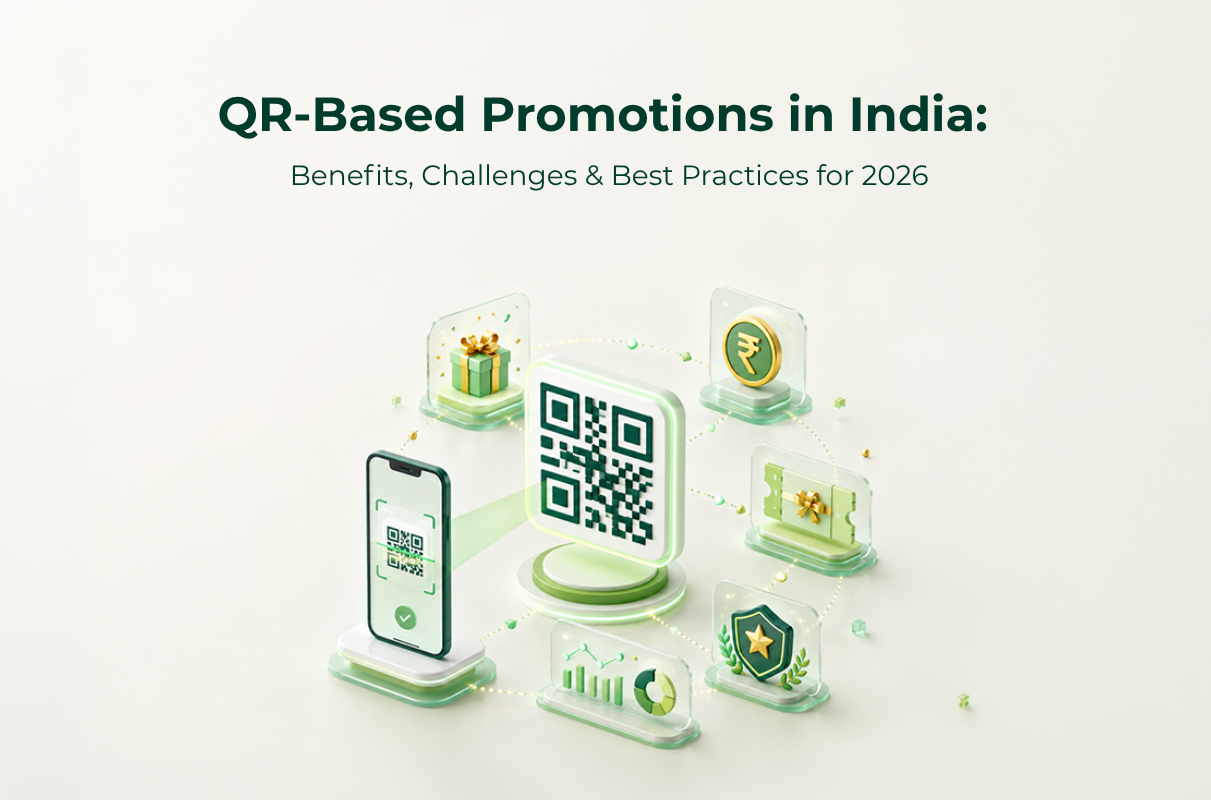
QR-Based Promotions in India: Benefits, Challenges & Best Practices for 2026
In the evolving landscape of Indian marketing, QR-based promotions have emerged as a pivotal tool for brands and businesses to engage consumers, partners, and employees. By 2026, leveraging QR technology effectively represents a significant opportunity for marketers to drive participation, sales, and loyalty. This article explores why QR-based promotions matter for Indian businesses, the latest market dynamics, challenges, and best practices, all from RewardPort perspective.
Understanding the Market Context and Consumer Behavior
India’s deep adoption of digital payments, primarily propelled by the Unified Payments Interface (UPI), has created a fertile ground for QR-based interactions. Consumers are highly accustomed to scanning QR codes for everyday transactions, which sets a natural stage for brands to integrate promotions and loyalty programs seamlessly. This mass familiarity extends from urban metros to Tier 2 and Tier 3 cities, making QR-based promotions a cost-effective way to reach a broad demographic.
Moreover, QR codes enable real-time data collection on consumer preferences, purchase patterns, and geographic insights, empowering marketers with actionable analytics for personalized offers. These insights help shape consumer promotions and loyalty campaigns that resonate more effectively with their target audiences.
Emerging Trends in QR-Based Promotions for 2026
Looking ahead, several key trends are shaping QR-based promotions in India:
- Enhanced Reward Variety: Beyond instant cashback and digital vouchers, brands are increasingly offering experiential rewards such as movie tickets, dining vouchers, and wellness subscriptions, tapping into evolving consumer expectations.
- Instant Gratification: QR codes facilitate immediate reward redemption, critical for generating quick participation and loyalty, especially in consumer and employee engagement programs.
- Integrated Digital Ecosystems: QR scanning is becoming seamlessly integrated with CRM and ERP systems to harmonize channel partner incentive schemes, dealer rewards, and sales incentive management on a single platform.
Challenges Indian Businesses Face with QR-Based Promotions
Despite the benefits, there are notable challenges to consider:
- Digital Divide and Connectivity Gaps: Uneven smartphone penetration and internet access in rural India can limit campaign reach and inclusivity.
- Consumer QR Fatigue and Security Concerns: Overexposure to QR campaigns or fears about fraudulent codes can reduce trust and participation.
- Technological Integration Complexity: Combining QR campaigns with diverse reward catalogs like cashback, multi-brand vouchers, and experiential rewards requires robust backend infrastructure.
Practical Implications for B2B and Trade Marketers
Marketers, brand managers, and channel leaders must design QR-based promotions that balance clear value propositions with seamless user experiences. For channel incentivization, QR codes printed on product packaging or invoices can allow dealers and retailers to instantly claim rewards, boosting transparency and motivation. For consumer promotions, QR scans can trigger immediate discounts, loyalty points, or sweepstakes entries.
RewardPort Perspective and Solution Approach
RewardPort leverages its expertise through digital reward fulfillment platforms and a diverse reward catalog to support impactful QR-based promotions. Our offerings include instant gratification rewards, cashback and UPI-based incentives, multi-brand vouchers, and entertainment options like movie tickets and travel experiences, aligning with Indian consumer preferences.
We also support integrated channel partner incentive programs where QR codes enable performance tracking and real-time rewards, enhancing dealer and distributor engagement. Our gamification engine and WhatsApp redemption flows further enrich user experiences, making QR-based promotions more interactive and accessible across customer and channel touchpoints.
Verified RewardPort Case-Study Learnings
RewardPort has facilitated multiple brand promotions employing QR scan-to-win campaigns and instant cashback rewards that have driven repeat purchases and higher engagement. For example, a festive QR Scan-to-Win campaign combining digital vouchers, OTT subscriptions, and travel prizes yielded a measurable uplift in sales and customer participation. Such campaigns highlight the effectiveness of instant gratification and diversified rewards in maintaining consumer interest in QR promotions.
Best Practices and Implementation Framework
- Clear and Incentive-Driven CTAs: Clearly communicate rewards via the QR code to overcome consumer hesitation and QR fatigue.
- Mobile-Optimized and Multilingual Support: Provide streamlined scanning and redemption experiences accessible to diverse Indian audiences.
- Robust Security Measures: Use verified QR codes to build trust and mitigate fraud concerns.
- Data-Driven Personalization: Leverage real-time analytics to tailor offers dynamically, boosting relevance and ROI.
- Reward Variety: Combine instant cashback, experiential, and wellness rewards to appeal to different consumer segments.
Implementing these strategies within RewardPort integrated digital platforms ensures scalable, measurable, and audience-aligned campaigns.
QR-based promotions stand as a cornerstone tactic in India’s marketing ecosystem for 2026 and beyond. By understanding benefits and challenges and adhering to best practices, businesses can significantly enhance consumer and partner engagement while driving sales and loyalty. RewardPort specialized digital reward solutions and strategic insights equip Indian brands and channel leaders to harness the full potential of QR-based promotions with measurable outcomes and sustainable growth.
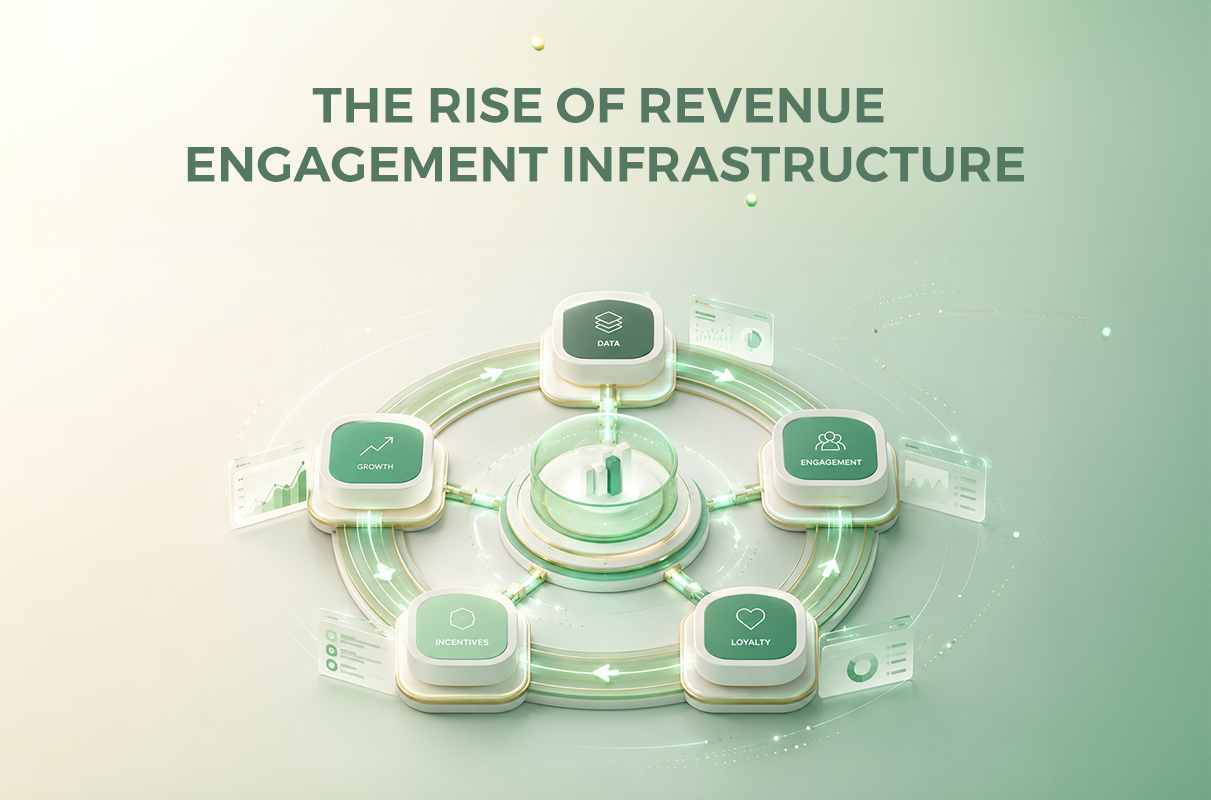
The Rise of Revenue Engagement Infrastructure: Why Loyalty, Rewards, AI, and Experiences Are Converging
For years, businesses have invested separately in marketing, loyalty programs, customer rewards, employee engagement, travel incentives, CRM platforms, and AI tools. Each function served a specific purpose, from acquisition and retention to participation and efficiency.
But today, these areas are no longer working in isolation. Enterprise budgets are starting to converge around one larger goal: influencing customer, employee, and partner behavior in ways that directly drive revenue.
This shift is creating a new category called Revenue Engagement Infrastructure, a connected layer that brings together customer action, incentives, experiences, retention, and revenue outcomes.
What Is Revenue Engagement Infrastructure?
Revenue Engagement Infrastructure is the layer that sits between customer behavior and business outcomes.
Its purpose is simple: to influence actions that lead to revenue.
The companies that will win over the next decade will not simply collect data. They will influence decisions.
The new engagement stack looks like this:
Customer Action → Incentive → Experience → Retention → Revenue
Every step in this chain matters.
A customer takes an action. An incentive encourages the next action. An experience creates emotional value. Retention increases. Revenue follows.
Historically, businesses managed each step independently. Today, technology allows these steps to be connected into one intelligent engagement system.
Why Traditional Loyalty Programs Are Losing Impact
Most loyalty programs were designed for a different era.
Customers would earn points, collect rewards, and redeem them later. But today, consumers are overwhelmed by points and memberships.
Most people cannot remember how many loyalty programs they belong to. Even fewer actively engage with them.
The strongest loyalty programs today are built around engagement, not accumulation. They use:
- Gamification
- Instant rewards
- Surprise benefits
- Exclusive access
- Experiences
- Personalized offers
The goal is no longer just to create members. The goal is to create meaningful customer behavior.
Why Experiences Are Becoming More Valuable Than Discounts
Consumers increasingly value experiences over transactions.
A discount may be forgotten quickly, but a memorable experience creates a story.
Travel, entertainment, dining, attractions, events, and exclusive access generate emotional engagement that traditional rewards often struggle to match.
This is why experience-based rewards are becoming a powerful loyalty currency. Their perceived value is often far greater than their actual cost.
For businesses, this creates a strong engagement lever. For customers, it creates something memorable and worth talking about.
The AI Layer Changes Everything
Artificial intelligence is often discussed as a productivity tool. But the bigger opportunity lies in decision-making.
The next generation of AI systems will not simply generate content or reports. They will help determine:
- Which customer should be engaged
- What reward should be offered
- Which experience is most relevant
- When communication should happen
- How much incentive is required to drive action
This transforms AI from a reporting tool into a revenue engine.
The future belongs to systems that recommend and execute, not systems that simply observe.
Why Enterprise Budgets Are Converging
Marketing, loyalty, rewards, employee engagement, channel incentives, travel experiences, CRM, and AI are increasingly being funded from the same strategic objective: revenue growth.
Organizations are realizing that these outcomes are deeply connected:
- Retention
- Engagement
- Customer lifetime value
- Employee motivation
- Channel partner productivity
- Repeat purchases
- Brand advocacy
A dealer incentive program, a customer loyalty initiative, an employee recognition platform, a travel rewards marketplace, and an AI engagement engine may look different on the surface.
But they are all trying to do one thing: influence human behavior.
That is why the boundaries between these categories are disappearing.
The Next Big Opportunity
The next billion-dollar companies in engagement technology will not be only loyalty companies, travel companies, or AI companies.
They will be companies that combine all three.
They will own the decision layer between action and outcome.
They will know:
- Who to engage
- What to offer
- Which experience to recommend
- When to trigger the interaction
And they will do it at scale.
This is where Revenue Engagement Infrastructure becomes powerful. It connects data, incentives, experiences, and decision-making into one system designed to drive measurable business outcomes.
Final Thought
The future is not about building better dashboards.
It is not about creating more points programs.
It is not about adding another AI chatbot.
The future belongs to organizations that can systematically influence behavior.
The winners will sit between:
Customer Action → Incentive → Experience → Retention → Revenue
That space is becoming one of the most important opportunities in modern business.
And we are only at the beginning.
About the Author
Javed Akhtar Is a serial entrepreneur and the founder of RewardPort, tripXOXO, and EdgeInnovate. He is a business leader and thought leader in loyalty, rewards, customer engagement, and AI-driven marketing. He is also the author of Marketing Then, Now, and AI: Evolving Strategies for the Future, a practical guide focused on hyper-personalization, AI-generated content, and ethical innovation in modern marketing.
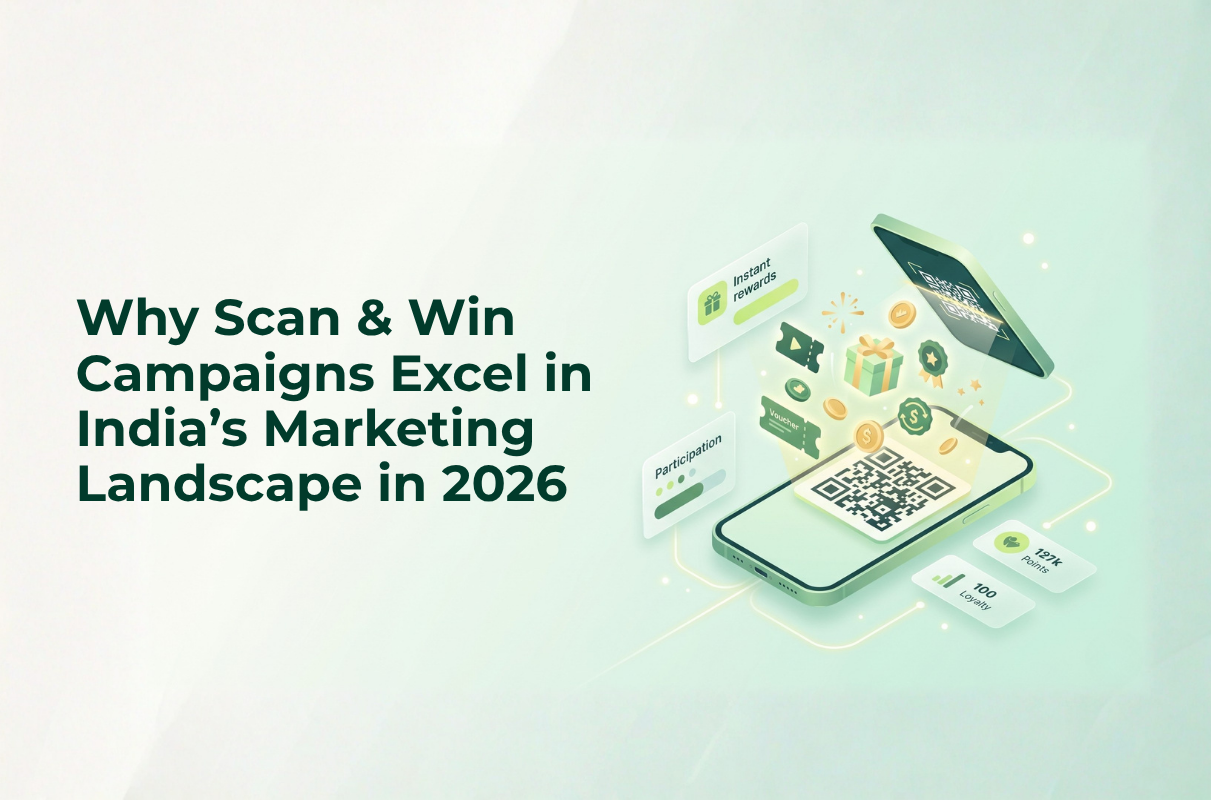
Why Scan & Win Campaigns Excel in India’s Marketing Landscape in 2026
India’s consumer marketing arena is evolving rapidly, fueled by skyrocketing digital adoption and changing reward preferences. Among the diverse promotion strategies, Scan & Win campaigns have emerged as especially effective in engaging consumers and energizing channel partners. As India moves through 2026, these campaigns continue to lead India’s digital promotions, blending gamification, instant gratification, and data-driven personalization. At RewardPort, India’s specialist in consumer promotions, loyalty, and channel incentives, we draw on key trends and real-world successes to demonstrate why Scan & Win campaigns work so well in India—and how businesses can leverage our solutions to maximize impact.
India’s Digital Ecosystem Fuels Scan & Win Popularity
India’s smartphone user base is projected to surpass 1 billion by 2026, accompanied by massive uptake of digital payment methods such as UPI, which is expected to cross $10 trillion in transactions. This widespread digital penetration creates fertile ground for QR-based Scan & Win campaigns, where consumers can effortlessly scan codes with their mobiles and instantly participate. The instant gratification of receiving immediate digital rewards or chances to win appeals strongly to Indian consumers, particularly millennials and Gen Z, who crave engaging, real-time experiences. This seamless digital journey, powered by RewardPort QR Scan to Win modules and integrated cashback engines, removes friction in participation and amplifies consumer enthusiasm.
Gamification and Dynamic Rewards Drive Deeper Engagement
Gamification is a critical factor behind Scan & Win campaigns’ success in India. The thrill of chance-based wins combined with assured rewards creates a fun, interactive experience that boosts active campaign participation and repeat purchases. RewardPort portfolio includes over 100 gamified branded games that can be embedded within campaigns to enhance engagement further. Moreover, evolving consumer preferences highlight a shift from simple cashback or digital vouchers toward more personalized, experiential rewards—ranging from travel vouchers (AirPac, VacPac) to wellness packages and exclusive entertainment access. Our diverse reward catalog enables brands to tailor incentives that resonate uniquely with their target segments for higher motivation.
Empowering Channel Partners and Retailers Through Digital Incentives
Scan & Win campaigns extend benefits beyond consumers to channel partners and retailers. Traditional incentive disbursement often involves complex manual tracking, but digital Scan & Win platforms facilitate transparent, instant reward distribution, strengthening channel loyalty and performance. RewardPort Channely program integrates seamless CRM/ERP systems to provide real-time incentive management, enhancing motivation among trade partners. For example, the Delhi Duty Free tiered loyalty program powered by RewardPort showcased significant uplift in repeat purchases by rewarding both shoppers and retailers, demonstrating the power of structured incentives.
Leveraging Data for Personalization and ROI Optimization
A major advantage of Scan & Win campaigns is the rich first-party data generated during consumer participation—from scanning behavior to reward redemption preferences. Brands can harness RewardPort’s analytic tools to segment and personalize future marketing efforts, creating targeted promotions that drive deeper loyalty and efficient marketing spend. This data-driven approach helps businesses forecast trends, optimize reward mix, and customize communication, ensuring campaigns remain relevant and engaging in an increasingly competitive market.
RewardPort Case Studies: Real-World Successes
Several RewardPort-led campaigns illustrate the effectiveness of Scan & Win strategies in India: – Bikaji: The festive QR Scan-to-Win campaign combined OTT, pizza, and travel prizes to spark substantial festive sales growth and brand engagement. – Aaradhana Foods: Incorporating cashback QR codes inside packs alongside grand prize draws led to increased repeat purchases, showcasing the power of assured rewards plus gamified excitement. – Delhi Duty Free: By implementing a tiered loyalty and incentive model, the brand witnessed higher repeat visits and increased sales, proving the value of ongoing engagement.
Practical Guidance for Marketers and Channel Leaders
For B2B marketers, trade marketers, and HR/channel incentive leaders aiming to harness Scan & Win campaigns effectively in India, key takeaways include: – Align execution methods to your target segment: Youth gravitate towards OTT, gaming, and food rewards; families prefer travel and dining incentives; channel partners value travel clubs and multi-brand catalogs. – Combine instant rewards (cashback, assured vouchers) with grand prizes or tiered loyalty systems to balance fun and achievability. – Use digital platforms that effortlessly integrate with your CRM and ERP systems for streamlined channel partner incentives. – Tap into RewardPort plug-and-play modules to deploy quick-to-launch, customizable campaigns backed by a robust catalog covering travel, entertainment, food, wellness, and essentials.
Scan & Win campaigns stand out as a winning marketing approach in India’s digitally empowered landscape. They blend India’s technology-driven consumer behavior with gamification, instant rewards, and channel incentives to create campaigns that engage deeply and deliver measurable business impact. RewardPort expertise and solutions are uniquely positioned to help brands design, implement, and optimize these campaigns, ensuring relevance and success well into 2026 and beyond.
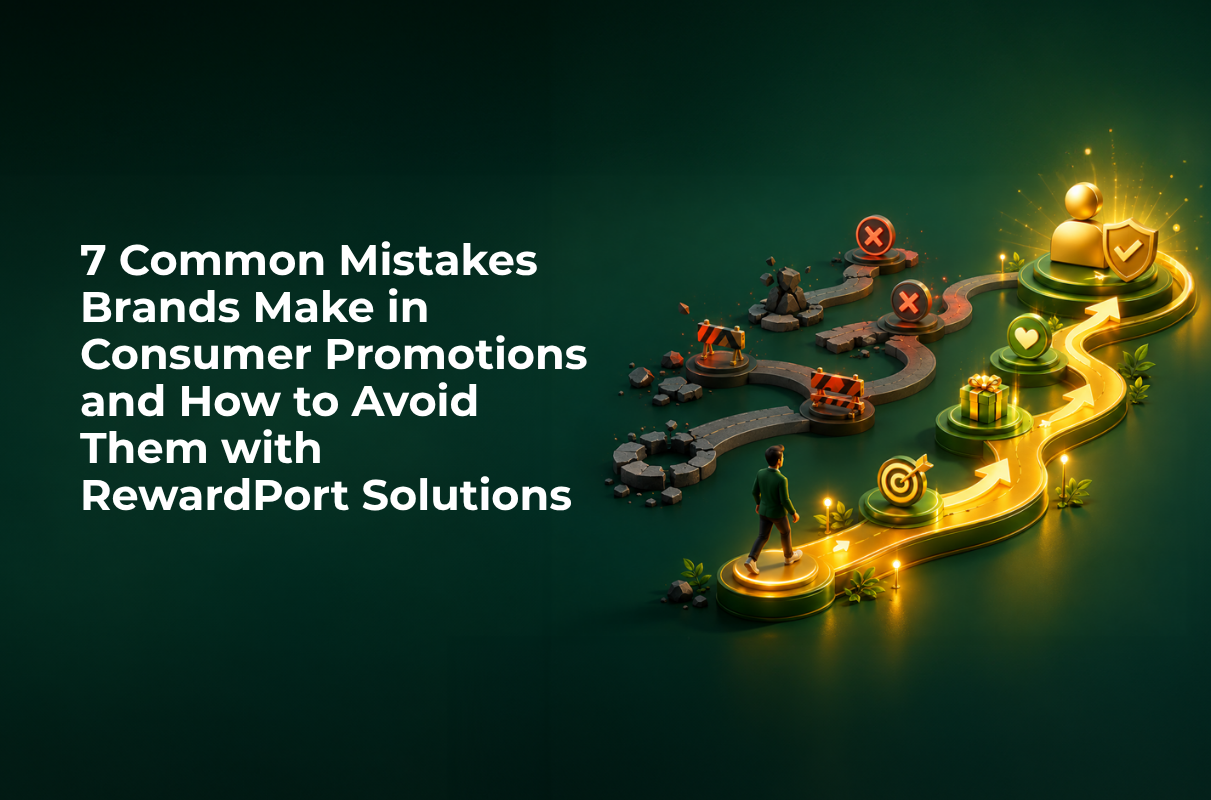
7 Common Mistakes Brands Make in Consumer Promotions and How to Avoid Them with RewardPort Solutions
Discover 7 common consumer promotion mistakes brands make and how RewardPort India-centric solutions maximize engagement, loyalty, and ROI in 2026.
7 Common Mistakes Brands Make in Consumer Promotions and How to Avoid Them with RewardPort Solutions
Consumer promotions remain a powerful tool for brands to engage customers, drive sales, and build loyalty. Yet, as the Indian market evolves dynamically towards 2026, many brands stumble over common pitfalls that limit their promotion’s effectiveness. At RewardPort, India’s consumer promotion specialist, we’ve helped 750+ clients engage 7M+ customers annually by avoiding these errors with strategic program design, best-in-class execution models, and a rich rewards catalog tailored for Indian consumers.
Lack of Integrated Strategy: Prioritize Long-Term Engagement over Short-Term Sales
Brands often chase quick sales uplift without integrating promotions into a broader customer lifecycle strategy. This fragmented approach delivers transactional gains but misses out on building lasting relationships. RewardPort advocates a holistic approach covering Acquisition → Trials → Repeat → Upsell → Loyalty → Referral cycles. Our Loyalty Programs with points, tiers, and multiplier systems support sustained engagement, as demonstrated in our work with Being Human where 500k+ members saw a 27% repeat purchase increase.
Generic & Irrelevant Offers: Leverage Personalization for India’s Diverse Consumers
India’s diversity demands hyper-personalized promotions. Generic offers miss consumer relevance, leading to lower engagement. RewardPort uses data-driven insights to tailor campaigns and rewards from our extensive catalog—spanning travel experiences through VacPac and AirPac, entertainment like OTT subscriptions and movie tickets, to food, wellness, and essentials. For example, Amy’s Kitchen’s layered rewards boosted trial among varied segments with food plus movie/dining tiers.
Overly Complex Redemption: Enable Seamless, Instant Reward Experiences
Complex redemption processes deter participation. Indian consumers expect quick, simple digital redemptions. Our WhatsApp Redemption Flow, Cashback Engine, and instant voucher systems ensure frictionless reward experiences. Aaradhana Foods’ cashback QR inside pack demonstrated how assured cashback plus appliance draws triggered repeat purchases by offering straightforward incentives.
Inadequate Multi-Channel Communication: Amplify Promotion Awareness Across India’s Fragmented Media
Many brands struggle to communicate promotions effectively across India’s digital and traditional channels. RewardPort integrated execution methods—from QR Scan-to-Win and WhatsApp to Spin the Wheel and Contest engines—enable omnichannel reach that cuts through clutter. Bikaji’s festive QR Scan-to-Win campaign combined OTT, pizza vouchers, and travel prizes for broad festive uplift.
Neglecting Post-Campaign Analytics: Harness Data to Optimize Future Campaigns
Without robust analytics, brands miss insights into consumer preferences and ROI. RewardPort platforms track redemption and engagement in real-time, enabling data-backed optimization. This analytic rigor supports evolving campaign tactics aligned with dynamic Indian market trends.
Underestimating Channel Partner Role: Empower Partners with Incentives and Tools
Channels, especially kiranas and traditional retailers, are critical last-mile players yet often under-incentivized. RewardPort Dealer & Channel Partner Incentive Programs, integrated CRM/ERP tools, and tiered loyalty drive channel motivation and superior execution. Infra Market’s quarterly dealer loyalty points scheme boosted trade engagement measurably.
Uninspired & Undifferentiated Rewards: Offer Unique, Experiential, and Wellness Benefits
Simple discounts no longer excite Indian consumers who seek experiences and wellness benefits. Our rich rewards catalog includes travel vacations, wellness apps, spa/salon vouchers, and exclusive experiences—moving beyond monetary discounts to delight consumers. Britannia’s assured voucher plus holiday prize format exemplified reward-led penetration growth.
Elevate Consumer Promotions with RewardPort Expert Solutions
Effective consumer promotions in India require strategic integration, personalized engagement, simple redemption, omnichannel communication, data analytics, channel empowerment, and differentiated rewards. RewardPort end-to-end solutions and expansive reward catalog are designed precisely to address these needs, enabling brands to drive sustained growth and customer loyalty in 2026 and beyond.
Cross-Industry Trade Engagement Success: Proven Strategies and RewardPort Insights for 2026
Explore cross-industry trade engagement success strategies, leveraging digital rewards, gamification, and personalized incentives with RewardPort expertise.
Cross-Industry Trade Engagement Success: Proven Strategies and RewardPort Insights for 2026
Trade engagement is increasingly pivotal for brands in India aiming to thrive in a competitive, digitizing market. From FMCG to telecom, and automotive to consumer electronics, successful trade engagement fosters loyalty, drives sales, and empowers channel partners. In this article, we explore cross-industry examples and insights on trade engagement success trends in India, emphasizing RewardPort tailored solutions that enable businesses to supercharge their incentives and loyalty programs.
Context: The Evolving Landscape of Trade Engagement in India
India’s market exhibits a fast-evolving blend of digital and physical (phygital) engagement strategies. According to recent industry insights, the use of hybrid engagement models combining digital reward redemption platforms with traditional in-store touchpoints has become a dominant method. This approach bridges urban and rural consumers and adapts to increasingly savvy channel partners who expect seamless communication and timely rewards. Further, personalized incentives powered by AI and data analytics are transforming how brands motivate and recognize dealers and resellers.
Key Trends Driving Cross-Industry Trade Engagement Success
Several overarching trends stand out in cross-industry trade engagement success in India: – Phygital Rewards and Instant Redemptions: Across sectors, instant digital cashback and voucher rewards via UPI and digital wallets have shortened the feedback loop of incentives, encouraging quicker sales cycles and repeat business. – Gamification of Channel Incentives: Telecom, FMCG, and consumer electronics sectors increasingly deploy gamified contests and leaderboards to create healthy competition among dealers, boosting performance and engagement. – Personalized and Tiered Incentive Structures: Top-performing dealers now receive bespoke rewards—not just monetary but experiential—motivating continued loyalty and higher sales. – Skill Development and Digital Enablement: Beyond financial rewards, brands are empowering their trade partners with digital tools and training, fostering a more competent and connected sales ecosystem. – Wellness and Sustainability Rewards: Aligning incentives with wellness programs and sustainable consumer values reflects evolving urban consumer priorities, particularly for premium product segments.
RewardPort Role in Trade Engagement Success
RewardPort stands at the forefront of these trends, enabling brands to implement mission-critical incentive and loyalty programs that drive measurable trade engagement results. We offer a suite of plug-and-play modules such as Channely for channel partner incentives and RewardOne for custom voucher catalogs that fit diverse industry needs. Our gamification engine with over 100 branded games, cashback systems, and instant digital voucher redemptions empower businesses to create engaging, timely, and personalized programs for trade partners. For example, by leveraging instant digital rewards and gamified leaderboards, brands have reported marked uplifts in dealer participation and sales growth. Additionally, RewardPort travel and entertainment rewards catalog — including AirPac, VacPac, and CineRewardz — taps into aspirational and experiential rewards favored across segments, bolstering dealer motivation and loyalty.
Case Study Patterns Reflecting Cross-Industry Engagement Success
Successful Indian campaigns illustrate varied but proven approaches: – A leading telecom brand implemented gamified leaderboards with instant cashback rewards, resulting in increased sales performance and improved dealer satisfaction. – FMCG brands driving festive QR Scan-to-Win campaigns combined assured cashback with travel prizes and food vouchers, leading to significant repeat purchases. – Dealer loyalty programs with tiered points and quarterly redemption windows have boosted engagement for industrial clients, reinforcing recurrent trade partner participation. These patterns underscore RewardPort flexible and scalable solutions catered to diverse trade engagement challenges and goals.
Trade engagement success in India demands a nuanced, data-driven, and digitally enabled approach. Cross-industry insights reveal the effectiveness of instantaneous, personalized, and gamified incentives combined with experiential rewards. RewardPort award-winning platform and rich rewards catalog provide the ideal foundation for brands to capitalize on these trends and foster deeper, sustained trade relationships.
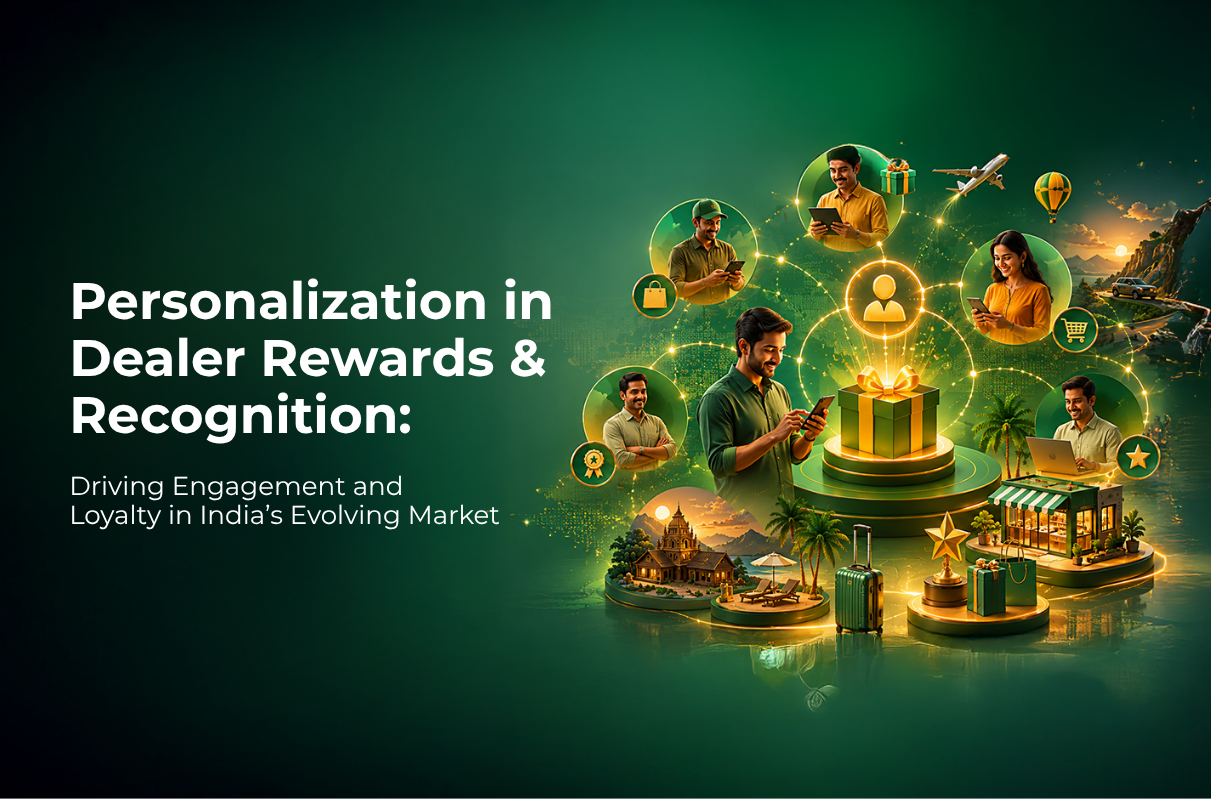
Personalization in Dealer Rewards & Recognition: Driving Engagement and Loyalty in India’s Evolving Market
Explore how hyper-personalization transforms dealer rewards and recognition in India, enhancing engagement with AI-driven insights and tailored incentives.
Personalization in Dealer Rewards & Recognition: Driving Engagement and Loyalty in India’s Evolving Market
Personalization in dealer rewards and recognition has become a critical strategy for businesses in India aiming to foster stronger channel partner engagement, loyalty, and motivation. As the Indian market matures and digital transformation accelerates, traditional reward models are rapidly evolving into hyper-personalized, data-driven programs that meet individual dealer preferences and regional nuances. This evolution not only boosts dealer satisfaction but also drives better business outcomes by aligning rewards with dealer aspirations and cultural context.
The Shift Toward Hyper-Personalization in Dealer Incentives
Leading organizations are adopting AI and machine learning to analyze dealer data—performance metrics, demographics, past reward redemptions, and regional behavior—to craft personalized incentive programs. This data-driven approach goes beyond basic segmentation, predicting the most effective reward types and communication channels for each dealer, enhancing the relevance and impact of rewards. In India’s diverse dealer ecosystem, this technology-driven personalization is becoming a key differentiator for sustained channel engagement.
Expanding Reward Choices: Experiential and Wellness Incentives
While cashback and digital vouchers remain staples, there is a visible shift towards experiential and wellness rewards tailored to the dealer’s lifestyle and cultural preferences. These include skill development workshops, family vacations, exclusive event access, and wellness-related incentives such as health check-ups and fitness memberships. Such rewards resonate more deeply on a personal level and inspire greater dealer loyalty, reflecting their aspirations beyond traditional financial rewards.
Instant and Digital Reward Fulfillment
With the growing expectation for instant gratification, personalized dealer programs increasingly offer instant digital rewards. These can range from curated digital vouchers to UPI-based cashback or direct bank transfers, selected based on the dealer’s preferred payout method and brand affinities. This immediacy not only enhances dealer satisfaction but also facilitates smoother reward redemption experiences, critical for maintaining high engagement levels.
Gamification and Continuous Recognition
Gamified elements such as personalized leaderboards, achievement badges, and sales challenges are being integrated into dealer incentive programs. These features provide continuous recognition aligned to individual dealer milestones, fostering ongoing motivation rather than one-time rewards. Customized gamification experiences, hosted on user-friendly platforms, help sustain engagement and create a dynamic, competitive dealer environment.
Regional and Cultural Sensitivity
India’s linguistic and cultural diversity demands a regionally sensitive approach in dealer rewards. Programs embed regional festivals, local product preferences, and communication styles into their personalization strategies. Rewards such as local gift vouchers or region-specific experiential tours honor cultural distinctiveness and strengthen emotional ties with dealers, particularly in rural and tier 2/3 markets.
Dealer Self-Service Portals: Empowering Customization
Advanced dealer portals now enable channel partners to track performance, view personalized reward catalogs, and choose reward categories that match their preferences—whether wellness-focused, experiential, or cashback-based. This empowerment fosters a deeper sense of ownership and participation in the reward program, increasing overall effectiveness and satisfaction.
RewardPort Perspective: Seamless Personalization Powered by Proven Solutions
At RewardPort, we understand these evolving trends and the imperative of personalization in dealer rewards. Our platform is designed to integrate rich data analytics for hyper-personalized campaign execution. Utilizing a variety of execution methods—from gamification and instant cashback to channel partner incentive programs and referral rewards—we help businesses drive targeted and impactful dealer engagement. Our extensive reward catalog supports varied personalization needs, featuring popular experiential rewards like VacPac holidays, wellness vouchers for spa and fitness memberships, curated multi-brand gift vouchers, and instant digital rewards tailored to dealer preferences. Coupled with Plug-and-Play modules such as Channely for seamless dealer engagement and RewardOne for custom voucher engines, RewardPort delivers end-to-end personalization at scale. Notably, successful campaigns for clients like Infra Market and Bikaji demonstrate how leveraging personalization through dealer loyalty points or festive QR scan-to-win formats can result in significant trade engagement growth and festive season uplift respectively. These case studies underscore the business impact achievable by adopting personalized dealer recognition programs.