
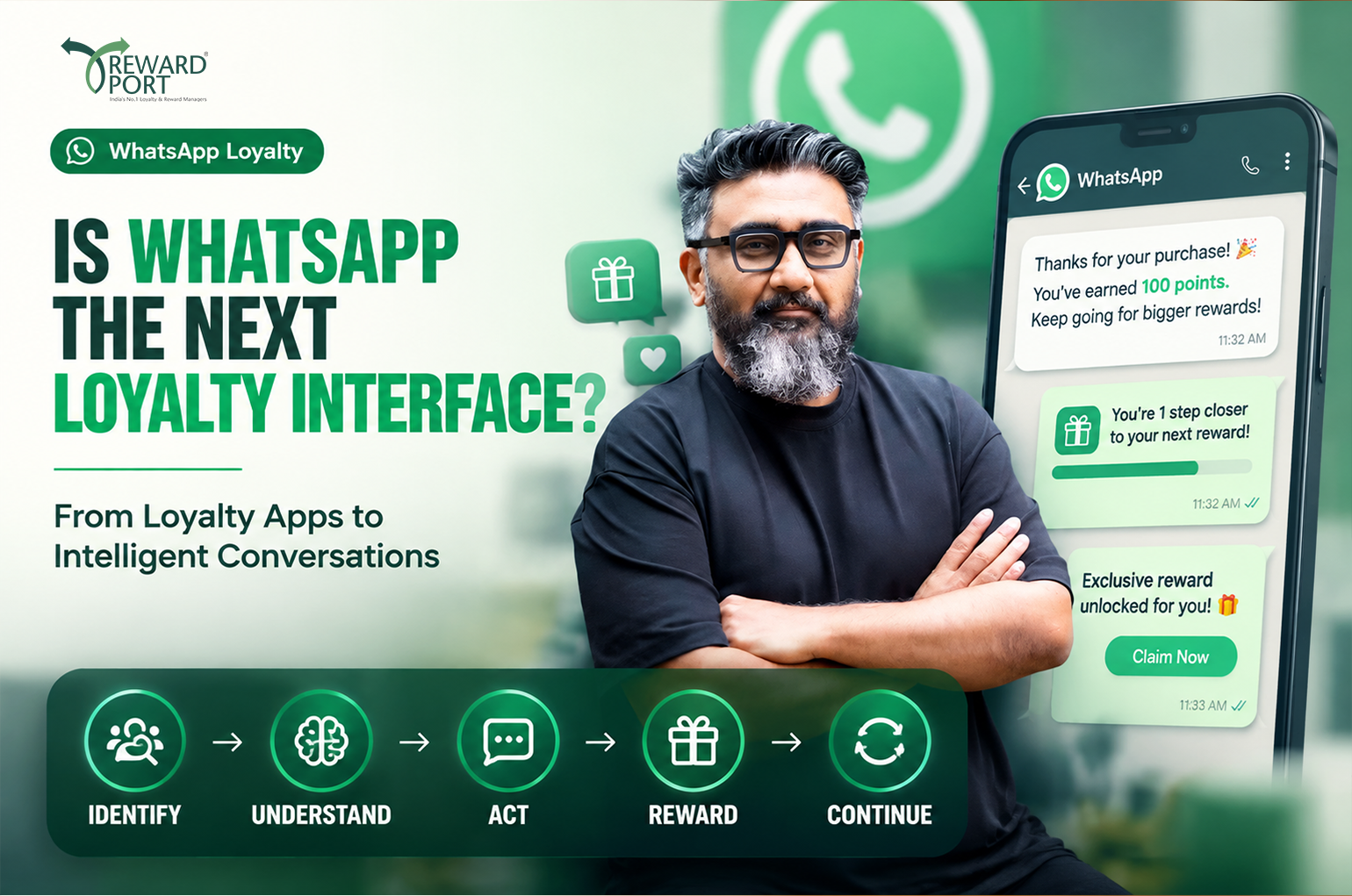
WhatsApp is moving well beyond messaging.
In India, consumers can already use it for payments, prepaid mobile recharges, metro ticketing, business conversations and other everyday services. Meta is also introducing AI capabilities that can answer questions, recommend products, capture leads, book appointments and facilitate increasingly sophisticated commercial interactions.
At the same time, CRED founder Kunal Shah has been appointed global head of WhatsApp.
For loyalty leaders, these developments belong in the same conversation.
The question is no longer simply:
Should a brand use WhatsApp to communicate with loyalty members?
The more interesting question is:
Could WhatsApp become the interface through which loyalty itself happens?
The discussion below explores that possibility. It is a strategic interpretation of WhatsApp’s evolving capabilities—not a claim about Meta’s future product roadmap.
Kunal Shah Now Runs WhatsApp. Loyalty Leaders Should Pay Attention.
In June 2026, Meta appointed Kunal Shah, founder of CRED, as global head of WhatsApp, succeeding Will Cathcart.
Shah’s career has revolved around payments, rewards, membership, financial services, repeat behavior and customer engagement.
There is no evidence that WhatsApp will become CRED.
But the overlap between Shah’s experience and WhatsApp’s evolving direction makes the development particularly interesting for loyalty leaders.
The bigger question is what happens when a platform already embedded in consumers’ daily behavior becomes increasingly capable of supporting commerce, payments, AI and customer service.
WhatsApp Is Becoming a Place Where People Do Things, Not Just Talk
WhatsApp’s role in India has steadily expanded beyond person-to-person messaging.
Meta has added prepaid mobile recharges and access to UPI payments and metro services. It has also been expanding WhatsApp’s capabilities for businesses.
That changes the strategic role of the platform.
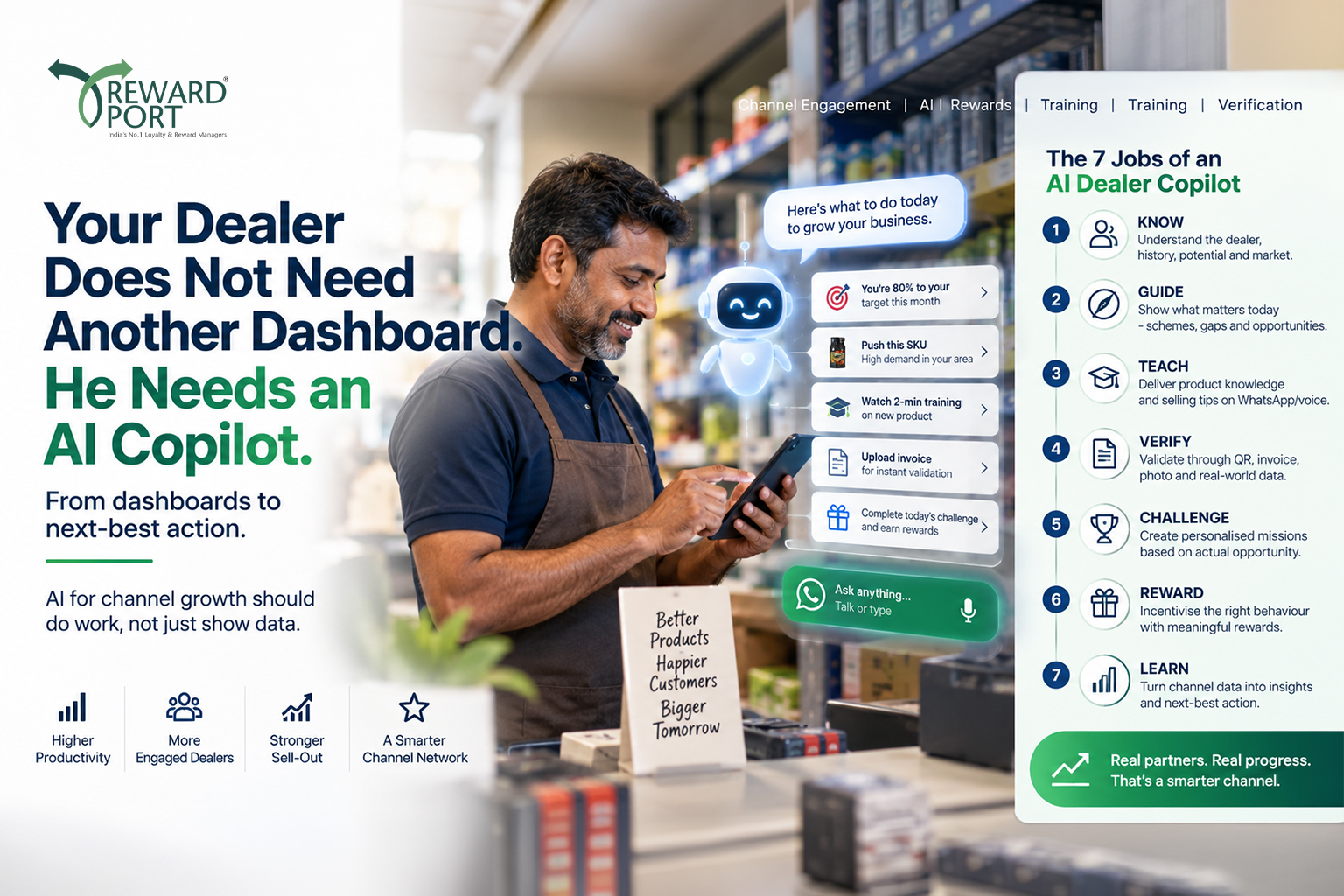
WhatsApp is increasingly becoming an environment where a conversation can potentially lead to an action without forcing the customer to move across multiple disconnected interfaces.
For loyalty programs, that matters.
Then Came Business AI
Meta launched Business AI on WhatsApp for small businesses in India in May 2026.
According to Meta, Business AI can support activities such as:
- Answering customer questions
- Capturing leads
- Booking appointments
- Recommending products
- Handing complex conversations back to a business owner
Meta also said Business AI would begin facilitating UPI payments directly inside chats.
The significance for loyalty is not simply automation.
It is the possibility of bringing understanding, action and transaction into the same conversational environment.
WhatsApp Is Increasingly Being Positioned as a Commerce Engine
Meta has described WhatsApp as an emerging commerce engine connecting discovery, purchase and post-purchase journeys within conversations.
The company has also highlighted the broader movement of Indian e-commerce from traditional search-and-transact journeys toward discovery, AI, short-form video and conversational messaging.
This raises an important question for brands:
If discovery, service and transactions can increasingly happen conversationally, why should every loyalty interaction require a separate destination?
Loyalty Has Historically Been a Destination
Most traditional loyalty programs ask customers to go somewhere.
Download an app.
Log in.
Check the balance.
Browse the catalogue.
Choose a reward.
Redeem.
Return later.
That model works particularly well in categories such as airlines, hotels, banking and large marketplaces, where customers may have sufficient reasons to engage frequently with a dedicated environment.
But not every consumer brand has enough standalone utility to justify another app or loyalty destination.
This creates what we can call the loyalty destination problem.
WhatsApp could change that relationship.
What If Loyalty Became a Conversation Instead?
Imagine a customer asking:
“How many points do I have?”
“I bought another pack today. Does my streak continue?”
“What can I redeem for my family?”
“My reward hasn’t arrived. Can you help?”
In a connected loyalty environment, these questions could potentially be answered without forcing customers to navigate through a separate interface.
Instead of asking customers to learn the program’s navigation structure, the program could begin understanding the customer’s intent.
That creates a different model for loyalty engagement.
The Conversational Loyalty Loop
A potential conversational loyalty journey can be expressed as:
Identify → Understand → Act → Reward → Continue
Identify
Recognizes the participant appropriately.
Understand
Connect relevant loyalty, transaction, status and service context.
Act
Allow the customer to verify, ask, register, redeem or request assistance.
Reward
Trigger the appropriate reward, benefit or response.
Continue
Make the next useful action clear.
The experience becomes less about navigating a loyalty system and more about having a useful interaction with it.
This Is Different From Putting a Chatbot on Top of Loyalty
Traditional WhatsApp automation is often menu-driven.
A customer may receive options such as:
Press 1 for Balance
Press 2 for Rewards
Press 3 for Support
Generative AI introduces the possibility of a different experience.
Instead of requiring customers to understand the menu, the system can potentially understand the customer’s request.
The interface moves from:
Navigation → Understanding
That distinction could significantly influence how future loyalty journeys are designed.
Why Kunal Shah Arrival Makes the Question More Interesting
Shah has spent years working around a fundamental consumer-engagement challenge:
How do you make people come back?
WhatsApp already possesses something most loyalty programs spend significant resources trying to create:
A high-frequency conversation habit.
This suggests an interesting potential architecture:
Messaging = Interface
Where the customer interacts.
AI = Understanding Layer
Where intent and context can be interpreted.
Payments = Transaction Layer
Where relevant transactions can happen.
Loyalty = Continuity Layer
Where past behavior, current status and the next valuable action are connected.
Again, this is not a claim about Meta’s roadmap.
It is a strategic possibility for how conversational loyalty could evolve.
Does This Mean Loyalty Apps Are Finished?
No.
The more useful question is:
Which loyalty interactions actually require a dedicated app?
Apps remain valuable when brands need:
- Complex account management
- Deep product or reward discovery
- Rich dashboards
- Extensive reward catalogues
- Location-based functionality
- High-frequency branded experiences
- Sophisticated member functionality
But many simpler loyalty interactions may not require a separate app.
Checking progress, asking about eligibility, finding a reward, reporting a missing benefit or understanding the next milestone could potentially happen conversationally.
The Loyalty App May Increasingly Become Infrastructure
The loyalty technology itself does not disappear.
The loyalty engine can remain behind the scenes.
So can:
CRM → Verification → Reward Fulfilment → Analytics → Fraud Controls → Transaction Systems
The difference is what the customer sees.
Instead of opening several screens, the customer may simply ask:
“What can I redeem?”
or:
“How close am I to my next reward?”
The technology becomes infrastructure.
Conversation becomes the experience.
Why India May Be Particularly Suited to Conversational Loyalty
India combines several behaviors and infrastructure layers that make conversational loyalty particularly interesting:
- Widespread WhatsApp usage
- UPI adoption
- Familiarity with QR-led interactions
- Mobile-first behavior
- Multilingual markets
- Large retailer and dealer ecosystems
- Increasing conversational commerce adoption
Meta cited a 2025 Kantar study stating that 91% of online adults in India chat with a business weekly.
For loyalty leaders, this means the conversational habit may already exist.
The challenge is turning that habit into genuinely useful loyalty interactions.
Five Loyalty Journeys That Could Move Into WhatsApp
1. Consumer Promotion to Ongoing Relationship
A customer enters a promotion through a QR code or other campaign mechanic.
Instead of the relationship ending after reward fulfilment, WhatsApp could become a continuing engagement interface.
2. Repeat-Purchase and Streak Programs
Customers could potentially check progress, verify qualifying actions and understand their next milestone conversationally.
3. Dealer and Retailer Loyalty
Trade partners could interact with programs without constantly navigating complex portals for basic queries and actions.
4. Reward Discovery
Instead of browsing an extensive catalogue, participants could ask:
“What can I redeem for my family?”
or:
“Show me entertainment options within my balance.”
5. Service Recovery
Missing rewards, verification questions, failed fulfilment or eligibility issues could be handled in the same conversation.
But Conversational Loyalty Could Go Wrong Quickly
There is an obvious danger.
If conversational loyalty becomes:
SALE!
BUY NOW!
LAST CHANCE!
POINTS EXPIRING!
brands will simply move promotional spam into a more personal channel.
That could damage rather than strengthen the relationship.
The guiding principle should therefore be:
Usefulness before frequency.
The objective should not be sending more messages.
It should be making valuable customer actions easier.
Fraud and Trust Will Become Part of Loyalty Design
Moving loyalty into a conversational interface does not remove the need for robust infrastructure.
Conversational loyalty still requires:
- Identity controls
- Transaction validation
- Fraud monitoring
- Reward controls
- Data governance
- Appropriate consent and communication management
Meta itself continues to introduce anti-scam protections for WhatsApp.
Convenience cannot come at the expense of trust.
Five Rules for Conversational Loyalty
1. Utility Before Promotion
Every interaction should provide genuine value.
2. Conversation Before Navigation
Allow customers to express what they want instead of forcing them through unnecessary menus.
3. Context Before Volume
Use relevant customer context to improve interactions rather than simply increasing communication frequency.
4. Humans Still Matter
AI should know when a conversation requires human intervention.
5. Customer Data Must Create Customer Value
If a loyalty system knows more about a customer, that intelligence should result in greater relevance, convenience or value for that customer.
How Brands Should Prepare
Brands do not need to rebuild their entire loyalty architecture immediately.
A more practical approach is to start with one useful journey.
Step 1: Map Existing Loyalty Interactions
Identify everything customers currently need to do within the program.
Step 2: Identify What Can Happen Conversationally
Determine which interactions genuinely benefit from conversation.
Step 3: Map the Required Backend Systems
Understand which CRM, loyalty, verification, reward and transaction systems need to connect.
Step 4: Design Around Customer Questions
Start with what customers naturally ask rather than what menu structure is easiest to build.
Step 5: Define AI Boundaries
Determine what AI can answer or execute and when a human needs to intervene.
Step 6: Start With One High-Value Journey
Test conversational loyalty where it can solve a meaningful customer problem.
What Should Conversational Loyalty Measure?
Success should not be measured by message volume.
Brands should examine:
Adoption
Are customers choosing to use the conversational journey?
Utility
Are customers successfully completing the actions they intended?
Engagement
Does conversation encourage meaningful continued participation?
Commercial Impact
Does it influence repeat purchase, retention, redemption or another defined business behaviour?
Experience
Does it reduce friction and improve customer satisfaction?
Trust
Are customers comfortable using the channel for loyalty-related interactions?
The key metric is not:
How many WhatsApp messages did we send?
It is:
How many useful customer actions did the conversation make easier?
WhatsApp may not become the loyalty platform itself.
But it could increasingly become the loyalty interface.
The loyalty engine can stay behind the scenes.
The CRM can stay behind the scenes.
Verification and reward fulfilment can stay behind the scenes.
The customer may simply experience a conversation.
That changes the question loyalty leaders need to ask.
Instead of:
“How do we get customers to use our loyalty app?”
The next question could become:
“What should customers be able to ask their loyalty program?”
Frequently Asked Questions
What is conversational loyalty?
Conversational loyalty is an approach where customers interact with loyalty services through natural conversations rather than relying exclusively on apps, websites or menu-driven interfaces.
Can WhatsApp replace a loyalty app?
Not necessarily. Dedicated apps remain valuable for complex account management, extensive catalogues, rich dashboards and high-frequency brand experiences. Conversational interfaces may be more appropriate for simpler actions such as checking status, discovering rewards or requesting support.
How could AI improve WhatsApp loyalty programs?
AI could potentially understand natural-language questions, interpret customer intent and connect those requests with relevant loyalty, transaction and service information. Appropriate controls and human escalation would still be required.
What loyalty journeys could work through WhatsApp?
Potential use cases include consumer promotion follow-ups, repeat-purchase programs, reward discovery, dealer and retailer engagement, status enquiries and service recovery.
What is the biggest risk of conversational loyalty?
Overcommunication is a major risk. If brands use conversational channels primarily for repetitive promotional messages rather than genuine utility, they may create spam rather than loyalty.
Do brands still need a loyalty engine?
Yes. Conversational interfaces do not eliminate the need for loyalty infrastructure, CRM integration, verification, reward fulfilment, analytics, fraud controls and appropriate data governance.