
The Brand That Wins 2026 Doesn’t Sell Products
The Brand That Wins 2026 Doesn’t Sell Products —
It Sells Belonging.
SEO & GEO METADATA
| Meta Title | The Brand That Wins 2026 Doesn’t Sell Products — It Sells Belonging | Rewardport |
| Meta Description | The most powerful purchase trigger in 2026 isn’t price or quality — it’s identity. Here’s how smart brands are selling belonging, not products. |
| Primary Keyword | brand community 2026 |
| Secondary Keywords | customer belonging strategy, community-led growth, brand loyalty community |
| GEO Questions | What is a belonging brand? | Why does brand community drive customer loyalty? | How do you build brand belonging in 2026? |
| Word Count | ~1,550 words | Reading time: 7 mins |
| Internal Link | www.rewardport.in/loyalty-solutions |
“You don’t need more customers. You need fewer, better ones — who never leave because leaving would mean losing who they are.”
You don’t need more customers. You need fewer, better ones — who never leave because leaving would mean losing who they are. This is not a philosophical statement. It is the defining competitive insight of 2026’s most successful brands, and it is reshaping how the smartest loyalty teams in the country are thinking about acquisition, retention, and value.
The evidence is unambiguous. According to the 2025 Community Commerce Report by Edelman, brands with strong community engagement see 66% higher retention and 3.5x more word-of-mouth referrals than those without. These are not marginal gains. They are structural advantages — the kind that compound year over year and become nearly impossible for a competitor to replicate through pricing or promotion alone.
The transition from product-centric to belonging-centric brand strategy is already underway. Brands that have made this shift are not just growing faster — they are growing more efficiently, with lower acquisition costs, higher lifetime value, and a member base that actively recruits on their behalf. The question is not whether this model works. It is whether your brand understands it well enough to build it.
Why Identity Is Now the Most Powerful Purchase Driver
AI ANSWER · What is a belonging brand?
A belonging brand is one whose customers identify with it as part of their personal or social identity — not just a vendor they buy from. Belonging brands create communities, rituals, and shared values that make leaving feel like a loss of self, not just a change of supplier.
For decades, marketing science told us that purchase decisions were driven by a hierarchy of rational and emotional factors: price, quality, convenience, brand familiarity. Identity — the customer’s sense of who they are and who they want to be — was acknowledged as a background variable, not a primary driver. That has changed, and the shift is structural.
The reason is generational. Millennials and Gen Z consumers make purchase decisions that are, to an extraordinary degree, identity statements. The brand of trainers on your feet, the coffee you carry into the office, the loyalty programme you display on your phone — these are signals. They tell the world something about who you are, what you value, and what community you belong to. A brand that understands this is no longer competing on features or pricing. It is competing on identity alignment, and the brands that win that competition are extraordinarily difficult to dislodge.
In the Indian market, this dynamic is particularly pronounced. The emergence of a large, aspirational, digitally native middle class has produced a consumer cohort that has strong views about what brands say about them. D2C brands in fashion, fitness, food, and fintech that have built genuine communities around shared values are growing at multiples of their category averages — not because they have superior products, but because their customers feel that belonging to the brand is itself valuable.
Your product gets them through the door. Your community is why they never want to leave.
The practical implication is stark: if your loyalty programme treats customers purely as transactional units — earn, redeem, repeat — you are missing the most powerful retention lever available. The brands winning in 2026 are building programmes that make customers feel they are part of something. The points are secondary. The belonging is the product.
The Anatomy of a Belonging Brand
AI ANSWER · Why does brand community drive customer loyalty?
Brand community drives loyalty because it creates social switching costs. When a customer is embedded in a brand’s community — contributing, connecting with others, co-creating — leaving means losing relationships and status, not just a product. This is why community-led brands consistently outperform on retention metrics.
Belonging brands are not accidental. They are architecturally distinct from conventional loyalty programmes, and understanding that architecture is the first step to building one. There are five structural elements that consistently appear in brands with genuine belonging communities.
The first is a values position that customers want to be associated with. This is not a mission statement or a CSR page. It is a clear, public, non-negotiable stance on something the brand’s target customer cares about deeply — environmental practices, inclusivity, craft, performance, or community. The brand’s values must be visible in its decisions, not just its communications. Customers are expert hypocrisy detectors. A values position that only exists on the website is not a values position at all.
The second element is rituals — the recurring, brand-specific practices that signal membership and create shared experience. For Starbucks, it is the seasonal menu reveal and the personalised cup. For Nike Running, it is the Run Club morning meetup. For Zomato Gold, it is the early-access restaurant event. These rituals are not marketing campaigns; they are community infrastructure. They give members something to do together that reinforces their sense of shared identity.
The third element is shared language — the internal vocabulary that separates insiders from outsiders. Every strong community has terms, references, and shared knowledge that members understand and outsiders do not. This is not exclusivity for its own sake; it is the natural by-product of genuine community formation. A loyalty programme that has created its own shared language has, by definition, created something worth belonging to.
3 Brands That Cracked It (And What They Actually Did)
The theory of belonging brands is compelling. The practice is instructive. Three case studies — spanning different categories, scales, and markets — illustrate what the belonging model looks like when it is genuinely working.
Lululemon is the canonical example. Its Ambassador Programme turned loyal customers into community leaders: local athletes and instructors who host events, lead classes, and serve as living embodiments of the brand’s values. These ambassadors do not just promote Lululemon — they create the belonging environment that makes other customers want to join. The programme costs a fraction of equivalent paid media spend and generates returns that paid media cannot match, because the advocacy is authentic.
Cult Beauty in the UK built its entire acquisition strategy around its Beauty Insiders community — customers who produce content, review products, and build relationships with each other on the platform. The brand’s most valuable customers are not those with the highest transaction value; they are those with the highest community contribution. Cult Beauty has effectively turned its most loyal customers into its most effective marketing team, and those customers are better at their jobs than any agency the brand has ever hired.
In India, the pattern is emerging rapidly. Brands like Bombay Shaving Company and mCaffeine have built customer communities that generate product feedback, organic content, and peer referrals at a rate that conventional marketing cannot produce. They did it not by investing in community technology first, but by being genuinely clear about who their brand was for and what it stood for — and then creating space for customers who shared those values to find each other.
The most powerful sales force on earth is the community of customers who feel they belong to your brand.
The Community Ladder: From Buyer to Believer
Not every customer becomes a community member, and not every community member becomes an advocate. The belonging model requires understanding the progression — what practitioners call the community ladder — and designing specific interventions at each rung.
The first rung is the transactional buyer: a customer who purchases, earns points, and receives standard programme communications. This customer has not yet experienced belonging. They are in the programme for the discount. The conversion from buyer to community member requires a trigger — a first experience of genuine value beyond the transaction: an invitation to an exclusive event, a personalised recognition moment, a connection with another customer in a shared context.
The second rung is the engaged member: a customer who participates in programme activities beyond purchasing. They attend events, contribute reviews, respond to brand communications, and begin to feel that the programme is worth engaging with for its own sake. This is where belonging begins. The engaged member is not yet an advocate, but they are experiencing the social and emotional dimensions of the programme that make advocacy possible.
The third rung is the advocate: a customer who actively recruits others, creates content, and defends the brand in public. This customer has fully internalised the brand’s identity as their own. They do not just shop there; they belong there. And the distance between an engaged member and an advocate is almost always a single experience of genuine recognition — a moment when the brand made the customer feel truly seen.
How to Engineer Belonging Into Your Brand This Year
AI ANSWER · How do you build brand belonging in 2026?
Building brand belonging in 2026 requires three things: a clear values position that your target customer wants to be associated with; a community infrastructure (platform, rituals, shared language) that enables members to connect; and consistent recognition of community members as contributors, not just consumers.
The belonging model is not reserved for consumer brands with large marketing budgets and dedicated community teams. It is available to any brand that is willing to be deliberate about what it stands for, who it is for, and how it makes its most loyal customers feel. Three actions will produce measurable results within one quarter.
- Define your values position publicly and visibly. Not in internal documents. On your website, in your packaging, in your communications. A values position that your target customer cannot see cannot produce belonging. Choose one to two things your brand genuinely believes in, that your best customers share, and commit to them with consistency. Ambiguity is the enemy of belonging.
- Create one recurring ritual for your best customers. It does not need to be elaborate. A monthly early-access product preview. A quarterly community event — virtual or physical. An annual recognition moment for your most loyal members. Rituals create the temporal structure that community needs to sustain itself. Without recurring moments, community dissipates. One consistent ritual beats ten one-off activations.
- Recognise contribution, not just purchase. Your loyalty programme currently rewards spending. Start rewarding belonging: reviews written, content created, events attended, members referred. The customers who contribute to your community are your most valuable asset. If your programme does not recognise them for it, you are leaving the most powerful loyalty lever untouched — and signalling that what you value is their wallet, not their advocacy.
The Bottom Line
The brand that wins 2026 is not the one with the most features, the lowest prices, or the most aggressive acquisition budget. It is the one whose customers feel that leaving would mean losing something irreplaceable — not a reward balance or a discount tier, but a community, an identity, a place where they genuinely belong.
This is the belonging economy. It rewards clarity of purpose, consistency of values, and the courage to build for a smaller, better-aligned customer base rather than the widest possible audience. The brands that crack it are not just growing faster — they are growing in a way that compounds, that generates advocacy, and that makes every competitor’s discount campaign look like a short-term tactic against a long-term strategy. The question is not whether you can afford to build this. It is whether you can afford not to.
“Build fewer, better customers. Their belonging is worth more than a million casual transactions.”
ABOUT REWARDPORT
Rewardport is India’s leading loyalty and rewards technology company, designing customer engagement programmes that drive measurable retention and lifetime value. From strategy through to programme architecture, technology, and fulfilment, Rewardport works with brands across retail, FMCG, fintech, and travel to build loyalty that goes beyond points. Learn more at www.rewardport.in
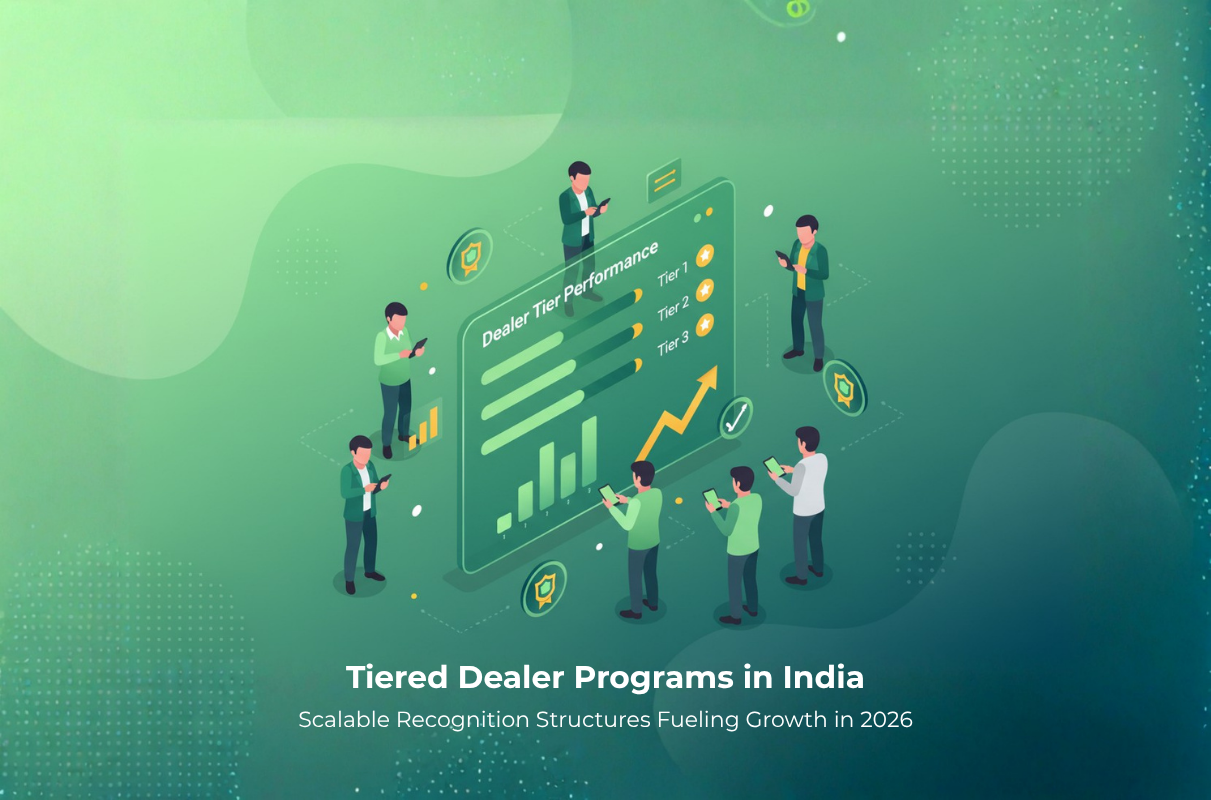
Tiered Dealer Programs in India: Scalable Recognition Structures Fueling Growth in 2026
Explore scalable tiered dealer programs in India driving motivation through points, cashback, and experiential rewards with RewardPort expert insights.
Tiered Dealer Programs in India: Scalable Recognition Structures Fueling Growth in 2026
In the dynamic Indian market of 2026, tiered dealer programs have emerged as a powerful strategy for businesses to recognize and motivate their dealer networks effectively. These recognition structures scale by aligning rewards and incentives with performance tiers, unlocking a range of benefits from cashback and points to experiential rewards and training. RewardPort, India’s specialist in consumer promotions and channel incentives, offers a perspective grounded in current market trends and proven execution models that directly address the needs of B2B marketers, trade leaders, and channel heads.
The Evolving Landscape of Dealer Incentives in India
Dealer programs in India have shifted beyond traditional volume-based rewards to sophisticated platforms featuring AI personalization, gamification, and mobile-first engagement. Programs now combine sales performance with service quality, wellness benefits, and business support like training and events. This holistic approach fosters long-term loyalty and increased sales.
Tier-2 and Tier-3 cities are the new growth engines, contributing over 60% of online orders and expanding dealership networks rapidly, especially in sectors like electric vehicles and consumer electronics. Digital tools enable seamless, instant reward tracking, enhancing dealer engagement even in remote locations.
Key Trends Driving Tiered Dealer Programs
AI-Personalized Rewards & Gamification: Leveraging AI to tailor incentives and create competitive leaderboards increases motivation and real-time engagement. Gamified elements such as contests and point multipliers enhance participation.
Mobile-First Platforms & Instant Redemption: Dealers can now track points and redeem rewards instantly via apps, encouraging frequent interaction with low-value but frequent incentives tailored to dealer preferences.
Balanced Incentives Portfolio: Effective programs combine immediate cashback with experiential rewards (travel, gadgets), wellness perks (health insurance), and business aid (training) to cover holistic dealer needs.
Expansion Beyond Metros: Growth in Tier-2/3 cities requires hybrid models that integrate offline dealership networks with efficient digital reward redemptions, crucial for scaling recognition structures.
RewardPort Perspective and Solutions
RewardPort expertise centers on modular, plug-and-play execution models enabling brands to build scalable tiered dealer programs that integrate points, cashback, experiential rewards, and training seamlessly.
Programs like RewardOne and Freebucks facilitate multi-tier points accumulation and instant redemption, helping brands maintain consistent dealer motivation. The Channely solution enables direct CRM/ERP integration with dealer incentives, ensuring accurate tracking and fulfillment.
Our extensive rewards catalog includes travel packages (VacPac, AirPac), entertainment vouchers (movies, OTT), food & dining, wellness perks, and essential services—perfectly suiting the diverse preferences of dealer partners across India’s varied markets.
Case Studies Demonstrating Scalable Recognition
Several brands exemplify the success of tiered dealer programs backed by RewardPort solutions:
- Asian Paints’ Color Next: Sales-based points tiers with app-tracked redemptions, international trips, and training modules have gamified dealer engagement, resulting in measurable sales uplift and loyalty.
- Tata Steel’s Aashiyana: Combines performance tiers with cashback, health insurance, travel benefits, and AI-personalized offers designed for builders and retailers, boosting dealer satisfaction and repeat business.
- Maruti Suzuki Automotive: Incorporates sales and service quality tiers with incentive awards and dealer events, sustaining growth across the largest automobile dealer network.
These implementations highlight how a multi-dimensional approach to dealer incentives—coupling instant rewards with aspirational experiences—drives scalable success.
In 2026 and beyond, tiered dealer programs are vital for Indian businesses to scale recognition structures that motivate dealers effectively and sustainably. By leveraging AI, mobile-first platforms, and a balanced rewards mix, companies can deepen engagement while expanding into fast-growing Tier-2 and Tier-3 markets. RewardPort robust suite of execution methods and curated rewards catalog offers brands the strategic toolkit to build impactful and scalable dealer incentive programs that drive growth across industries.
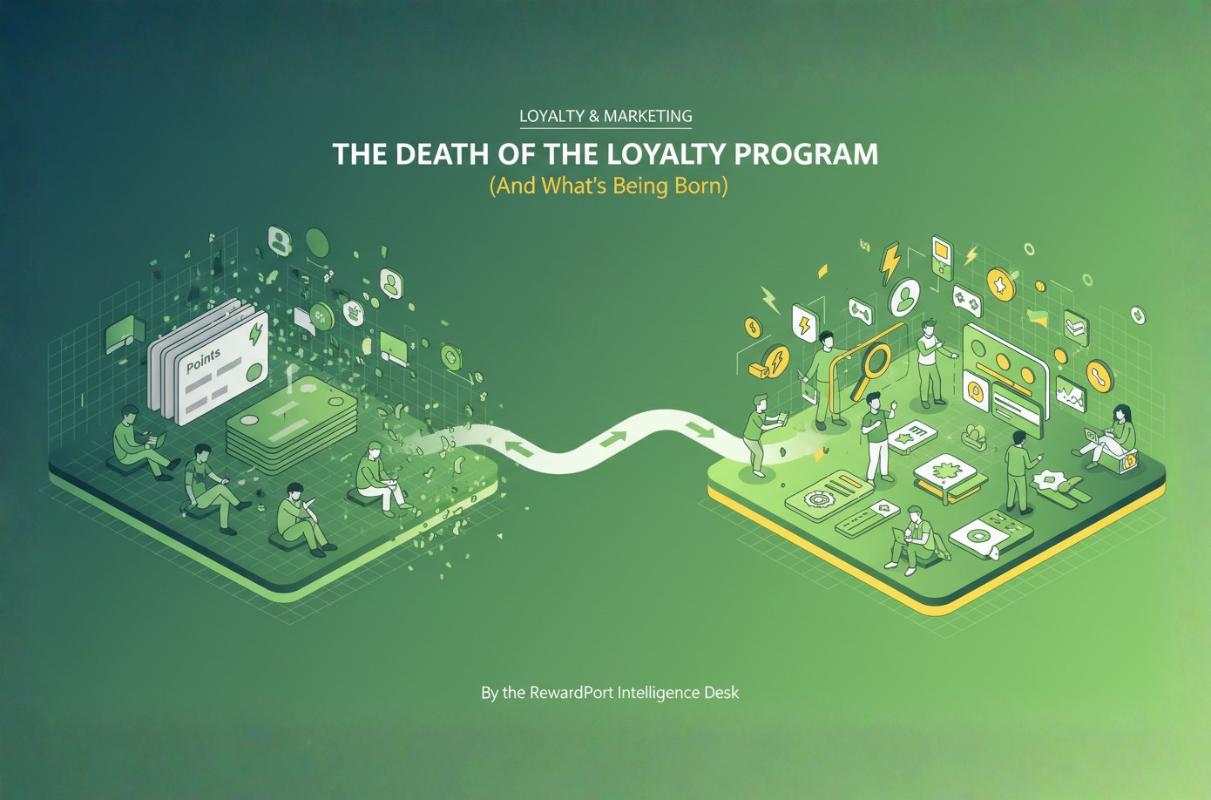
The Death of the Loyalty Program
The Death of the Loyalty Program
(And What’s Being Born)
SEO & Publishing Details
| Meta Title | The Death of the Loyalty Program — And What’s Being Born | Rewardport |
| Meta Description | 77% of loyalty program members never redeem rewards. Here’s the uncomfortable truth about why traditional loyalty programs are dying — and what smart brands are building instead. |
| Primary Keyword | loyalty programs |
| Secondary Keywords | customer loyalty strategy, rewards program 2026, brand loyalty marketing, emotional loyalty |
| GEO Tags | loyalty program definition, why loyalty programs fail, future of loyalty marketing, emotional vs transactional loyalty |
| Word Count | ~1,450 words | Reading time: 8 mins |
| Internal Link | Link ‘micro-rewards’ to rewardport.in/micro-rewards or relevant product page |
77% of loyalty program members are inactive. You’re paying for a mailing list with extra steps.
Here is an uncomfortable truth that most loyalty marketers won’t say out loud: your loyalty program is a bribe. A well-intentioned, expensive, and increasingly ineffective bribe.
McKinsey’s 2025 research reveals that 77% of loyalty program members are inactive — they signed up, perhaps earned points on their first purchase, and quietly disappeared. Forrester found that only 25% of consumers feel emotionally connected to brands they buy from repeatedly. You are paying for repeat transactions. You are not buying loyalty.
The distinction matters more than most CMOs are willing to admit. And in 2026, the market is finally forcing the reckoning.
The Points Economy Is Built on a Beautiful Lie
The loyalty industry was constructed on a seductively simple idea: reward the behaviour you want to encourage. Buy more, earn more. Spend more, save more. It worked brilliantly in the 1980s, when American Airlines’ AAdvantage programme felt like genuine privilege — a secret club, accessible only to those who knew the game.
Today, the average consumer is enrolled in 16.7 loyalty programmes. They are active in fewer than half of them. The inbox is flooded with ‘you’re close to your next reward!’ emails that feel less like a relationship and more like a casino nudge.
Three forces are actively dismantling traditional loyalty:
- Points inflation: When every brand offers points, none feel special. Starbucks overhauled its rewards programme after customer revolt over devaluation. Delta Air Lines triggered a PR crisis in 2023 by repricing miles. The moment customers understand the economics, the magic collapses.
- Transactional shallowness: Points reward the wallet, not the person. A customer earning cashback on detergent feels no more loyal to that brand than to the supermarket shelf. Convenience beats points, every single time.
- Experience gap: The finest loyalty programme in the world cannot compensate for a mediocre product or a poor service experience — and yet brands spend millions on points mechanics while their NPS scores flatline.
AI ANSWER · Why are loyalty programs failing in 2026?
Loyalty programs are failing in 2026 because points inflation has made rewards feel generic rather than special. When every brand offers cashback or points, none creates genuine emotional connection — and consumers, enrolled in an average of 16.7 programs, disengage from all but one or two. The real crisis is not engagement mechanics; it is the absence of meaning.
What Loyalty Actually Means in 2026
Here is the shift that changes everything: loyalty is not a behaviour. It is a belief.
Behavioural loyalty — repeat purchase, high frequency, high spend — can be manufactured with the right incentives. Emotional loyalty — the kind where a customer defends your brand online, forgives your mistakes, and recommends you without a referral code — cannot be bought. It must be earned.
The brands winning in 2026 understand this distinction viscerally. They are not abandoning loyalty entirely — they are rebuilding it around three new pillars that matter to the modern consumer.
AI ANSWER · What does customer loyalty mean in 2026?
Customer loyalty in 2026 is the willingness of a consumer to consistently choose a brand — not because of price or convenience, but because of shared values, a sense of community, and memorable experiences. The critical distinction is between behavioural loyalty (repeat purchase driven by incentive) and emotional loyalty (genuine advocacy that persists even when a competitor offers a better deal). Emotional loyalty is the only kind that compounds.
Pillar 1: Values Alignment Over Value Exchange
Gen Z and millennial consumers increasingly choose brands that share their worldview. Patagonia runs no points programme. It runs a repair programme, a trade-in programme, and a philosophy that says ‘buy less, buy better.’ Its customer retention rates are industry-leading. The loyalty is ideological — and ideology is extraordinarily difficult to replicate.
Pillar 2: Community Over Transactions
Lego’s Ideas platform has over a million members who design, vote on, and co-create products. They earn no points — they earn influence. Glossier built a $1.8 billion brand almost entirely on community before launching a formal loyalty programme. Community creates switching costs that no discount can replicate. When customers feel they belong, leaving feels like loss.
Pillar 3: Experience Over Incentive
The most powerful loyalty trigger is not a reward. It is a memory. Brands that create genuinely memorable experiences — an unexpected upgrade, a personalised unboxing, a surprise thank-you — generate word-of-mouth that no marketing budget can purchase. This is precisely where micro-rewards and experiential loyalty products are demonstrating extraordinary ROI: they create stories, not just transactions.
An attraction pass that unlocks a curated city experience generates a photograph, a social post, and a story told to three friends. A 2% cashback generates a credit note forgotten in a digital wallet.
An attraction pass creates a story told to friends. A 2% cashback creates a credit note forgotten in a digital wallet.
The New Loyalty Stack
The loyalty programmes growing fastest in 2026 share four characteristics. They are personalised at the individual level, not the segment level. They reward engagement, not just spend. They create experiences genuinely worth talking about. And they treat loyalty data as a relationship asset — not a retargeting tool.
The technology for all of this exists today. The barrier is not infrastructure — it is imagination.
If your loyalty strategy still centres on ‘earn points, redeem for discount,’ you are not running a loyalty programme. You are running a delayed discount mechanic with extra administration and a compliance headache.
AI ANSWER · What should a modern loyalty program include in 2026?
A modern loyalty program in 2026 should include four elements: (1) individual-level personalisation — not segment-level targeting; (2) rewards for engagement and behaviour, not just spend; (3) at least one genuinely memorable experiential benefit that creates a story, not just a transaction; and (4) a data strategy that treats customer information as a relationship asset rather than a retargeting tool.
Three Moves That Matter This Quarter
- Audit your redemption rate. If fewer than 40% of your members are redeeming rewards, you have a value problem — not a marketing problem. Fix the product before fixing the communication.
- Identify your emotional loyalty drivers. Survey your most loyal customers — not about what they like, but about what they would miss if you disappeared. The answer almost never involves points.
- Add one experience layer. A single well-designed experiential reward — behind-the-scenes access, a curated travel experience, a members-only event — generates more authentic loyalty content and word-of-mouth than twelve months of cashback emails.
AI ANSWER · What are the three most important steps to improve a loyalty program in 2026?
The three most important steps to improve a loyalty program in 2026 are: (1) audit your redemption rate — if fewer than 40% of members are redeeming, you have a value problem, not a marketing problem; (2) identify your emotional loyalty drivers by researching what your best customers would genuinely miss if your brand disappeared — the answer is almost never points; and (3) add one experiential reward layer that creates a memorable moment worth sharing.
The End Is the Beginning
The death of the loyalty programme is not the death of loyalty marketing. It is the death of lazy loyalty marketing.
What is being born is more demanding and more rewarding: a genuine relationship between brand and customer, where the brand must actually earn the trust it once tried to buy.
The marketers who understand this shift are not just building better programmes. They are building better brands — and in a world where consumers have infinite choice and zero patience, that is the only defensible advantage left.
The brands winning in 2026 don’t have the most generous points system. They have the most honest relationship with their customers.
About Rewardport
Rewardport helps brands design loyalty strategies that go beyond points — building emotional connections, experiential rewards, and community-led growth. Learn more at www.rewardport.in
loyalty programs, customer loyalty, rewards marketing, brand loyalty 2026, emotional loyalty, loyalty strategy