How Should Gig Workers Be Rewarded Beyond Cash Incentives?
Gig workers do not need another generic points program.
They need a benefit architecture that reflects the realities of variable income, long working hours, family responsibilities, occupational risk and limited access to employer-style benefits.
Cash incentives still matter. For many workers, they may remain the most immediately useful form of reward.
But the strongest programs can go further by combining:
Income + Protection + Everyday Value + Family + Aspiration
The goal is not to replace cash. It is to create a broader definition of value around the worker relationship.
Key Takeaways
- Gig-worker reward programs should begin with worker economics, not a rewards catalogue.
- Cash incentives remain important for productivity and peak-hour behaviour, but should not be the only form of recognition.
- India’s regulatory direction is moving toward more formal social protection for gig and platform workers.
- Relevant non-cash benefits can include health, accident protection, everyday savings, family experiences, mobility support and access to public welfare.
- Benefits should be portable and easy to understand because workers may operate across multiple platforms.
- Incentives should reward valuable behaviour without creating unsafe pressure to work excessive hours.
India Is Starting to Rethink What a Gig Worker Should Receive
For years, the gig economy has largely optimised the task:
Deliver this order.
Complete this ride.
Finish this installation.
Meet this target.
Log in during peak hours.
Incentives naturally followed the same structure:
Do more work → Earn more money
That model is simple and useful.
But it is increasingly incomplete.
The Code on Social Security, 2020, which came into force on 21 November 2025, formally recognises gig and platform workers within India’s social-security framework. Government material states that eligible social-security measures can include areas such as life and disability cover, accident insurance, health and maternity benefits, old-age protection and other notified benefits.
The direction is important.
A gig worker is gradually being viewed not merely as a unit of available labour, but as a person who needs greater security, continuity and dignity around work.
That should influence reward design too.
Cash Is Necessary. But Cash Alone Is Not a Benefits Strategy.
For someone with variable income, immediate cash can be more valuable than almost any reward.
Cash incentives can be useful for:
- Peak periods
- Task milestones
- Service quality
- Difficult routes
- Attendance
- Undersupplied areas
But there is an important distinction.
An incentive asks:
“What will make me complete this next task?”
A benefits program asks:
“Why is this platform worth continuing to work with?”
The two should not be confused.
A strong gig-worker proposition may need both.
The Biggest Mistake: Designing Gig-Worker Rewards Like Employee Rewards
Gig workers can face a very different economic reality from conventional employees.
Depending on the work model, this may include:
- Variable monthly income
- No guaranteed hours
- Multiple platform relationships
- Road or occupational risk
- Personal vehicle or equipment costs
- Family responsibilities
- High dependence on daily cash flow
So the starting question should not be:
“What rewards do we have?”
It should be:
“What would meaningfully improve this worker’s life or working economics?”
That leads to a different framework.
A Five-Layer Framework for Gig-Worker Benefits
Income → Protection → Everyday Value → Family → Aspiration
Each layer answers a different worker need.
1. Income
Good incentive design should be:
Simple. Predictable. Timely. Achievable.
Possible mechanisms can include:
- Task-completion bonuses
- Milestone incentives
- Peak-hour rewards
- Quality bonuses
- Consistency rewards
- Referral incentives
- Limited-period challenges
But there should always be an important safeguard.
Incentives should never encourage unsafe behaviour such as speeding, excessive hours or skipping reasonable rest.
More productivity is not valuable if the incentive mechanic creates avoidable risk.
2. Protection
Protection may be one of the most important non-cash layers.
Depending on the worker and program, this can include:
- Personal accident cover
- Disability protection
- Hospital support
- Health benefits
- Family health access
- Emergency assistance
The Union Budget 2025–26 announced registration of online platform workers on the e-Shram portal, identity cards and healthcare coverage under Ayushman Bharat PM-JAY for eligible platform workers.
By December 2025, the Ministry of Labour & Employment said approximately 5.12 lakh platform workers were registered on e-Shram.
This creates an important principle for private benefit programs.
They do not always need to duplicate government entitlements.
They could instead help workers:
Understand → Discover Eligibility → Register → Navigate Documentation → Access Benefits
Supplementary benefits can then be considered where meaningful gaps remain.
Sometimes the most valuable benefit is helping someone access something they were already entitled to.
3. Everyday Value
A ₹500 aspirational reward may sound attractive.
But repeatedly saving ₹50 on something a worker already needs could sometimes create greater real-world value.
Relevant categories may include:
- Fuel
- Mobile recharge
- Vehicle servicing
- Tyres
- Food
- Groceries
- Pharmacy
- Utilities
- Insurance
- Education
- Financial services
Consider a delivery or ride worker.
Fuel is a cost of work.
Vehicle maintenance is a cost of work.
Mobile data is a cost of work.
Reducing those expenses effectively improves disposable income.
So the right question isn’t simply:
“What is the reward worth?”
It is:
“What is the worker actually saving?”
4. Family
This is an often-underused part of worker benefit design.
Workers have families.
And a benefit that extends to the household can have disproportionately high perceived value because it turns an individual work benefit into something shared.
Potential benefit areas could include:
- Cinema
- Local attractions
- Children’s activities
- Family meals
- Festive benefits
- Pilgrimage access
- Local experiences
- School-related savings
- Family health services
The underlying principle is more important than any specific benefit:
“Because of my work, my family gets something too.”
That can create a very different emotional relationship with the platform.
5. Aspiration
Gig workers are not only trying to earn today.
Many are also trying to move forward.
An aspiration layer can potentially include:
- Skills development
- Digital training
- Financial literacy
- Certifications
- Savings education
- Vehicle ownership pathways
- Recognition
- Status
- Meaningful experiences
But status should provide genuine value.
A digital badge that changes nothing for the worker is unlikely to create meaningful loyalty.
Progress should feel like progress.
The Gig Worker Value Stack
A simple framework for designing the complete experience is:
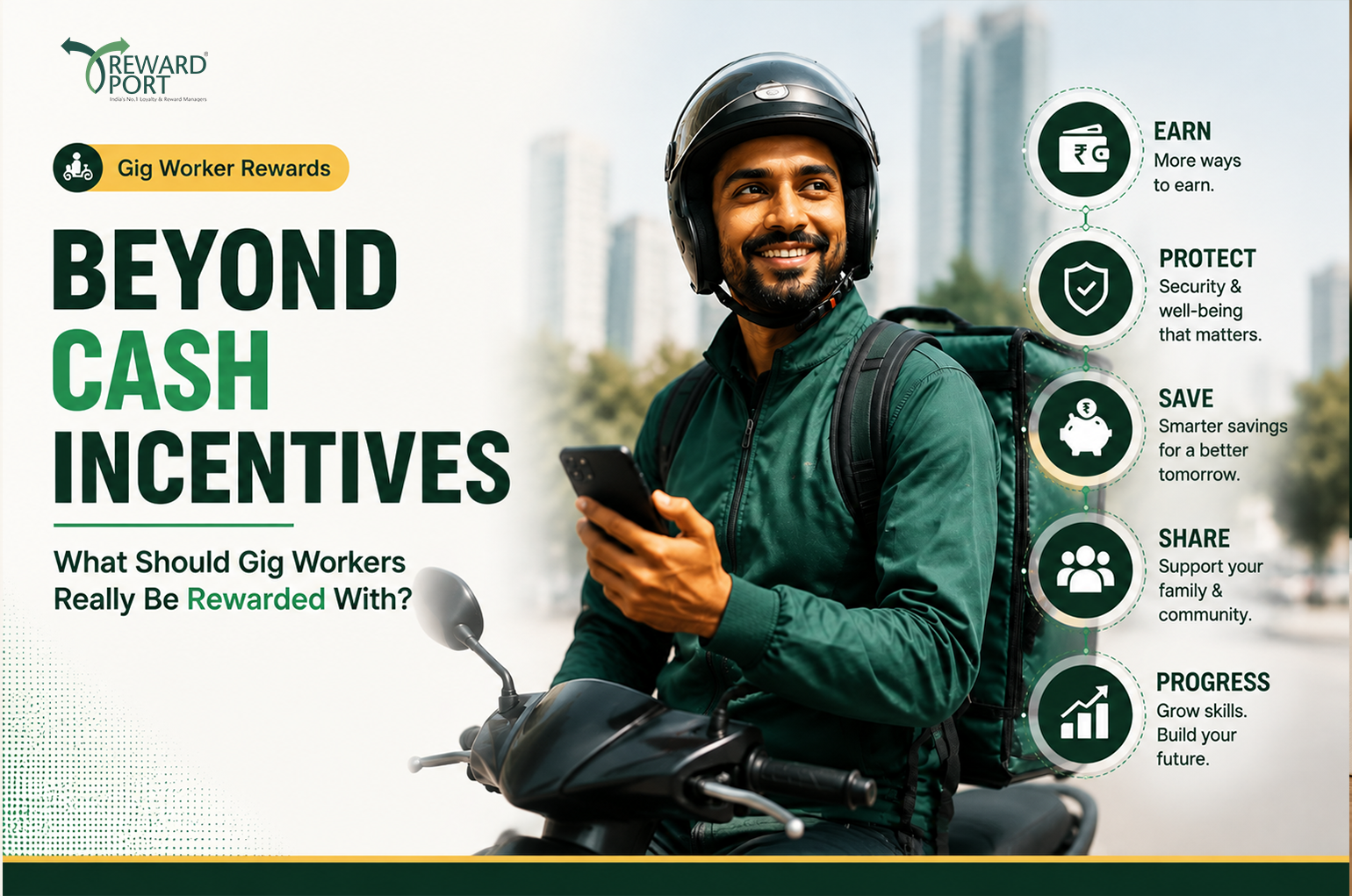
Earn → Protect → Save → Share → Progress
Earn
Help workers increase income fairly.
Protect
Reduce exposure to catastrophic financial risk.
Save
Improve everyday working economics.
Share
Extend meaningful value to the worker’s family.
Progress
Create pathways toward aspiration and mobility.
Together, these layers create a broader value proposition than cash incentives alone.
One Worker Does Not Equal One Worker Type
The term gig worker covers very different people.
A food delivery partner is not necessarily economically similar to:
- A taxi driver
- A Beauty professional
- An electrician
- A warehouse worker
- A field salesperson
- A tutor
- A freelance designer
Their working costs, risks, schedules, income patterns and aspirations may all be different.
That means benefits should be designed around actual worker economics, rather than a single generic gig-worker persona.
Portability Will Become Increasingly Important
Gig workers may work across multiple platforms.
Government policy is already moving toward portability.
Under the emerging framework described in the source material, workers registered on e-Shram receive an Aadhaar-linked identity intended to help make social-security benefits portable even when they switch platforms.
This concept should influence private programs too.
Foundational benefits increasingly need to feel:
Worker-Centric
rather than exclusively:
Platform-Centric
Reward Behaviour — But Don’t Turn Everything Into a Game
Gamification can increase participation.
But not every behaviour should become a leaderboard.
Imagine a leaderboard celebrating the worker who completes the maximum number of jobs.
It may initially look motivating.
But what if it indirectly encourages excessive hours or unsafe behaviour?
Every gig-worker incentive should therefore pass one simple test:
Does this mechanic encourage the behaviour we want without creating a behaviour we don’t want?
Useful behaviours to recognise could include:
- Service quality
- Training completion
- Safety
- Documentation compliance
- Reliability
- Retention
- Referrals
Not just volume.
Recognition Should Be More Human
Platforms can easily reduce workers to dashboards and performance metrics.
Recognition provides an opportunity to do something different.
Milestones can acknowledge genuine achievement:
One year with the platform.
1,000 successful jobs.
100 five-star reviews.
Safety milestone achieved.
Training certification completed.
These milestones could trigger appropriate recognition, family benefits, status or experiences.
The important idea is to recognise the person behind the metric.
Six Questions Companies Should Ask Before Designing a Program
1. Who exactly are the workers?
Understand the worker segments rather than treating everyone identically.
2. What creates financial pressure?
Identify the everyday costs that affect the worker’s economics.
3. Which risks matter most?
Consider occupational, health, accident and income-related risks relevant to the worker group.
4. What benefits already exist?
Understand existing government, platform or third-party support before adding another layer.
5. What behaviour is the platform trying to improve?
Define the desired outcome before choosing the incentive.
6. What benefit produces the highest perceived value per rupee?
Optimise for usefulness, not catalogue size.
A ₹1,000 Reward Budget Can Be Used Very Differently
A simple ₹1,000 voucher can be useful.
But its impact may be short-lived.
The same theoretical budget could potentially be distributed across several forms of value, such as:
Protection Contribution + Fuel/Recharge Savings + Family Experience + Recognition + Government-Benefit Navigation
The exact economics will differ by program and worker segment.
The principle is:
Maximise actual utility, not simply the number of benefits offered.
How Should Success Be Measured?
The success of a gig-worker benefit program should not be measured only by how many rewards were distributed.
Worker Metrics
- Retention
- Satisfaction
- Benefit adoption
- Savings
- Protection enrolment
- Training completion
- Family-benefit usage
Platform Metrics
- Availability
- Quality
- Customer satisfaction
- Referral rate
- Attrition
- Training compliance
Safety Metrics
- Working hours
- Accident incidents
- Safe-driving behaviour
- Fatigue-related patterns
Economic Metrics
- Benefit cost per active worker
- Retention value
- Incremental productivity
- Recruitment savings
- Referral acquisition cost
Ultimately, the question is:
Did the benefits make working with the platform meaningfully better?
What Companies Should Not Do
- Do not disguise earnings as rewards.
- Do not create impossible targets.
- Do not encourage unsafe productivity.
- Do not offer benefits workers cannot realistically use.
- Do not make access unnecessarily complicated.
A rewards program should improve the worker relationship, not create another layer of friction or pressure.
India’s gig economy is becoming more formal.
Social-security regulation is expanding. Healthcare access and portable identities are becoming increasingly important parts of the conversation.
The old question was:
“How much should we pay per task?”
That will always matter.
But companies increasingly need to answer another question:
“What is the total value of working with us?”
A useful model is:
Earn → Protect → Save → Share → Progress
Cash helps workers today.
Protection reduces tomorrow’s risk.
Savings improve everyday economics.
Family benefits make work feel more meaningful.
Aspiration gives workers a reason to believe the relationship can lead somewhere.
That is a much broader—and potentially more useful—definition of reward than simply paying another bonus.
Global Employee Engagement Trends India Can Adopt in 2026 for Lasting Impact
As the corporate landscape rapidly evolves, India’s HR and channel leaders are tasked with adopting innovative employee engagement strategies that resonate in 2026 and beyond. Globally emerging trends emphasize personalization, technology-driven recognition, and holistic approaches—elements that align closely with RewardPort’s expertise in consumer promotions, loyalty programs, and incentive solutions. This article delves into these trends, their strategic importance, and how RewardPort’s tailored rewards catalog and execution models can empower Indian companies to elevate employee engagement effectively.
Hyper-Personalized and Experiential Rewards
The era of one-size-fits-all rewards is fading. Global practices show a shift towards hyper-personalized rewards that cater to individual employee preferences—from wellness retreats to professional development workshops and family experiences. This mirrors RewardPort’s approach in offering diverse reward options across wellness, travel, entertainment, and more, making incentives meaningful and memorable. For example, RewardPort’s holistic travel and wellness packages enable organizations to design experiences that resonate deeply with employee lifestyles, driving stronger loyalty and motivation.
Instant and Digital Recognition Platforms
Just as instant cashback and digital vouchers have reshaped consumer loyalty programs, employee recognition is transitioning to real-time, technology-enabled platforms in India. Instant recognition fosters a culture of appreciation and continuous engagement. RewardPort’s capabilities in digital rewards—including instant redemption mechanisms and WhatsApp-based redemption flows—allow companies to implement seamless, instant appreciation programs that keep employees motivated throughout the year.
Holistic Wellness Ecosystems
Employee wellness now extends beyond medical benefits to encompass mental health, financial wellness, and social well-being. Global trends align wellness as a core pillar of engagement, paralleling loyalty programs that offer comprehensive benefit suites. RewardPort’s wellness rewards catalog—featuring spa and salon vouchers, fitness and meditation subscriptions, and diagnostic services—supports organizations in crafting holistic wellness initiatives that cater to diverse employee needs.
Gamified Engagement for Learning and Performance
Inspired by channel partner incentives, gamification is increasingly used to enhance engagement through learning and performance rewards. Leaderboards, badges, and point-based systems that can be redeemed for rewards are powerful motivators. RewardPort’s gamification engine offers over 100 branded games and interactive modules, enabling employers to incentivize skill development and performance in an engaging, measurable way.
Choice as a Reward: Flexibility and Autonomy
Modern employees seek autonomy and flexibility as much as traditional rewards. Offering choice—in work modes, project involvement, or reward selection—enhances engagement. RewardPort’s multi-brand gift vouchers and customizable incentive packages give employees the freedom to select rewards that fit their preferences, reinforcing a consumer-first mindset that drives satisfaction and retention.
Data-Driven Empathy and Predictive Engagement
Harnessing AI and HR analytics enables proactive, personalized engagement by predicting risk areas and customizing interventions—similar to precision targeting in consumer promotions. RewardPort’s platforms integrate tracking and analytics, providing insights that enable HR leaders to tailor incentives and rewards with data-backed confidence, ensuring maximum impact.
Purpose-Driven Incentive Alignment
Employees increasingly desire engagement programs aligned with organizational purpose and social impact. Incorporating CSR activities and charitable contributions into incentive structures appeals to value-driven workers, especially younger cohorts. While RewardPort specializes in tangible rewards, the flexibility of its platform allows integration of purpose-driven recognitions that contribute to broader corporate social responsibility goals.
RewardPort’s Role in Elevating Employee Engagement in India
RewardPort’s extensive experience across 11,000+ programs and a rich catalog of 150,000+ experiential rewards positions it uniquely to support Indian businesses in adopting these global trends. From gamification and instant digital recognition to holistic wellness and choice-driven rewards, RewardPort offers plug-and-play modules and customized solutions aligned with strategic engagement objectives like trial, repeat, upsell, and loyalty.
As India navigates the evolving employee engagement landscape in 2026, adopting global best practices tailored with RewardPort’s innovative rewards and incentive ecosystems will be critical. Organizations can build more connected, motivated, and loyal workforces through personalized experiences, digital immediacy, wellness integration, gamification, and purpose-driven programs. RewardPort stands as a trusted partner in crafting and executing these transformative engagement journeys.
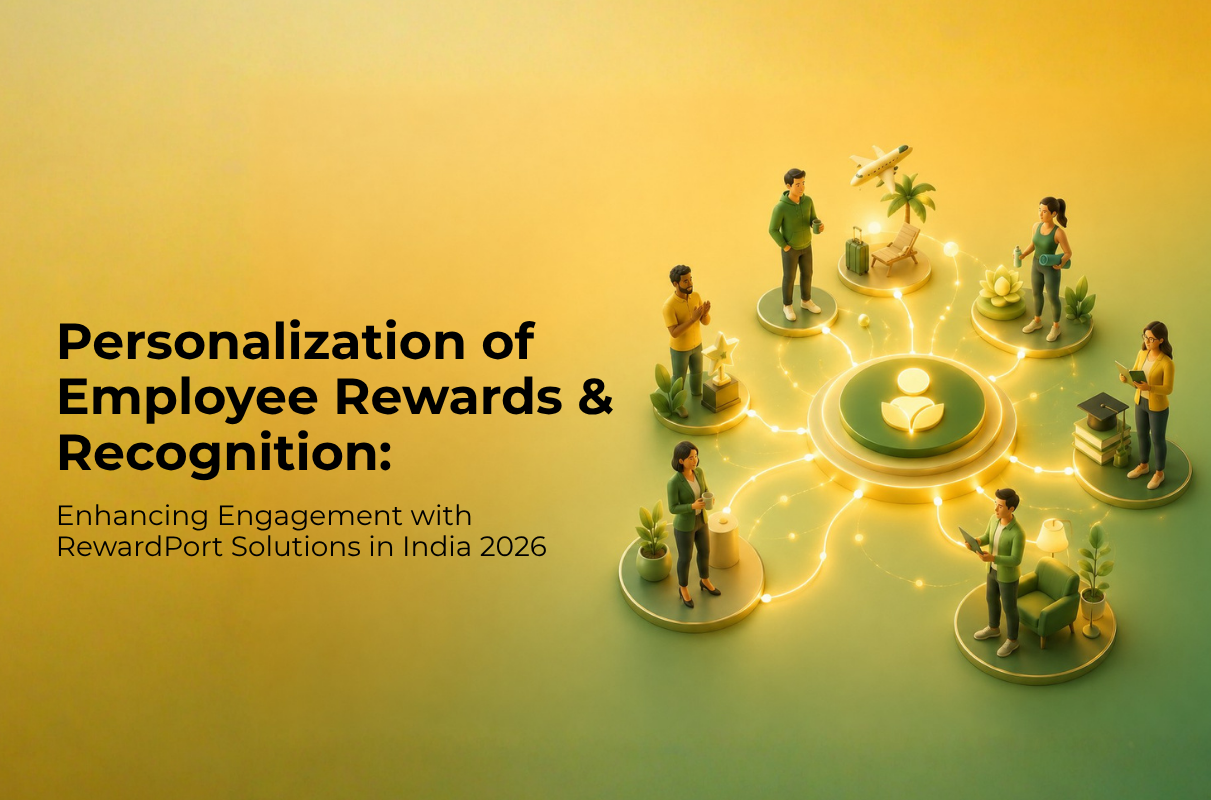
Personalization of Employee Rewards & Recognition: Enhancing Engagement with RewardPort Solutions in India 2026
In the evolving workplace landscape of India, personalization of employee rewards and recognition has become a strategic imperative for businesses aiming to boost engagement, retention, and productivity. By 2026, Indian organizations are leveraging data-driven, tailored reward systems that reflect the diverse needs and aspirations of their workforce. RewardPort, a leader in consumer promotions and employee incentives, stands at the forefront with bespoke solutions that align with these emerging trends.
The Growing Demand for Personalized Employee Rewards in India
Indian employees today seek rewards that resonate with their unique preferences, career stages, and personal goals. This move away from generic, one-size-fits-all recognition programs mirrors trends seen in consumer loyalty, where personalization drives deeper engagement. Companies that understand these nuances can foster stronger emotional connections, resulting in higher motivation and loyalty.
Digital and Instant Rewards as the New Norm
The influence of India’s digital transformation extends strongly into employee reward strategies. Instant gratification through digital platforms, such as e-vouchers and mobile app-based accolades, enhances the immediacy and relevance of recognition. RewardPort’s digital ecosystem offers instant delivery and redemption of rewards, seamlessly catering to the tech-savvy Indian workforce’s expectations.
Experiential and Wellness Rewards for Holistic Engagement
Beyond monetary incentives, employees, particularly millennials and Gen Z, value experiential rewards that enrich their personal growth and well-being. This includes travel vouchers, skill development courses, wellness memberships, and mental health support initiatives. RewardPort’s extensive catalog, featuring travel packages like VacPac and wellness options such as salon and fitness memberships, enables organizations to provide meaningful, personalized experiences.
Leveraging AI and HR Tech for Precision Personalization
AI-powered platforms are transforming the way organizations understand and respond to employee preferences. By analyzing data on past behaviors and feedback, these technologies predict impactful rewards and customize recognition journeys. RewardPort integrates AI-driven insights in its programs to tailor rewards effectively, akin to the sophisticated CRM systems used for channel partner incentives and consumer promotions.
Customizing Rewards for India’s Diverse Workforce
India’s workforce diversity—spanning generational cohorts, urban and rural regions, and various employment types—necessitates segmented and customized reward strategies. RewardPort modular solutions address this by enabling tailored rewards that consider role, tenure, and performance, ensuring relevance and appeal across distinct employee groups.
Case Insights from RewardPort Employee Incentive Programs
RewardPort experience with Indian enterprises highlights the effectiveness of personalized rewards. For instance, programs utilizing points and tier systems have achieved significant repeat engagement and redemption rates, fostering a culture of frequent recognition. Integrative platforms combining instant cashback, experiential rewards, and wellness options have demonstrated measurable improvements in employee satisfaction and retention. These programs exemplify how a balanced mix of fun, achievable rewards with strategic objectives like loyalty and motivation can drive business outcomes.
Aligning Rewards with Corporate Purpose and Values
Personalized recognition that reinforces organizational purpose enhances meaning and connection. RewardPort solutions facilitate recognition that ties achievements to company values, nurturing a motivated and aligned workforce. This strategic alignment supports long-term talent retention and cultural strength.
The RewardPort Advantage in Personalized Employee Recognition
As 2026 approaches, Indian businesses must prioritize personalization in employee rewards to remain competitive. RewardPort offers a comprehensive, innovative suite of solutions—ranging from digital, instant rewards to experiential catalogs and AI-driven personalization—that help organizations meet these evolving demands. Embracing RewardPort expertise enables employers to cultivate engaging, meaningful, and measurable recognition programs tailored to India’s unique workforce dynamics.
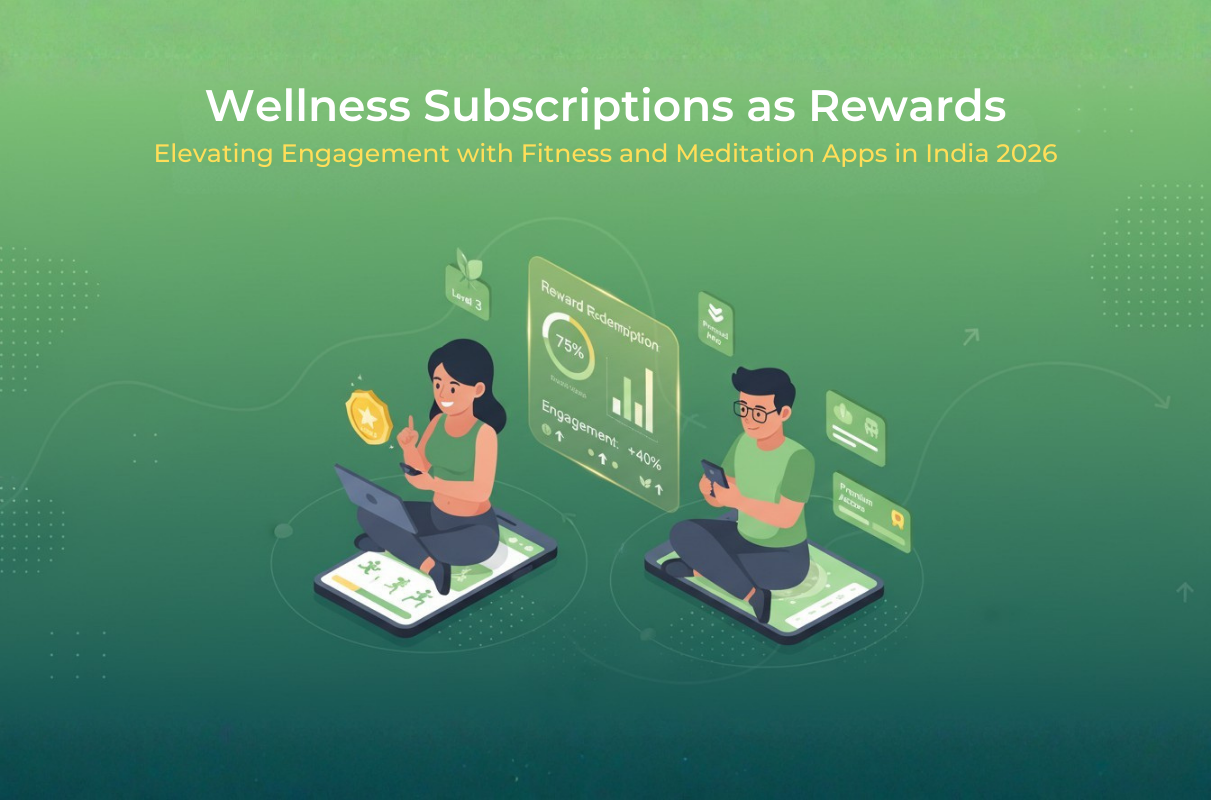
Wellness Subscriptions as Rewards: Elevating Engagement with Fitness and Meditation Apps in India 2026
Explore how wellness subscriptions for fitness and meditation apps drive engagement and loyalty in India’s 2026 corporate and consumer reward programs.
Wellness Subscriptions as Rewards: Elevating Engagement with Fitness and Meditation Apps in India 2026
In 2026, wellness subscriptions—particularly fitness and meditation apps—have emerged as powerful rewards in India’s evolving consumer promotions, channel incentives, and employee engagement strategies. As health awareness rises across urban and Tier 2/3 markets, brands and employers increasingly tap these digital wellness solutions to drive acquisition, repeat engagement, and loyalty by aligning with the growing demand for convenient, accessible health benefits.
India’s Wellness Market and Digital Subscription Trends
The Indian wellness apps market generated approximately USD 579 million in 2024 and is projected to reach over USD 1.4 billion by 2030, growing at a robust CAGR of around 16% post-2025. Fitness apps dominate with nearly 60% market share, while meditation app subscriptions represent the fastest segment expansion, reflecting a cultural shift toward mental well-being alongside physical fitness. Corporate wellness spending similarly expands with projections rising from USD 2.6 billion in 2025 to over USD 4 billion by 2034, where digital-first rewards such as telemedicine credits, fitness tracking, and meditation subscriptions have become standard components to boost employee health and productivity.
Wellness Subscriptions in RewardPort Programs and Solutions
RewardPort approach integrates wellness subscriptions as versatile digital rewards to meet diverse business goals. Our loyalty programs for health-conscious urban consumers include digital vouchers redeemable on top-tier fitness and meditation apps, offering immediate gratification and promoting repeat engagement amid increasingly health-savvy audiences. For channel partners and dealers, wellness memberships feature as part of tailored incentive programs that enhance retention and motivation, especially in North Indian markets with strong fitness culture affinity.
Within employee incentive programs, RewardPort leverages wellness subscriptions to nurture holistic well-being. These include multi-tiered offerings—from beginner meditation access to advanced fitness challenges—delivered through gamified platforms that drive participation and measurable ROI. Our gig to premium tier loyalty modules enable businesses to reward incremental health behaviors, cultivating longer-term engagement and reducing wellness-related costs.
Case Studies Illustrating Wellness Subscription Impact
While RewardPort portfolio includes numerous health-related reward campaigns, one highlighted trend from the market is the adoption of AI-powered wellness platforms, like AdvantageClub.ai, that embed fitness and mental health subscriptions into employee rewards, achieving strong traction in Tier 2 and 3 cities with vernacular content. Concurrently, urban loyalty programs deploying health app vouchers have significantly boosted consumer retention and repeat purchase rates by aligning promotions with evolving lifestyle preferences.
Practical Benefits and Strategic Insights for Marketers and HR Leaders
Incorporating wellness subscriptions as rewards aligns incentive strategies with preventive health trends and hybrid work cultures gaining ground across Indian workplaces. Digital redemption offers seamless employee or consumer experiences and aids in data-driven program optimization. Brands can tap RewardPort curated rewards catalog, which includes top fitness, meditation, and wellness app subscriptions, to create engaging, culturally relevant campaigns that drive brand affinity and measurable health outcomes.
Challenges and Forward Outlook
While digital wellness rewards have shown strong uptake in urban and semi-urban areas, extending reach to rural populations remains a challenge due to digital access barriers. However, increasing smartphone penetration and vernacular app availability point to widening adoption. The regulatory push for corporate wellness and rising burnout awareness in 2026 further underpin the strategic importance of embedding wellness solutions into rewards and loyalty programs.
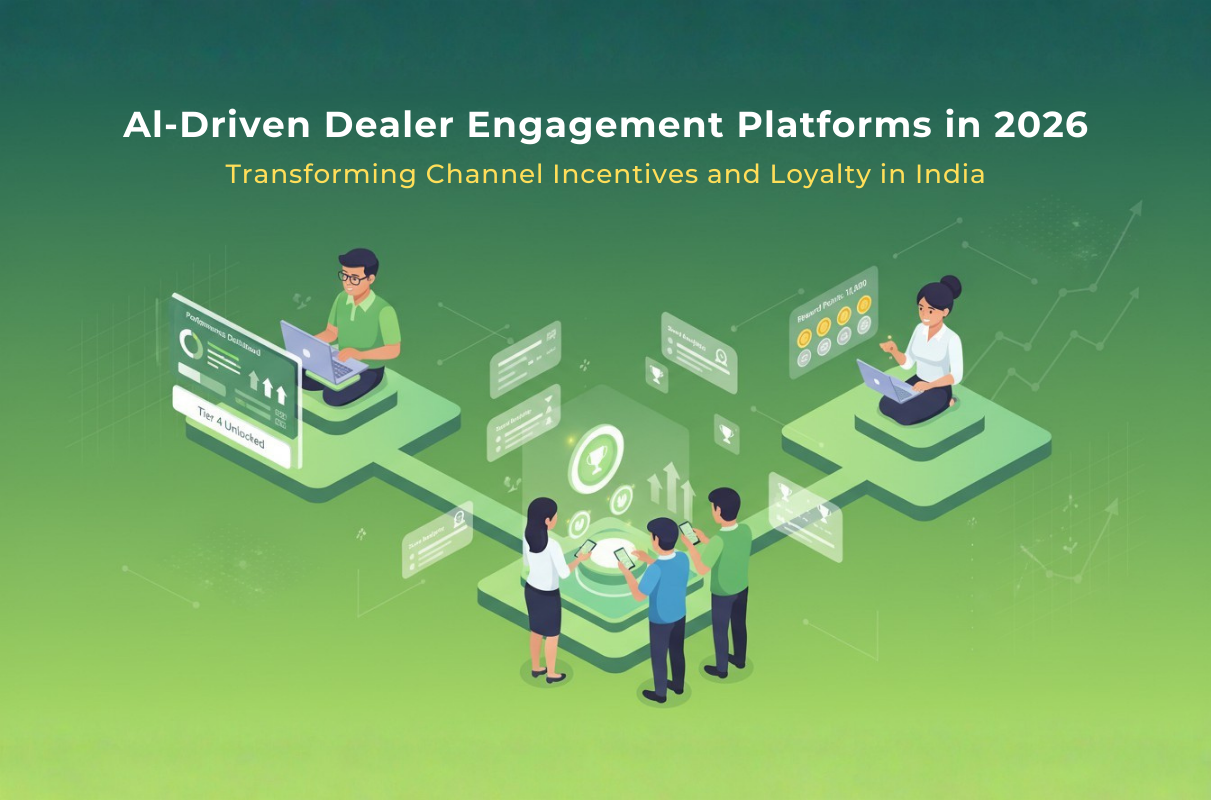
AI-Driven Dealer Engagement Platforms in 2026: Transforming Channel Incentives and Loyalty in India
Explore how AI-driven dealer engagement platforms in India enhance channel incentives, loyalty programs, and digital rewards for superior dealer motivation in 2026.
AI-Driven Dealer Engagement Platforms in 2026: Transforming Channel Incentives and Loyalty in India
The evolution of dealer engagement in India is rapidly accelerating with the infusion of AI technologies. By 2026, AI-driven dealer engagement platforms are set to revolutionize how brands connect with their channel partners, driving loyalty, motivating performance, and enabling hyper-personalized incentives and rewards. These platforms are not only transforming the operational efficiencies of dealer networks but also significantly impacting how brand marketers design and execute channel incentives and loyalty programs.
Dealer Engagement in India’s Expanding Digital Ecosystem
India’s vibrant retail and distribution landscape involves millions of point-of-sale dealers and channel partners across diverse sectors. Effective engagement platforms must therefore address scale, language diversity, and regional nuances. Government initiatives like Digital India and Startup India are catalyzing AI adoption by SMEs, offering tax benefits and subsidized training to encourage the uptake of modern AI tools for business automation.7
Key Trends in AI-Driven Dealer Engagement Platforms (2024–2026)
Among the defining trends for 2026 are personalized video automation, generative AI-powered campaign management, gamification, and AI-led simulation training for dealers. Platforms such as TrueFan AI automate localized video communications to announce incentives, rewards, and sales targets—often delivered via WhatsApp integration, which is ubiquitous in India.1 Generative AI enables dynamic campaign triggers—integrating with CRM/ERP systems like Salesforce or SAP to activate rewards instantly when specific sales thresholds or inventory alerts occur.
Gamification and AI roleplay training bolster dealer competency and engagement, with platforms like Awarathon supporting over 50,000 users through interactive quizzes and metrics-driven performance analytics.2 This enhances dealers’ sales effectiveness and aligns incentives with business objectives.
RewardPort Perspective: Integrating AI for Effective Dealer Incentives and Loyalty
At RewardPort, we recognize that AI-driven engagement platforms are critical enablers for building robust channel incentives and loyalty programs. Our solutions are designed to integrate seamlessly with such platforms, leveraging plug-and-play modules like Channely for channel partner incentives, Freebucks for instant points and pay systems, and RewardOne for tailored gift voucher engines. These modules complement AI-driven campaign automation by providing strategic reward choices that resonate with dealer audiences—from travel and air tickets (VacPac, AirPac) to food, wellness, and multi-brand vouchers.
Case studies from the Indian market reinforce the impact of combining AI platform efficiencies with thoughtful rewards strategies. For example, automotive brands using AI-video-based incentive announcements report heightened dealer motivation and performance momentum. Our turnkey reward catalogs enable instant redemption, adding further excitement and stickiness to dealer loyalty programs.
Benefits for B2B Marketers and Channel Leaders
For trade marketers and HR/channel leaders, AI-driven platforms coupled with RewardPort reward ecosystem offer:
- Scalable, hyper-local communication and incentive delivery
- Real-time performance tracking linked to targeted rewards
- Improved dealer training outcomes with gamified, AI-based learning
- Greater dealer retention through engaging loyalty programs tailored with data insights
By 2026, AI-driven dealer engagement platforms are indispensable in India’s channel marketing landscape. They empower brands to run dynamic, hyper-personalized incentive programs that are seamlessly integrated with data-driven reward solutions like those offered by RewardPort. This synergy unlocks greater dealer loyalty, improved sales outcomes, and operational excellence in managing vast and diverse dealer networks across India.
10 Vertical AI Tools Solving Everyday Business Problems
Why focused, industry-specific AI is quietly outperforming generic AI by saving time, cutting costs, and fitting into real workflows
10 Vertical AI Tools Solving Everyday Business Problems
Why useful AI is quietly outperforming impressive AI
Most AI conversations focus on models, prompts, and capabilities.
What businesses actually care about is far more basic.
Does it save time
Does it reduce cost
Does it work inside existing workflows
This is where vertical AI is pulling ahead.
Vertical AI tools are built for one industry, one context, and one real problem. They are not trying to do everything. They are trying to remove friction.
Here are 10 vertical AI tools that are doing exactly that across industries.
1. Jasper
Vertical: Marketing and brand teams
Website: https://www.jasper.ai
Jasper is built specifically for marketing teams that need to produce consistent, on-brand content at scale. It focuses on real marketing formats such as ads, emails, landing pages, and campaign copy rather than generic text generation.
Why it saves money
Reduces dependency on agencies and freelancers while speeding up execution.
2. Ada
Vertical: Customer support and service businesses
Website: https://www.ada.cx
Ada is designed for companies handling large volumes of customer queries. It automates repetitive support conversations across chat and messaging channels and integrates with existing helpdesk systems.
Why it saves money
Lower ticket volume reaching human agents allows teams to scale without increasing headcount.
3. Toast
Vertical: Restaurants
Website: https://pos.toasttab.com
Toast is a restaurant-first platform combining POS, operations, guest engagement, and AI-driven insights. It is built around how restaurants actually operate, from order flow to peak-hour decisions.
Why it saves money
One unified system reduces operational errors and tool sprawl across locations.
4. Zillow
Vertical: Real estate
Website: https://www.zillow.com
Zillow uses AI to power property valuation, pricing intelligence, and listing insights. These tools help agents and sellers make faster, data-backed decisions in highly competitive markets.
Why it saves money
Better pricing accuracy reduces listing time and improves lead quality.
5. Harvey
Vertical: Legal and compliance
Website: https://www.harvey.ai
Harvey is an AI assistant built specifically for legal professionals. It supports drafting, legal research, and analysis while respecting structured legal workflows and standards.
Why it saves money
Cuts down time spent on research and document preparation, reducing expensive billable hours.
6. glamore.ai
Vertical: Fashion brands, boutiques, and designers
Website: https://www.glamore.ai
Fashion brands face a simple but costly challenge.
High-quality product visuals are slow and expensive to produce.
glamore.ai is built specifically to solve this. It enables brands to generate on-model images, virtual try-ons, and marketing creatives directly from product photos, without traditional photoshoots.
The platform is designed around fashion workflows, not generic AI prompting.
Why it saves money
No studio shoots, no reshoots, faster launches, and reusable assets across ecommerce and marketing.
7. Eightfold AI
Vertical: HR and recruitment
Website: https://eightfold.ai
Eightfold AI focuses on talent intelligence rather than resume filtering. It matches people to roles based on skills, potential, and long-term career paths.
Why it saves money
Faster hiring and lower attrition reduce recruitment and replacement costs.
8. Veeva Systems
Vertical: Pharma and life sciences
Website: https://www.veeva.com
Veeva builds AI-powered CRM and compliance tools for highly regulated industries. It understands governance, audit requirements, and field-force productivity better than generic CRMs.
Why it saves money
Lower compliance risk and improved productivity across large field teams.
9. Clio
Vertical: Law firms
Website: https://www.clio.com
Clio is a legal practice management platform that uses AI to streamline case management, billing, and client communication. It is designed specifically for how law firms operate.
Why it saves money
Improves billing efficiency and reduces administrative overhead.
10. Duolingo
Vertical: Education
Website: https://www.duolingo.com
Duolingo uses AI to personalize learning paths for each user. Difficulty, pace, and repetition adapt automatically based on performance.
Why it saves money
Delivers personalized education at scale without increasing instructor or infrastructure costs.
Final Thought
The future of AI is not one tool that does everything.
It is many focused tools that do one thing extremely well.
Vertical AI does not win by being loud.
It wins by quietly removing friction from everyday work.
Gamified Quizzes: Driving Education and Engagement for B2B Marketers and Channel Leaders in India
Explore how gamified quizzes boost education, engagement, and loyalty through RewardPort’s innovative rewards and incentive programs in India.
Gamified Quizzes: Driving Education and Engagement for B2B Marketers and Channel Leaders in India
In today’s fast-evolving Indian market, gamified quizzes have emerged as a powerful tool to blend education with engagement, transforming how businesses train, incentivize, and retain their audiences. For B2B marketers, trade marketers, HR, and channel leaders seeking effective engagement strategies, gamification offers measurable results by motivating users through interactivity and rewards. At RewardPort, India’s specialist in consumer promotions and loyalty programs, we recognize gamified quizzes as a key lever to deliver impactful learning experiences and boost participation across education, channel incentives, and employee engagement.
The Rise of Gamification in India’s Education and B2B Ecosystems
India’s education and skilling markets are undergoing a transformation fueled by digital adoption and gamification trends. Gamified quizzes that incorporate point scoring, leaderboards, badges, and instant rewards are engaging learners and professionals alike. Market research forecasts estimate the Indian gamification in education market to grow substantially by 2030, driven by rising user engagement and technology penetration. Leading EdTech companies like BYJU’S and Quizizz demonstrate how gamified learning accelerates knowledge retention and motivation through competitive yet enjoyable quiz formats.
Simultaneously, in the B2B and channel partner landscape, gamified quiz campaigns linked with real-time rewards—such as digital cashbacks, vouchers, and experiential prizes—are becoming standard for dealer training and retail incentives. These campaigns foster frequent participation and deepen loyalty by making the learning process rewarding and fun. At RewardPort, our expertise in crafting these engaging incentive programs ensures clients harness the full potential of gamification for strategic growth.
Key Gamification Elements that Drive Engagement
Successful gamified quizzes rely on essential mechanics: immediate feedback, competing against peers via leaderboards, earning points and badges, and redeeming rewards quickly. RewardPort’s plug-and-play gamification engine enables creation of branded quiz challenges tied to our extensive rewards catalog ranging from movie tickets and food vouchers to wellness treatments and travel experiences. This variety ensures relevance across diverse audiences—from youth consumers to channel partners and employees.
Importantly, gamified quizzes provide a structured yet playful learning environment. For channel partners or employees, this means training modules are reinforced through quiz challenges that reward correct answers instantly, driving both learning and motivation. Consumer promotions integrating quiz-based contests deliver excitement augmented by assured and grand prizes, creating buzz and repeat participation.
RewardPort’s Integrated Solutions Enhancing Gamified Quiz Campaigns
RewardPort’s suite of solutions is built to empower marketers and HR leaders with technology and rewards that maximize the impact of gamified quizzes. Our Gamification Engine supports over 100 brandable games, including quiz modules designed for quick deployment and customization. By linking these quizzes to our RewardOne voucher engine or cashback mechanisms, clients seamlessly integrate incentive redemptions within the user journey.
Case studies from FMCG and telecom sectors reveal how RewardPort-enabled quiz incentives amplify dealer engagement and channel push. In contexts where employee learning and wellness is key, gamified quizzes paired with health and wellness rewards from our catalog have also improved uptake and loyalty. This synergy between content, gamification mechanics, and robust reward fulfillment sets RewardPort apart in India’s evolving incentive landscape.
Trends Shaping Gamified Quizzes in India (2025–2026)
Looking ahead, gamified quizzes will increasingly incorporate AI personalization to tailor challenges and rewards based on user behavior, further enhancing engagement and outcomes. Mobile-first design is critical for accessibility across India’s diverse digital user base. Integration of wellness, experiential, and travel incentives offers a broader appeal to families, employees, and channel partners.
Additionally, B2B enterprises are embracing gamified quizzes not just for training but also for upskilling and onboarding, using instant reward feedback loops to accelerate new knowledge adoption. The convergence of education, promotion, and loyalty ecosystems through quizzes positions RewardPort to meet these evolving demands with scalable, data-driven solutions.
Gamified quizzes stand at the intersection of education, engagement, and loyalty, delivering measurable uplift across India’s B2B marketing, channel incentives, and employee programs. RewardPort’s experience and technology empower businesses to harness gamification’s potential with tailored rewards and proven execution models. As India’s market evolves through 2026 and beyond, integrating gamified quizzes with strategic rewards will remain a cornerstone for successful engagement, training, and loyalty initiatives.

FMCG Engagement Campaigns in 2026: Winning Strategies and RewardPort-Driven Solutions
Explore top FMCG engagement campaigns in India for 2026 and how RewardPort’s loyalty and incentive solutions drive impactful consumer and channel rewards.
FMCG Engagement Campaigns in 2026: Winning Strategies and RewardPort-Driven Solutions
India’s FMCG sector in 2026 is marked by a dynamic shift towards digitally enabled, omnichannel engagement campaigns that harness personalized rewards and robust channel incentives. As consumption patterns evolve across urban and rural markets, brands that excel are those integrating technology-driven loyalty programs with compelling experiential rewards. RewardPort stands at the forefront of this transformation, powering campaigns that connect deeply with consumers, trade partners, and employees alike.
The ongoing growth in digital ad spend, expected to represent over 60% of FMCG marketing budgets by 2026, reflects brands’ commitment to mobile-first, video-rich content alongside traditional platforms. This omnichannel approach strengthens brand recall and maximizes reach across India’s diverse population. RewardPort’s turnkey solutions — from data-driven points loyalty and cashback engines to gamification and experiential rewards catalogues — align perfectly to activate these strategies effectively.
What Works in 2026 (Playbook)
Engagement campaigns that succeed in 2026 share several core traits:
• Omnichannel Integration: Combining TV, digital, print, and mobile amplifies engagement rates up to 35% higher than single-medium campaigns. RewardPort enables seamless coordination across channels with plug-and-play loyalty modules.
• Personalized Loyalty & Instant Gratification: Data-driven segmentation fuels instant cashback, tiered multipliers, and digital wallet redemptions that retain and upsell consumers.
• Channel Partner Incentives: Dealers and retailers gain from tailored point programs, wellness benefits, and curated experiential rewards to boost distribution and motivation.
• Experiential Rewards: Wellness retreats, holiday packages (via RewardPort’s VacPac and AirPac catalogs), and entertainment vouchers foster emotional loyalty beyond transactional benefits.
• Influencer & Celebrity Engagement: Integration with influencer campaigns and celeb endorsements elevates trust and reach—strategies supported by RewardPort’s digital backend for instant reward delivery.
For FMCG marketers and trade leaders, this approach translates into measurable uplifts in repeat purchase, channel activation, and brand advocacy.
RewardPort Case Studies and Solutions in Action
While the 2026-specific FMCG case data is emerging, RewardPort’s ongoing partnerships reveal the effectiveness of its campaign models:
• Multi-Channel Loyalty for a Leading Personal Care Brand: Implementing point accrual combined with tiered rewards boosted repeat purchases by over 25%, leveraging RewardPort’s Freebucks points system with instant redemption.
• Channel Partner Incentives for a Food FMCG Brand: A dealer loyalty program offering quarterly redemption points, wellness vouchers, and merchandise rewards resulted in heightened trade engagement.
• Scratch & Win Campaign with Assured Prizes: For a prominent snack manufacturer, combining assured food vouchers and grand holiday prizes (from RewardPort’s curated catalog) stimulated a 20% uplift in consumer trial and repeat purchase during festive seasons.
• Gamified Referral Program: A beverage brand utilized RewardPort’s gamification engine alongside referral rewards yielding rapid network growth and acquisition lift.
Why RewardPort Is the Partner of Choice
RewardPort’s comprehensive plug-and-play modules provide FMCG brands with the agility to deploy complex campaigns rapidly while maintaining rigorous tracking and redemption transparency. The extensive rewards catalog caters to diverse consumer preferences—from OTT and movie tickets popular with youth to multi-brand vouchers and wellness experiences favored in families and trade partners. Real-time analytics enable course correction and optimization for maximum ROI.
In a market where engagement campaigns must balance fun, attainability, and strategic impact, RewardPort delivers proven models that adapt to evolving consumer behaviour and channel dynamics.
FMCG engagement campaigns in India for 2026 are defined by a blend of digital sophistication, personalized loyalty, and experiential incentives. Brands that integrate these elements effectively benefit from enhanced consumer retention and energized channel partners. RewardPort’s full-suite solutions—spanning loyalty programs, cashback, gamification, and multi-category rewards—equip FMCG marketers and trade leaders to meet these challenges head-on with impactful, measurable campaigns. As the industry moves forward, partnering with RewardPort ensures that engagement strategies remain innovative, scalable, and consumer-centric.
Sales Team Motivation Beyond Money: Performance Incentive Programs That Drive Results
The sales profession is undergoing a fundamental transformation. Traditional commission-heavy compensation models that worked for decades are failing to motivate today’s sales professionals, leading to declining performance, increased turnover, and missed revenue targets. Companies clinging to outdated “money talks” approaches are discovering that their top performers are jumping ship for organizations that understand a crucial truth: modern sales motivation requires far more than financial incentives.
The most successful sales organizations have moved beyond simple monetary rewards to create comprehensive performance incentive ecosystems that address the full spectrum of human motivation. These programs don’t eliminate financial incentives—they amplify them with recognition, growth opportunities, autonomy, purpose, and community that create sustained high performance. The results speak for themselves: companies implementing holistic sales incentive programs report 43% higher quota attainment, 67% lower turnover among top performers, and 89% improvement in overall sales team engagement.
For business leaders struggling with sales performance issues, the solution isn’t increasing commission rates—it’s reimagining how sales motivation works in the modern economy.
The Crisis in Traditional Sales Motivation
The Diminishing Returns of Money-Only Motivation
Research consistently shows that beyond meeting basic financial needs, additional monetary rewards produce diminishing motivational returns. This phenomenon is particularly pronounced in sales roles where high earners become less responsive to incremental commission increases. The psychological principle of hedonic adaptation means salespeople quickly adjust to higher income levels, requiring ever-increasing financial incentives to maintain the same motivational impact.
The Hidden Costs of Money-First Approaches:
Reduced Intrinsic Motivation: Overemphasis on financial rewards can actually undermine salespeople’s natural drive to excel, succeed, and build relationships with customers.
Short-Term Thinking: Commission-focused systems encourage salespeople to prioritize quick wins over long-term customer relationships and sustainable business growth.
Team Fragmentation: Individual financial competition creates silos, reduces collaboration, and prevents knowledge sharing that could benefit the entire organization.
Ethical Compromises: Pressure to hit financial targets can lead to overselling, customer dissatisfaction, and damage to company reputation.
Burnout and Stress: Constant focus on financial performance creates anxiety, stress, and eventual burnout that reduces long-term productivity.
Why Modern Salespeople Need More
Today’s sales professionals, particularly millennials and Gen Z workers, have fundamentally different motivational drivers than previous generations. They seek meaning in their work, value work-life integration, prioritize learning and development, and want to feel part of something larger than individual achievement.
Changing Sales Professional Expectations:
- Purpose-Driven Work: Wanting to understand how their efforts contribute to meaningful outcomes beyond revenue generation
- Professional Development: Prioritizing skill building, career advancement, and learning opportunities
- Recognition and Status: Seeking acknowledgment, respect, and social validation from peers and leadership
- Autonomy and Flexibility: Desiring control over how, when, and where they work
- Community and Belonging: Wanting to be part of teams and cultures that support personal and professional growth
The Science of Comprehensive Sales Motivation
Self-Determination Theory in Sales
Self-Determination Theory identifies three fundamental psychological needs that drive human motivation: autonomy, competence, and relatedness. Traditional sales models often neglect these needs, focusing solely on external motivation through financial rewards. Effective modern sales incentive programs systematically address all three:
Autonomy: Giving salespeople control over their methods, schedules, and customer relationships while maintaining accountability for results.
Competence: Providing opportunities to develop skills, master new capabilities, and feel increasingly effective in their roles.
Relatedness: Creating connections with teammates, mentors, customers, and the broader organization that make salespeople feel valued and supported.
Maslow’s Hierarchy Applied to Sales Teams
While financial compensation addresses basic physiological and security needs, high-performing sales teams require programs that satisfy higher-level needs:
Esteem Needs: Recognition, respect, achievement acknowledgment, and status within the organization and industry.
Self-Actualization Needs: Opportunities for creativity, problem-solving, personal growth, and making meaningful contributions.
Social Needs: Team membership, mentorship relationships, and collaborative achievement that creates lasting bonds.
Flow State and Peak Performance
Research on flow states—periods of optimal performance where individuals are fully engaged and operating at their highest capacity—shows that intrinsic motivators are far more effective than extrinsic rewards for achieving peak performance. Sales programs that create conditions for flow experience significantly higher performance levels.
Flow State Enablers in Sales:
- Clear, challenging but achievable goals
- Immediate feedback on performance
- Balance between challenge difficulty and skill level
- Sense of control over outcomes
- Deep focus without distractions
- Intrinsic motivation rather than external pressure
Comprehensive Sales Incentive Program Framework
Tier 1: Recognition and Achievement Systems
Public Recognition Programs: Modern salespeople crave acknowledgment from peers, leadership, and the broader organization. Effective recognition programs go beyond simple “salesperson of the month” awards to create meaningful, personalized acknowledgment that reinforces desired behaviors and achievements.
Implementation Strategies:
- Achievement Ceremonies: Regular events that celebrate not just top performers but also improvement, teamwork, and customer success stories
- Peer Nomination Systems: Programs where salespeople can nominate teammates for excellence in collaboration, mentorship, or customer service
- Leadership Recognition: Direct acknowledgment from C-suite executives through personal notes, lunch meetings, or presentation opportunities
- Customer Testimonial Sharing: Amplifying positive customer feedback to show salespeople the real impact of their work
Digital Recognition Platforms: Implementing technology that makes recognition immediate, visible, and meaningful across the organization. These platforms should integrate with existing sales tools and provide multiple ways for recognition to occur organically.
Tier 2: Professional Development and Growth
Skill Development Programs: Top sales performers are often motivated by opportunities to expand their capabilities, learn new approaches, and stay ahead of industry trends. Comprehensive development programs demonstrate organizational investment in individual growth while improving overall team performance.
Components of Effective Development Programs:
Advanced Sales Training: Regular workshops on consultative selling, negotiation tactics, industry-specific knowledge, and emerging sales technologies.
Leadership Development: Preparing high performers for management roles through leadership training, project management experience, and mentoring opportunities.
Cross-Functional Exposure: Opportunities to work with marketing, product development, customer success, and other departments to broaden understanding and build internal networks.
External Education: Support for attending industry conferences, pursuing certifications, or completing relevant coursework that enhances professional capabilities.
Mentorship Programs: Pairing experienced performers with newer team members in mutually beneficial relationships that develop both parties.
Tier 3: Autonomy and Flexibility Rewards
Performance-Based Freedom: High-performing salespeople often value autonomy more than additional compensation. Programs that reward consistent performance with increased flexibility create powerful motivation while maintaining accountability.
Autonomy Incentive Examples:
Flexible Work Arrangements: Remote work options, flexible hours, or compressed work weeks for salespeople who consistently meet performance targets.
Territory Expansion: Opportunities to take on larger territories, key accounts, or new market segments based on proven success.
Product Line Ownership: Giving top performers responsibility for specific product lines or customer segments that align with their interests and expertise.
Strategic Project Leadership: Involving high performers in company initiatives, strategy development, or new market exploration that leverages their front-line insights.
Customer Relationship Control: Allowing successful salespeople greater autonomy in managing customer relationships and developing account strategies.
Tier 4: Purpose and Impact Connection
Mission Alignment Programs: Helping salespeople understand and connect with the broader organizational mission creates intrinsic motivation that sustains performance through challenging periods.
Purpose-Building Activities:
Customer Impact Stories: Regularly sharing detailed stories about how products or services positively impact customer businesses and lives.
Company Mission Integration: Helping salespeople understand how their individual contributions support larger organizational goals and societal benefits.
Social Responsibility Participation: Opportunities to participate in community service, charitable activities, or sustainability initiatives that align with personal values.
Innovation Contribution: Involving salespeople in product development feedback, market research, and strategic planning that makes them partners in company success.
Industry Leadership: Supporting salespeople in becoming thought leaders through speaking opportunities, content creation, or industry association participation.
Case Study: Technology Company Transformation
The Challenge
A mid-sized B2B software company was struggling with sales team performance despite competitive commission structures. They faced 34% annual turnover among sales staff, declining quota attainment rates, and low employee engagement scores. Exit interviews revealed that salespeople felt undervalued, lacked growth opportunities, and questioned their impact on customer success.
The Comprehensive Solution
Rather than increasing commission rates, the company implemented a holistic incentive program addressing multiple motivational dimensions:
Recognition Revolution:
- Implemented weekly “customer impact spotlights” highlighting specific ways salespeople helped customers succeed
- Created peer-to-peer recognition platform where team members could acknowledge each other’s contributions
- Established quarterly awards ceremony featuring customer testimonials and cross-departmental recognition
Development Investment:
- Launched comprehensive sales academy with monthly training sessions on consultative selling, industry trends, and personal development
- Created mentorship program pairing experienced salespeople with newer team members
- Provided education stipends for industry certifications and conference attendance
Autonomy Expansion:
- Introduced flexible work options for salespeople meeting consistent performance standards
- Allowed top performers to choose their own territories and account assignments
- Created opportunities for salespeople to lead cross-functional projects and initiatives
Purpose Amplification:
- Developed customer success story database showcasing real business impact
- Included salespeople in product development discussions and customer advisory boards
- Created volunteer time-off program supporting local community organizations
Remarkable Results
After 18 Months:
- Turnover Reduction: Annual turnover dropped from 34% to 8%
- Performance Improvement: Average quota attainment increased from 73% to 94%
- Engagement Growth: Employee engagement scores improved from 2.8 to 4.6 out of 5
- Revenue Impact: Overall sales revenue increased by 67% despite no changes to commission structure
- Customer Satisfaction: Customer satisfaction scores improved by 23% due to more consultative, relationship-focused selling
Key Success Factors
Leadership Commitment: Senior leadership actively participated in recognition programs and demonstrated genuine interest in salesperson development and well-being.
Integrated Approach: Rather than implementing isolated initiatives, the company created a comprehensive ecosystem where all elements reinforced each other.
Continuous Feedback: Regular surveys and one-on-one meetings ensured programs evolved based on actual salesperson needs and preferences.
Measurement and Adjustment: Detailed tracking of both performance metrics and engagement indicators allowed for continuous program optimization.
Building Your Comprehensive Sales Incentive Program
Phase 1: Assessment and Design (Months 1-2)
Current State Analysis:
- Survey sales team about current motivation levels, satisfaction factors, and desired improvements
- Analyze turnover patterns, performance trends, and engagement metrics
- Review existing incentive programs and identify gaps in motivation coverage
- Benchmark against industry best practices and competitor approaches
Program Architecture:
- Design integrated program addressing recognition, development, autonomy, and purpose
- Create tier-based system where different performance levels unlock different benefits
- Establish clear connection between desired behaviors and incentive rewards
- Develop measurement framework tracking both performance and engagement outcomes
Stakeholder Alignment:
- Secure leadership commitment to long-term program investment and participation
- Align with HR, finance, and operations teams on program implementation and resource requirements
- Create communication plan explaining program benefits and implementation timeline
Phase 2: Foundation Building (Months 2-4)
Technology Infrastructure:
- Implement recognition platforms that integrate with existing sales tools and CRM systems
- Develop tracking mechanisms for non-financial incentives and their impact on performance
- Create communication channels for program updates, recognition sharing, and feedback collection
Training and Development:
- Launch initial development programs addressing immediate skill gaps and growth opportunities
- Establish mentorship matching process and provide mentor training
- Create resource libraries for ongoing learning and professional development
Recognition System Launch:
- Begin regular recognition activities with leadership modeling desired behaviors
- Establish peer-to-peer recognition mechanisms and encourage active participation
- Create customer feedback collection and sharing processes
Phase 3: Full Implementation (Months 4-6)
Autonomy Programs:
- Introduce flexible work arrangements and territory management options for qualifying performers
- Create project leadership opportunities and cross-functional collaboration initiatives
- Develop customer relationship management autonomy for proven performers
Purpose Integration:
- Launch customer impact tracking and story sharing initiatives
- Involve salespeople in strategic planning and product development discussions
- Create community service and social responsibility participation opportunities
Feedback and Optimization:
- Conduct regular program effectiveness surveys and focus groups
- Analyze performance correlation with different program elements
- Adjust program components based on actual usage and impact data
Phase 4: Advanced Development (Months 6+)
Personalization:
- Customize incentive offerings based on individual salesperson preferences and motivations
- Create career pathway options that align with different professional goals and interests
- Develop specialized recognition and development tracks for different sales roles and experience levels
Innovation Integration:
- Involve top performers in testing new incentive approaches and program features
- Create innovation challenges where salespeople can propose and implement process improvements
- Establish thought leadership opportunities for salespeople to share expertise internally and externally
Continuous Evolution:
- Regularly update program elements based on changing workforce expectations and business needs
- Benchmark against evolving industry best practices and emerging motivation research
- Scale successful elements while discontinuing less effective components
Measuring Success Beyond Revenue
Comprehensive Metrics Framework
Performance Indicators:
- Quota Attainment: Individual and team achievement of sales targets
- Revenue Growth: Year-over-year and quarter-over-quarter sales increases
- Deal Size: Average transaction value and upselling success rates
- Sales Cycle: Time from initial contact to closed deals
- Customer Acquisition: New customer generation and market penetration
Engagement Indicators:
- Employee Net Promoter Score: Likelihood of salespeople to recommend the company as an employer
- Participation Rates: Active engagement with recognition, development, and autonomy programs
- Internal Mobility: Promotions and lateral moves within the organization
- Peer Collaboration: Cross-team projects and knowledge sharing activities
Retention Metrics:
- Voluntary Turnover: Percentage of salespeople choosing to leave the organization
- Time to Productivity: How quickly new hires reach full performance levels
- High Performer Retention: Specific focus on keeping top-performing salespeople
- Exit Interview Insights: Qualitative feedback about motivation and satisfaction factors
Customer Impact Measures:
- Customer Satisfaction: Feedback scores and testimonials about sales interactions
- Relationship Quality: Long-term customer retention and expansion rates
- Referral Generation: Customer willingness to recommend the company based on sales experience
- Solution Alignment: How well sold solutions match actual customer needs and deliver promised value
Advanced Analytics and Insights
Correlation Analysis: Tracking which specific program elements correlate most strongly with improved performance, engagement, and retention outcomes enables continuous optimization and resource allocation.
Predictive Modeling: Using engagement and participation data to predict future performance issues, turnover risks, and high-performer identification before traditional metrics would reveal these insights.
Segmentation Analysis: Understanding how different salesperson demographics, experience levels, and personality types respond to various incentive program elements enables more targeted and effective motivation strategies.
Advanced Strategies for Mature Programs
Gamification and Competition
Healthy Competition Design: Creating competitive elements that motivate individual excellence while maintaining team collaboration and support.
Implementation Approaches:
- Team-Based Challenges: Competitions between different sales teams or regions that require collaboration to succeed
- Skill-Building Contests: Competitions focused on learning new capabilities or improving specific performance areas
- Customer Success Tournaments: Recognition for salespeople who deliver the best customer outcomes rather than just highest revenue
- Innovation Challenges: Contests for developing new sales approaches, tools, or customer engagement strategies
Social Recognition and Peer Influence
Community Building: Leveraging human social needs to create motivation through belonging, status, and peer recognition within the sales organization.
Social Program Elements:
- Sales Excellence Communities: Groups focused on sharing best practices and celebrating achievements
- Cross-Functional Integration: Opportunities for salespeople to work with and gain recognition from other departments
- Industry Networking: Support for external professional development and industry participation
- Alumni Networks: Maintaining connections with former team members who have moved to other roles or companies
Personalized Career Pathways
Individual Development Planning: Creating customized career development paths that align individual aspirations with organizational needs and opportunities.
Pathway Options:
- Management Track: Leadership development for salespeople interested in team management and organizational leadership
- Subject Matter Expert Track: Deep specialization in specific products, industries, or sales methodologies
- Account Management Track: Focus on strategic customer relationship development and expansion
- Business Development Track: New market development and strategic partnership creation
- Training and Development Track: Internal training, coaching, and development program leadership
Common Implementation Challenges and Solutions
Budget Concerns and ROI Justification
Challenge: Organizations worry about the cost of comprehensive incentive programs compared to simple commission increases.
Solution: Demonstrate ROI through improved retention (reduced recruitment and training costs), increased productivity, and customer satisfaction improvements. Many non-monetary incentives have lower direct costs than commission increases while delivering higher motivational impact.
Manager Resistance and Skill Gaps
Challenge: Sales managers may resist new approaches if they lack skills or confidence in non-financial motivation techniques.
Solution: Provide comprehensive manager training on recognition, coaching, and development techniques. Create manager-specific incentives for team engagement and development success rather than just revenue outcomes.
Program Complexity and Communication
Challenge: Comprehensive programs can become complex and difficult for salespeople to understand or navigate.
Solution: Implement programs gradually with clear communication about benefits and participation methods. Use technology platforms that simplify access and participation while providing transparency about program elements and individual progress.
Measuring Intangible Benefits
Challenge: Difficulty quantifying the impact of recognition, development, and purpose-driven initiatives compared to easily measured financial incentives.
Solution: Develop comprehensive measurement frameworks that track leading indicators (engagement, satisfaction, participation) alongside lagging indicators (performance, retention, revenue). Use longitudinal studies to demonstrate correlation between program participation and long-term outcomes.
Future Trends in Sales Motivation
Artificial Intelligence and Personalization
Predictive Motivation: AI systems that analyze individual salesperson behavior patterns, performance trends, and engagement levels to predict optimal motivation strategies and timing.
Dynamic Incentive Adjustment: Programs that automatically adjust incentive offerings based on individual performance, engagement, and life circumstances to maintain optimal motivation levels.
Behavioral Analytics: Advanced analysis of communication patterns, activity levels, and performance indicators to identify motivation issues before they impact results.
Virtual and Hybrid Team Motivation
Remote Recognition: Developing effective recognition and community-building approaches for distributed sales teams who may never meet in person.
Digital Mentorship: Creating meaningful mentorship and development relationships through virtual platforms and technologies.
Asynchronous Collaboration: Building team cohesion and peer recognition in environments where team members work different schedules and time zones.
Generation Z Integration
Purpose-First Motivation: Adapting programs for workers who prioritize meaningful work and social impact over traditional career advancement and financial rewards.
Continuous Learning: Creating development programs that match expectations for constant skill updates and career evolution rather than linear advancement paths.
Social Justice Integration: Incorporating diversity, equity, inclusion, and social responsibility elements into sales incentive programs.
Implementation Success Factors
Leadership Modeling and Commitment
Visible Participation: Senior leadership must actively participate in recognition programs, development initiatives, and purpose-driven activities rather than simply endorsing them.
Resource Investment: Adequate budget allocation for technology, training, and program administration demonstrates genuine organizational commitment to comprehensive motivation.
Long-Term Perspective: Understanding that cultural change and motivation transformation require sustained effort over months and years rather than quick fixes.
Cultural Integration
Values Alignment: Ensuring that incentive programs reinforce and amplify existing organizational values rather than creating conflicting messages.
Communication Consistency: Maintaining consistent messaging about program benefits, expectations, and participation across all organizational levels and communications.
Feedback Responsiveness: Demonstrating that the organization listens to and acts on feedback about program effectiveness and needed improvements.
Technology Enablement
Integration: Seamless integration with existing sales tools, CRM systems, and communication platforms to minimize friction and maximize adoption.
User Experience: Intuitive, mobile-friendly interfaces that make program participation easy and enjoyable rather than burdensome.
Data Analytics: Robust tracking and reporting capabilities that enable continuous optimization and demonstrate program impact.
Conclusion: The Future of Sales Motivation
The era of money-only sales motivation is ending. Organizations that continue relying solely on financial incentives will find themselves unable to attract, retain, and motivate the high-performing sales professionals essential for competitive success. The future belongs to companies that understand human psychology, embrace comprehensive motivation strategies, and create sales environments where people thrive personally and professionally while delivering exceptional business results.
Implementing comprehensive sales incentive programs requires investment, commitment, and patience. The payoff—higher performance, increased retention, improved customer relationships, and sustainable competitive advantage—justifies the effort. Most importantly, these programs create positive work environments where sales professionals can achieve their full potential while contributing to meaningful organizational success.
The choice is clear: evolve sales motivation strategies to meet modern workforce expectations, or watch top talent migrate to competitors who understand that sustainable sales success requires far more than financial incentives. The companies that make this transition successfully will shape the future of sales excellence.
Ready to transform your sales team motivation beyond money? RewardPort specializes in designing and implementing comprehensive sales incentive programs that drive performance through recognition, development, autonomy, and purpose. Contact us to discover how our proven methodologies can create a high-performing sales culture that delivers sustainable results.
Employee Recognition Programs That Actually Work: Data-Driven Insights from 500+ Indian Companies
Employee recognition programs are everywhere, yet 79% of Indian employees still feel undervalued at work. Despite companies spending ₹45,000 crores annually on recognition initiatives, engagement scores remain stagnant, turnover continues to climb, and productivity gains are marginal at best. The harsh truth? Most recognition programs fail because they’re designed around what companies think employees want, not what actually drives human motivation and performance.
But here’s what’s different: Companies that implement data-driven, psychologically-informed recognition programs see 31% lower voluntary turnover, 37% better sales performance, and 3x higher employee engagement scores. The secret isn’t spending more money—it’s understanding the science of motivation and applying it systematically.
Key Research Findings:
- 68% of Indian employees receive recognition less than once per month
- 84% of recognition comes from immediate supervisors only
- 91% of recognition focuses on results rather than behaviors or efforts
- Only 23% of employees find their company’s recognition meaningful
- 57% of high performers are actively seeking new jobs despite receiving recognition
The Recognition Crisis in Indian Workplaces
Indian employees face unique recognition challenges shaped by cultural expectations, hierarchical structures, and rapid economic transformation. Traditional corporate cultures often emphasize individual achievement over team collaboration, creating recognition programs that inadvertently demotivate more employees than they inspire.
These statistics paint a picture of recognition programs that check boxes rather than change behaviors. Companies invest in platforms, awards, and ceremonies while missing the fundamental psychology that makes recognition effective.
Why Traditional Recognition Programs Fail
The Participation Trophy Problem
Many Indian companies have adopted Western-style participation-based recognition, giving everyone equal appreciation regardless of contribution levels. While well-intentioned, this approach dilutes the impact of recognition and can actually demotivate high performers who see their exceptional efforts treated the same as average performance.
The Monetary Assumption
The biggest misconception is that recognition must be expensive to be effective. Research from Indian workplaces shows that monetary rewards lose motivational impact after 2-3 weeks, while non-monetary recognition can drive behavior change for months. Yet 78% of Indian recognition budgets go toward cash bonuses and gift vouchers.
The Annual Event Syndrome
Companies concentrate recognition into annual events, quarterly reviews, or monthly ceremonies. This creates long gaps between effort and acknowledgment, reducing the psychological impact. By the time recognition happens, the connection between behavior and reward has weakened significantly.
The Science of Effective Recognition
Neurological Impact
Recognition triggers the release of dopamine, the neurotransmitter associated with pleasure and motivation. However, the timing, frequency, and delivery method significantly impact dopamine production. Immediate recognition creates stronger neural pathways than delayed acknowledgment, making real-time appreciation exponentially more effective.
Cultural Adaptation for India
Indian workplace recognition must navigate cultural nuances around hierarchy, group harmony, and individual achievement. Successful programs balance public recognition (satisfying social status needs) with private appreciation (respecting humility values) while ensuring recognition strengthens rather than disrupts team dynamics.
The Anatomy of High-Performing Recognition Programs
1. Real-Time Recognition Systems
The most effective programs enable instant acknowledgment. Companies using mobile-first recognition platforms see 340% higher engagement than those relying on monthly or quarterly recognition cycles.
2. Multi-Directional Appreciation
Top programs enable recognition to flow in all directions: manager-to-employee, peer-to-peer, employee-to-manager, and cross-departmental. This creates a culture where appreciation becomes everyone’s responsibility, not just management’s obligation.
3. Behavior-Specific Recognition
Instead of generic “good job” messages, effective programs recognize specific behaviors aligned with company values. This reinforces desired actions and provides clear examples for other employees to follow.
Example Framework:
- Innovation Recognition: “Priya, your suggestion to automate the invoice process saved 15 hours weekly and improved accuracy by 23%. Your creative problem-solving embodies our innovation value.”
- Collaboration Recognition: “Raj, the way you shared your expertise with the new team members helped them complete their first project 2 days ahead of schedule. Your mentoring strengthens our entire team.”
Data-Driven Recognition: What the Numbers Reveal
Frequency Insights
Analysis of 500+ Indian companies reveals optimal recognition patterns:
- Daily micro-recognition: Simple “thank you” messages or emoji reactions
- Weekly meaningful recognition: Specific acknowledgment of significant contributions
- Monthly achievement recognition: Celebration of major accomplishments or milestones
- Quarterly impact recognition: Recognition of long-term contributions and growth
Companies following this frequency model show 43% higher employee satisfaction scores than those using sporadic recognition approaches.
Recognition Sources Impact
- Peer Recognition: 67% of employees value peer appreciation more than manager recognition
- Customer Recognition: When customers directly acknowledge employee contributions, motivation increases by 89%
- Senior Leadership Recognition: Recognition from C-suite executives has 3.2x more impact than manager recognition
Building Your Recognition Program: A Comprehensive Framework
Phase 1: Assessment and Planning (Month 1)
Current State Analysis:
- Survey employees about recognition preferences and satisfaction
- Analyze existing recognition frequency and methods
- Identify cultural and generational factors in your workforce
- Review correlation between recognition and performance metrics
Phase 2: Program Design (Month 2)
Recognition Categories:
- Daily Appreciation: Instant, low-effort acknowledgments
- Weekly Highlights: Behavior-specific recognition
- Monthly Celebrations: Achievement and milestone recognition
- Quarterly Impact: Long-term contribution acknowledgment
- Annual Excellence: Outstanding performance and culture embodiment
Phase 3: Implementation (Months 3-4)
Leadership Training:
- Educate managers on recognition psychology and best practices
- Provide templates and examples for effective recognition messages
- Establish recognition frequency expectations and accountability measures
Phase 4: Measurement and Optimization (Months 5-6)
Key Performance Indicators:
- Participation Rate: Percentage of employees giving and receiving recognition
- Engagement Score: Employee satisfaction with recognition frequency and quality
- Behavioral Impact: Changes in performance metrics and company values demonstration
- Retention Correlation: Relationship between recognition and turnover rates
Measuring Recognition Program ROI
Direct Financial Impact
ROI Calculations:
- Turnover Reduction: 31% lower voluntary turnover = ₹9.3 crore annual savings for 1,000-employee company
- Productivity Improvement: 37% higher productivity = ₹37 crore additional output for ₹100 crore revenue company
- Engagement Correlation: Highly engaged employees generate 21% higher profitability
Indirect Benefits
- Referral Quality: Engaged employees refer higher-quality candidates, reducing recruitment costs by 45%
- Customer Satisfaction: Teams with effective recognition achieve 12% higher customer satisfaction scores
- Innovation Metrics: Strong recognition cultures see 2.3x more employee-driven innovation initiatives
Advanced Recognition Strategies for Indian Companies
Cultural Event Integration
Leverage Indian festivals and cultural celebrations to create meaningful recognition moments. Diwali appreciation campaigns, Holi team recognition events, and regional festival acknowledgments create emotional connections while celebrating achievements.
Storytelling Recognition
Transform recognition into compelling narratives that inspire others. Instead of simple acknowledgments, create stories about how employee contributions impact customers, communities, and company success. These stories become powerful culture-building tools.
Family Inclusion
Recognize that Indian employees often prioritize family approval and pride. Programs that acknowledge achievements to family members or invite families to recognition events create deeper emotional impact and loyalty.
Common Implementation Mistakes and Solutions
Mistake 1: Over-Automation
Problem: Relying too heavily on automated recognition triggers without human personalization.
Solution: Use automation for reminders and suggestions, but ensure all recognition includes personal, specific messages about impact and behavior.
Mistake 2: Recognition Inflation
Problem: Giving so much recognition that it loses meaning and impact.
Solution: Maintain recognition standards tied to specific behaviors and achievements. Quality over quantity creates more meaningful experiences.
Mistake 3: Short-Term Thinking
Problem: Expecting immediate culture change without allowing time for habit formation and behavior modification.
Solution: Plan for 6-12 month culture transformation timeline with regular measurement and adjustment periods.
Building Your Recognition Culture: Starting Tomorrow
The most successful recognition programs begin with small, consistent actions rather than elaborate launches. Here’s how to start:
Week 1: Personal Recognition Audit
- Track how often you currently recognize team members
- Note the types of recognition you give and receive
- Identify missed opportunities for acknowledgment
Week 2: Recognition Experiments
- Try different recognition methods: public praise, private notes, peer nominations
- Observe which approaches generate the strongest positive responses
- Begin recognizing specific behaviors rather than general performance
Week 3: Team Integration
- Encourage team members to recognize each other’s contributions
- Share recognition best practices and examples
- Create informal recognition moments in meetings and communications
Week 4: Systematic Implementation
- Establish regular recognition rhythms and expectations
- Begin tracking recognition frequency and employee responses
- Plan for technology platform evaluation and implementation
Remember, recognition programs don’t fail because of insufficient technology or budget—they fail because of insufficient understanding of human psychology and motivation. Companies that master the science of appreciation create sustainable competitive advantages through engaged, motivated workforces who choose to stay, perform, and advocate for their organizations.
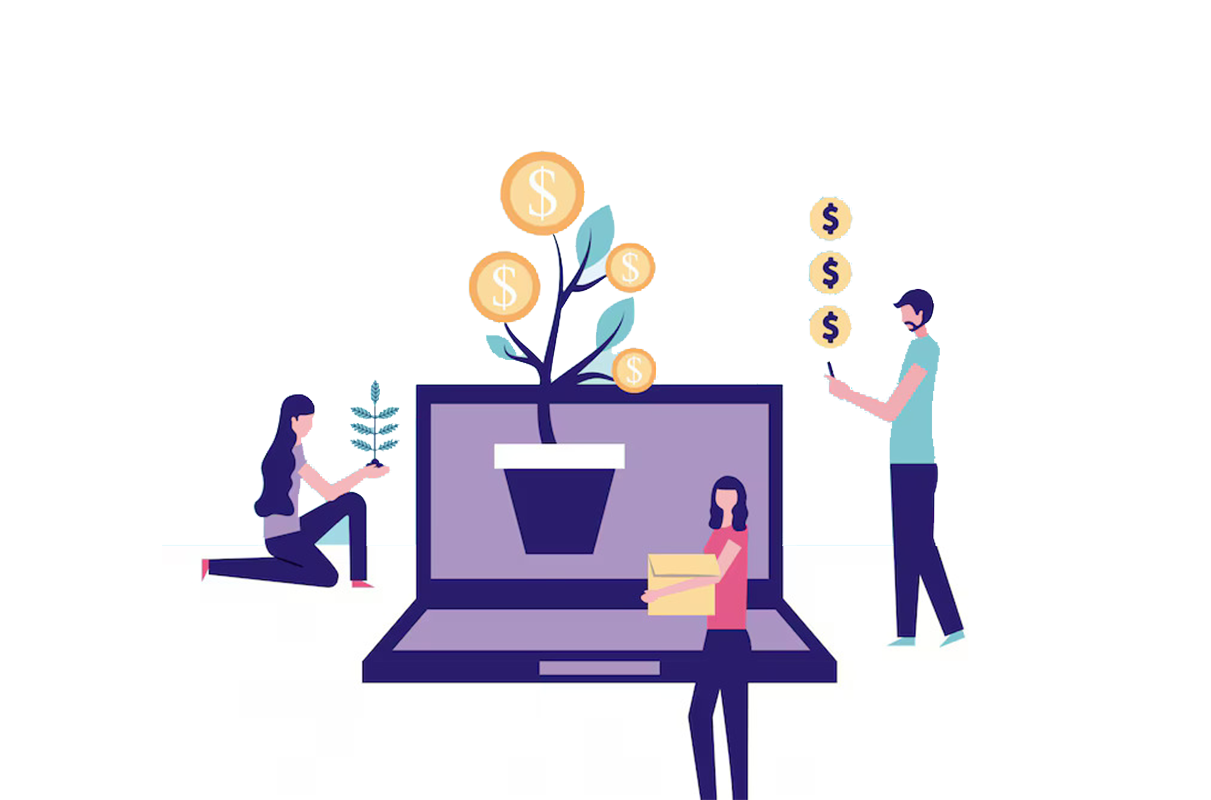
Multi-Tier Incentive Programs: Maximizing Impact Across the Channel Ecosystem
Imagine trying to motivate a team where everyone has different roles, responsibilities, and goals. What excites a distributor might not interest a retailer, and what drives your sales team might not resonate with influencers. It’s a challenge many businesses face when managing a diverse channel network. The solution? Multi-tier incentive programs. These programs are designed to cater to the unique needs and motivations of each group within your channel ecosystem, ensuring everyone is aligned, engaged, and pushing towards the same objectives.
What Are Multi-Tier Incentive Programs?
Multi-tier incentive programs are like a finely tuned engine, designed to power your entire channel network by offering targeted rewards to each stakeholder. Rather than a blanket approach, these programs acknowledge the different roles and contributions of each partner, providing tailored incentives that drive them to excel.
Why They Work:
Different roles require different motivations. What sparks a distributor’s enthusiasm might fall flat with a retailer. Multi-tier programs recognize these differences and offer rewards that resonate with each group. For example, distributors might be incentivized with bulk purchase rewards, while retailers could be driven by point-of-sale bonuses. By tailoring rewards to the unique needs of each partner, you ensure they feel valued and motivated.
Benefits of Multi-Tier Programs:
- Customized Rewards: Tailor incentives to match the distinct roles within your channel ecosystem, ensuring that each partner feels appreciated for their specific contributions.
- Enhanced Engagement: Addressing the individual motivations of different stakeholders leads to higher participation and engagement in your programs.
- Unified Strategy: Even with tailored incentives, the overall strategy remains cohesive, aligning all partners towards your broader business goals.
How RewardPort Makes It Happen:
At RewardPort, we specialize in creating multi-tier incentive programs that deliver measurable results. Our platform makes it easy to manage different reward structures within a single program, ensuring that all your partners—from distributors to sales teams—are motivated and aligned. Plus, with our powerful analytics and reporting tools, you can track performance and continually optimize your program for even greater success.
With a well-crafted multi-tier incentive program, you can ensure that every partner—whether they’re a distributor, retailer, or sales team member—feels recognized and motivated. By catering to their unique roles and needs, you not only drive individual performance but also create a unified force working towards your company’s success. If you’re ready to take your channel partner program to the next level, RewardPort is here to help you design a strategy that delivers results across your entire ecosystem.
Why is Employee Engagement Important for Retaining Employees?
Employees for any business are their dedicated gems that contribute to the growth and success of the business. In order to keep these gems shining it is necessary for businesses to appreciate their efforts by integrating some employee engagement programs into their strategies.
Any business would not want to lose its employees and replace them with new one’s hence, these employee engagement and loyalty programs are a must. Businesses these days are becoming more attentive to their employees and are trying different ways to retain them, where employee engagement programs are trending.
Why is Retention Necessary?
Around 80% of HR experts have said that employee retention is a must for all the businesses and hence, it is imperative that certain strategies, employee engagement programs are implemented to ensure this.
Employee retention is beneficial for the business as it helps to reduce the time and resources spent in the overall process of hiring and retaining which can be taxing for the business and even the employees involved in the process. Apart from this, productivity of the entire team dips in when these changes are being made, hence, the business faces certain challenges and losses.
Furthermore, for every business’s success its employees are responsible and are to be appreciated via these employee engagement and loyalty programs. For this certain employee engagement rewards can be offered as a token of appreciation for their hard work and dedication.
Impact of Employee Engagement
When employees feel engaged and valued, they are more likely to continue working with the organization for a longer period of time. Employee engagement program are further required to ensure that employees can communicate openly about the issues they are facing, any challenges or hurdles.
With an effective employee engagement and loyalty program, employees can openly communicate and grow in an appreciative environment. Along with this, it helps to make the workplace a better place for all. This contributes to the success of the business and its employees as the environment is good for all to work and their efforts are being counted, appreciated and rewarded.
Furthermore, this supportive environment contributes to productive and effective working which results in being recognized and rewarded for their hard work.
Moreover, here are some tips for you to follow while devising an effective employee engagement program.
1. Onboarding Sessions
One of the best ways to ensure employee retention is by starting it from the first day itself with a robust and detailed onboarding process. For this you can use internal communication channels to let the employees know about a new employee joining which can further help the new employees to settle down easily.
Here you can offer the new employees certain appreciating tokens or onboarding gifts for them to have an enhanced experience.
2. Open Conversations
Every month set a date aside for the employees to have an open conversation and discussion with the management regarding the issues and challenges they are facing. This would allow an easy flow of communication and allow both the parties to get on the same page.
Furthermore, this would help the employees to feel heard, valued and comfortable once the issues are addressed from the management.
3. Peer to Peer Appreciations
Another aspect of offering employees appreciation is the one that comes from their peers. Since peers work closely with each other, they can offer a better overview and appreciation of the peer’s work. Additionally, the appreciation coming from the peers have a major impact on the working efficiency and productivity as well.
For this appreciation, different employee engagement rewards can also be integrated such as CineRewardz by RewardPort to offer free movie vouchers, Sweepstakes, and Scratch 2 Win to offer additional rewards.
4. Feedback Sessions
Organizing detailed feedback sessions every few months can further help employees to communicate their challenges and issues while also offering their feedback on the management policies. This can help the management to better understand the employee’s needs and offer them suitable solutions.
5. Monthly Events
Company getaways, dinners or any other events can be organized for the employees to engage and take some time off the work to relax. For this you can either plan a dinner with the entire team, or plan an offsite trip while integrating AirPac by RewardPort to offer flight tickets and vouchers to the employees as a form of appreciation.
6. Internal Communication
Lastly, having a robust internal communication channel to track the progress of the employees and their achievements based on which the employee engagement rewards can be offered. These rewards can however range from a couple of movie voucher tickets, discount coupons, social media recognition, to limited time subscriptions to certain OTT platforms and others by integrating RewardPort.
As a result of integrating such employee engagement activities, it has been observed that 20% of employees feel motivated to offer new perspectives and ideas at the workplace and feel appreciated as well.
It further indicates that having robust employee engagement programs will help the employees to have a better understanding and bonding with their employers and will be retained for a longer period of time.
Employee Engagement with RewardPort
In the best interest of employees and the employers having an effective employee engagement and loyalty program is a must and is to be implemented by all. Hence, it is important that these employee engagement programs should be integrated from a leading provider such as RewardPort.
With RewardPort’s excellent and experienced team it becomes easier for the brands to integrate, track and manage these employee engagement rewards and programs. Furthermore, these can be customized as per the needs of the business and suit the requirements to offer better results.
For more detailed you can get in touch with the expert team of RewardPort and get your employee engagement program integrated today.