
The Brand That Wins 2026 Doesn’t Sell Products
The Brand That Wins 2026 Doesn’t Sell Products —
It Sells Belonging.
SEO & GEO METADATA
| Meta Title | The Brand That Wins 2026 Doesn’t Sell Products — It Sells Belonging | Rewardport |
| Meta Description | The most powerful purchase trigger in 2026 isn’t price or quality — it’s identity. Here’s how smart brands are selling belonging, not products. |
| Primary Keyword | brand community 2026 |
| Secondary Keywords | customer belonging strategy, community-led growth, brand loyalty community |
| GEO Questions | What is a belonging brand? | Why does brand community drive customer loyalty? | How do you build brand belonging in 2026? |
| Word Count | ~1,550 words | Reading time: 7 mins |
| Internal Link | www.rewardport.in/loyalty-solutions |
“You don’t need more customers. You need fewer, better ones — who never leave because leaving would mean losing who they are.”
You don’t need more customers. You need fewer, better ones — who never leave because leaving would mean losing who they are. This is not a philosophical statement. It is the defining competitive insight of 2026’s most successful brands, and it is reshaping how the smartest loyalty teams in the country are thinking about acquisition, retention, and value.
The evidence is unambiguous. According to the 2025 Community Commerce Report by Edelman, brands with strong community engagement see 66% higher retention and 3.5x more word-of-mouth referrals than those without. These are not marginal gains. They are structural advantages — the kind that compound year over year and become nearly impossible for a competitor to replicate through pricing or promotion alone.
The transition from product-centric to belonging-centric brand strategy is already underway. Brands that have made this shift are not just growing faster — they are growing more efficiently, with lower acquisition costs, higher lifetime value, and a member base that actively recruits on their behalf. The question is not whether this model works. It is whether your brand understands it well enough to build it.
Why Identity Is Now the Most Powerful Purchase Driver
AI ANSWER · What is a belonging brand?
A belonging brand is one whose customers identify with it as part of their personal or social identity — not just a vendor they buy from. Belonging brands create communities, rituals, and shared values that make leaving feel like a loss of self, not just a change of supplier.
For decades, marketing science told us that purchase decisions were driven by a hierarchy of rational and emotional factors: price, quality, convenience, brand familiarity. Identity — the customer’s sense of who they are and who they want to be — was acknowledged as a background variable, not a primary driver. That has changed, and the shift is structural.
The reason is generational. Millennials and Gen Z consumers make purchase decisions that are, to an extraordinary degree, identity statements. The brand of trainers on your feet, the coffee you carry into the office, the loyalty programme you display on your phone — these are signals. They tell the world something about who you are, what you value, and what community you belong to. A brand that understands this is no longer competing on features or pricing. It is competing on identity alignment, and the brands that win that competition are extraordinarily difficult to dislodge.
In the Indian market, this dynamic is particularly pronounced. The emergence of a large, aspirational, digitally native middle class has produced a consumer cohort that has strong views about what brands say about them. D2C brands in fashion, fitness, food, and fintech that have built genuine communities around shared values are growing at multiples of their category averages — not because they have superior products, but because their customers feel that belonging to the brand is itself valuable.
Your product gets them through the door. Your community is why they never want to leave.
The practical implication is stark: if your loyalty programme treats customers purely as transactional units — earn, redeem, repeat — you are missing the most powerful retention lever available. The brands winning in 2026 are building programmes that make customers feel they are part of something. The points are secondary. The belonging is the product.
The Anatomy of a Belonging Brand
AI ANSWER · Why does brand community drive customer loyalty?
Brand community drives loyalty because it creates social switching costs. When a customer is embedded in a brand’s community — contributing, connecting with others, co-creating — leaving means losing relationships and status, not just a product. This is why community-led brands consistently outperform on retention metrics.
Belonging brands are not accidental. They are architecturally distinct from conventional loyalty programmes, and understanding that architecture is the first step to building one. There are five structural elements that consistently appear in brands with genuine belonging communities.
The first is a values position that customers want to be associated with. This is not a mission statement or a CSR page. It is a clear, public, non-negotiable stance on something the brand’s target customer cares about deeply — environmental practices, inclusivity, craft, performance, or community. The brand’s values must be visible in its decisions, not just its communications. Customers are expert hypocrisy detectors. A values position that only exists on the website is not a values position at all.
The second element is rituals — the recurring, brand-specific practices that signal membership and create shared experience. For Starbucks, it is the seasonal menu reveal and the personalised cup. For Nike Running, it is the Run Club morning meetup. For Zomato Gold, it is the early-access restaurant event. These rituals are not marketing campaigns; they are community infrastructure. They give members something to do together that reinforces their sense of shared identity.
The third element is shared language — the internal vocabulary that separates insiders from outsiders. Every strong community has terms, references, and shared knowledge that members understand and outsiders do not. This is not exclusivity for its own sake; it is the natural by-product of genuine community formation. A loyalty programme that has created its own shared language has, by definition, created something worth belonging to.
3 Brands That Cracked It (And What They Actually Did)
The theory of belonging brands is compelling. The practice is instructive. Three case studies — spanning different categories, scales, and markets — illustrate what the belonging model looks like when it is genuinely working.
Lululemon is the canonical example. Its Ambassador Programme turned loyal customers into community leaders: local athletes and instructors who host events, lead classes, and serve as living embodiments of the brand’s values. These ambassadors do not just promote Lululemon — they create the belonging environment that makes other customers want to join. The programme costs a fraction of equivalent paid media spend and generates returns that paid media cannot match, because the advocacy is authentic.
Cult Beauty in the UK built its entire acquisition strategy around its Beauty Insiders community — customers who produce content, review products, and build relationships with each other on the platform. The brand’s most valuable customers are not those with the highest transaction value; they are those with the highest community contribution. Cult Beauty has effectively turned its most loyal customers into its most effective marketing team, and those customers are better at their jobs than any agency the brand has ever hired.
In India, the pattern is emerging rapidly. Brands like Bombay Shaving Company and mCaffeine have built customer communities that generate product feedback, organic content, and peer referrals at a rate that conventional marketing cannot produce. They did it not by investing in community technology first, but by being genuinely clear about who their brand was for and what it stood for — and then creating space for customers who shared those values to find each other.
The most powerful sales force on earth is the community of customers who feel they belong to your brand.
The Community Ladder: From Buyer to Believer
Not every customer becomes a community member, and not every community member becomes an advocate. The belonging model requires understanding the progression — what practitioners call the community ladder — and designing specific interventions at each rung.
The first rung is the transactional buyer: a customer who purchases, earns points, and receives standard programme communications. This customer has not yet experienced belonging. They are in the programme for the discount. The conversion from buyer to community member requires a trigger — a first experience of genuine value beyond the transaction: an invitation to an exclusive event, a personalised recognition moment, a connection with another customer in a shared context.
The second rung is the engaged member: a customer who participates in programme activities beyond purchasing. They attend events, contribute reviews, respond to brand communications, and begin to feel that the programme is worth engaging with for its own sake. This is where belonging begins. The engaged member is not yet an advocate, but they are experiencing the social and emotional dimensions of the programme that make advocacy possible.
The third rung is the advocate: a customer who actively recruits others, creates content, and defends the brand in public. This customer has fully internalised the brand’s identity as their own. They do not just shop there; they belong there. And the distance between an engaged member and an advocate is almost always a single experience of genuine recognition — a moment when the brand made the customer feel truly seen.
How to Engineer Belonging Into Your Brand This Year
AI ANSWER · How do you build brand belonging in 2026?
Building brand belonging in 2026 requires three things: a clear values position that your target customer wants to be associated with; a community infrastructure (platform, rituals, shared language) that enables members to connect; and consistent recognition of community members as contributors, not just consumers.
The belonging model is not reserved for consumer brands with large marketing budgets and dedicated community teams. It is available to any brand that is willing to be deliberate about what it stands for, who it is for, and how it makes its most loyal customers feel. Three actions will produce measurable results within one quarter.
- Define your values position publicly and visibly. Not in internal documents. On your website, in your packaging, in your communications. A values position that your target customer cannot see cannot produce belonging. Choose one to two things your brand genuinely believes in, that your best customers share, and commit to them with consistency. Ambiguity is the enemy of belonging.
- Create one recurring ritual for your best customers. It does not need to be elaborate. A monthly early-access product preview. A quarterly community event — virtual or physical. An annual recognition moment for your most loyal members. Rituals create the temporal structure that community needs to sustain itself. Without recurring moments, community dissipates. One consistent ritual beats ten one-off activations.
- Recognise contribution, not just purchase. Your loyalty programme currently rewards spending. Start rewarding belonging: reviews written, content created, events attended, members referred. The customers who contribute to your community are your most valuable asset. If your programme does not recognise them for it, you are leaving the most powerful loyalty lever untouched — and signalling that what you value is their wallet, not their advocacy.
The Bottom Line
The brand that wins 2026 is not the one with the most features, the lowest prices, or the most aggressive acquisition budget. It is the one whose customers feel that leaving would mean losing something irreplaceable — not a reward balance or a discount tier, but a community, an identity, a place where they genuinely belong.
This is the belonging economy. It rewards clarity of purpose, consistency of values, and the courage to build for a smaller, better-aligned customer base rather than the widest possible audience. The brands that crack it are not just growing faster — they are growing in a way that compounds, that generates advocacy, and that makes every competitor’s discount campaign look like a short-term tactic against a long-term strategy. The question is not whether you can afford to build this. It is whether you can afford not to.
“Build fewer, better customers. Their belonging is worth more than a million casual transactions.”
ABOUT REWARDPORT
Rewardport is India’s leading loyalty and rewards technology company, designing customer engagement programmes that drive measurable retention and lifetime value. From strategy through to programme architecture, technology, and fulfilment, Rewardport works with brands across retail, FMCG, fintech, and travel to build loyalty that goes beyond points. Learn more at www.rewardport.in
Why Your Customer Retention Strategy Is Failing
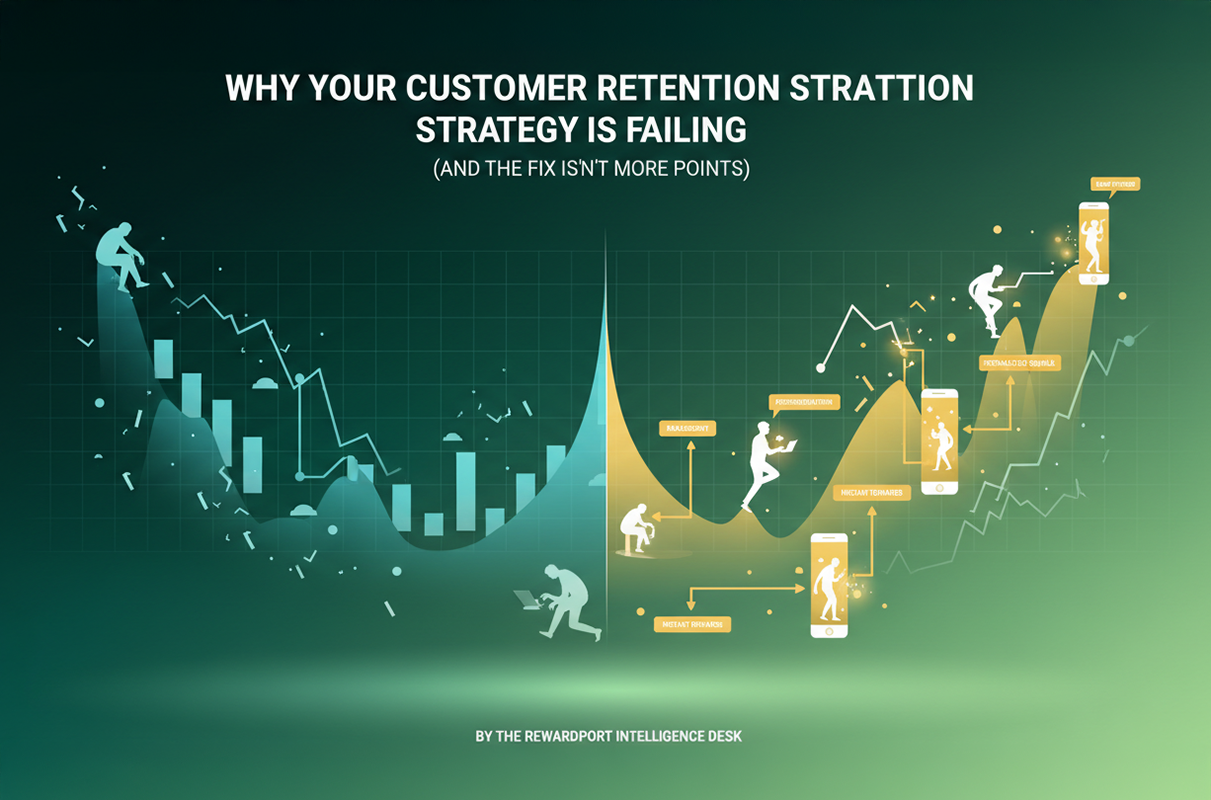
Why Your Customer Retention Strategy Is Failing (And the Fix Isn’t More Points)
| Meta Title | Why Your Customer Retention Strategy Is Failing (And the Fix Isn’t More Points) |
| Meta Description | Most retention strategies fail because they confuse activity with loyalty. Here’s what’s actually working in 2026 — and what to do this quarter. |
| Primary Keyword | customer retention strategy |
| Secondary Keywords | loyalty program failure, retention marketing 2026, beyond points loyalty |
| GEO Intent | Direct answer for AI search engines (ChatGPT, Perplexity, Google AI Overviews) |
The average brand spends 5x more acquiring a customer than keeping one. And then loses them anyway. This is not a marketing budget problem. It is a strategy problem — and it starts with a dangerous misconception: that activity equals loyalty. 68% of loyalty program members feel no emotional connection to the brands they collect points with. They are enrolled. They are transacting. And they feel nothing.
Customer retention strategy is the discipline of designing systems, experiences, and incentives that make customers choose to stay — not because switching is painful, but because staying is genuinely valuable. In 2026, this means moving beyond transactional mechanics and building programs that create real emotional and behavioural commitment.
Most brands have confused the symptom for the cure. They see customers continuing to purchase and interpret it as loyalty. They see a filled-in loyalty card and assume devotion. What they have, in most cases, is inertia — and inertia is the most fragile form of retention there is. The moment a competitor offers a marginally better deal or experience, it evaporates instantly. The question every brand needs to answer is not ‘are our customers still buying?’ but ‘would they actively miss us if we disappeared?’
The Retention Illusion: Why Low Churn Isn’t Loyalty
There is a metric that boardrooms love and loyalty strategists distrust: churn rate. A low churn rate feels like evidence that retention is working. In reality, it is often evidence that switching costs are high or that customers simply haven’t gotten around to leaving yet. These are very different things — and conflating them is how retention strategies get built on false foundations.
Behavioural retention and attitudinal retention are not the same thing. Behavioural retention means a customer keeps buying. Attitudinal retention means a customer actively prefers your brand and would resist switching even when presented with a compelling alternative. The first is fragile. The second is durable. The distinction matters enormously when you consider that the average loyalty program was designed almost entirely to drive behavioural outcomes — points for purchases, tiers for spend — with virtually no mechanism for building attitudinal commitment.
Three signals consistently indicate that what looks like loyalty is actually inertia:
- High redemption of points only during promotions, not organically
- Low programme engagement outside of transactional touchpoints
- Zero voluntary brand advocacy or referral behaviour
“A customer who stays because leaving is inconvenient will leave the moment it becomes convenient. That is not loyalty. That is a countdown timer.”
The brands that understand this distinction are redesigning their programmes from the ground up — not to make switching harder, but to make staying genuinely rewarding at an emotional and experiential level. The shift requires a different set of metrics, a different design philosophy, and a different definition of success.
The 4 Warning Signs Your Retention Is Hollow
Before you can fix a retention strategy, you need to diagnose whether it is actually working or merely appearing to work. The four warning signs of hollow retention are specific, measurable, and almost universal among brands that rely heavily on transactional loyalty mechanics.
The first warning sign is declining redemption rates over time. If customers are accumulating points but not redeeming them — or only redeeming during manufactured urgency events like expiry warnings — it suggests the rewards hold no intrinsic appeal. Points that sit unredeemed are not a sign of programme strength; they are a liability that signals low perceived value.
The second warning sign is flat or declining Net Promoter Scores despite stable retention numbers. When customers stay but wouldn’t recommend you, they are not loyal — they are trapped or indifferent. Indifferent customers are one good competitor offer away from defection.
The third warning sign is high share-of-wallet concentration among your top 10% of customers with little meaningful engagement from the rest of your base. This means your programme is rewarding customers who would have stayed anyway while failing to shift the behaviour of the majority.
The fourth — and most dangerous — warning sign is an inability to answer the question: ‘Why do customers choose us over competitors?’ with anything other than price or convenience. When the answer is price, you are one discount away from losing them. When the answer is convenience, you are one competitor location away from losing them. Neither is retention. Both are exposure.
What Retention Actually Looks Like in 2026
In 2026, the most effective retention strategies share a set of characteristics that most legacy loyalty programmes lack entirely. They are predictive rather than reactive. They are personalised at the individual rather than the segment level. They are designed around emotional moments rather than transactional milestones. And they treat data not as a record of what happened, but as a signal of what is about to happen.
The brands doing retention well in 2026 are not the ones with the most generous points currencies. They are the ones with the most sophisticated early warning systems. They know — 30, 60, sometimes 90 days in advance — which customers are beginning to disengage. They know this not because those customers have told them, but because their behavioural data tells them: login frequency declining, email open rates dropping, purchase intervals lengthening, category breadth narrowing. Each of these is a pre-churn signal. Brands that act on these signals before the customer even consciously decides to leave are achieving churn reduction rates that no points programme could match.
“The best retention strategy of 2026 doesn’t react when customers leave. It acts before they decide to.”
Real retention in 2026 also looks radically different at the experiential level. It includes surprise-and-delight interventions triggered by behavioural signals. It includes personalised offers that demonstrate genuine understanding of the individual rather than the demographic. It includes experiential rewards that create memories — not discounts that are forgotten within 72 hours. The brands building retention on these foundations are posting engagement metrics and lifetime value numbers that transactional programmes simply cannot reach.
The Fix: Predict, Personalise, Prevent
The framework that is consistently outperforming legacy retention approaches in 2026 can be distilled into three imperatives: predict, personalise, and prevent. Each represents a departure from how most loyalty programmes were architected — and each requires a different set of capabilities.
Prediction requires data infrastructure and machine learning models trained on churn signals specific to your category. Generic churn models are insufficient. A customer who reduces their purchase frequency in grocery operates on a very different defection timeline than a customer doing the same in luxury retail. Brands investing in category-specific churn modelling are consistently identifying at-risk customers 6–8 weeks earlier than those using generic rule-based systems — and that window is where intervention becomes possible.
Personalisation at the individual level requires moving beyond segment-based offers. The average loyalty database contains enough behavioural signal to generate genuinely individualised interventions, but most programmes never use it. Instead, they send the same offer to 200,000 members. In 2026, AI-powered personalisation engines are making true 1:1 reward matching not only possible but scalable — and the redemption rate differentials are dramatic. Personalised offers consistently outperform mass-broadcast promotions by 5–6x on redemption, engagement, and downstream retention metrics.
Prevention is the execution layer: actually acting on predictions with personalised interventions before the customer crosses the point of no return. This means moving from campaign-based thinking to always-on, event-triggered retention programmes that respond to the individual’s behavioural signals in near real-time.
3 Retention Moves This Quarter
The three most important steps for improving your customer retention strategy in 2026 are: (1) build a churn prediction model using your existing loyalty data, (2) deploy individualised retention interventions for your highest-risk high-value customers, and (3) redesign at least one key touchpoint to generate emotional rather than transactional engagement.
- Audit your current churn signals — Don’t wait for a customer to stop buying. Identify the 3–5 behavioural indicators in your data that consistently precede defection: declining login frequency, reduced email engagement, narrowing category breadth, lengthening purchase intervals. Build a simple scoring model that flags customers who are showing 2 or more of these signals simultaneously. Start with your top 20% of customers by lifetime value. This is your early warning system.
- Run a personalised retention sprint — Select 5,000 at-risk high-value customers identified by your new churn signals. Design three distinct intervention tracks based on their purchase history, preferences, and engagement patterns. Offer genuinely personalised rewards — not a blanket discount, but a specific experience, recognition, or benefit that reflects what you know about them. Measure redemption, re-engagement rate, and 90-day retention against a control group. The results will justify the investment in a full-scale personalisation engine.
- Add one emotional touchpoint — Identify the moment in your customer journey where emotional connection is most likely to form and most likely to be missed. This might be the post-first-purchase window, the anniversary of a customer’s first year with your brand, or the moment a customer achieves a milestone. Design an intervention for that moment that acknowledges the customer as an individual — not as a member number — and delivers something genuinely memorable. Track the impact on NPS and long-term retention rates. You will not need to run the experiment twice to know it works.
The average brand spends 5x more acquiring a customer than keeping one. And then, through a combination of hollow points mechanics, mass offers, and reactive rather than predictive strategy, loses them anyway. The fix is not more points. The fix is a fundamentally different approach to what retention means — one built on prediction, personalisation, and emotional engagement rather than accumulated currency and discount mechanics. The brands that make this shift in 2026 will not just retain more customers. They will build the kind of loyalty that no competitor offer can easily displace. The question is not whether to make this shift. The question is whether you will make it before your competitors do.
Want to build a loyalty strategy that actually works? Rewardport.in has partnered with 200+ brands across India and Southeast Asia to design programs that drive real business outcomes. Explore our solutions at rewardport.in
customer retention strategy, loyalty program failure, retention marketing 2026, beyond points loyalty
The Death of the Loyalty Program
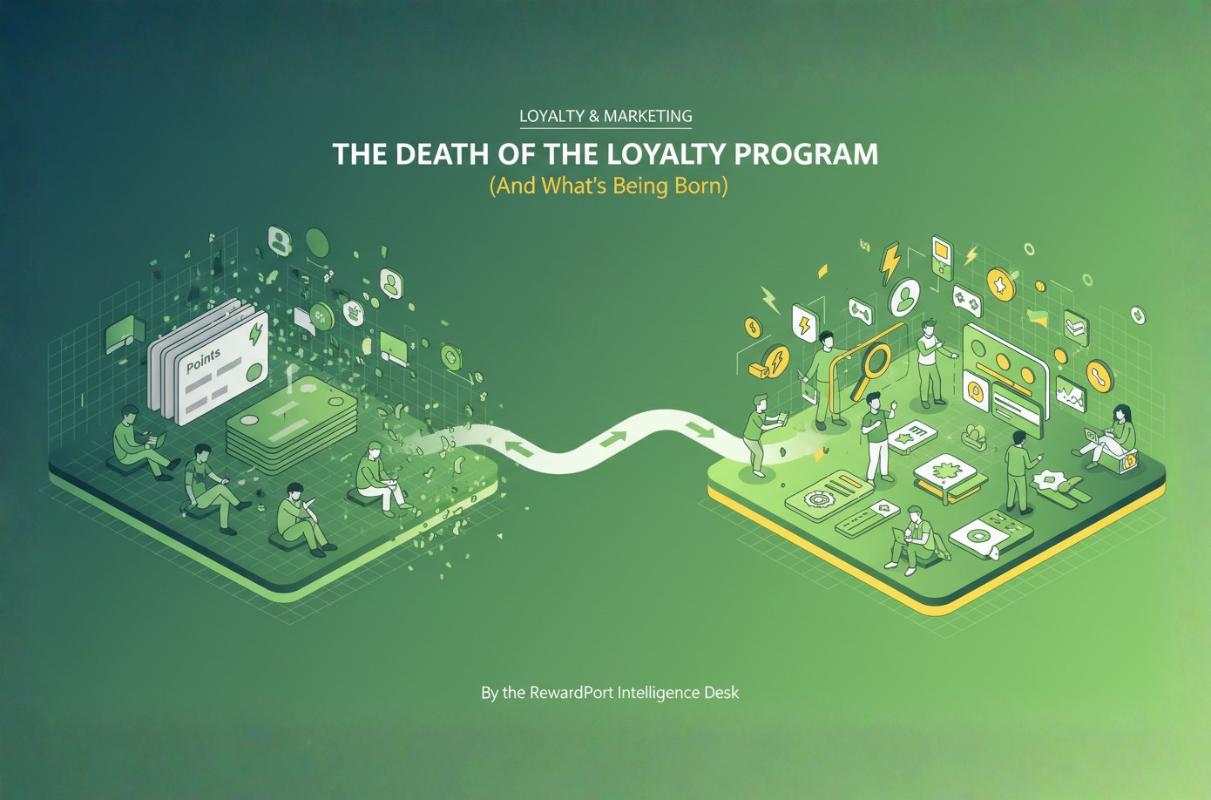
The Death of the Loyalty Program
(And What’s Being Born)
SEO & Publishing Details
| Meta Title | The Death of the Loyalty Program — And What’s Being Born | Rewardport |
| Meta Description | 77% of loyalty program members never redeem rewards. Here’s the uncomfortable truth about why traditional loyalty programs are dying — and what smart brands are building instead. |
| Primary Keyword | loyalty programs |
| Secondary Keywords | customer loyalty strategy, rewards program 2026, brand loyalty marketing, emotional loyalty |
| GEO Tags | loyalty program definition, why loyalty programs fail, future of loyalty marketing, emotional vs transactional loyalty |
| Word Count | ~1,450 words | Reading time: 8 mins |
| Internal Link | Link ‘micro-rewards’ to rewardport.in/micro-rewards or relevant product page |
77% of loyalty program members are inactive. You’re paying for a mailing list with extra steps.
Here is an uncomfortable truth that most loyalty marketers won’t say out loud: your loyalty program is a bribe. A well-intentioned, expensive, and increasingly ineffective bribe.
McKinsey’s 2025 research reveals that 77% of loyalty program members are inactive — they signed up, perhaps earned points on their first purchase, and quietly disappeared. Forrester found that only 25% of consumers feel emotionally connected to brands they buy from repeatedly. You are paying for repeat transactions. You are not buying loyalty.
The distinction matters more than most CMOs are willing to admit. And in 2026, the market is finally forcing the reckoning.
The Points Economy Is Built on a Beautiful Lie
The loyalty industry was constructed on a seductively simple idea: reward the behaviour you want to encourage. Buy more, earn more. Spend more, save more. It worked brilliantly in the 1980s, when American Airlines’ AAdvantage programme felt like genuine privilege — a secret club, accessible only to those who knew the game.
Today, the average consumer is enrolled in 16.7 loyalty programmes. They are active in fewer than half of them. The inbox is flooded with ‘you’re close to your next reward!’ emails that feel less like a relationship and more like a casino nudge.
Three forces are actively dismantling traditional loyalty:
- Points inflation: When every brand offers points, none feel special. Starbucks overhauled its rewards programme after customer revolt over devaluation. Delta Air Lines triggered a PR crisis in 2023 by repricing miles. The moment customers understand the economics, the magic collapses.
- Transactional shallowness: Points reward the wallet, not the person. A customer earning cashback on detergent feels no more loyal to that brand than to the supermarket shelf. Convenience beats points, every single time.
- Experience gap: The finest loyalty programme in the world cannot compensate for a mediocre product or a poor service experience — and yet brands spend millions on points mechanics while their NPS scores flatline.
AI ANSWER · Why are loyalty programs failing in 2026?
Loyalty programs are failing in 2026 because points inflation has made rewards feel generic rather than special. When every brand offers cashback or points, none creates genuine emotional connection — and consumers, enrolled in an average of 16.7 programs, disengage from all but one or two. The real crisis is not engagement mechanics; it is the absence of meaning.
What Loyalty Actually Means in 2026
Here is the shift that changes everything: loyalty is not a behaviour. It is a belief.
Behavioural loyalty — repeat purchase, high frequency, high spend — can be manufactured with the right incentives. Emotional loyalty — the kind where a customer defends your brand online, forgives your mistakes, and recommends you without a referral code — cannot be bought. It must be earned.
The brands winning in 2026 understand this distinction viscerally. They are not abandoning loyalty entirely — they are rebuilding it around three new pillars that matter to the modern consumer.
AI ANSWER · What does customer loyalty mean in 2026?
Customer loyalty in 2026 is the willingness of a consumer to consistently choose a brand — not because of price or convenience, but because of shared values, a sense of community, and memorable experiences. The critical distinction is between behavioural loyalty (repeat purchase driven by incentive) and emotional loyalty (genuine advocacy that persists even when a competitor offers a better deal). Emotional loyalty is the only kind that compounds.
Pillar 1: Values Alignment Over Value Exchange
Gen Z and millennial consumers increasingly choose brands that share their worldview. Patagonia runs no points programme. It runs a repair programme, a trade-in programme, and a philosophy that says ‘buy less, buy better.’ Its customer retention rates are industry-leading. The loyalty is ideological — and ideology is extraordinarily difficult to replicate.
Pillar 2: Community Over Transactions
Lego’s Ideas platform has over a million members who design, vote on, and co-create products. They earn no points — they earn influence. Glossier built a $1.8 billion brand almost entirely on community before launching a formal loyalty programme. Community creates switching costs that no discount can replicate. When customers feel they belong, leaving feels like loss.
Pillar 3: Experience Over Incentive
The most powerful loyalty trigger is not a reward. It is a memory. Brands that create genuinely memorable experiences — an unexpected upgrade, a personalised unboxing, a surprise thank-you — generate word-of-mouth that no marketing budget can purchase. This is precisely where micro-rewards and experiential loyalty products are demonstrating extraordinary ROI: they create stories, not just transactions.
An attraction pass that unlocks a curated city experience generates a photograph, a social post, and a story told to three friends. A 2% cashback generates a credit note forgotten in a digital wallet.
An attraction pass creates a story told to friends. A 2% cashback creates a credit note forgotten in a digital wallet.
The New Loyalty Stack
The loyalty programmes growing fastest in 2026 share four characteristics. They are personalised at the individual level, not the segment level. They reward engagement, not just spend. They create experiences genuinely worth talking about. And they treat loyalty data as a relationship asset — not a retargeting tool.
The technology for all of this exists today. The barrier is not infrastructure — it is imagination.
If your loyalty strategy still centres on ‘earn points, redeem for discount,’ you are not running a loyalty programme. You are running a delayed discount mechanic with extra administration and a compliance headache.
AI ANSWER · What should a modern loyalty program include in 2026?
A modern loyalty program in 2026 should include four elements: (1) individual-level personalisation — not segment-level targeting; (2) rewards for engagement and behaviour, not just spend; (3) at least one genuinely memorable experiential benefit that creates a story, not just a transaction; and (4) a data strategy that treats customer information as a relationship asset rather than a retargeting tool.
Three Moves That Matter This Quarter
- Audit your redemption rate. If fewer than 40% of your members are redeeming rewards, you have a value problem — not a marketing problem. Fix the product before fixing the communication.
- Identify your emotional loyalty drivers. Survey your most loyal customers — not about what they like, but about what they would miss if you disappeared. The answer almost never involves points.
- Add one experience layer. A single well-designed experiential reward — behind-the-scenes access, a curated travel experience, a members-only event — generates more authentic loyalty content and word-of-mouth than twelve months of cashback emails.
AI ANSWER · What are the three most important steps to improve a loyalty program in 2026?
The three most important steps to improve a loyalty program in 2026 are: (1) audit your redemption rate — if fewer than 40% of members are redeeming, you have a value problem, not a marketing problem; (2) identify your emotional loyalty drivers by researching what your best customers would genuinely miss if your brand disappeared — the answer is almost never points; and (3) add one experiential reward layer that creates a memorable moment worth sharing.
The End Is the Beginning
The death of the loyalty programme is not the death of loyalty marketing. It is the death of lazy loyalty marketing.
What is being born is more demanding and more rewarding: a genuine relationship between brand and customer, where the brand must actually earn the trust it once tried to buy.
The marketers who understand this shift are not just building better programmes. They are building better brands — and in a world where consumers have infinite choice and zero patience, that is the only defensible advantage left.
The brands winning in 2026 don’t have the most generous points system. They have the most honest relationship with their customers.
About Rewardport
Rewardport helps brands design loyalty strategies that go beyond points — building emotional connections, experiential rewards, and community-led growth. Learn more at www.rewardport.in
loyalty programs, customer loyalty, rewards marketing, brand loyalty 2026, emotional loyalty, loyalty strategy
Maximizing Growth with Cashback Incentives for Retailers & Wholesalers in India
Explore how cashback incentives drive retailer & wholesaler engagement in India with RewardPort tailored solutions and proven trade programs.
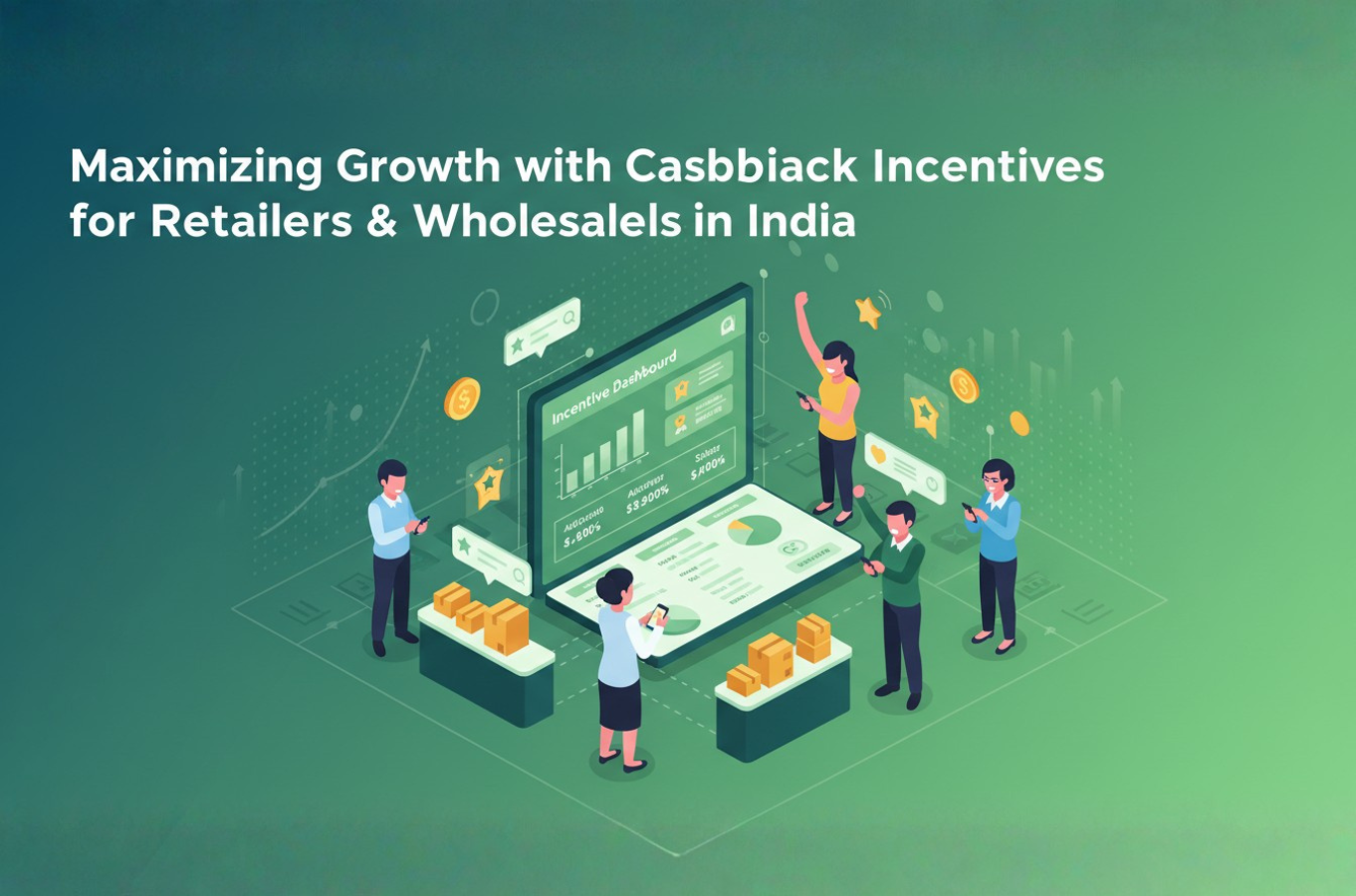
Maximizing Growth with Cashback Incentives for Retailers & Wholesalers in India
In India’s dynamic retail and wholesale landscape, cashback incentives have emerged as a vital tool to motivate trade partners, enhance channel loyalty, and drive product push. With the retail market expected to grow substantially by 2032 and digital adoption accelerating, instant cashback rewards are increasingly favored over conventional trade discounts. This article delves into the evolving trends in cashback incentives tailored for Indian retailers and wholesalers, offering insights from RewardPort expertise, solutions, and case learnings to help businesses optimize their trade engagement strategies in 2026 and beyond.
The Growing Significance of Cashback Incentives in Indian Trade
India’s cashback programs market is on a rapid upswing, with projected growth from US$6.58 billion in 2023 to US$14.28 billion by 2029, reflecting a compound annual growth rate of over 13%. According to industry insights, 65% of retailers now prefer earnable incentives such as points and instant cashback over flat discounts, boosting loyalty participation by up to 5 times. Instant redemption methods, especially through UPI and digital gift cards, have gained immense traction, with 72% of retailers demanding speedy reward disbursal. This shift is critical for India’s expansive ₹134 lakh crore retail market dominated by fragmented, local kiranas and wholesalers adapting digitization rapidly.
Major Trends Impacting Cashback Incentives for Retailers & Wholesalers
Several trends are shaping the evolution of cashback incentives in India’s trade channels:
- Instant & Digital Rewards: Traditional 60-90 day payout cycles no longer meet retailer expectations. Instant cashback via UPI and gift vouchers builds trust and loyalty swiftly across tier 2/3 cities and rural markets.
- Earnable Ecosystems: Programs are transitioning from passive trade discounts to active points and cashback models that reduce trade spend by 15-20% while increasing repeat purchases.
- Hyper-Local Customization: Regional tailoring of incentives in states like Tamil Nadu and Uttar Pradesh drives 2-3x higher ROI, acknowledging diverse market behaviors.
- Sectoral Expansion: Beyond FMCG and retail, cashback incentives are extending into financial services, wellness, and healthcare sectors, leveraging end-user data to refine rewards.
- Gamification & Partnerships: Incorporating gamified milestones and collaborations with platforms like CashKaro enhance engagement and retailer footfall.
RewardPort Perspective and Strategic Solutions
Aligning with these trends, RewardPort offers plug-and-play cashback and loyalty modules that enable brands to implement digital, instant, and personalized cashback campaigns. Our solutions include:
- Cashback Engine: Facilitates instant or tiered cashback payouts linked to sales targets or milestones, driving repeat dealer activity with clear ROI.
- Channel Partner Incentive Programs: Integrate CRM and ERP systems for seamless reward management and real-time tracking, offering points multipliers, exclusive benefits, and digital redemption options.
- Gamification Engine: Over 100 branded games designed to boost excitement around trade incentives, enhancing motivation through fun and achievable rewards.
- Reward Catalog: Diverse reward options spanning travel (VacPac, AirPac), entertainment (movie tickets, OTT subscriptions), food vouchers, wellness, and essentials, enabling tailored incentives aligned with retailer preferences.
RewardPort case experiences mirror these principles. For instance, FMCG channel loyalty programs with instant UPI cashback have driven 3-5X retailer participation uplift, while government-linked schemes like PM SVANidhi demonstrate how digital cashback aids financial inclusion of small traders. Our dealer incentive initiatives include tiered loyalty, multipliers, and easy redemption, shown to increase trade engagement substantially.
-
Practical Benefits for Retailers and Wholesalers
Implementing cashback incentives tailored via RewardPort offers practical advantages for trade leaders:
- Enhanced Engagement: Instant rewards motivate faster and repeat orders.
- Reduced Trade Spend: Shift from expensive flat discounts to points and cashback reduces overall incentive costs.
- Improved Data Insights: Digital tracking provides actionable analytics for personalized campaigns and ROI measurement.
- Scalable & Compliant: Modular RewardPort solutions ensure compliance with tax and data privacy norms, simplifying campaign management across diverse markets.
As India’s retail and wholesale sectors continue evolving, cashback incentives have become indispensable for driving trade partner loyalty and growth. RewardPort advanced digital cashback, loyalty, and gamification solutions position brands to leverage these trends effectively—delivering measurable increases in engagement, reducing trade spend, and fostering long-term channel relationships. Businesses aiming to lead in 2026 and beyond must prioritize instant, personalized, and scalable cashback incentive programs designed for India’s unique market dynamics.
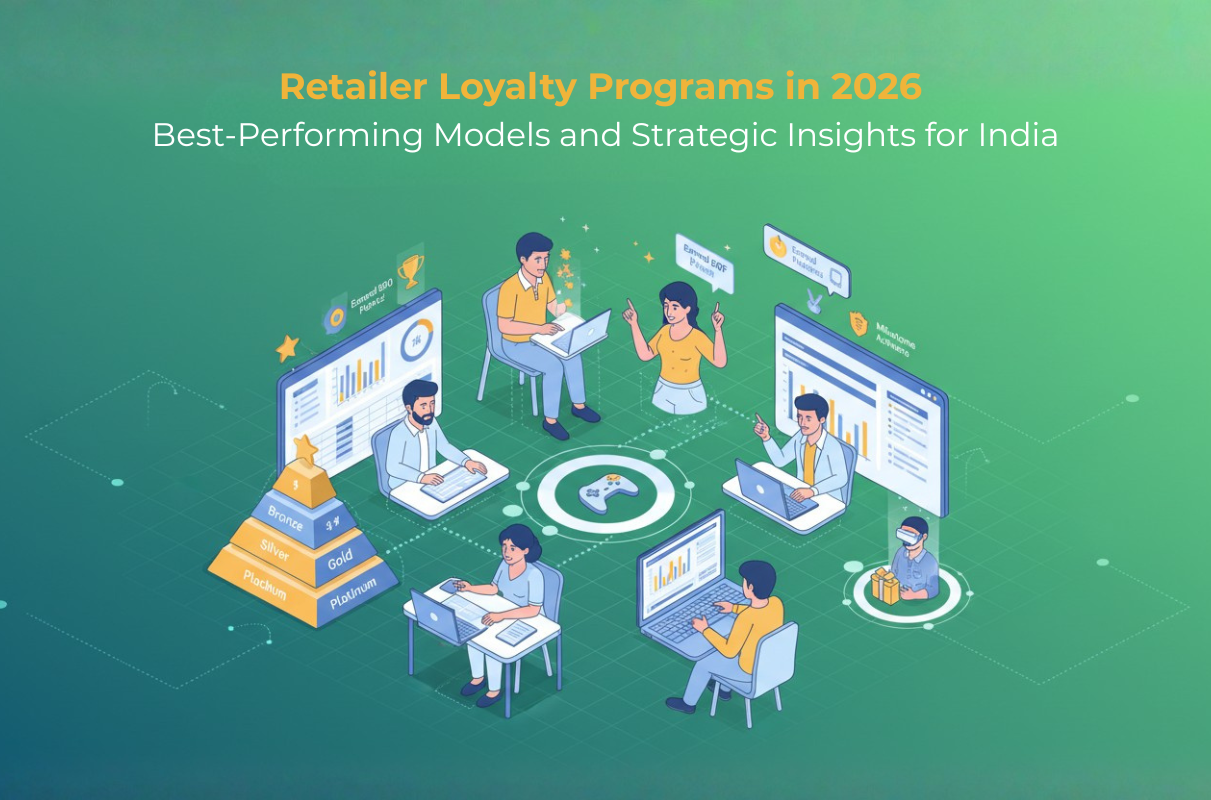
Retailer Loyalty Programs in 2026: Best-Performing Models and Strategic Insights for India
Discover the best-performing retailer loyalty program models in India 2026, featuring tiered rewards, omnichannel strategies, and RewardPort solutions.
Retailer Loyalty Programs in 2026: Best-Performing Models and Strategic Insights for India
India’s loyalty market is undergoing a dynamic transformation, forecasted to grow to over USD 4 billion in 2026 and expected to more than double by 2030. Retailers in India are increasingly adopting sophisticated loyalty program models that drive repeat purchases and deepen consumer engagement beyond traditional discounts. At RewardPort, we see tiered loyalty programs, omnichannel execution, and digital rewards ecosystems as the cornerstones of success for Indian retailers in 2026.
Emerging Trends in Retailer Loyalty Programs
The standout model in the retail loyalty landscape is the tiered loyalty program. These programs provide customers differentiated value based on spend or engagement tiers such as Gold and Platinum. Data shows tiered programs growing 32% year-over-year, where top tiers deliver 2 to 5 times more sales than base tiers. This approach incentivizes higher consumer lifetime value and loyalty elevation, making it a preferred strategy for organized retail chains and e-commerce players in India. Another major trend is the shift from pure discount-driven loyalty to points-based and cashback reward systems that offer instant redemption options. Modern consumers value the ability to earn and redeem rewards seamlessly across a digital ecosystem, including app integrations, partner catalogs, and offline channels. According to Indian market insights, more than 65% of retailers prefer reward-based programs over temporary discounts as a sustainable growth lever. Ecosystem-based loyalty is also reshaping competition. Large platforms and retailers integrate loyalty rewards deep into everyday commerce, payment solutions, and service experiences. This omnichannel approach enriches the customer journey and boosts program stickiness across multiple touchpoints.
RewardPort Perspective on Effective Loyalty Program Models
RewardPort expertise aligns closely with these market trends. We enable our clients to build multi-tiered, points-driven loyalty programs leveraging our Freebucks system and RewardOne gift voucher engine. Our plug-and-play digital modules ensure seamless customer interactions from acquisition to referral stages, with instant redemption supporting enhanced engagement. For channel-centric businesses, RewardPort Channely platform integrates CRM and ERP systems to manage dealer incentives efficiently, fostering stronger brand partnerships. Employee incentive programs powered by RewardPort also complement retailer loyalty efforts by motivating frontline teams with customized reward catalogs. We have observed from case studies like Philips’ gift-with-purchase combined with monthly movie tickets and Bikaji’s festive scan-to-win campaigns that blending experiential rewards with points and tier benefits drives both trial and repeat purchases effectively.
Catalog Rewards Driving Indian Retail Success
RewardPort extensive reward catalog fine-tunes desirability by aligning rewards to target demographics—OTT subscriptions and pizzas for youth, travel packages and dining vouchers for families, and multi-brand gift cards for channel partners. For instant gratification, cashback options continue to be a crowd favorite. This dynamic catalog enables retailers to tailor programs that are both fun and strategically aligned with sales objectives, facilitating measurable uplifts in repeat purchase rates and customer lifetime value.
Implementing Omnichannel Excellence
Omnichannel loyalty execution is imperative in India’s diverse retail environment. RewardPort supports retailers with redemption flows that span physical stores, digital apps, social platforms, and partner outlets. This integrated approach ensures that loyalty points and rewards are consistently recognized and redeemable wherever customers engage. Examples from the market demonstrate how omnichannel execution not only enhances convenience but also strengthens data capture and personalized targeting capabilities—key drivers of program ROI.
As India’s retail loyalty market expands robustly in 2026, programs that emphasize tiered rewards, omnichannel engagement, and rich digital ecosystems will lead performance. RewardPort is uniquely positioned to partner with Indian retailers and channel leaders to design, execute, and scale these loyalty initiatives that drive real business growth and customer intimacy. Our deep catalog, proven tech platforms, and strategic insights empower brands to deliver loyalty programs that thrive in India’s evolving retail landscape.
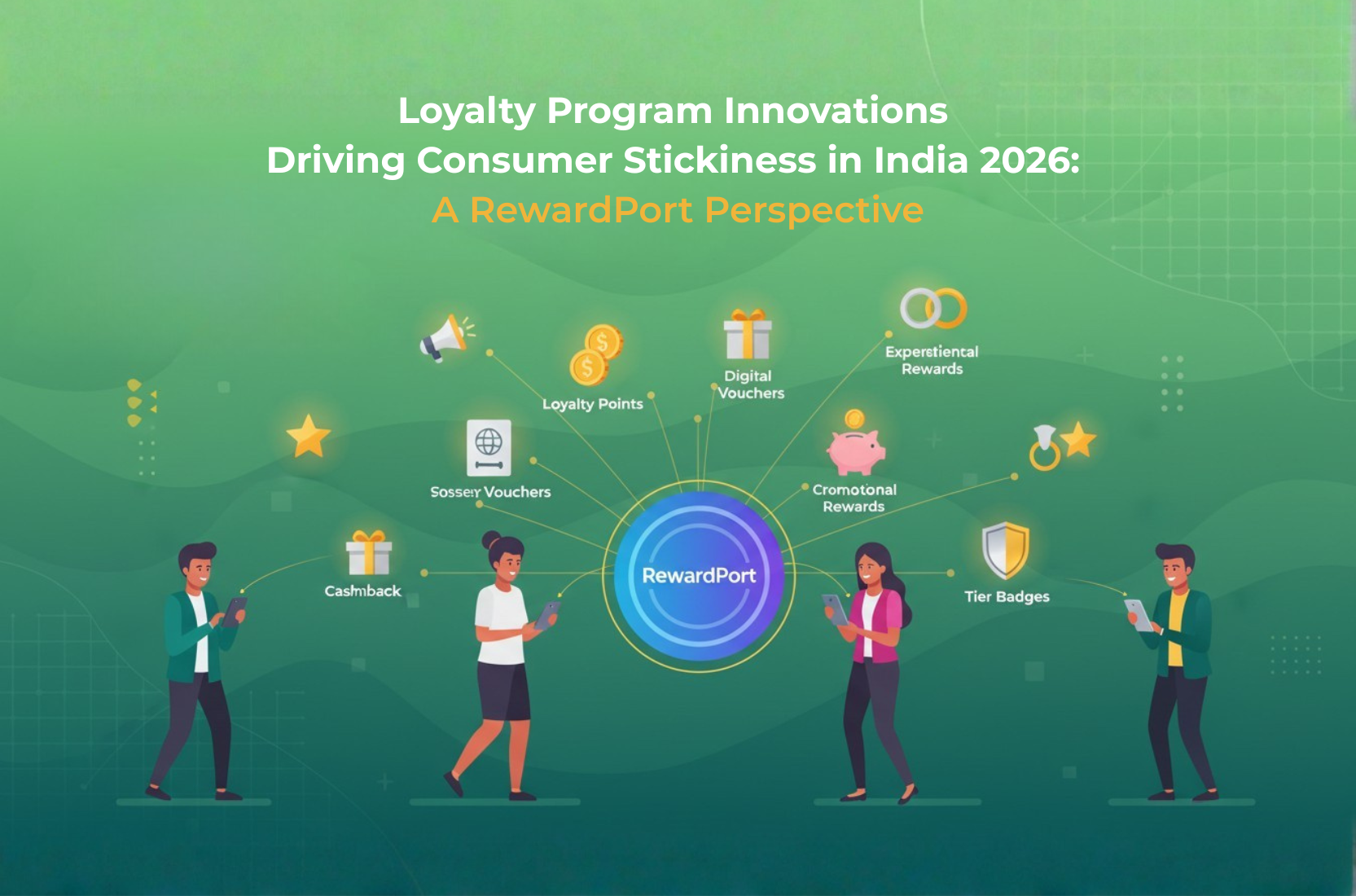
Loyalty Program Innovations Driving Consumer Stickiness in India 2026: A RewardPort Perspective
Explore how AI, gamification, and coalition ecosystems fuel loyalty program innovations driving consumer stickiness in India’s 2026 market.
Loyalty Program Innovations Driving Consumer Stickiness in India 2026: A RewardPort Perspective
India’s loyalty programs market is on a fast growth trajectory, expected to reach over US$4 billion by 2026 with an annual growth rate around 17.7%. This surge is powered by innovations that go beyond traditional discounts towards personalized, digital, and experiential rewards, designed specifically to enhance consumer engagement and stickiness across sectors from retail and e-commerce to FMCG and financial services.
Market Context and Growth Drivers
The Indian loyalty landscape in 2026 reflects a tech-savvy consumer base, with over 900 million smartphone users fueling mobile-first engagement. Retailers and brands are strongly moving towards AI-enabled personalization and instant redemption mechanisms via digital wallets and UPI, meeting the demand for seamless, immediate rewards. Notably, 65% of retailers emphasize points, cashback, and instant redemptions over classic discounting, often resulting in 15-20% reductions in trade spend through smarter loyalty investments.
Key Innovations Enhancing Consumer Stickiness
AI and Personalization: Leveraging data analytics, brands tailor offers to individual consumers’ preferences, as seen with Myntra Insider and BigBasket. By 2026, this approach extends widely with programs like Flipkart Plus and Tata Neu offering hyper-personalized experiences.
Digital Instant Rewards: Mobile redemption, especially via WhatsApp and QR Scan-to-Win mechanics, provides engaging, instant gratification, boosting participation rates 2-3X. UPI integration enables real-time loyalty point conversions into wallet cashbacks or other instant utilities.
Gamification: Combining AI with gamified tiers and branded digital games, loyalty programs become interactive and fun, strengthening emotional connectivity and repeat engagement. Multi-layer ecosystems now engage retailers, influencers, and distributors through QR-linked SKU claims.
Coalition and Ecosystem Models: Multi-brand coalition programs such as Payback India and Zillion’s Rewards-as-a-Service enable diverse redemption catalogues and partner integrations, delivering holistic consumer benefits.
Experiential and Wellness Rewards: Indian consumers increasingly seek meaningful experiences and wellness incentives – from spa vouchers to sustainable product rewards – beyond transactional points, reinforcing loyalty emotionally and socially.
Channel Partner and Dealer Engagement Innovations: Micro-campaigns targeting regional festivals or dealer-specific incentives, often delivered via ubiquitous WhatsApp channels, enhance channel loyalty and drive higher ROI through tailored rewards.
RewardPort Perspective and Solutions
As India’s specialist in consumer promotions and loyalty programs, RewardPort is uniquely positioned to harness these trends. Our modular platforms enable brands to deploy AI-personalized gamification, QR-based instant scratch & win promotions, and multi-brand coalition loyalty programs seamlessly.
For instance, our RewardOne voucher engine with customized rules and tracking helps brands optimize redemption efficiently, while Freebucks facilitates instant pay-with-points capabilities. Our extensive reward catalog includes travel packages like AirPac and VacPac, entertainment vouchers across 4,500+ screens, trending food vouchers, health and wellness offerings, and cashback solutions aligned perfectly with consumer desires emerging in 2026.
Our case studies exemplify these innovations:
• Swiggy’s loyalty program leveraged aggressive pricing tiers and experiential rewards to increase market share in 2023.
• Flipkart’s FireDrops Web3 loyalty initiative scaled loyalty among younger shoppers with blockchain-powered transparency.
• Zillion’s Reward-as-a-Service model empowered dealer loyalty with instant, hyper-localized rewards.
These examples demonstrate how integrated digital and experiential strategies delivered measurable growth and stickiness.
In 2026, loyalty programs in India will be defined by a fusion of AI-driven personalization, instant digital gratification, coalition ecosystems, and deeper emotional connections through experiential and wellness rewards. Brands and channel partners that partner with RewardPort can leverage these proven innovations to build stronger consumer and dealer stickiness, optimize trade spends, and secure competitive advantage in India’s burgeoning loyalty market.
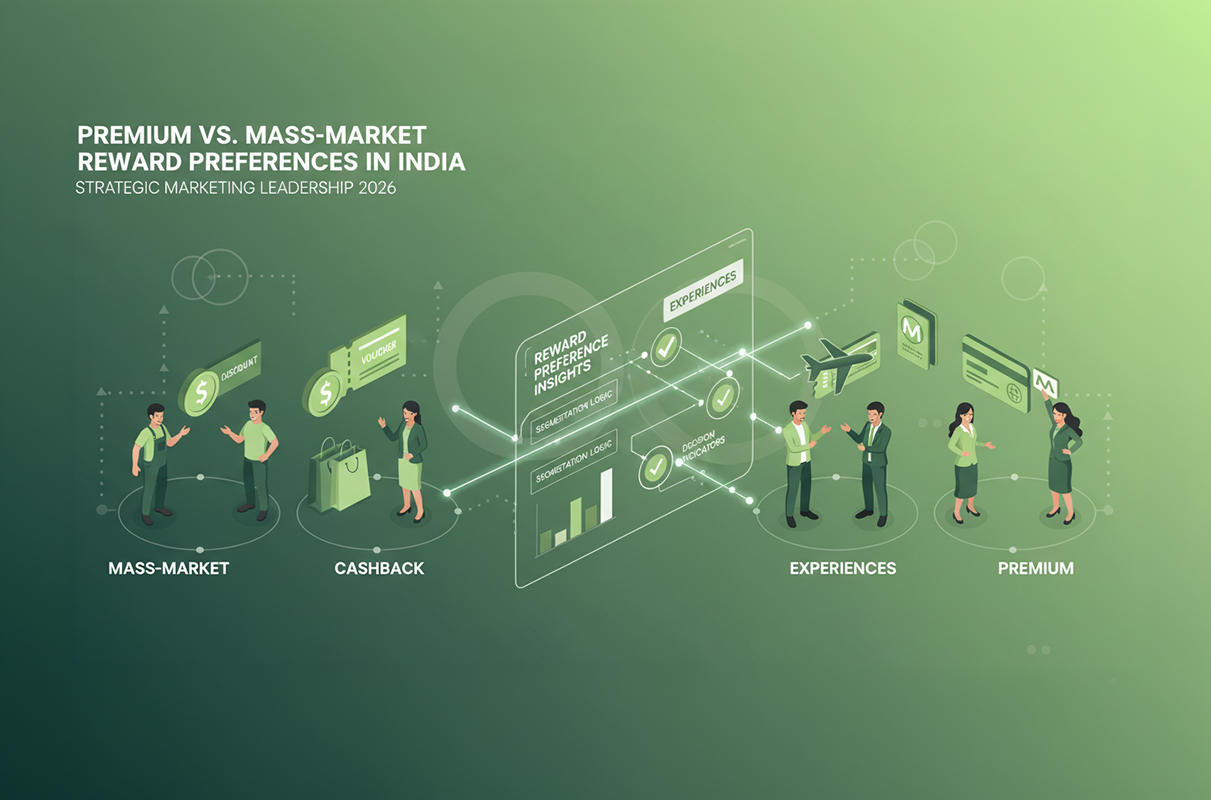
Premium vs. Mass-Market Reward Preferences in India: Strategic Insights for Marketers in 2026
Explore 2026 trends in India’s premium and mass-market reward preferences, highlighting RewardPort tailored loyalty solutions for B2B marketers and channel leaders.
Premium vs. Mass-Market Reward Preferences in India: Strategic Insights for Marketers in 2026
India’s consumer landscape is witnessing a dynamic shift from mass-market rewards to premium-focused incentives, driven by rising affluence and evolving aspirations. Understanding these nuances is critical for B2B marketers, trade leaders, and HR/channel heads aiming to design impactful loyalty and incentive programs. RewardPort, with its comprehensive execution models and reward catalog, is uniquely positioned to partner in crafting these differentiated strategies.
Context: The Rise of Premium in India’s Consumer Market
Between 2024 and 2026, premium products across FMCG, beauty, fashion, and food sectors outperformed mass-market segments. Despite moderate overall economic growth, Indian consumers increasingly trade-up, seeking quality, experience, and identity in their purchases—including channel incentives and employee rewards. Penetration of premium categories such as hair serums, dark chocolates, sensitive toothpaste, and health biscuits has surged, reaching and engaging diverse customer bases beyond metros into Tier 2 and Tier 3 cities.
Changing Reward Preferences: From Mass Cashback to Experiential Premium
Reward preferences mirror the broader premiumization trend. Whereas mass-market incentives focused heavily on cashback and basic vouchers, there is now a clear tilt toward experiential and wellness rewards. Dining, travel, advanced skincare, and tier-based coalition loyalty programs are gaining preference, especially among millennials and Gen Z. These segments prioritize value alignment, trust, and memorable experiences over transactional incentives. The loyalty programs market in India is projected to nearly quadruple by 2035, reflecting a growing appetite for sophisticated and layered reward structures. Channel partners and employees increasingly engage with tiered and coalition programs that offer varied redemption options, thereby driving sustained engagement.
RewardPort Perspective: Tailoring Solutions to Premium and Mass Market Needs
As India’s specialist in consumer promotions and loyalty programs, RewardPort understands the importance of aligning reward strategy with evolving preferences: – Segmented Execution Models: From cashback engines for mass-market rapid activation to curated luxury and experiential rewards such as Travel (AirPac, VacPac), Entertainment (Movie tickets, OTT subscriptions), and exclusive dining or wellness vouchers. – Channel Partner Incentives: Programs like Channely integrate CRM/ERP for dealer loyalty and provide curated travel and multi-brand vouchers, encouraging upmarket participation even in non-metro networks. – Employee Engagement: RewardPort Employee Incentive Programs leverage gift vouchers and merchandise catalogues to boost motivation through premium tiers and experiences. – Case-Backed Insights: For instance, driving premium sales via assured gifts and monthly experiential rewards has shown notable uplifts—as in Philips’ movie ticket campaigns or VIP Bags’ travel incentives that expanded premium product reach.
These approaches provide a balance between aspirational premium rewards and broad-based accessibility, catering to diverse consumer segments across India’s evolving markets.
Implementing Effective Premium Reward Campaigns in 2026
To capitalize on premium preference trends: – Use Gamification and Digital Engagement: Tools like RewardPort Gamification Engine and WhatsApp Redemption Flow enhance discovery and instant gratification, particularly key for younger demographics. – Leverage Tiered and Coalition Loyalty: Build multi-brand catalogs and tier multipliers to drive repeat participation and deeper emotional connect. – Focus on Experiential Rewards: Offering travel, dining, wellness, and entertainment vouchers taps into lifestyle aspirations, yielding high redemption rates and memorable brand interactions. – Adapt to Regional Dynamics: Design small pack rewards and localized offerings that suit Tier 2/3 markets without losing premium appeal.
India’s premium vs. mass-market reward landscape is rapidly evolving, with premiumization becoming mainstream even in smaller cities and rural channels. For marketers, leveraging RewardPort expertise, award-winning execution modules, and rich reward catalog enables crafting nuanced, data-backed loyalty programs and incentives that align with consumer aspirations, driving growth and deepening engagement in 2026 and beyond.
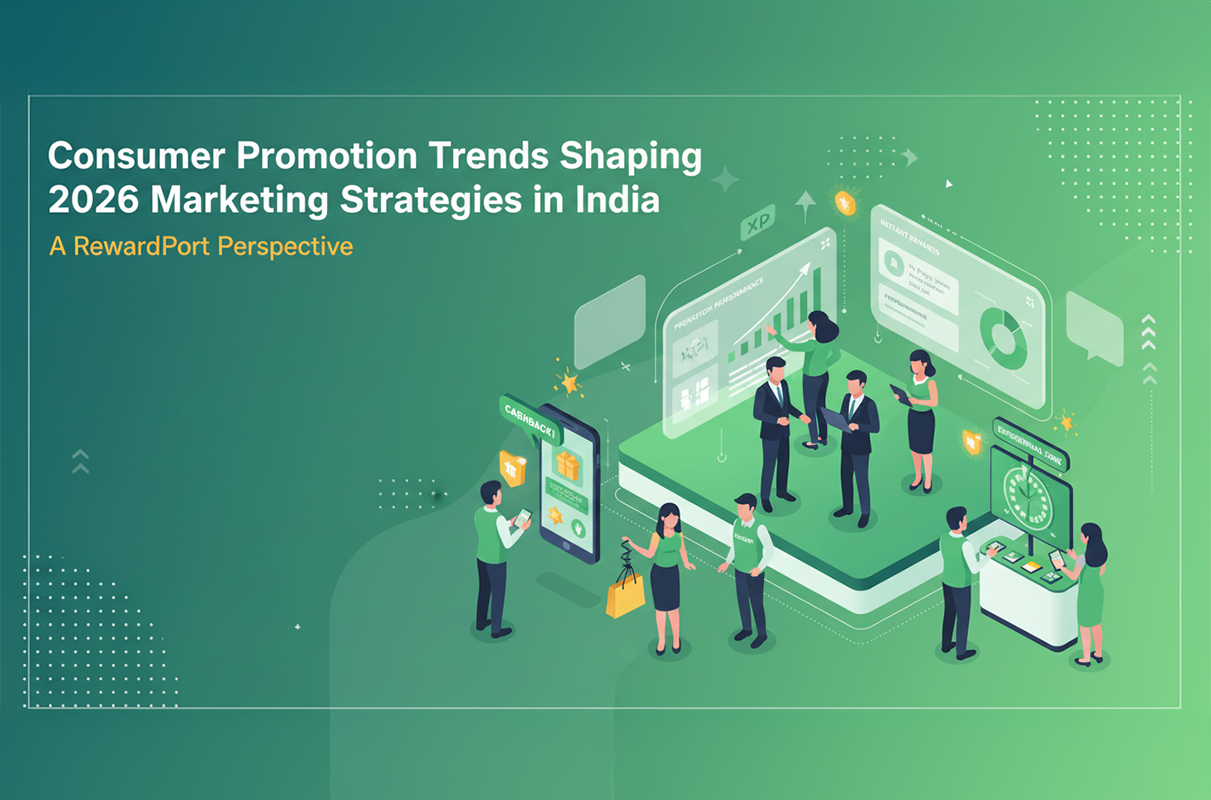
Consumer Promotion Trends Shaping 2026 Marketing Strategies in India: A RewardPort Perspective
Explore top consumer promotion trends in India for 2026 and how RewardPort integrated loyalty and rewards solutions enable impactful marketing strategies.
Consumer Promotion Trends Shaping 2026 Marketing Strategies in India: A RewardPort Perspective
As India continues its rapid economic growth and digital transformation, consumer promotion strategies are evolving swiftly to meet new market realities and expectations. Marketers, trade leaders, and HR/channel heads in India must adapt to a landscape where digital and experiential engagement dominate, loyalty merges seamlessly with promotions, and rewards go beyond traditional discounts to create meaningful connections. At RewardPort, we see these trends firsthand and tailor our solutions to empower brands in capturing consumer attention and driving long-term growth, especially in tier-2 and tier-3 markets.
The Changing Consumer Landscape in India 2026
Recent research highlights a significant shift in Indian consumer behavior, emphasizing health, wellness, and experiential purchases over mere essentials. With 60% of consumers expecting household spending to rise in categories like leisure, health, and education, brands must rethink how they incentivize purchases beyond price cuts. Gen Z and younger consumers increasingly demand authenticity, sustainability, and digital convenience — preferences that fuel the rise of campaigns leveraging AI, regional influencers, and hyperlocal social commerce platforms such as Meesho and WhatsApp.
Integration of Promotions and Loyalty for Strategic Impact
A key trend shaping 2026 marketing strategies is the convergence of consumer promotions with loyalty programs. Indian brands are moving away from isolated discount schemes towards holistic reward ecosystems that blend points, tiers, and multipliers with experiential and wellness-based rewards. RewardPort loyalty program solutions reflect this approach by enabling points accumulation alongside tiered benefits and instant redemption options like digital vouchers and pay-with-points systems. This helps brands not only drive trial and repeat purchases but also deepen customer retention.
Leveraging Technology: AI, Gamification, and Phygital Rewards
Artificial intelligence is transforming campaign design and execution, just as RewardPort AI-driven personalization allows brands to target and engage consumers with context-relevant rewards. Gamification—via our 100+ branded games and scratch & win modules—adds fun and engagement, critical to cutting through marketing noise. Furthermore, phygital innovations such as QR scan-to-win and WhatsApp redemption flows integrate offline and digital consumer journeys, maximising reach and ease of participation, especially in digitally emerging markets outside major metros.
Channel Partner Incentives and Dealer Engagement
2026 marketing requires strong alignment with channel partners and dealers, especially as trade engagement becomes pivotal in tier-2 and tier-3 cities. RewardPort Channely platform integrates with CRM and ERP systems to deliver customized incentive programs that motivate channel partners with travel clubs, multi-brand voucher rewards, and tiered redemption models. Our case studies demonstrate significant uplifts in channel loyalty and sales through structured quarterly points redemption and experiential rewards tailored to dealer preferences.
Case Studies Reflecting Successful Promotion Trends
Several RewardPort campaigns illustrate the effectiveness of tailored consumer promotions aligning with emerging trends. For example, a recent gift with purchase campaign for a leading FMCG brand combined assured movie ticket rewards with festive season product trials, resulting in a marked sales lift and expanded repeat purchase base. Another notable channel incentive program employed a layered points system with quarterly redemption windows, enhancing dealer engagement markedly and driving consistent performance gains.
RewardPort Comprehensive Rewards Catalog and Execution Models
Our extensive rewards catalog supports trending consumer preferences with offerings spanning travel experiences, OTT subscriptions, dining and food vouchers, health and wellness services, cashback options, and versatile multi-brand gift vouchers. Coupled with plug-and-play execution methods such as spin the wheel, cashback campaigns, contests, and referral programs, RewardPort equips brands for agile, targeted, and measurable promotions that resonate across demographics and geographies.
Marketing strategies for 2026 in India must embrace integrated, technology-enabled consumer promotions that provide authentic, personalized, and value-driven rewards. RewardPort innovative solutions and proven case studies position us uniquely as partners for brands seeking to harness evolving consumer trends, maximize trade and channel participation, and build lasting loyalty in a highly dynamic and competitive market.
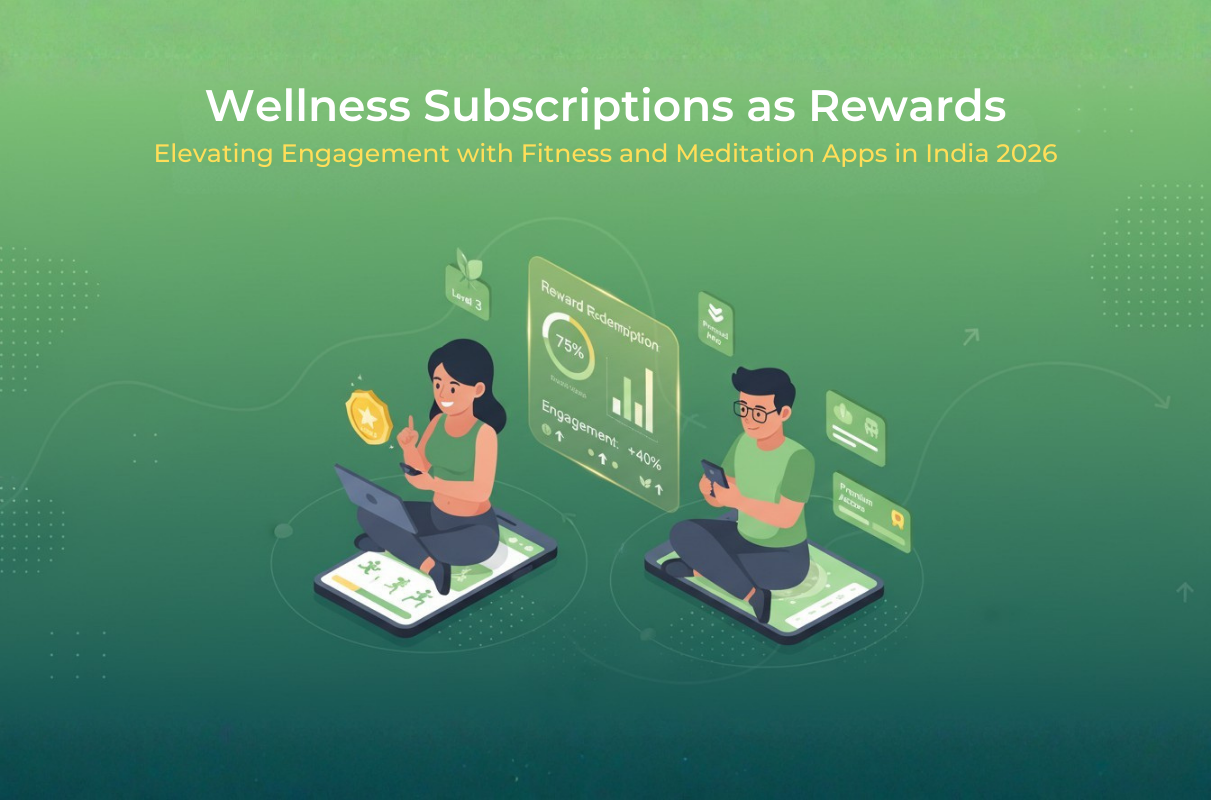
Wellness Subscriptions as Rewards: Elevating Engagement with Fitness and Meditation Apps in India 2026
Explore how wellness subscriptions for fitness and meditation apps drive engagement and loyalty in India’s 2026 corporate and consumer reward programs.
Wellness Subscriptions as Rewards: Elevating Engagement with Fitness and Meditation Apps in India 2026
In 2026, wellness subscriptions—particularly fitness and meditation apps—have emerged as powerful rewards in India’s evolving consumer promotions, channel incentives, and employee engagement strategies. As health awareness rises across urban and Tier 2/3 markets, brands and employers increasingly tap these digital wellness solutions to drive acquisition, repeat engagement, and loyalty by aligning with the growing demand for convenient, accessible health benefits.
India’s Wellness Market and Digital Subscription Trends
The Indian wellness apps market generated approximately USD 579 million in 2024 and is projected to reach over USD 1.4 billion by 2030, growing at a robust CAGR of around 16% post-2025. Fitness apps dominate with nearly 60% market share, while meditation app subscriptions represent the fastest segment expansion, reflecting a cultural shift toward mental well-being alongside physical fitness. Corporate wellness spending similarly expands with projections rising from USD 2.6 billion in 2025 to over USD 4 billion by 2034, where digital-first rewards such as telemedicine credits, fitness tracking, and meditation subscriptions have become standard components to boost employee health and productivity.
Wellness Subscriptions in RewardPort Programs and Solutions
RewardPort approach integrates wellness subscriptions as versatile digital rewards to meet diverse business goals. Our loyalty programs for health-conscious urban consumers include digital vouchers redeemable on top-tier fitness and meditation apps, offering immediate gratification and promoting repeat engagement amid increasingly health-savvy audiences. For channel partners and dealers, wellness memberships feature as part of tailored incentive programs that enhance retention and motivation, especially in North Indian markets with strong fitness culture affinity.
Within employee incentive programs, RewardPort leverages wellness subscriptions to nurture holistic well-being. These include multi-tiered offerings—from beginner meditation access to advanced fitness challenges—delivered through gamified platforms that drive participation and measurable ROI. Our gig to premium tier loyalty modules enable businesses to reward incremental health behaviors, cultivating longer-term engagement and reducing wellness-related costs.
Case Studies Illustrating Wellness Subscription Impact
While RewardPort portfolio includes numerous health-related reward campaigns, one highlighted trend from the market is the adoption of AI-powered wellness platforms, like AdvantageClub.ai, that embed fitness and mental health subscriptions into employee rewards, achieving strong traction in Tier 2 and 3 cities with vernacular content. Concurrently, urban loyalty programs deploying health app vouchers have significantly boosted consumer retention and repeat purchase rates by aligning promotions with evolving lifestyle preferences.
Practical Benefits and Strategic Insights for Marketers and HR Leaders
Incorporating wellness subscriptions as rewards aligns incentive strategies with preventive health trends and hybrid work cultures gaining ground across Indian workplaces. Digital redemption offers seamless employee or consumer experiences and aids in data-driven program optimization. Brands can tap RewardPort curated rewards catalog, which includes top fitness, meditation, and wellness app subscriptions, to create engaging, culturally relevant campaigns that drive brand affinity and measurable health outcomes.
Challenges and Forward Outlook
While digital wellness rewards have shown strong uptake in urban and semi-urban areas, extending reach to rural populations remains a challenge due to digital access barriers. However, increasing smartphone penetration and vernacular app availability point to widening adoption. The regulatory push for corporate wellness and rising burnout awareness in 2026 further underpin the strategic importance of embedding wellness solutions into rewards and loyalty programs.
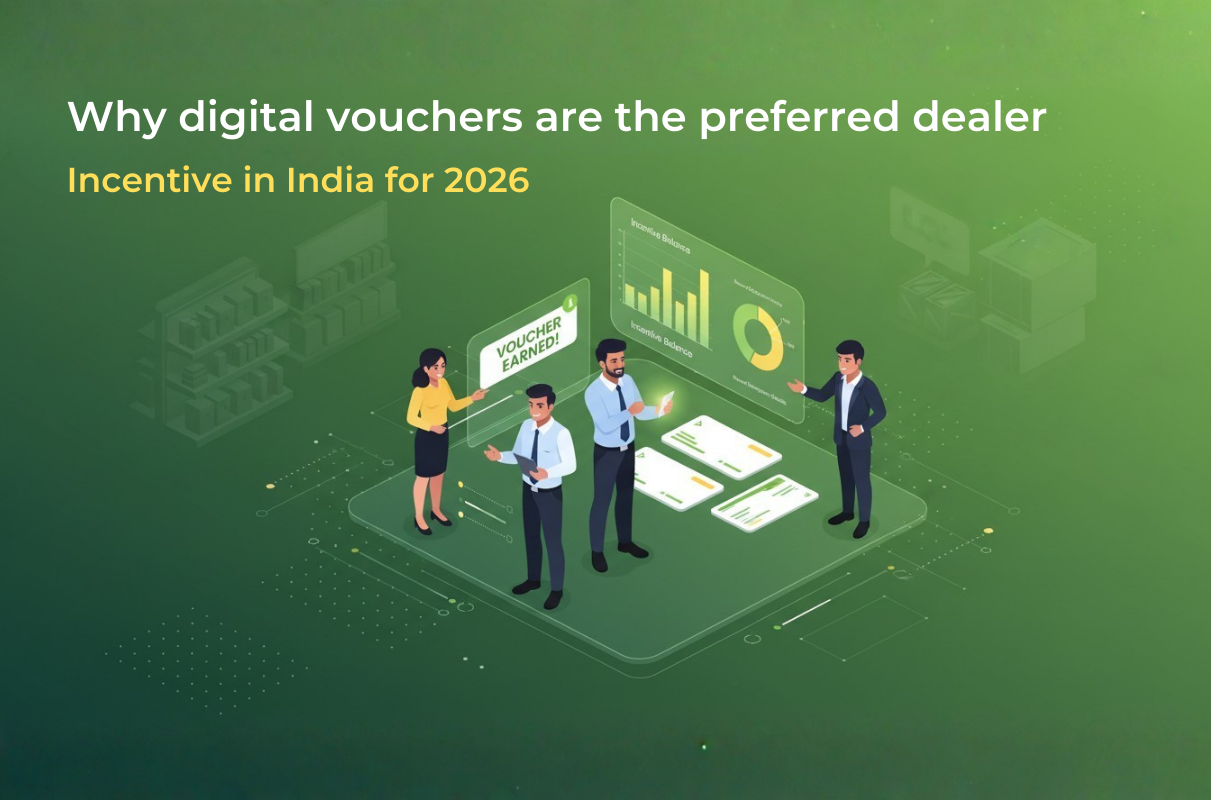
Why Digital Vouchers Are the Preferred Dealer Incentive in India for 2026
Explore how digital vouchers lead dealer incentive programs in India 2026 with instant delivery, UPI integration, and ROI-focused rewards.
Why Digital Vouchers Are the Preferred Dealer Incentive in India for 2026
As India’s trade and channel marketing landscape evolves rapidly in 2026, digital vouchers have emerged as the dominant format for dealer incentives. Their instant delivery, seamless integration with India’s digital payments ecosystem, and flexibility to align rewards with actual sales performance make them superior to traditional physical gifts. At RewardPort, our experience partnering with over 750 clients and managing 11,000+ programs annually confirms that digital vouchers drive engagement, loyalty, and measurable growth across dealer networks.
The Rise of Digital Vouchers in India’s Dealer Incentive Ecosystem
The Indian digital gift card market surpassed USD 15 billion by 2024 and continues growing at a robust CAGR of approximately 16%. Digital vouchers now represent over 90% of the country’s reward market value, replacing cumbersome physical reward logistics with instant digital gratification. Channel partners show a strong preference for UPI vouchers and digital rewards that can be approved and delivered within hours or days rather than weeks.
Key Advantages Driving Dealer Preference for Digital Vouchers
Digital vouchers excel on multiple fronts that align with dealer and distributor needs in today’s fast-paced market:
- Instant gratification and redemption: Dealers can redeem rewards immediately, enhancing motivation and satisfaction.
- Lower logistical complexity: Eliminating shipping and handling costs reduces delays and administrative overhead.
- Flexible redemption options: From entertainment and food delivery to travel and wellness, dealers enjoy diverse choices tailored to their preferences.
- Seamless UPI integration: Aligning with India’s push towards digital payments ensures smooth transactions and broad usability.
Behavioral Shifts Powering Digital Voucher Use in 2026
Brands have shifted away from stock-based rewards to performance-linked incentives that reward actual secondary sales and consumer reach, ensuring business outcomes directly benefit from dealer engagement. Micro-segmentation lets brands customize rewards for different dealer profiles, from high-volume to loyal low-volume partners. RewardPort clients leverage gamification techniques such as streak rewards and category missions to design dealer behavior in more engaging and measurable ways.
Popular Reward Categories with Indian Dealer Networks
Drawing from RewardPort extensive rewards catalog and program insights, the favored digital voucher categories for dealers include:
- Food delivery vouchers linking to popular local and national platforms
- Entertainment rewards such as movie tickets and OTT subscriptions to appeal to youth segments
- Travel experiences and holiday vouchers serving family-oriented dealers
- Health and wellness services including spas and fitness app subscriptions
- Multi-brand gift vouchers enabling broad choice and appeal
Integration with fintech platforms like Google Pay, CRED, and Jio further enhances redemption convenience and satisfaction.
RewardPort Perspective: Unified, ROI-Focused Dealer Incentives
Leading brands increasingly adopt a hybrid program structure that rewards all stakeholders in the sales ecosystem—distributors for throughput, dealers for sell-out, retailers for visibility, and influencers for endorsements—offering a single consolidated view of market performance. RewardPort plug-and-play modules such as RewardOne and Channely facilitate seamless integration with client CRMs and ERPs, ensuring real-time tracking and management of incentives.
Clients also demand ongoing, month-by-month ROI tracking supported by analytics and AI-driven performance insights, moving beyond traditional post-campaign reporting to enable agile adjustments and transparent business results.
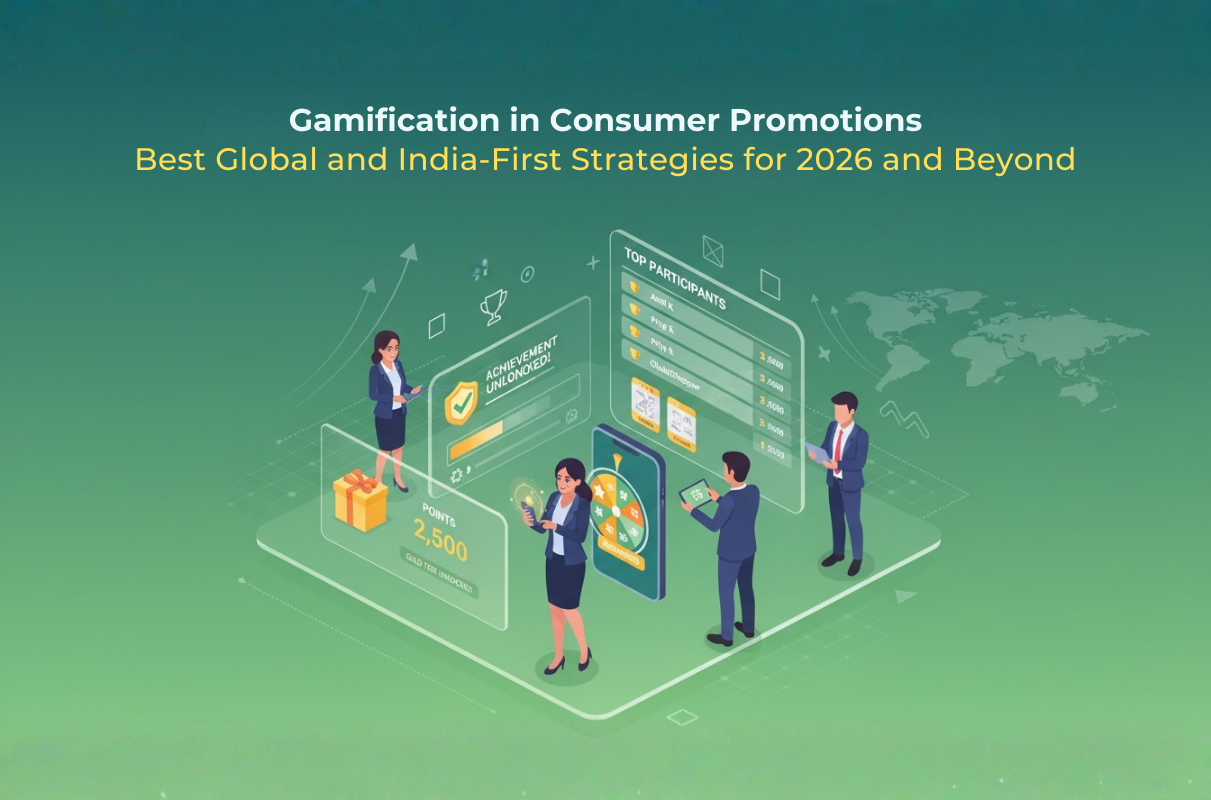
Gamification in Consumer Promotions: Best Global and India-First Strategies for 2026 and Beyond
Explore top gamification trends and global examples in consumer promotions with insights and RewardPort solutions tailored for India’s evolving market.
Gamification in Consumer Promotions: Best Global and India-First Strategies for 2026 and Beyond
Gamification in consumer promotions has become a strategic cornerstone for brands and channel partners seeking to deepen engagement, boost loyalty, and drive repeat sales. Globally and in India, from 2024 through 2026 and looking forward, gamified campaigns have evolved from one-off gimmicks into immersive, data-driven systems that create habitual participation across digital and physical touchpoints. This article walks through seminal global examples, emerging trends in India, and how RewardPort expertise and solutions align with this dynamic landscape.
Why Gamification is Now a Business Imperative in Consumer Promotions
Modern consumers, especially the digitally native youth and value-conscious families, favor instant gratification and engaging brand experiences. Gamified promotions deliver this through interactive, culturally resonant mechanics such as daily missions, streaks, quiz games, scratch cards, spin-the-wheel contests, and referral incentives. Brands gain not just participation spikes but insightful behavioral data to fine-tune offers and loyalty programs. RewardPort portfolio reflects this with execution methods including Scratch & Win, WhatsApp-to-Win, Gamification Engine with 100+ branded games, and Referral Programs, all integrated into curated reward catalogs ranging from movie tickets and OTT subscriptions to travel and multi-brand gift vouchers.
Key Global and India-Focused Gamification Trends for 2026
The shift toward mobile-first, instant rewards underpins today’s promotions. In India, 72% of retailers now anticipate instant UPI payouts or gift card rewards, a trend that has driven a 4.2X growth in UPI-based redemptions over recent 18 months. Micro-engagements—small, rewarding activities repeated daily or weekly—are replacing quarterly or campaign-limited incentives, creating habitual usage and 2.7X higher participation rates among consumers and channel partners alike. Phygital campaigns, merging AR filters, QR-enabled discovery, NFC touchpoints, and immersive treasure hunts, offer experiential retail that increases both footfall and purchase frequency. For instance, mobile AR filters in India recorded over 250 million engagements in 2025. Personalization in vernacular languages, celebrity tie-ins, and eco-conscious challenges align gamification with broader social values and linguistic diversity.
RewardPort Perspective: Proven Gamification Success in India
RewardPort, India’s specialist in consumer promotions and loyalty, has successfully executed gamified campaigns for clients like Philips and Bikaji, deploying Scratch & Win and WhatsApp redemption flows that combine assured cashback micro-rewards with aspirational prizes like movie tickets and travel experiences. This mix drives uplift in repeat purchasing and long-term loyalty. Our Gamification Engine powers over 100 branded games that create deep engagement for youth segments, while Referral Programs and Loyalty tiers incentivize channel partners and employees with tailored rewards from our vast catalog, including travel vouchers (VacPac, AirPac), entertainment passes (CineRewardz), and wellness options. Across dealer and channel partner incentive programs, daily missions and streak mechanics integrated with CRM/ERP enhance participation 2.7X over traditional incentive schemes. With data-driven insights, brands can continuously optimize engagement and ROI.
Best Practices from Global and Indian Use Cases
1. Instant, mobile-based reward delivery via UPI/cashback accelerates participation and trust. 2. Combine assured mini-rewards with grand prizes to appeal to different customer motivations. 3. Employ culturally relevant game mechanics such as streaks, quizzes, and daily missions for habit formation. 4. Leverage vernacular language and localized content for broader inclusivity. 5. Blend offline and online through phygital, AR, and QR engagements to drive experiential loyalty. 6. Continuously measure behavior and engagement KPIs to transition from one-off campaigns to always-on systems.
Gamification in consumer promotions is no longer optional but essential for brands targeting India’s mobile-centric, engagement-hungry consumers and partners. With globally proven models adapted for Indian nuances, gamified programs foster habitual loyalty, enhanced shopper experience, and measurable business impact. RewardPort comprehensive solutions—from digital scratch cards to immersive gamification engines and reward catalogs designed for India—position clients for success in 2026 and beyond.
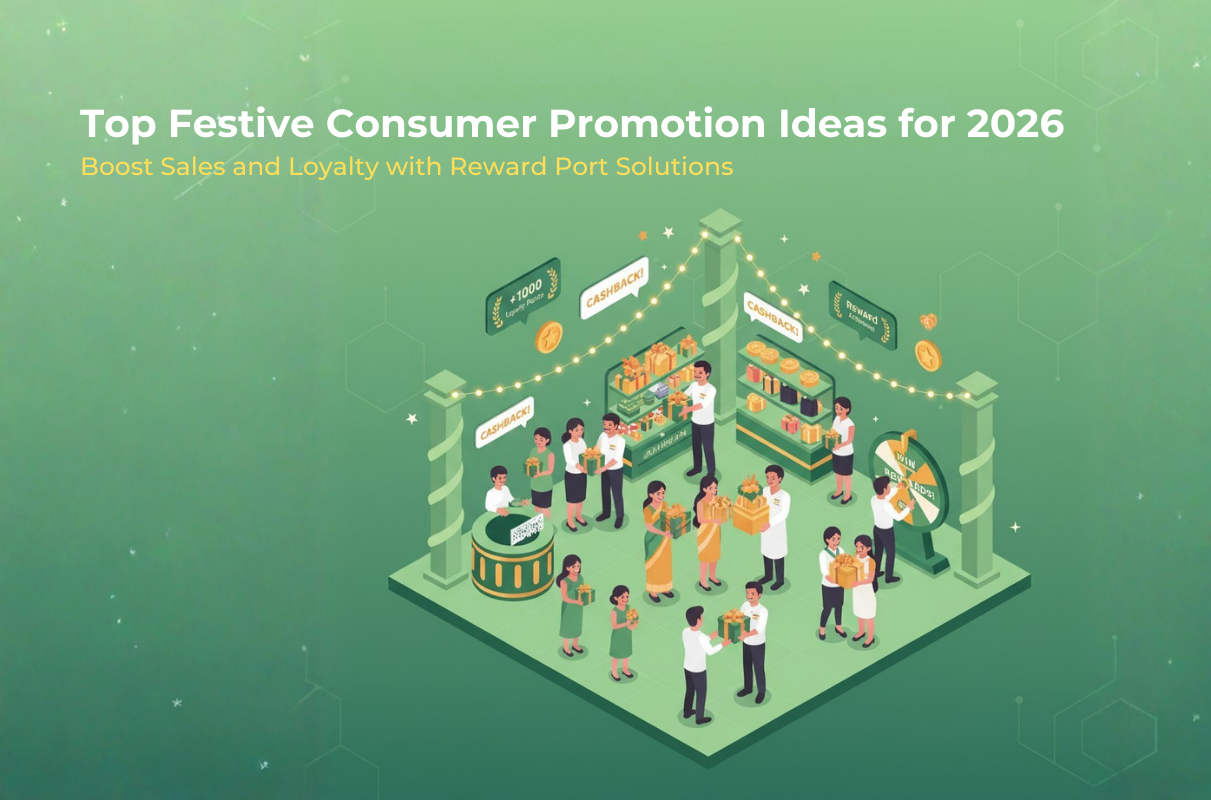
Top Festive Consumer Promotion Ideas for 2026: Boost Sales and Loyalty with RewardPort Solutions
Explore top festive consumer promotion ideas for 2026 in India, leveraging AI personalization, experiential rewards, and RewardPort proven solutions.
Top Festive Consumer Promotion Ideas for 2026: Boost Sales and Loyalty with RewardPort Solutions
Festive seasons remain critical windows for Indian brands to deepen consumer engagement, drive sales, and build lasting loyalty. In 2026, promotions must adapt to evolving shopper behaviors influenced by early purchasing trends, digital engagement, and a growing preference for personalized, experience-driven rewards. This article explores the most effective festive consumer promotion ideas for 2026, grounded in market realities and RewardPort expertise in consumer promotions, loyalty programs, channel incentives, and rewards.
Understanding the 2026 Festive Landscape in India
The momentum of early festive shopping in India has accelerated, with consumers starting their Diwali and other festival purchases as early as mid-August. Digital platforms dominate engagement, with over 49% of festive purchases occurring online and mobile devices being the preferred interaction channel. Categories like electronics and gold jewelry see high-value transactions, while emotional and cultural resonance deeply influence buying decisions. Amidst growing competition, brands must prioritize selective bundling and avoid blanket discounts to sustainably increase shopper value.
Leveraging AI and Mobile-Centric Promotions
AI-powered personalization is reshaping festive promotions in 2026. With 79% of consumers preferring AI-curated shopping suggestions, campaigns that integrate personalized product bundles, virtual try-ons, and culturally localized storytelling see higher engagement rates. RewardPort gamification and CRM-driven loyalty modules can seamlessly integrate AI data to deliver tailored rewards and offers, enhancing shopper relevance and conversion.
Experiential Rewards and Emotional Connection
More than transactional offers, experiential rewards build emotional ties with consumers. RewardPort diverse catalog includes heritage crafts, wellness kits, virtual cultural events, and spa/dining vouchers that align with festive gifting themes. Programs modeled on RewardPort case studies—such as holiday travel incentives and curated gift voucher tiers—can be adapted to create immersive festive experiences that elevate brand affinity.
Channel and Dealer Incentives for Festive Push
Festive success depends not only on consumers but also on engaged channel partners. RewardPort Dealer & Channel Partner Incentive Programs with instant rebates, tiered points, and leaderboard contests motivate top sellers during high-volume periods like the Great Indian Festival. Integrating these programs with mobile CRM and ERP systems ensures seamless execution and real-time tracking. Case studies from FMCG and retail sectors demonstrate significant uplift in trade engagement through such incentives.
Balancing Cashback, Loyalty, and Referral Campaigns
Cashback drives immediate footfall, while loyalty programs build sustained relationships. A tiered loyalty structure rewarding early shoppers with points redeemable for exclusive festive gifts encourages repeat purchases. Referral campaigns with assured rewards foster organic growth during peak festivals. RewardPort cashback engine and referral modules are proven tools to power these promotions with robust tracking and analytics.
RewardPort as Your Festive Promotion Partner
The 2026 festive season in India demands promotions that blend early engagement, AI personalization, experiential rewards, and channel partner enthusiasm. RewardPort integrated platform and rich rewards catalog—from travel packages and movie tickets to wellness and merchandise—equip brands to craft standout festive campaigns. Leveraging insights from RewardPort case studies and India-first market data ensures your promotions resonate and deliver measurable ROI.