Why Mobile-First Promotions Perform Better: Insights for Indian Businesses in 2026
In an increasingly digital world, mobile-first promotions have become a critical strategy for Indian businesses aiming to engage consumers, channel partners, and employees effectively. By 2026, the mobile device will be the primary gateway to brand interaction, making mobile-first approaches essential for driving participation, repeat purchases, and measurable business outcomes. This article explores why mobile-first promotions perform better and how RewardPort expertise and solutions are uniquely positioned to help brands unlock their full potential.
Market Context and Consumer Behaviour in India
India’s rapid smartphone penetration, currently exceeding 80% of internet users, coupled with affordable data plans, has shifted consumer behavior decisively toward mobile engagement. Mobile devices are not just communication tools but influential channels for shopping, entertainment, and loyalty interaction. By 2026, over 75% of consumer promotional interactions in India are projected to occur via mobile platforms. This shift demands that marketers optimize campaigns for mobile-first delivery to capture attention and drive action efficiently.
Emerging Trends Driving Mobile-First Promotions in 2026
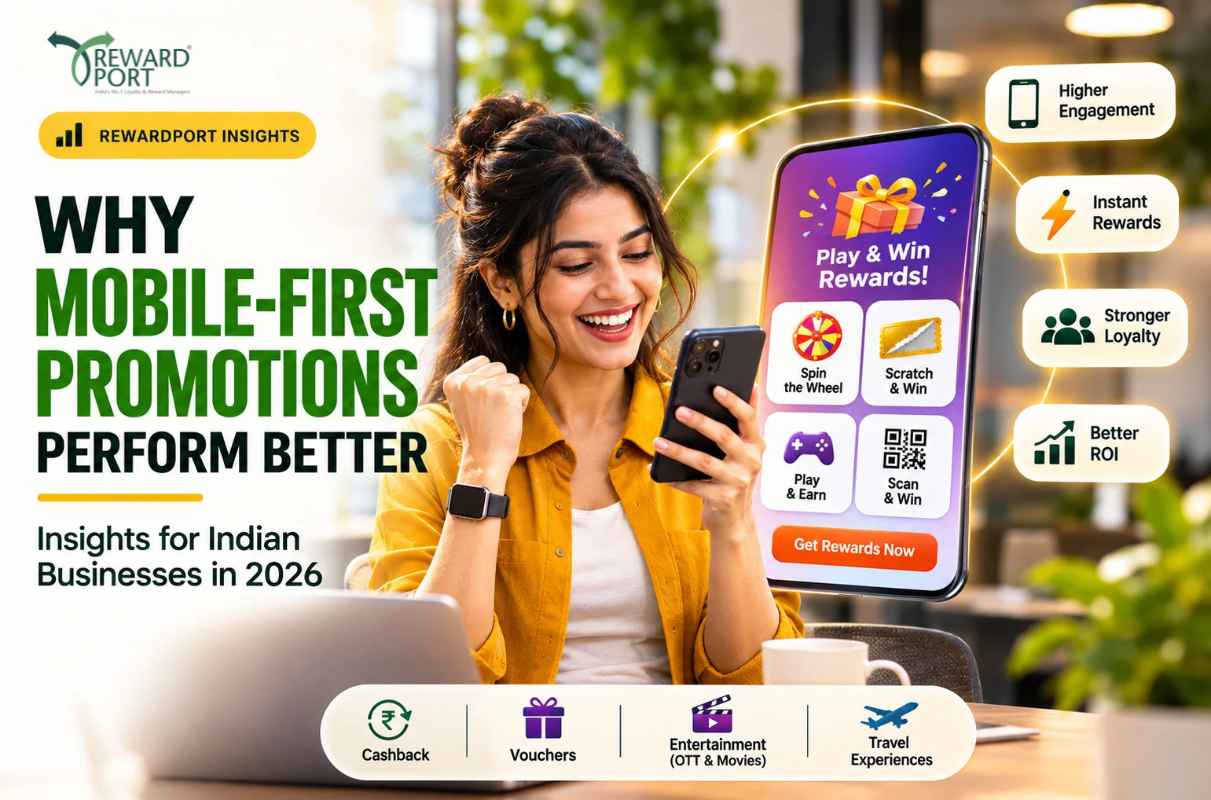
Several trends underline the growing dominance of mobile-first promotions, including the rise of instant gratification campaigns, gamification integration, and the use of QR codes and UPI-based digital rewards. The Indian market’s appetite for convenient, engaging, and immediate rewards experiences favors mobile-centric formats such as scratch & win, spin-the-wheel, and WhatsApp-based redemption flows. Additionally, data-driven personalisation powered by mobile interactions enables more relevant and rewarding experiences, increasing loyalty and channel push outcomes.
Implications for B2B Marketers, Trade Marketers, and HR Leaders
For brand managers and trade marketers, mobile-first promotions facilitate seamless consumer engagement from acquisition to repeat purchase and loyalty. Channel leaders benefit from easy-to-use mobile incentive programs that integrate with CRM and ERP systems, enhancing dealer and distributor motivation and compliance. HR leaders and sales incentive managers find mobile-first platforms highly effective for employee rewards and recognition, sustaining motivation through instant digital rewards and gamification. The reduced friction in reward redemption on mobile devices significantly improves participation and ROI.
RewardPort Perspective and Solution Approach
RewardPort leverages mobile-first promotions by integrating digital rewards and gamification engines tailored for mobile devices, providing an end-to-end solution that spans consumer promotions, loyalty programs, and channel incentives. Our digital rewards catalogue includes multi-brand vouchers, cashback offers, entertainment subscriptions like OTT and movie tickets, and experiential travel rewards curated for instant mobile redemption. Solutions such as Freebucks, RewardOne, and Gamification Engine enable brands to launch engaging, reward-driven campaigns that deliver measurable participation and loyalty uplift across mobile platforms.
Verified RewardPort Case Study Learnings
One notable RewardPort success involved a consumer promotion using mobile-based scratch & win combined with assured digital vouchers and a grand prize draw. This campaign saw a significant uplift in trial and repeat purchase metrics, validating mobile-first engagement’s effectiveness. Channel incentive programs employing RewardPort Channely platform also demonstrated higher dealer participation and quarterly redemption rates through seamless mobile access. Furthermore, employee reward programs using instant digital redemption boosted motivation and performance via mobile interfaces, reinforcing the mobile-first advantage.
Practical Recommendations for Implementation
Adopting a mobile-first promotions strategy requires careful alignment of campaign formats with audience preferences and behavioural triggers. Embrace instant gratification models such as scratch & win and spin-the-wheel on mobile. Prioritise digital rewards that are easily redeemable on phones, like cashback, food vouchers, and entertainment passes. Integrate gamification to enhance engagement depth and frequency. Ensure backend systems support mobile-friendly analytics for real-time tracking and optimisation. Partnering with RewardPort can accelerate these capabilities leveraging proven technology platforms and diverse reward catalogues designed for India’s dynamic mobile audience.
Mobile-first promotions represent a decisive advantage for Indian businesses in 2026 and beyond by driving deeper consumer engagement, channel partner motivation, and employee participation. Optimising promotions for mobile platforms enhances convenience, personalisation, and instant gratification, all critical to sustained business growth. RewardPort comprehensive solutions empower brands to harness the full power of mobile-first promotions, translating into measurable improvements in loyalty, sales, and ROI.
The Biggest Loyalty Program Mistakes Brands Make and How to Avoid Them in 2026
Loyalty programs have become pivotal for brands aiming to deepen customer engagement, enhance repeat purchases, and strengthen channel partnerships in India. However, many brands falter due to common pitfalls that hamper program effectiveness and ROI. Understanding these mistakes is crucial for marketers, trade leaders, and HR heads who seek 2026-ready program strategies that succeed in India’s dynamic market.
Why Loyalty Programs Matter for Indian Businesses
In India’s competitive retail and B2B landscape, loyalty programs are more than just customer retention tools — they drive acquisition, upsell, and brand advocacy. With evolving consumer expectations and technological advances, programs must be designed with precision to resonate deeply. Failure to do so can waste significant marketing budget, frustrate participants, and erode brand trust.
Market Context and Consumer Behaviour in 2026
By 2026, Indian consumers expect seamless, personalised, and instant gratification rewards. Digital-first interactions are standard, with increasing mobile penetration and UPI-based payments integrating loyalty seamlessly into daily habits. B2B buyers and channel partners also demand flexible, relevant incentives that acknowledge their business contributions beyond transactions.
Emerging Loyalty Program Trends Relevant to 2026
Key trends shaping loyalty success include gamification, omnichannel engagement, tiered rewards, and experiential incentives. Integration with instant cashback and UPI systems fuels redemption ease. Additionally, diversity in reward categories — from travel and entertainment to multi-brand vouchers and wellness offerings — appeals to varied demographics in India’s heterogeneous market.
The Biggest Loyalty Program Mistakes Brands Make
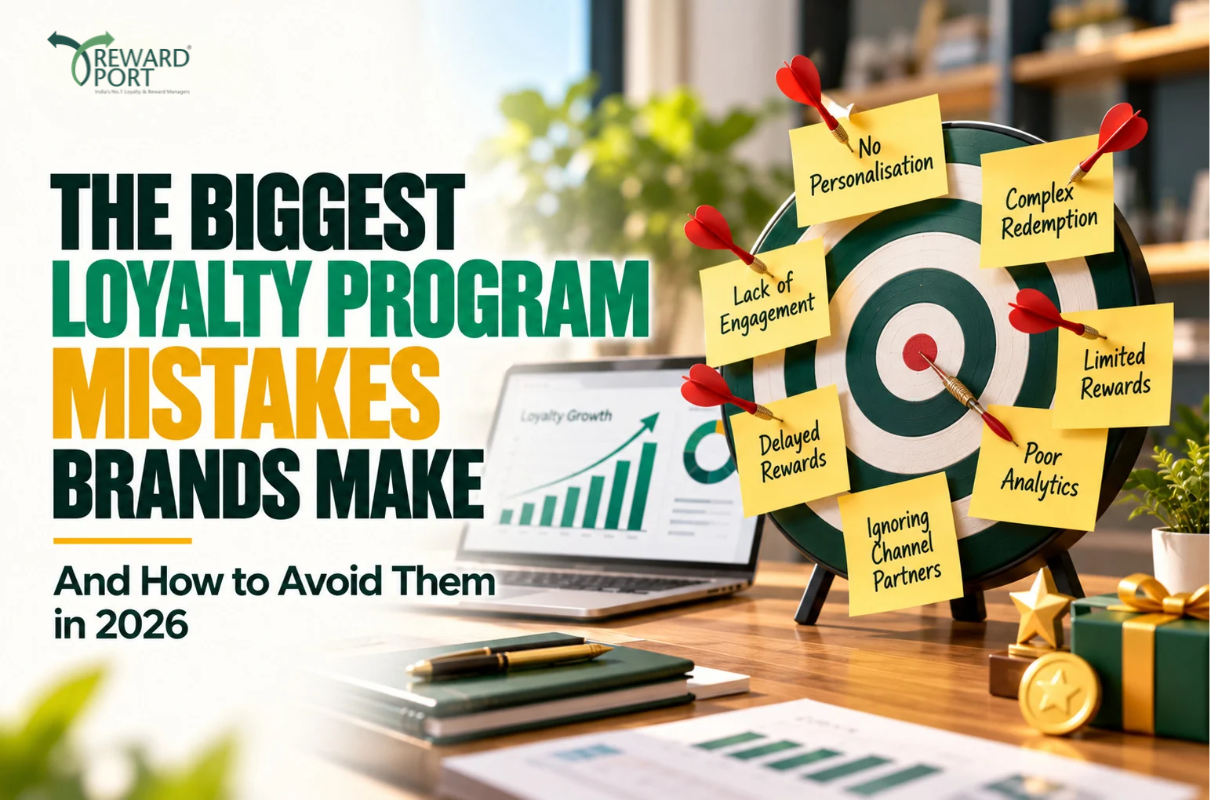
1. Lack of Personalisation and Relevance: Generic rewards and one-size-fits-all engagement models fail to motivate today’s discerning customers and channel partners.
2. Complex Redemption Processes: Cumbersome reward redemption dampens enthusiasm and participation.
3. Ignoring Channel Partner Incentives: Overlooking dealer and distributor loyalty limits program reach and channel sales growth.
4. Neglecting Employee Engagement: Employee rewards and recognition are often missed opportunities to boost morale and sales motivation.
5. Poor Data Analytics and Tracking: Without robust campaign analytics, brands cannot optimise performance or measure ROI.
6. Overemphasis on Points Without Instant Gratification: Delayed rewards reduce program stickiness and enthusiasm.
7. Insufficient Variety in Rewards: Limited catalogues fail to cater to diverse consumer tastes and needs.
Practical Implications for B2B and Trade Marketers
Marketers must focus on designing loyalty programs that are personalised, easy to join and redeem, and provide immediate value. Incorporating channel partner incentives tailored to dealer and distributor needs drives deeper engagement across the sales ecosystem.
HR leaders can leverage employee incentive programs under the same umbrella to foster a culture of motivation and recognition that aligns with business objectives.
RewardPort Perspective and Solution Approach
RewardPort expertise in consumer promotions, channel incentives, and employee rewards equips brands to avoid these pitfalls strategically. Our digital and omnichannel platform allows for multi-category rewards, instant cashback campaigns, gamification, and seamless UPI integration to ensure ease of participation and redemption.
We emphasise proven campaign analytics capabilities that offer real-time insights to optimise engagement and sales outcomes. Our catalogue spans travel, entertainment, food vouchers, wellness, multi-brand vouchers, and digital pay systems that cater to India’s diverse consumer and channel partner base effectively.
Verified RewardPort Case-Study Learnings
Our work with leading brands demonstrates the impact of combining cashback and instant gratification with tiered loyalty and gamified engagement. For instance, campaigns that integrate movie tickets with cashback and multi-brand vouchers show notable uplift in repeat purchases and channel partner activation, reflecting common loyalty program success patterns.
Recommendations for Implementation
Brands should start with clear objectives aligning target audience needs to reward types and engagement mechanisms. Employ digital platforms for seamless campaign execution, ensuring simple enrolment and redemption processes. Utilise diverse rewards and introduce gamification elements to sustain interest. Focus also on channel partner and employee incentive integration to maximise overall impact.
Regularly analyse campaign data to fine-tune offers and detect lapses causing dropout or reduced enthusiasm. Leverage RewardPort technology and catalogues to stay agile and responsive in a fast-evolving marketplace.
Avoiding the biggest loyalty program mistakes is essential for Indian brands seeking to maintain relevance and competitive edge in 2026. Personalisation, ease, diversity, instant gratification, and robust analytics form the pillars of successful modern loyalty programs. RewardPort comprehensive solutions empower marketers, trade leaders, and HR to design and execute reward programs that drive engagement, increase repeat purchase, and deliver measurable ROI.
What Makes a Trade Loyalty Program Successful? Insights and Strategies for 2026
In India’s dynamic trade environment, designing a successful trade loyalty program is essential for brands, distributors, and channel partners aiming to boost sales, enhance partner engagement, and build lasting relationships. As we move through 2026, Indian businesses face evolving market demands, technological innovation, and heightened competition, making effective trade loyalty programs more critical than ever.
Understanding the Market Context and Consumer Behaviour in India
Indian trade channels are diverse, ranging from traditional retailers and distributors to large organized partners. Channel partners play a pivotal role in reaching end consumers, and their motivation directly impacts product penetration and repeat sales. Current consumer behaviour, influenced by digital accessibility and preference for instant gratification, also shapes the requirements from trade loyalty initiatives. Moreover, with increasing smartphone adoption among channel partners, there is a growing appetite for real-time communication and reward redemption.
Emerging Trends Shaping Trade Loyalty Programs in 2026
Key trends in trade loyalty programs for 2026 include:
- Digital Transformation: Mobile-first platforms, real-time tracking, and instant reward fulfillment are transforming program execution.
- Gamification: Engaging channel partners through games and interactive challenges enhances participation and motivation.
- Personalisation and Tiered Rewards: Tailored incentives based on partner performance boost loyalty and upsell opportunities.
- Multi-category Reward Catalogues: Diverse rewards like travel experiences, cashback, multi-brand vouchers, and entertainment options appeal to varied preferences.
- Integration with CRM and ERP Systems: Seamless integration ensures better data analytics and campaign optimisation.
Practical Implications for Channel and Trade Marketers
For B2B marketers and channel leaders, a successful trade loyalty program must align with broader business goals such as increasing market share, improving channel engagement, and driving repeat orders. It requires clear, measurable KPIs, easy-to-use platforms, and rewards that resonate with partner aspirations. Transparency with real-time reporting and prompt reward fulfilment builds trust and encourages sustained participation.
RewardPort Perspective and Solution Approach
At RewardPort, we specialise in crafting trade loyalty programs that address India’s unique channel ecosystem. Our Dealer & Channel Partner Incentive Programs leverage digital platforms delivering instant gratification through options like cashback and UPI-based rewards, multi-brand gift vouchers, and experiential rewards including travel and entertainment.
Gamification enhances engagement with over 100 branded digital games that motivate partners to achieve higher sales and unlock tiered benefits. Integration capabilities with existing CRM and ERP systems enable streamlined campaign tracking and analytics, ensuring optimised ROI.
Verified RewardPort Case Study Learnings
One notable RewardPort initiative involved a top Indian FMCG brand that utilised a tiered loyalty program combined with instant cashback and movie ticket rewards. This strategy resulted in significantly higher repeat orders and enhanced partner satisfaction, highlighting how tailored rewards and seamless digital experiences drive success.
Recommendations and Framework for Implementation
To build a successful trade loyalty program in 2026, B2B marketers and trade programme leaders should:
- Define clear objectives aligned with sales and engagement goals.
- Choose reward categories that appeal to the diverse preferences of channel partners—combining essentials with experiential rewards.
- Leverage digital platforms for real-time campaign tracking, communication, and instant reward redemption.
- Incorporate gamification to increase engagement and motivate continued participation.
- Monitor participation and sales data continuously to refine incentives and program mechanics.
By employing these strategies and partnering with experts like RewardPort, organisations can unlock greater channel performance and ROI.
A successful trade loyalty program in India requires an adaptive, digital-first approach that reflects evolving market conditions and partner expectations. By integrating personalised rewards, gamification, instant gratification, and robust analytics, brands can strengthen channel relationships, boost sales, and ensure long-term loyalty. RewardPort proven capabilities and catalogue of diverse rewards make it an ideal partner for driving impactful trade loyalty programs in 2026 and beyond.
Why Digital Rewards Are Becoming the Preferred Incentive in India: A 2026 Perspective
In the dynamic Indian market, businesses across sectors are increasingly adopting digital rewards as a core incentive strategy. This shift is driven by evolving consumer behaviours, accelerated digital adoption, and the operational advantages digital incentives offer. For brand managers, loyalty professionals, channel marketing teams, and HR leaders, understanding this trend is vital to crafting successful campaigns that drive participation, retention, and measurable ROI.
Market Context and Consumer Behaviour in India
India’s rise as a digital economy has been fueled by the widespread adoption of UPI-based payments and mobile internet penetration, especially in Tier 2 and Tier 3 cities. Consumers today expect instant gratification—an immediacy that digital rewards perfectly deliver. NCRI’s annual reports and Deloitte India’s Future of Loyalty research (2023) highlight that consumers prefer instant, flexible reward options they can redeem seamlessly across popular digital platforms.
Furthermore, digital rewards remove traditional logistical challenges associated with physical gifts, enabling brands to reach and incentivize consumers and channel partners across diverse geographies. This accessibility not only maximizes reach but significantly enhances participation rates.
Emerging Trends Shaping 2026 and Beyond
Several key trends are influencing the shift toward digital rewards:
- Personalization and Choice: Offering consumers and channel partners a choice of rewards—from e-vouchers and cashback to experiential and wellness benefits—increases engagement by catering to individual preferences.
- Data-Driven Campaigns: Digital rewards enable brands to gather rich analytics on redemption patterns and preferences, allowing for timely campaign optimizations and better customer insights.
- Scalability and Cost Efficiency: Digital incentives drastically reduce administrative and logistics overheads, enabling large-scale campaigns with consistent reward fulfilment and tracking.
- Growth in Experiential and Wellness Rewards: Consumers increasingly seek rewards that enhance lifestyle and well-being, such as OTT subscriptions, fitness app memberships, and wellness kits.
Implications for B2B Marketers and Channel Leaders
For trade marketers and channel leaders, digital rewards offer an effective mechanism to motivate dealers, distributors, and sales teams across dispersed geographies. Instant, multi-brand vouchers and cashback rewards can be tailored to cater to varied stakeholder preferences, driving higher channel activation and loyalty.
HR leaders benefit from streamlined employee reward and recognition programs that leverage digital gift vouchers and experiential rewards—enhancing motivation and retention, particularly among the tech-savvy workforce.
RewardPort Approach to Digital Rewards
RewardPort supports these market needs through a comprehensive suite of digital reward solutions tailored to Indian businesses. Our platform facilitates consumer promotions with instant cashback and e-voucher delivery, supports channel partner incentives with multi-brand vouchers and Travel Club rewards, and empowers employee recognition with personalized digital gifts.
We also employ gamification engines and instant gratification campaigns to enhance engagement, making reward participation enjoyable and rewarding. Our analytics tools provide crucial insights for clients to monitor performance and optimize their incentive programs effectively.
Verified RewardPort Case Study Learnings
While specific client names cannot be disclosed, RewardPort has enabled multiple successful campaigns leveraging digital rewards. For instance, a festive QR Scan-to-Win campaign featuring OTT, pizza, and travel vouchers significantly uplifted repeat purchases and brand engagement among youth segments. Similarly, dealer incentive programs using multi-brand digital vouchers and cashback rewards have boosted channel partner motivation, resulting in measurable sales performance improvements.
Practical Recommendations for Implementing Digital Rewards
To harness the full potential of digital rewards, businesses should:
- Leverage data analytics to personalise reward options and campaign timing.
- Incorporate instant redemption features to meet consumer expectations of immediacy.
- Utilise multi-brand and experiential rewards to cater to diverse participant interests.
- Deploy gamification elements to enhance engagement and sustain interest.
- Integrate rewards seamlessly with digital payment platforms to simplify fulfilment and tracking.
Adopting digital rewards is no longer a choice but a strategic imperative for Indian businesses aiming to enhance consumer engagement, channel activation, and employee motivation in 2026 and beyond. Digital incentives offer unmatched advantages in personalization, accessibility, and operational efficiency, all of which contribute to measurable business outcomes. Embracing digital rewards enables brands to stay relevant in a fast-evolving market landscape and foster lasting loyalty.
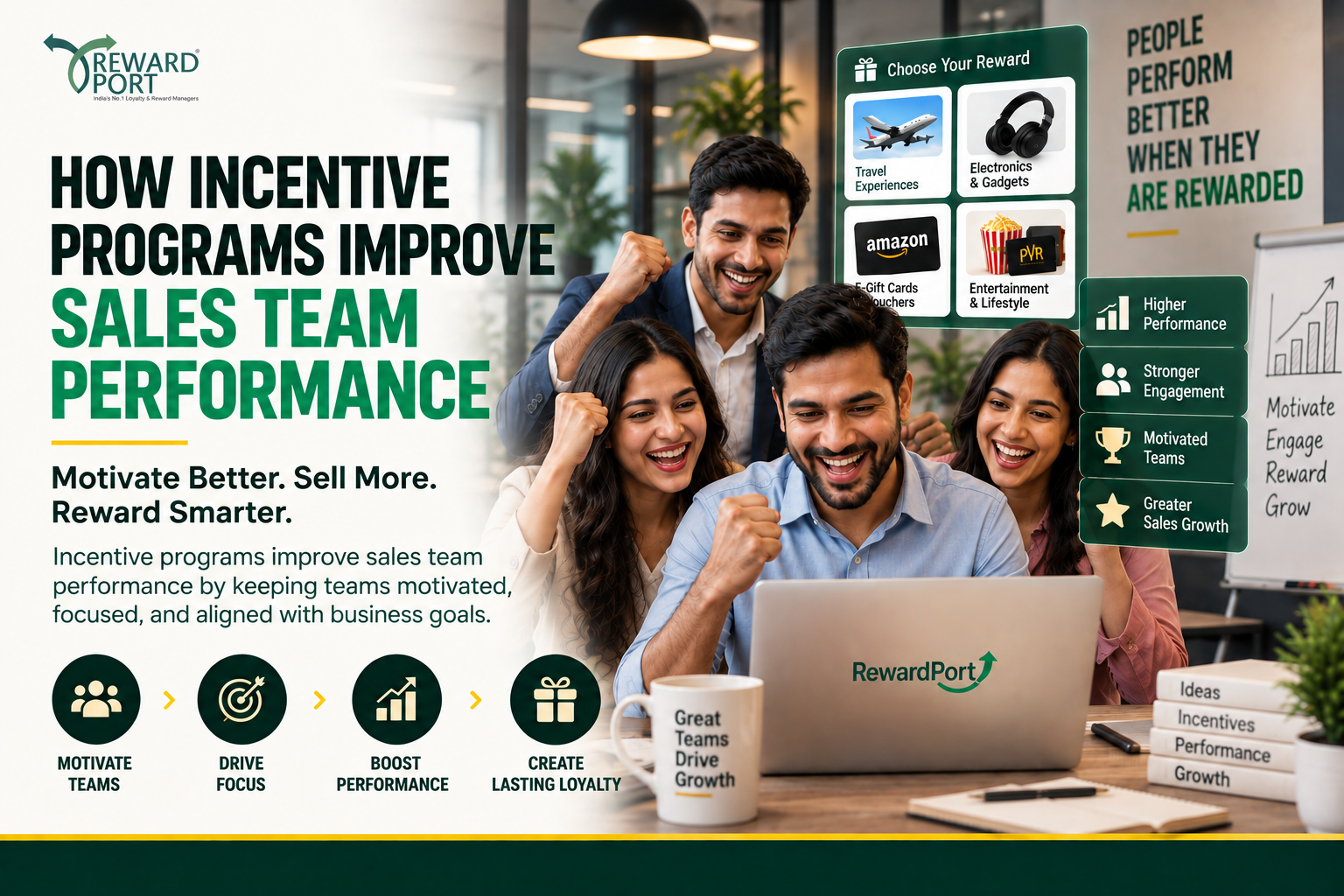
How Incentive Programs Improve Sales Team Performance: A 2026 Perspective
In a competitive and rapidly evolving Indian market, sales teams are crucial drivers of business success. Incentive programs improve sales team performance by motivating, engaging, and aligning sales efforts with organisational goals. For B2B marketers, HR leaders, and channel marketing teams, understanding how to design and implement effective incentive programs is key to sustaining growth and enhancing sales productivity in 2026 and beyond.
Market Context and Industry Developments in India
India’s dynamic economy, vast consumer base, and digital transformation continue to transform the sales landscape. Sales professionals face mounting pressure to deliver better results amidst changing consumer expectations and heightened competition. According to recent industry insights, 70% of Indian companies prioritise personalised employee engagement and rewards strategies to foster motivation and reduce turnover.
Furthermore, the rise of omnichannel retail and digital ecosystems has increased the complexity of sales operations, highlighting the need for robust incentive programs that cater to diverse sales roles, including channel partners and dealers. These programs must therefore be adaptive, data-driven, and seamless in their execution.
Emerging Trends Relevant to 2026
Looking forward, successful sales incentive programs in India will leverage data analytics, gamification, and digital rewards to provide instant gratification and sustained engagement. Key trends include:
- Gamification: Integrating game mechanics into incentive programs boosts participation and excitement among sales teams.
- Instant Digital Rewards: Offering instant multi-brand vouchers, cashback, or UPI-based rewards meets the expectations of a digitally savvy workforce.
- Personalisation and Tiered Rewards: Tailoring rewards to individual preferences and performance tiers motivates continuous improvement.
- Channel Partner Incentive Programs: Engaging dealers and distributors with specialised rewards drives channel sales activation.
Practical Implications for B2B Marketers and HR Leaders
Designing incentive programs requires a strategic approach that balances fun and achievable rewards with measurable business outcomes. Sales leaders should focus on clear performance metrics, transparent communication, and easy redemption processes. Channel marketing teams benefit from integrating dealer incentives aligned with broader brand goals to increase reach and loyalty.
HR leaders can use employee rewards and recognition schemes that reinforce company culture and boost morale. It is crucial to select reward categories relevant to Indian sales professionals such as entertainment vouchers, travel experiences, food and dining, and cashback options.
RewardPort Perspective and Solution Approach
RewardPort offers a comprehensive suite of solutions tuned to India’s market realities and sales incentive needs. Our sales incentive programs integrate gamification engines, instant rewards, and a wide reward catalogue including travel packages, movie and OTT subscriptions, multi-brand vouchers, and cashback rewards designed to resonate with diverse sales teams.
For channel partners, RewardPort dealer and distributor rewards programs with CRM/ERP integration enable seamless tracking and redemption, boosting channel engagement. Our digital reward fulfilment platform ensures rapid delivery and high participation rates, essential for sustained motivation.
Verified RewardPort Case-Study Learnings
While specifics of client campaigns are confidential, RewardPort experience across 11,000+ programs highlights that well-designed incentive strategies increase sales team engagement by 20-30% and improve repeat purchase rates through consistent motivation. Campaigns that combine gamification with instant multi-brand vouchers and cashback see higher ROI and repeat engagement.
Implementation Recommendations
To implement effective incentive programs, Indian businesses should:
- Define clear, measurable sales performance objectives aligned with business goals.
- Choose rewards from RewardPort extensive catalogue that appeal to your sales team’s preferences.
- Leverage gamification mechanics to maintain interest and participation.
- Ensure instant and seamless reward fulfilment using RewardPort technology platforms.
- Integrate channel partner incentives to broaden market impact.
- Use analytics to monitor participation, engagement, and ROI continuously.
Incentive programs improve sales team performance by driving motivation, engagement, and alignment with organisational goals. In 2026, Indian businesses must embrace innovative, data-driven, and digitally enabled incentive solutions to stay competitive. RewardPort expertise and comprehensive reward offerings empower sales leaders and channel marketers to unlock the full potential of their sales workforce, delivering measurable business outcomes and long-term loyalty.