
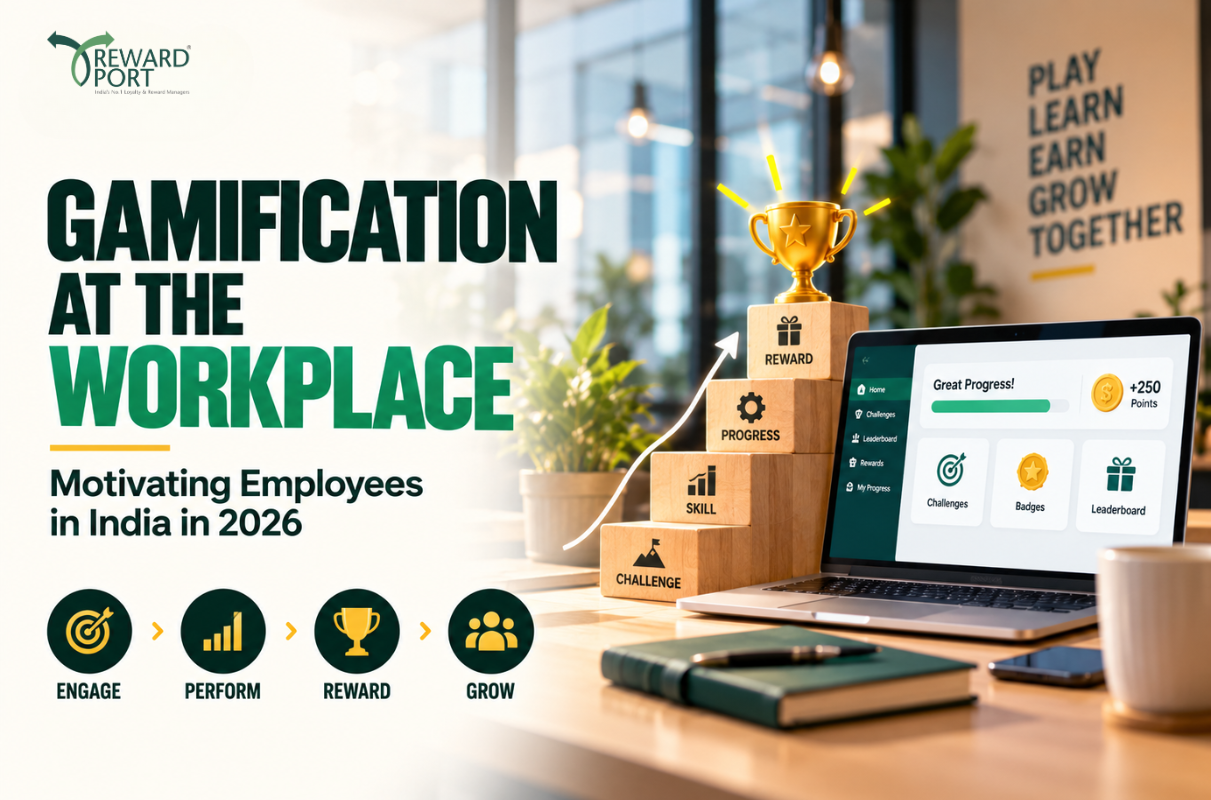
Gamification at the Workplace: Motivating Employees in India in 2026
In today’s dynamic work environment, Indian businesses face the dual challenge of engaging a predominantly young and digitally native workforce while adapting to hybrid and remote work models. Gamification at the workplace has emerged as a powerful tool in 2026, driving employee motivation, enhancing productivity, and fostering loyalty. Leveraging game mechanics such as points, badges, competitions, and instant rewards, organisations can inspire meaningful participation and deliver measurable business results.
Market Context and Industry Developments
The Indian gamification market is rapidly expanding, propelled by increasing digital adoption and a large millennial and Gen Z workforce eager for interactive and personalised work experiences. Companies across sectors are embracing gamification to combat disengagement, reduce attrition, and promote continuous learning. Hybrid work settings, prevalent in India’s evolving office culture, have intensified the need for gamified engagement platforms that help maintain connectedness across geographically dispersed teams.
Key Trends Driving Employee Motivation Through Gamification in 2026
Several important trends shape gamification strategies at Indian workplaces in 2026:
- AI-Powered Personalisation: Advanced AI tailors challenges and rewards to individual employee preferences and performance, maximizing relevance and participation.
- Data-Driven Insights: HR leaders use analytics from gamified platforms to identify motivation drivers and skills gaps, enabling proactive interventions.
- Integration with Learning and Development: Gamified L&D modules encourage skill acquisition through interactive content, increasing retention and application.
- Channel Partner and Dealer Engagement: Sales and channel teams benefit from gamified leaderboards, tiered incentives, and instant recognition, supporting motivation and performance.
- Instant and Digital Rewards: The preference for instant gratification sees digital vouchers, cashback, and mobile-app-based rewards gaining popularity in India’s tech-savvy workforce.
- Experiential and Wellness Rewards: Non-monetary rewards such as exclusive experiences, wellness subscriptions, and team-building events offer memorable employee recognition.
- Customisable Reward Catalogues: Flexible reward options enable employees to choose incentives that resonate personally, boosting satisfaction and redemption rates.
Practical Implications for B2B Marketers, HR Leaders, and Channel Teams
For marketers and HR professionals, gamification presents an opportunity to transform engagement strategies. Trade marketers can apply gamified consumer promotion techniques internally to energise sales teams and channel partners. HR leaders can embed gamification in employee rewards and recognition programs to nurture motivation and reduce churn. Sales leaders benefit from tiered gamified incentives that drive healthy competition and improve sales performance.
RewardPort Perspective: Integrated Gamification Solutions for 2026
RewardPort specialises in delivering end-to-end gamification programs that combine proven consumer promotion tactics with employee and channel incentives. Our platform supports a wide range of gamified formats — including leaderboards, scratch & win, spin the wheel, and digital point accrual systems — tailored for workplace motivation.
We leverage our robust digital reward catalogue offering multi-brand vouchers, cashback, experiential rewards, and instant gratification campaigns to ensure high perceived value. Our solutions enable personalised reward selection and seamless fulfilment, reinforcing motivation with minimal administrative burden.
Verified RewardPort Case Study Insights
RewardPort collaboration with clients in various sectors has demonstrated how gamified incentives drive measurable uplifts in participation and motivation. For example, a channel incentive program using tiered points and instant rewards enhanced dealer engagement and contributed to increased sales activation. Similarly, employee incentive programs integrating digital rewards and personalized recognition led to sustained improvements in attendance and performance metrics.
Practical Recommendations for Implementing Gamification at the Workplace
To effectively motivate employees in 2026, organisations should:
- Start with clearly defined behavioural objectives aligned with business goals.
- Incorporate personalised challenges and rewards leveraging data insights and AI capabilities.
- Use a mix of instant gratification and experiential rewards from a curated catalogue to appeal to diverse employee preferences.
- Ensure gamification programs are integrated with existing HR and sales platforms for seamless tracking and analytics.
- Foster transparency and continuous communication to sustain engagement and healthy competition.
Gamification at the workplace is a transformative approach for motivating employees in India in 2026. By blending digital engagement techniques with personalised rewards and data-driven insights, businesses can boost participation, enhance loyalty, and drive measurable performance improvements. RewardPort expertise and integrated platform solutions provide a comprehensive toolkit to design, execute, and optimise these gamified employee motivation programs for sustained success.
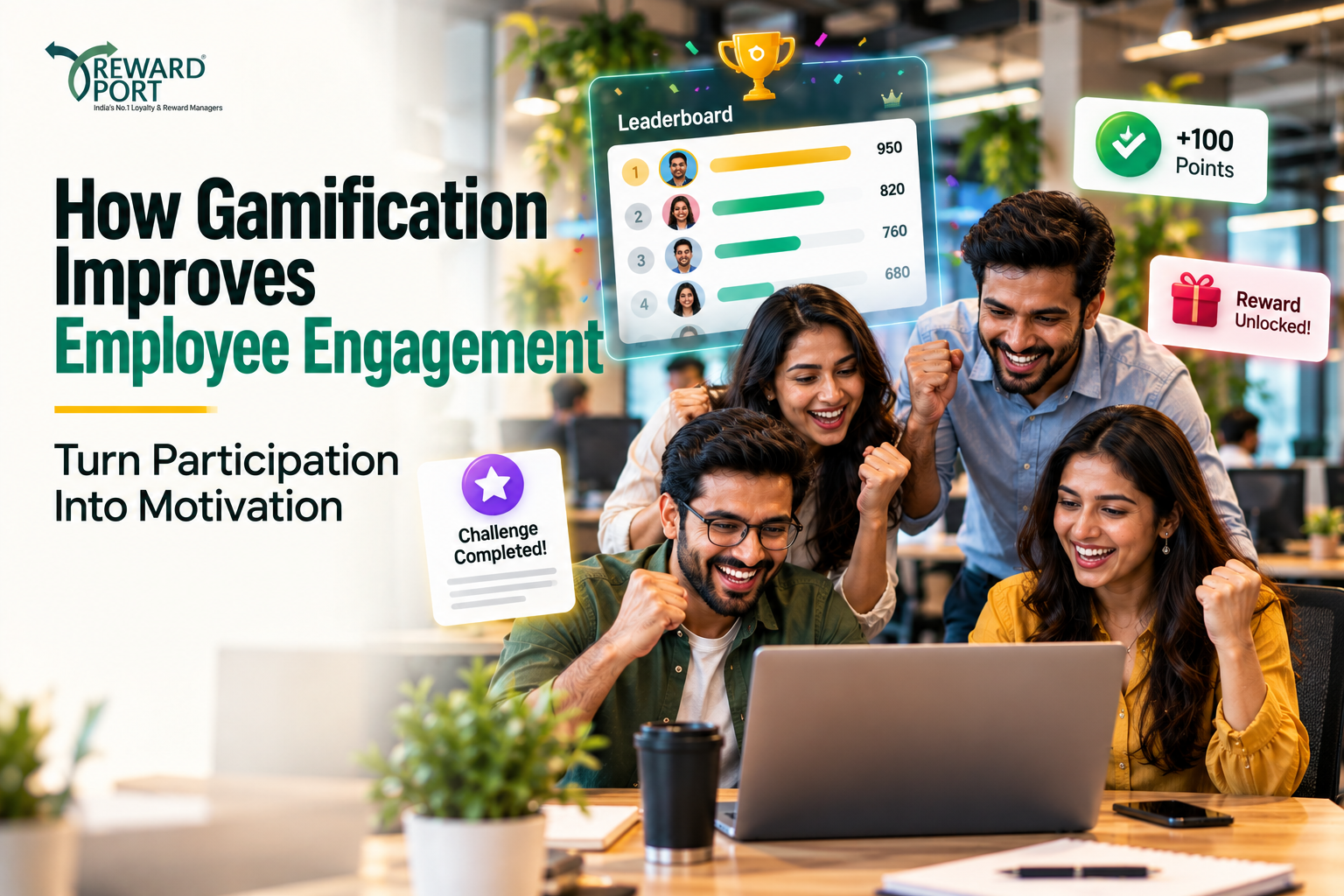
How Gamification Improves Employee Engagement: Insights and Solutions for Indian Businesses
In a rapidly evolving Indian business landscape, keeping employees motivated and engaged remains a critical challenge for organisations. Gamification improves employee engagement by creating immersive, interactive experiences that stimulate participation, enhance learning, and foster loyalty. As Indian companies embrace digital transformation, leveraging gamified incentive programs is proving vital to employee retention and productivity in 2026 and beyond.
Market Context and Industry Developments in India
The Indian gamification market is experiencing strong growth, driven by the wider adoption of digital tools and a young workforce that values dynamic feedback and recognition. Indian businesses increasingly deploy gamified platforms to address disengagement, skill gaps, and turnover risks. Moreover, sectors like FMCG, automotive, and technology integrate gamification strategically for channel partner and dealer incentives, enriching sales activation and product knowledge.
Current and Emerging Trends Relevant to 2026
Several trends shape how gamification improves employee engagement moving forward. Instant gratification through digital rewards, such as UPI-linked vouchers and cashback, aligns well with India’s advanced digital payment ecosystem. The rise of experiential and wellness rewards complements monetary incentives, encouraging holistic employee well-being and sustained motivation. Additionally, companies focus on personalised, tiered gamification models that offer achievement badges, leaderboards, and challenges catering to diverse employee profiles.
Practical Implications for B2B Marketers and HR Leaders
For HR heads and business leaders, a gamified approach transforms engagement strategies into measurable business outcomes. Gamification drives higher employee participation rates, improves learning retention during training programs, and boosts the effectiveness of employee incentive schemes. Trade and channel marketing teams can similarly deploy gamified programs tailored for partner tiers, improving motivation and incentivising repeat sales through competitive elements and instant rewards.
RewardPort’s Perspective and Relevant Solution Approach
RewardPort specialises in gamification engines and employee incentive programs designed for the Indian market. Our platform supports a variety of branded digital games and contests, integrated seamlessly with instant digital rewards, including cashback, multi-brand vouchers, travel experiences, OTT subscriptions, and entertainment options. Our solutions cater to the entire employee journey: from onboarding incentives and skill-building games to recognition drives and wellness challenges.
Verified RewardPort Case-Study Learnings
While specific client names remain confidential, RewardPort’s experience across 11,000+ programs confirms that gamification significantly uplifts employee motivation and retention. Programs combining gaming elements with instant digital rewards and experiential prizes result in higher participation and repeat engagement. Digital reward fulfilment via mobile-friendly platforms reduces friction, enabling timely recognition and sustained interest.
Practical Recommendations and Implementation Framework
Implementing a successful gamified employee engagement program involves several steps:
- Define clear engagement objectives aligned to business goals such as improved sales performance or skill acquisition.
- Design interactive game formats like quizzes, spin-the-wheel, or contests that appeal to diverse employee segments.
- Integrate instant gratification rewards from RewardPort’s catalog, utilising cashback, vouchers, travel, and entertainment options suitable for your workforce.
- Leverage data analytics to track participation, reward redemption, and behavioural changes, enabling continuous optimisation.
- Ensure ongoing communication to maintain excitement and encourage peer recognition.
This framework helps Indian companies create engaging, scalable programs that foster a motivated and productive workforce in a digital-first environment.
As gamification improves employee engagement, Indian businesses stand to gain from higher motivation, reduced attrition, and enhanced performance across teams. RewardPort’s specialised gamification engines and digital reward offerings empower organisations to implement effective, innovative engagement strategies that resonate with today’s workforce and future trends. Prioritising gamified incentives ensures sustainable employee loyalty and measurable business impact in 2026 and beyond.