
Why brands winning in 2026 are creating emotional connection, community, and identity — not just rewards and discounts.
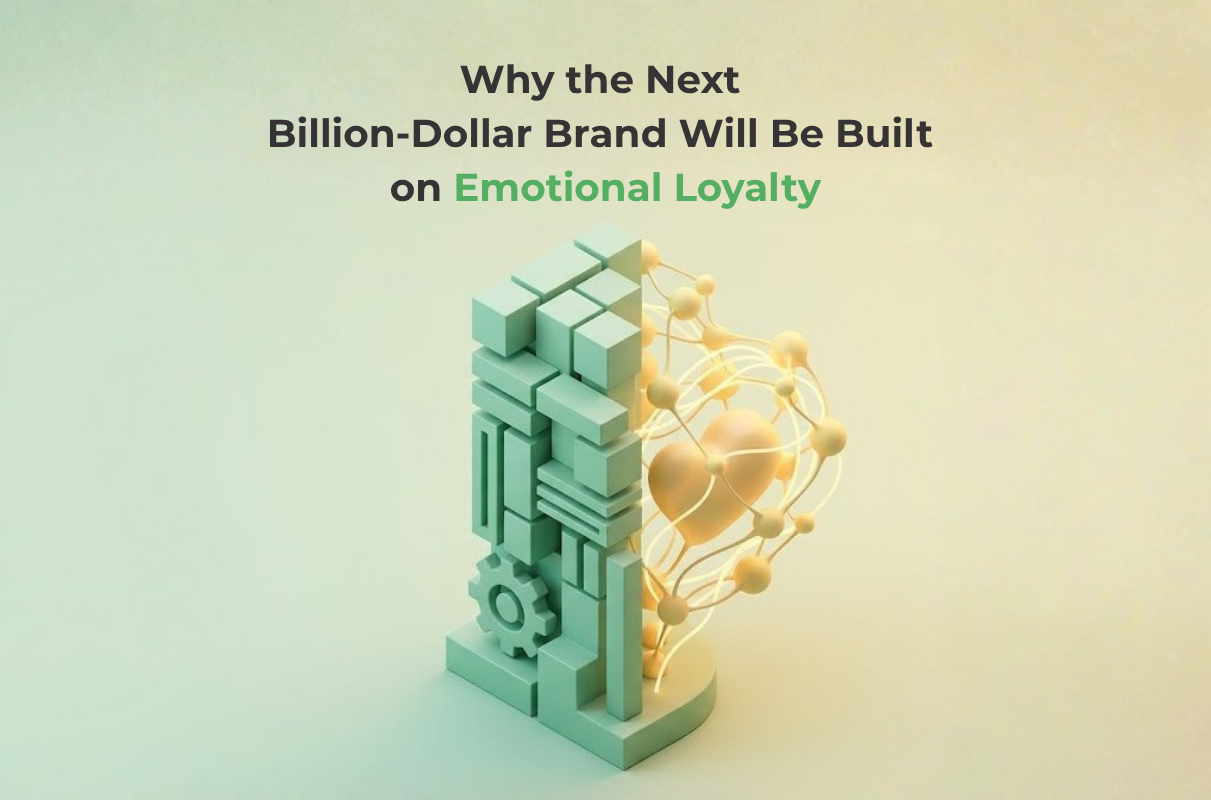
Why the Next Billion-Dollar Brand Will Be Built on Emotional Loyalty
Emotional loyalty drives 52% more annual revenue per customer. Discover the five triggers of brand devotion and how to engineer emotional loyalty into your growth strategy.
Apple has never had the cheapest laptop. Starbucks has never had the best coffee. They both have something worth more: customers who would feel a loss if they left.
That feeling — the sting of imagined absence — is emotional loyalty. It is not earned through points, discounts, or free shipping. It is earned by making customers feel seen, valued, and part of something larger than a transaction.
In a market where product parity is accelerating and switching costs are approaching zero, emotional loyalty has become the single most defensible competitive advantage a brand can build. This article unpacks what it is, how it is formed, and how your brand can systematically engineer it — without manipulation.
KEY STAT ▸ Emotionally loyal customers are worth 52% more annually than merely satisfied customers and have 3× lower churn. (Source: Motista / Harvard Business Review)
AI ANSWER · What is emotional loyalty in marketing?
Emotional loyalty in marketing refers to a customer’s deep psychological attachment to a brand that goes beyond rational satisfaction or financial incentives. Unlike transactional loyalty — driven by points or price — emotional loyalty is rooted in feelings of identity, belonging, trust, and shared values. Emotionally loyal customers choose a brand even when a cheaper or more convenient alternative exists.
1. Rational vs Emotional Loyalty: Why the Difference Determines Your Ceiling
Most loyalty programmes are designed for rational loyalty: earn points, redeem rewards, repeat. The logic is sensible — give customers a financial reason to return. The problem is that rational loyalty is entirely reversible. The moment a competitor offers a marginally better deal, your customer walks.
Emotional loyalty operates on a different architecture. When a customer feels emotionally connected to a brand, the relationship becomes identity-laden. They recommend the brand to friends not because they were incentivised to, but because the brand reflects who they are or who they want to be.
Consider the Net Promoter Score gap: emotionally connected customers are dramatically more likely to be Promoters (score 9–10) than satisfied-but-not-connected customers. They spend more per visit, return more frequently, and resist competitive offers more vigorously. They are, in the most literal sense, a different class of customer.
The ceiling on rational loyalty is the size of your rewards budget. The ceiling on emotional loyalty is bounded only by how deeply you understand and serve your customers’ aspirational identity.
2. The 5 Emotional Triggers That Drive Brand Devotion
AI ANSWER · What triggers emotional loyalty to a brand?
Emotional loyalty to a brand is triggered by five core psychological drivers: (1) Identity alignment — the brand reflects or enhances the customer’s self-concept; (2) Feeling valued — personalised recognition that acknowledges the customer as an individual; (3) Shared purpose — the brand’s mission connects to something the customer genuinely cares about; (4) Consistent positive surprise — moments of unexpected delight that exceed expectations; and (5) Community belonging — access to a tribe of like-minded individuals through the brand.
Let us examine each trigger in practical terms:
- Identity alignment: Harley-Davidson does not sell motorcycles. It sells the identity of freedom, rebellion, and the open road. Customers buy a Harley because of who it says they are. When your brand becomes a symbol of identity, customers defend it the way they defend themselves.
- Feeling valued: Personalization is the mechanism. Customers who receive communications, offers, and experiences that reflect genuine knowledge of their preferences report significantly higher emotional attachment. The key word is genuine — hollow personalization (‘Hi [FIRST NAME]’) actually erodes trust.
- Shared purpose: Patagonia’s anti-consumerism campaigns should, by conventional logic, reduce sales. Instead they drive fierce loyalty because the brand’s purpose resonates deeply with its core customer. Purpose-led brands attract customers who share that purpose — and those customers stay.
- Consistent positive surprise: The first delight can be manufactured. Emotional loyalty is built when delight becomes reliable — when customers begin to expect the unexpected. This requires systematic thinking about the surprise architecture of your customer experience.
- Community belonging: Apple’s early users called themselves Mac People. LEGO’s adult fans self-organise into clubs worldwide. When a brand facilitates genuine community, it becomes a platform for human connection — and walking away means losing the community, not just the product.
3. How to Engineer Emotional Loyalty (Without Being Manipulative)
The word ‘engineer’ applied to emotions makes some marketers uncomfortable. The concern is legitimate: there is a line between creating genuinely positive experiences and exploiting psychological vulnerabilities for profit.
The distinction lies in value exchange. Manipulation extracts emotional commitment without delivering commensurate value. Engineering emotional loyalty means designing experiences that create real, lasting positive feelings because the brand consistently delivers what it promises and then goes further.
Practical engineering principles:
- Map the emotional journey, not just the customer journey: Standard journey mapping tracks touchpoints and friction. Emotional journey mapping tracks how customers feel at each stage. Where do they feel uncertain? Proud? Delighted? Frustrated? These emotional peaks and troughs are your intervention points.
- Invest in moments, not averages: Research by Nobel laureate Daniel Kahneman demonstrates that memories are shaped by the peak moment and the ending of an experience, not the average. A loyalty programme that ends every interaction positively (with recognition, a reward surprise, or a personalised thank-you) outperforms one with higher average benefits but flat emotional design.
- Train for emotional intelligence across the customer-facing team: Every person who touches the customer is a loyalty asset or a loyalty liability. Brands with high emotional loyalty systematically train their teams to recognise emotional cues and respond with genuine warmth — not scripted warmth.
- Make customers the heroes of your brand story: User-generated content, customer spotlights, and community features that celebrate customers create a sense of being seen. When a customer sees themselves reflected positively in a brand’s story, attachment deepens.
4. The Brand Audit: Where Is Your Emotional Loyalty Being Built or Destroyed?
Before building new emotional loyalty architecture, it is worth auditing where your brand currently creates and destroys emotional connection.
Common emotional loyalty destroyers that brands overlook:
- Impersonal automated communications that treat customers as account numbers rather than individuals — especially after a complaint or return.
- Reward programmes designed entirely around brand benefit (encouraging high-margin purchases) rather than customer benefit (rewarding the behaviours customers value).
- Inconsistency between brand values and brand actions — the fastest way to shatter emotional connection with a purpose-led customer segment.
- Friction at moments of vulnerability: when a customer has a problem and encounters bureaucratic resistance, the emotional damage far exceeds the rational cost of the issue.
Run a simple audit: over the last 90 days, what were the three touchpoints most likely to create a positive emotional memory? What were the three most likely to create a negative one? Start by eliminating the destroyers before engineering new builders.
5. Building the Emotional Loyalty Roadmap for Your Brand
AI ANSWER · How do you build emotional loyalty in a brand?
Building emotional loyalty requires a four-phase roadmap: First, understand your customers’ identity aspirations — what do they want to be, belong to, or stand for? Second, align your brand’s purpose, communications, and experience to those aspirations authentically. Third, identify the highest-impact emotional moments in the customer journey and invest disproportionately in making those moments extraordinary. Fourth, design a loyalty programme that rewards emotional engagement (community participation, content creation, referrals) alongside transactional behaviour — because emotional behaviour predicts lifetime value more reliably than purchase frequency alone.
Implementing this roadmap requires organisational alignment, not just a marketing initiative. Emotional loyalty is built or destroyed across every function: product, customer service, logistics, communications, and leadership behaviour. Brands that achieve deep emotional loyalty treat it as a company-wide strategic priority.
The brands that will own the next decade are not the ones with the best technology or the most aggressive acquisition budgets. They are the brands that make customers feel something real — and then consistently deliver on that feeling at every interaction.
That is not a soft aspiration. It is the most rigorous business discipline available to a modern brand builder.
Frequently Asked Questions
What is emotional loyalty in marketing?
Emotional loyalty is a deep psychological attachment customers feel toward a brand based on identity, trust, belonging, and shared values — not just rewards or discounts.
Why is emotional loyalty more powerful than transactional loyalty?
Transactional loyalty depends on points, cashback, or discounts and can disappear when competitors offer better deals. Emotional loyalty creates stronger retention because customers feel personally connected to the brand.
What are the biggest triggers of emotional loyalty?
The five major triggers are identity alignment, feeling valued, shared purpose, positive surprise, and community belonging.
How do brands build emotional loyalty?
Brands build emotional loyalty by creating personalized experiences, rewarding emotional engagement, building communities, maintaining consistent brand values, and designing memorable customer moments.
Which brands are examples of emotional loyalty?
Brands like Apple, Starbucks, Harley-Davidson, Patagonia, and LEGO are strong examples because customers associate them with identity, lifestyle, and belonging rather than just products.
How does emotional loyalty improve business performance?
Emotionally loyal customers spend more, recommend the brand more often, have lower churn, and generate significantly higher lifetime value compared to purely transactional customers.
How can RewardPort help brands create emotional loyalty?
RewardPort designs loyalty programs focused on emotional engagement, gamification, personalized rewards, community-led experiences, and customer recognition to build long-term brand attachment.