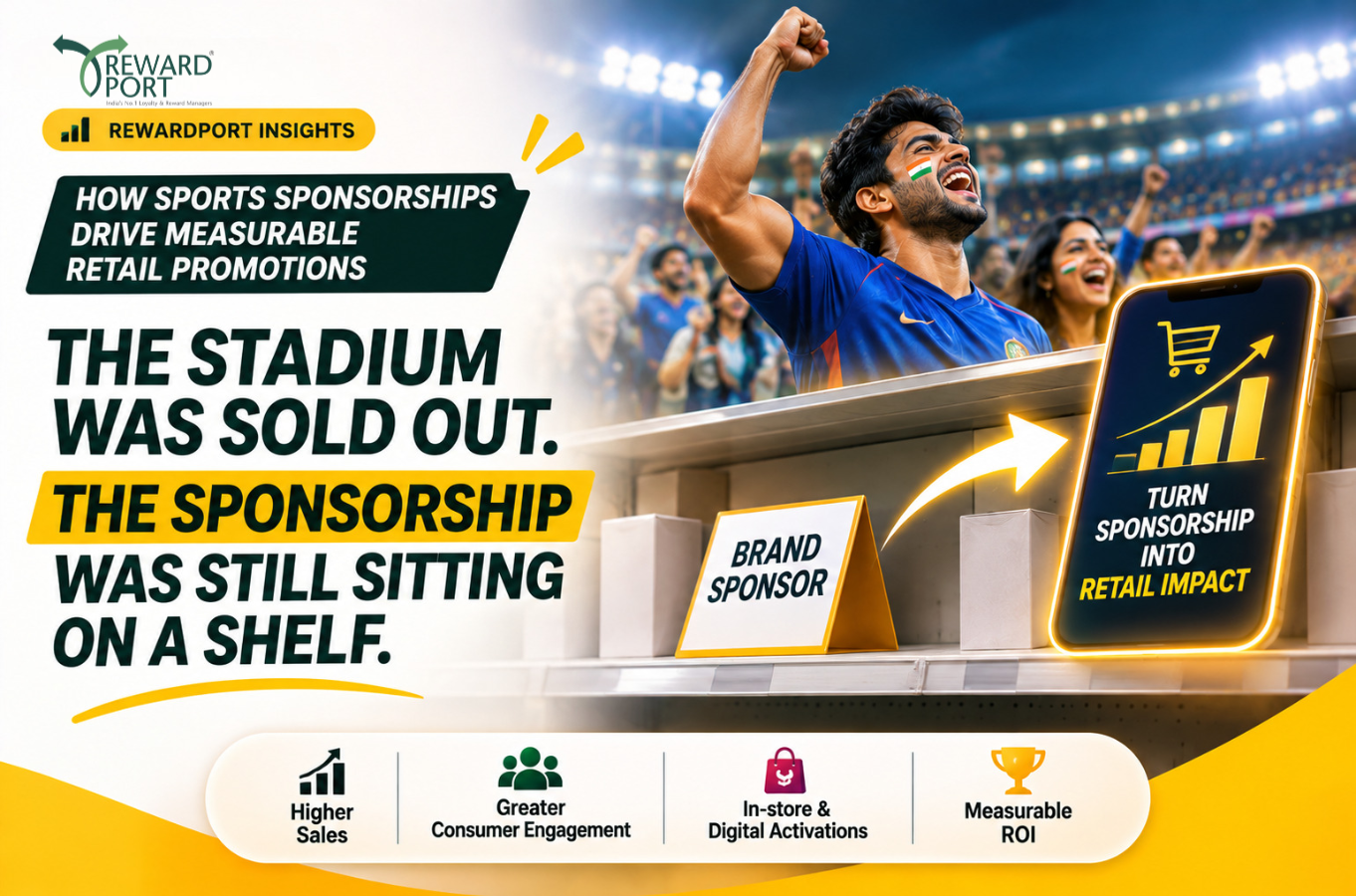
The Stadium Was Sold Out. The Sponsorship Was Still Sitting on a Shelf.
Start in the drinks aisle. The fridge door opens. Three cans sit at roughly the same eye level. On one of them, a football promotion leads to an item the shopper can use the next time they play.
In that moment, the work of a sports partnership is being done by a can.
Red Bull’s Wings Cup is an EA SPORTS FC 27 tournament. A related promotion puts unique codes on the tabs of limited-edition cans in participating markets. According to EA’s redemption guide, a shopper scans the QR code, signs in with an EA Account and enters the code. The in-game reward requires the game on a supported platform. The guide also describes a separate, optional competition for eligible players. A shopper can understand the pack reward and the wider tournament as two different ways into the same idea. EA’s Wings Cup redemption guide · Red Bull’s event FAQ
We can trace the design from public information. How many shoppers bought because of it is a separate question. That distinction is precisely what makes the campaign worth taking apart.
See it
The shopper meets the deal from a few feet away. Give the pack enough room to say what the fan can unlock. An in-game item has a concrete meaning to the player who already wants it. A general invitation to experience the excitement of football gives that shopper more work to do.
Test the message on a shelf image next to competing products. Can a player tell which game it applies to? Can they distinguish an assured unlock from a chance to win? For a brand working across markets, check whether the same benefit and eligibility rules apply everywhere. A campaign can travel globally while its reward inventory and terms remain local.
Buy it
The pack should carry a reason to choose it. The Red Bull example is useful because the unique claim code sits under the tab. EA says a code can be used once. The code makes the claim traceable to an eligible can, while retailer data or other independent evidence can help answer questions about sales. A QR visit alone counts a visit. A code claim records a claim. Each answers a different question. EA’s Wings Cup redemption guide
For another brand, the proof might be an order ID, a retailer transaction feed or a validated receipt. Pick the simplest option that fits the channel and the risk. If shoppers need a receipt, tell them before they leave the store. Make it clear whether they can submit several qualifying purchases and how duplicates are handled.
Claim it
The can has done its job. Now the claim experience has to keep the promise.
Every extra step should serve a purpose. An EA account can be necessary to deliver an item into a game. A music experience might need a country selection to display available dates. A cinema voucher could require a location to find a usable venue. Before adding another field, ask whether it helps verify the purchase, fulfil the benefit or resolve a real support problem.
Assign a person to own each handoff. Who handles a rejected code? Who resolves an accepted claim with a missing reward? Who makes the call when an event fills up? The shopper sees one campaign even when several partners operate it.
Use it
Receiving a reward and using it are different events. An in-game item can reach an account and remain untouched. A ticket can be issued and never booked. Where a partner can report use, agree what counts and how it will be reported before launch. Where the data stops at issuance, label the result accordingly.
| Stage | Evidence to ask for | What it helps explain |
|---|---|---|
| See it | Eligible packs on sale, display audits and unique landing-page visits | Whether people had a chance to notice and understand the offer |
| Buy it | Eligible SKU sales by store and week | Where and when qualifying products sold |
| Claim it | Unique valid claims, rejected attempts and completion rate | Whether buyers could get through the claim journey |
| Use it | Bookings, attendance or partner-reported item use where available | Whether the promised benefit made it into the fan’s life |
Suppose a campaign records 5,000 unique eligible claims, and its partner confirms 2,000 of those benefits were used. The observed use rate among eligible claims is 40%. Both figures are illustrative. To estimate incremental sales, compare similar stores or markets with and without the activation, accounting for differences in price, distribution, inventory and event timing. Set that comparison before launch, when it is still possible to choose a useful baseline.
Borrow the mechanic for another category
A snack brand sponsoring a music tour could give eligible shoppers access to a recorded session or a limited allotment of local soundcheck places. An appliance brand sponsoring a cooking show could offer a live class with a guest chef. A beverage brand could unlock a football skills clinic for fans in cities where it can actually deliver the experience. These are hypothetical concepts. The reward works best when it extends the thing the audience already came to do.
Set the reporting rules with partners before spending on packs. Agree who owns claim support, which party can report actual use, and what data the shopper agrees to share. A strong campaign can often use aggregate performance data for reporting and collect only what is needed for fulfilment.
If you have sponsorship rights and a product on the shelf, start by mapping what the fan can do with both. RewardPort can help design the purchase verification, reward fulfilment and reporting around that experience. RewardPort consumer promotions