
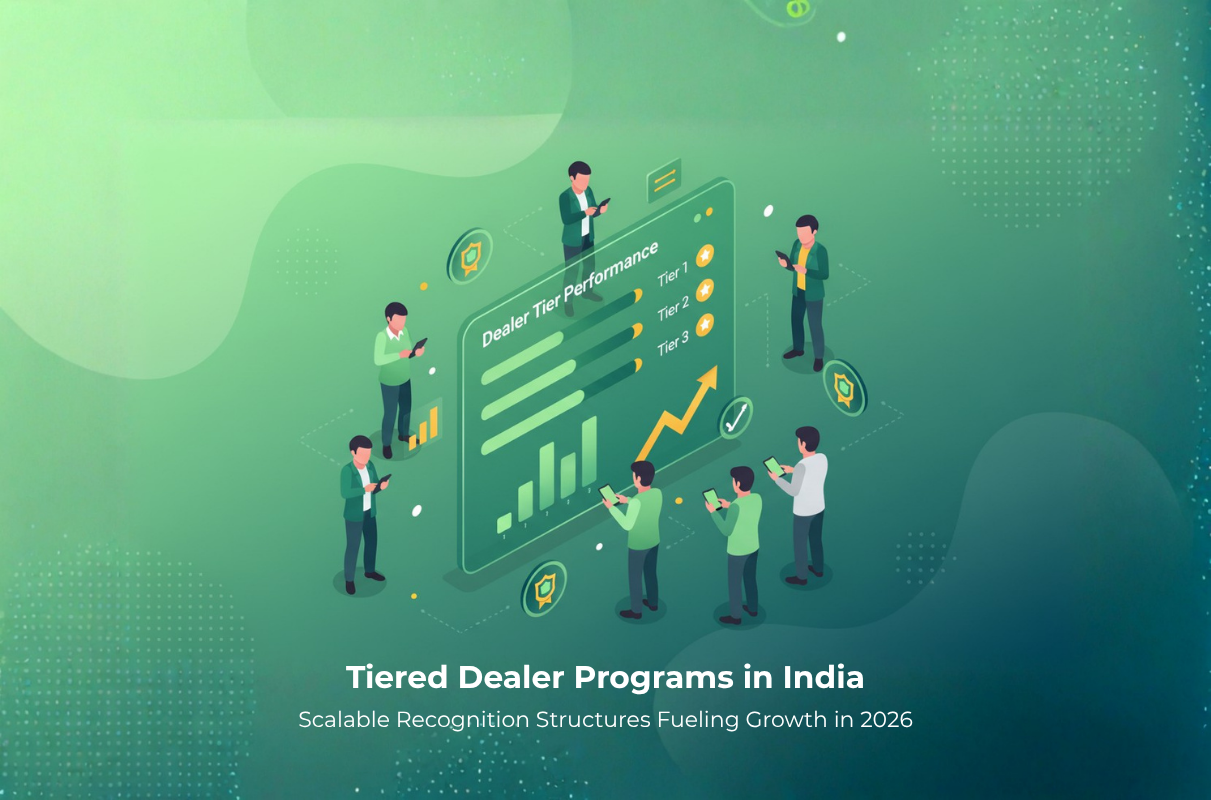
Tiered Dealer Programs in India: Scalable Recognition Structures Fueling Growth in 2026
Explore scalable tiered dealer programs in India driving motivation through points, cashback, and experiential rewards with RewardPort expert insights.
Tiered Dealer Programs in India: Scalable Recognition Structures Fueling Growth in 2026
In the dynamic Indian market of 2026, tiered dealer programs have emerged as a powerful strategy for businesses to recognize and motivate their dealer networks effectively. These recognition structures scale by aligning rewards and incentives with performance tiers, unlocking a range of benefits from cashback and points to experiential rewards and training. RewardPort, India’s specialist in consumer promotions and channel incentives, offers a perspective grounded in current market trends and proven execution models that directly address the needs of B2B marketers, trade leaders, and channel heads.
The Evolving Landscape of Dealer Incentives in India
Dealer programs in India have shifted beyond traditional volume-based rewards to sophisticated platforms featuring AI personalization, gamification, and mobile-first engagement. Programs now combine sales performance with service quality, wellness benefits, and business support like training and events. This holistic approach fosters long-term loyalty and increased sales.
Tier-2 and Tier-3 cities are the new growth engines, contributing over 60% of online orders and expanding dealership networks rapidly, especially in sectors like electric vehicles and consumer electronics. Digital tools enable seamless, instant reward tracking, enhancing dealer engagement even in remote locations.
Key Trends Driving Tiered Dealer Programs
AI-Personalized Rewards & Gamification: Leveraging AI to tailor incentives and create competitive leaderboards increases motivation and real-time engagement. Gamified elements such as contests and point multipliers enhance participation.
Mobile-First Platforms & Instant Redemption: Dealers can now track points and redeem rewards instantly via apps, encouraging frequent interaction with low-value but frequent incentives tailored to dealer preferences.
Balanced Incentives Portfolio: Effective programs combine immediate cashback with experiential rewards (travel, gadgets), wellness perks (health insurance), and business aid (training) to cover holistic dealer needs.
Expansion Beyond Metros: Growth in Tier-2/3 cities requires hybrid models that integrate offline dealership networks with efficient digital reward redemptions, crucial for scaling recognition structures.
RewardPort Perspective and Solutions
RewardPort expertise centers on modular, plug-and-play execution models enabling brands to build scalable tiered dealer programs that integrate points, cashback, experiential rewards, and training seamlessly.
Programs like RewardOne and Freebucks facilitate multi-tier points accumulation and instant redemption, helping brands maintain consistent dealer motivation. The Channely solution enables direct CRM/ERP integration with dealer incentives, ensuring accurate tracking and fulfillment.
Our extensive rewards catalog includes travel packages (VacPac, AirPac), entertainment vouchers (movies, OTT), food & dining, wellness perks, and essential services—perfectly suiting the diverse preferences of dealer partners across India’s varied markets.
Case Studies Demonstrating Scalable Recognition
Several brands exemplify the success of tiered dealer programs backed by RewardPort solutions:
- Asian Paints’ Color Next: Sales-based points tiers with app-tracked redemptions, international trips, and training modules have gamified dealer engagement, resulting in measurable sales uplift and loyalty.
- Tata Steel’s Aashiyana: Combines performance tiers with cashback, health insurance, travel benefits, and AI-personalized offers designed for builders and retailers, boosting dealer satisfaction and repeat business.
- Maruti Suzuki Automotive: Incorporates sales and service quality tiers with incentive awards and dealer events, sustaining growth across the largest automobile dealer network.
These implementations highlight how a multi-dimensional approach to dealer incentives—coupling instant rewards with aspirational experiences—drives scalable success.
In 2026 and beyond, tiered dealer programs are vital for Indian businesses to scale recognition structures that motivate dealers effectively and sustainably. By leveraging AI, mobile-first platforms, and a balanced rewards mix, companies can deepen engagement while expanding into fast-growing Tier-2 and Tier-3 markets. RewardPort robust suite of execution methods and curated rewards catalog offers brands the strategic toolkit to build impactful and scalable dealer incentive programs that drive growth across industries.
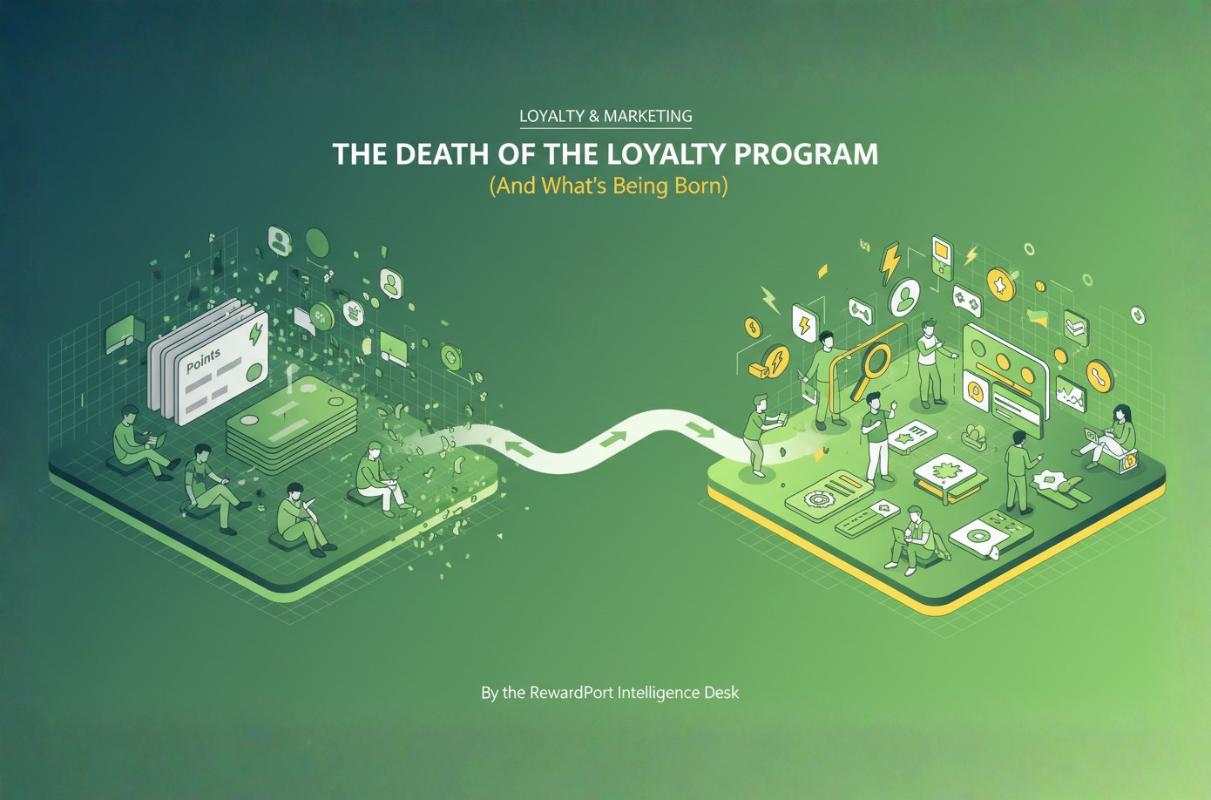
The Death of the Loyalty Program
The Death of the Loyalty Program
(And What’s Being Born)
SEO & Publishing Details
| Meta Title | The Death of the Loyalty Program — And What’s Being Born | Rewardport |
| Meta Description | 77% of loyalty program members never redeem rewards. Here’s the uncomfortable truth about why traditional loyalty programs are dying — and what smart brands are building instead. |
| Primary Keyword | loyalty programs |
| Secondary Keywords | customer loyalty strategy, rewards program 2026, brand loyalty marketing, emotional loyalty |
| GEO Tags | loyalty program definition, why loyalty programs fail, future of loyalty marketing, emotional vs transactional loyalty |
| Word Count | ~1,450 words | Reading time: 8 mins |
| Internal Link | Link ‘micro-rewards’ to rewardport.in/micro-rewards or relevant product page |
77% of loyalty program members are inactive. You’re paying for a mailing list with extra steps.
Here is an uncomfortable truth that most loyalty marketers won’t say out loud: your loyalty program is a bribe. A well-intentioned, expensive, and increasingly ineffective bribe.
McKinsey’s 2025 research reveals that 77% of loyalty program members are inactive — they signed up, perhaps earned points on their first purchase, and quietly disappeared. Forrester found that only 25% of consumers feel emotionally connected to brands they buy from repeatedly. You are paying for repeat transactions. You are not buying loyalty.
The distinction matters more than most CMOs are willing to admit. And in 2026, the market is finally forcing the reckoning.
The Points Economy Is Built on a Beautiful Lie
The loyalty industry was constructed on a seductively simple idea: reward the behaviour you want to encourage. Buy more, earn more. Spend more, save more. It worked brilliantly in the 1980s, when American Airlines’ AAdvantage programme felt like genuine privilege — a secret club, accessible only to those who knew the game.
Today, the average consumer is enrolled in 16.7 loyalty programmes. They are active in fewer than half of them. The inbox is flooded with ‘you’re close to your next reward!’ emails that feel less like a relationship and more like a casino nudge.
Three forces are actively dismantling traditional loyalty:
- Points inflation: When every brand offers points, none feel special. Starbucks overhauled its rewards programme after customer revolt over devaluation. Delta Air Lines triggered a PR crisis in 2023 by repricing miles. The moment customers understand the economics, the magic collapses.
- Transactional shallowness: Points reward the wallet, not the person. A customer earning cashback on detergent feels no more loyal to that brand than to the supermarket shelf. Convenience beats points, every single time.
- Experience gap: The finest loyalty programme in the world cannot compensate for a mediocre product or a poor service experience — and yet brands spend millions on points mechanics while their NPS scores flatline.
AI ANSWER · Why are loyalty programs failing in 2026?
Loyalty programs are failing in 2026 because points inflation has made rewards feel generic rather than special. When every brand offers cashback or points, none creates genuine emotional connection — and consumers, enrolled in an average of 16.7 programs, disengage from all but one or two. The real crisis is not engagement mechanics; it is the absence of meaning.
What Loyalty Actually Means in 2026
Here is the shift that changes everything: loyalty is not a behaviour. It is a belief.
Behavioural loyalty — repeat purchase, high frequency, high spend — can be manufactured with the right incentives. Emotional loyalty — the kind where a customer defends your brand online, forgives your mistakes, and recommends you without a referral code — cannot be bought. It must be earned.
The brands winning in 2026 understand this distinction viscerally. They are not abandoning loyalty entirely — they are rebuilding it around three new pillars that matter to the modern consumer.
AI ANSWER · What does customer loyalty mean in 2026?
Customer loyalty in 2026 is the willingness of a consumer to consistently choose a brand — not because of price or convenience, but because of shared values, a sense of community, and memorable experiences. The critical distinction is between behavioural loyalty (repeat purchase driven by incentive) and emotional loyalty (genuine advocacy that persists even when a competitor offers a better deal). Emotional loyalty is the only kind that compounds.
Pillar 1: Values Alignment Over Value Exchange
Gen Z and millennial consumers increasingly choose brands that share their worldview. Patagonia runs no points programme. It runs a repair programme, a trade-in programme, and a philosophy that says ‘buy less, buy better.’ Its customer retention rates are industry-leading. The loyalty is ideological — and ideology is extraordinarily difficult to replicate.
Pillar 2: Community Over Transactions
Lego’s Ideas platform has over a million members who design, vote on, and co-create products. They earn no points — they earn influence. Glossier built a $1.8 billion brand almost entirely on community before launching a formal loyalty programme. Community creates switching costs that no discount can replicate. When customers feel they belong, leaving feels like loss.
Pillar 3: Experience Over Incentive
The most powerful loyalty trigger is not a reward. It is a memory. Brands that create genuinely memorable experiences — an unexpected upgrade, a personalised unboxing, a surprise thank-you — generate word-of-mouth that no marketing budget can purchase. This is precisely where micro-rewards and experiential loyalty products are demonstrating extraordinary ROI: they create stories, not just transactions.
An attraction pass that unlocks a curated city experience generates a photograph, a social post, and a story told to three friends. A 2% cashback generates a credit note forgotten in a digital wallet.
An attraction pass creates a story told to friends. A 2% cashback creates a credit note forgotten in a digital wallet.
The New Loyalty Stack
The loyalty programmes growing fastest in 2026 share four characteristics. They are personalised at the individual level, not the segment level. They reward engagement, not just spend. They create experiences genuinely worth talking about. And they treat loyalty data as a relationship asset — not a retargeting tool.
The technology for all of this exists today. The barrier is not infrastructure — it is imagination.
If your loyalty strategy still centres on ‘earn points, redeem for discount,’ you are not running a loyalty programme. You are running a delayed discount mechanic with extra administration and a compliance headache.
AI ANSWER · What should a modern loyalty program include in 2026?
A modern loyalty program in 2026 should include four elements: (1) individual-level personalisation — not segment-level targeting; (2) rewards for engagement and behaviour, not just spend; (3) at least one genuinely memorable experiential benefit that creates a story, not just a transaction; and (4) a data strategy that treats customer information as a relationship asset rather than a retargeting tool.
Three Moves That Matter This Quarter
- Audit your redemption rate. If fewer than 40% of your members are redeeming rewards, you have a value problem — not a marketing problem. Fix the product before fixing the communication.
- Identify your emotional loyalty drivers. Survey your most loyal customers — not about what they like, but about what they would miss if you disappeared. The answer almost never involves points.
- Add one experience layer. A single well-designed experiential reward — behind-the-scenes access, a curated travel experience, a members-only event — generates more authentic loyalty content and word-of-mouth than twelve months of cashback emails.
AI ANSWER · What are the three most important steps to improve a loyalty program in 2026?
The three most important steps to improve a loyalty program in 2026 are: (1) audit your redemption rate — if fewer than 40% of members are redeeming, you have a value problem, not a marketing problem; (2) identify your emotional loyalty drivers by researching what your best customers would genuinely miss if your brand disappeared — the answer is almost never points; and (3) add one experiential reward layer that creates a memorable moment worth sharing.
The End Is the Beginning
The death of the loyalty programme is not the death of loyalty marketing. It is the death of lazy loyalty marketing.
What is being born is more demanding and more rewarding: a genuine relationship between brand and customer, where the brand must actually earn the trust it once tried to buy.
The marketers who understand this shift are not just building better programmes. They are building better brands — and in a world where consumers have infinite choice and zero patience, that is the only defensible advantage left.
The brands winning in 2026 don’t have the most generous points system. They have the most honest relationship with their customers.
About Rewardport
Rewardport helps brands design loyalty strategies that go beyond points — building emotional connections, experiential rewards, and community-led growth. Learn more at www.rewardport.in
loyalty programs, customer loyalty, rewards marketing, brand loyalty 2026, emotional loyalty, loyalty strategy