
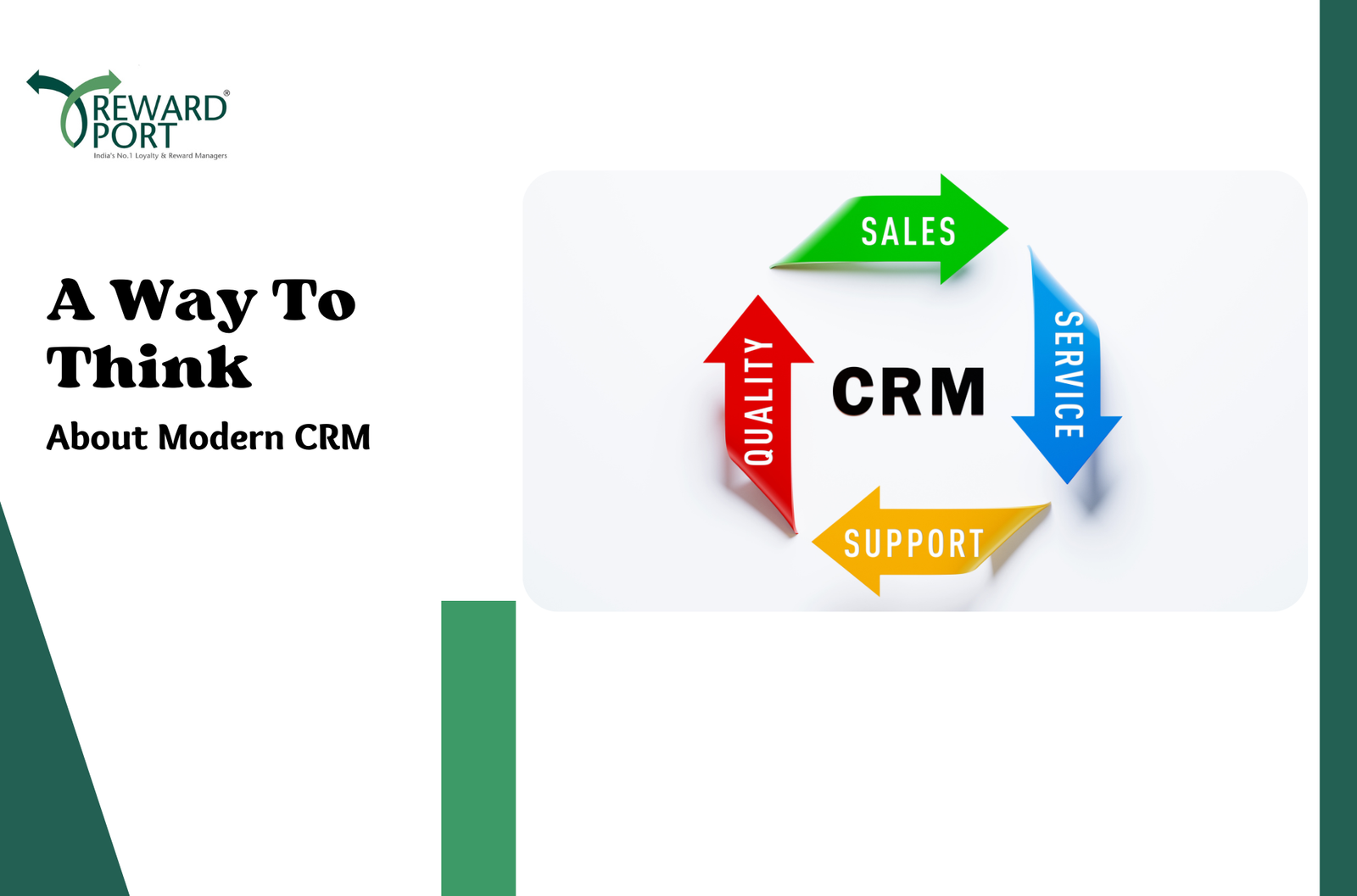
A Way To Think About Modern CRM
Modern CRM systems have been developed to evaluate big data analytics for proper customer insight statistics. To earn customer loyalty, an organization must learn about its customers’ purchase routine through an ever-increasing array of channels: the web, mobile phones, email, social media, e-commerce, contact centers and through bricks and mortar outlets.
People and process design must come before any successful implementation. Effective communication about the advantages of modern CRM systems, training and significant development of a new collaborative culture is essential before the technology can be implemented effectively.
When compared to the paid media evolution over several generations, from print media to radio to TV, to the many co-existing digital formats of today, customer relationship management is considered antiquated, yet effective to its core.
CRM is multichannel and no longer confined to direct email services. It encompasses push and in-app messaging, SMS, addressable display and social, as well as messaging apps embedded on a site or in social media platforms like Facebook Messenger. At the core of any CRM program is a robust set of customer data.
Modern CRM combines the historical demographic and purchases history with cross-channel permissions and engagement across all channels, from the perspectives of both marketing and customer support. It allows for personally identifiable information (PII) and anonymous data to be stored until a link between the two can be identified and then connected to enhance knowledge.
Modern CRM is powered by data across all of an enterprise’s business lines. This consolidation gives companies the ability to look at the entire customer base and leverage information gathered from one phase for another purpose within legal boundaries.
The ease of accessibility of the data, almost anywhere, anytime, is a key tenet of modern CRM. The point of consideration is the expectancy of Modern CRM to leverage the latest enterprise data at every touchpoint.
CRM and loyalty tend to be completely different programs. Yes, there should be initiatives that are specific to loyalty programs, but modern CRM takes the loyalty data into account and decides the desired action for every touch point or campaign.
Your customer data allows you to identify your best customers and to develop a customer strategy for a better conversion rate. When people are on owned properties such as a website, your ability to entice visitors to sign up, fill out, download, etc. are enhanced by the previous customer experiences.
CRM data and the knowledge of what has worked at the enterprise level, in conjunction with enterprise decision-making, allow us to make the best choices to convert a browser or prospect into a hand-raiser, a customer, or a full-fledged advocate.

Why do You Need to Protect Your Rewards & Loyalty Programs with AI?
We may deny but we can’t ignore the importance of free dinner at a posh restaurant or a free holiday trip to Hongkong. Ironically, it feels good to be recognized by your employer or your favourite service provider.
This is a well known fact to companies and they never leave a stone unturned to reward their customers whenever they realize we have spent enough for them. It’s a good customer retention practice and it holds true cash value. However, we are living in the era of fraudsters and without proper protective measures, it falls under their radar.
The Problem
Almost every loyalty program faces instance of program fraud. This is a serious breach and invites a lot of trouble. A few of them are mentioned below.
- Increased cost to replace points
- Lowered NPS that leads to customer dissatisfaction
- Loss of loyal customers`
Secondly, there are cyber crime cells but there are even more smarter fraudsters who finds a new way to open fake rewards account. Every now and then reward points and miles are getting sold online. According to a report by software security provider McAfee in 2014, cyber crime costs the global economy more than US$450bn annually.
On the other hand, the face of customer loyalty programs changing continuously. Almost every customer expects to be seen as a unique customer with personalized needs. Thus, companies have to adapt solutions that assure them customer loyalty along with security. This is the scenario where AI comes to rescue.
The Solution
According to experts, AI is the only way out by implementing which companies can secure customer loyalty and reach an audience of millions. AI runs on algorithms and it can differentiate customer’s needs and preferences in real time. It helps data analysis in personalizing customers and create real time data that works far beyond numbers.
It uses state-of-the-art technologies like voice recognition, natural language understanding and dialogue management to create personalized intelligent assistance. These assistants are highly secured and communicates with human beings in realtime to complete a task.
The world economy is slowly turning digital and it has changed the what customers expect from their service providers. AI implements services like voice banking and virtual chat assistants that provides immense scope for customer loyalty.
AI also augments employee performance since digital assistance cuts down a lot of human effort. This advanced approach also ensures safe handling of reward points without damaging customer experience.
It has the ability to predict future instances of fraud before they occur by reducing the amount of human intervention. Thus, it creates less friction for the customers and delivers result within the given period of time. The good news is – AI is ever evolving and there’s no chance of it becoming outdated.

Top 5 Things Not to Do in Your Employee Rewards Program
Employee rewards programs sound like something we can all benefit from, based of some known facts: generic rewards aren’t entirely effective, whereas the ones tailored to compliment the company can have a significant impact. Custom employee rewards contribute significantly to boost the engagement and company culture.
Upon due consideration, we must realise the fact that implementing a rewards program isn’t always a step forward to success, unless it’s done the right way. Following this statement, is a list of the top five things not to do when designing a detailed employee rewards program:
1. Turning a Blind Eye to The History
One must never design a rewards program without an in depth knowledge and a detailed insight into the company’s past history with rewards. Finances are always to be kept in check; the tangible rewards mustn’t be finalised without identifying the appropriate behaviours to be rewarded.
Rewards can be misused and misdirected; behaviours can’t always be changed without social reinforcement. Make wise decisions because reward programs tend to take the wrong direction, a consequence of an unplanned beginning.
2. Basing KPI’s on Biased Assumptions
Presuming that one knows what behaviours should be rewarded to produce the desired business growth, can be a reason for an unsuccessful rewards program. Observe, learn, converse, and connect with the employees to identify the behaviours that need addressing. Basing KPI’s on assumptions leaves a scope for biased opinions, which in turn, leads to undesired growth factors.
3. Ignoring the Objective Metrics:
Know the objectives of your rewards program and figure out a way to measure them. A common mistake occurs when only the subjective measures of effectiveness are considered, ignoring the objective metrics. Rewarding the wrong behaviour is never recommended. Remember, what you reward is what you’ll receive.
4. Undermining the Feedbacks
Rewards program tend to flourish when they incorporate employee and manager input. The job isn’t done yet, with rewarding; it requires taking feedbacks to find out if the reward makes an impact. Ask the recipients for a scope of improvement and apply the principles learned to design better the next time.
5. Underestimating the Significance of Recognition
Individuals who earn the rewards for their exceptional performances must know the specific reason for the recognition. A meaningful, sincere recognition encourages a positive behaviour in the future. Don’t restrict the rewards program to a mere transaction; it can be a great step forward to build personal relationships.
Appreciation is a fundamental need for humans to work with some motivation. Employees respond to appreciation because it is a reassurance of the value of their work. When recognised in a proper way, the productivity is set to increase, for there is a motivation to keep up the good work.
Hence, an employee rewards program requires a lot of planning and organisation, to work in an unperturbed fashion; keeping in mind the foremost things to avoid. A well planned ERP can act like a catalyst, and give cause to an exponentially rising upsurge in the business charts of a company.
Difference Between Online and Offline Loyalty Programs
Retailers appeal to customers’ buying habits with incentives in order to outsell their competition. This trend has been in practice since the beginning of time. Over years, retail has continued to evolve, and following the birth of ecommerce in the early 1990s, loyalty strategies have made a migration to the digital platforms with definite motives.
With all of the online and offline rewards programs emerging every passing moment, one might begin to wonder where exactly the differences lay between them. A detailed study of both the platforms leads to a clearer opinion about the debate that has raised quite a few opinions.
Offline Loyalty Programs:
Location has always held significant consideration on its part, for customers who choose to purchase products in-store, rather than an online purchase. However, additional expenses may be associated with visiting a particular store to purchase a certain product.
Although, customers tend to come back on their own simply due to the close proximity to a specific store, retailers must still be aiming to appeal to their customers’ best interests with their loyalty programs. Following are some of the strategies tailored to benefit the offline sales environment:
1. Social Sharing:
High chances prevail that customers will browse through physical stores through social networks before the purchase. The current generation of customers, in particular, spend a considerable amount of time on mobile devices, checking into social media accounts and with such exposure, harnessing social sharing power is a genius way to entice customers to shop with you.
Rewarding customers for sharing their experiences with the products on platforms like Twitter and Instagram gives retailers the opportunity to create brand influencers while incorporating their brand into the everyday social fabric of their customer base.
2. VIP Tiers;
VIP tiers allow retailers to acknowledge and evaluate their best customer base with exclusive benefits and rewards. Simply effective at increasing customer engagement, VIP tiered programs give the the customers an opportunity to earn more, which in turn encourages them to spend more.
VIP programs have emerged as an excellent solution for brick-and-mortar retailers, because once a customer is committed, they are more likely to engage themselves with a specific store. It’s the perfect example of how exclusive benefits, as opposed to discounts, set a brand apart from the herd.
Online Loyalty Programs
One of the most significant reasons people prefer to shop online is discount prices, which doesn’t come as a surprise given the fact that many such people don’t even have a savings account.
Online shopping has taken the commercial merchants by storm, and is soon to dominate, which raises a need for loyalty programs to ensure a customer base. With the facility to shop around and buy at the lowest price in a matter of seconds, there are many ways ecommerce merchants can work to keep their customers hooked.
1. VIP Tiers:
VIP Tiers is a perfect example of some of the strategies which can be incorporated in both online and offline platforms. Tiers are especially known to industries like supplements and cosmetics because they have intense levels of competition.
Brands that reward customer loyalty with benefits and transactional rewards are more appealing in a more obvious sense. Offering customers access to exclusive events or product launches are some of the many ways that retailers can give recognition to their VIP customers, considering that these loyal customers are responsible for a majority of their business.
2. Engagement Touch Points:
One must provide the customers with ways to engage outside of the shopping cart if one wishes to make his online brand stand out. With a rising trend of using smartphones for all manner of online activity, people are searching for experiences that complement their lifestyle.
Referral programs are an excellent way to encourage customers to engage with one’s brand throughout their everyday necessities, and can be seen as the evolution of the old school reward systems.
No matter what you’re selling, where’re you’re selling; whether it’s online or offline, a loyalty program is a proven way to acquire a huge customer base. Through exclusive rewards, beneficiary initiatives, and social awareness, one can treat customers to a lifestyle and loyalty experience unlike anywhere else, making one’s brand a priority for them, every time they go shopping.
The Future of Loyalty Programs
The success of an idea depends on how adaptable it is to the current needs of the system. The ability to amend brand strategies is the key to longevity irrespective of the industry, including the wide domain of customer loyalty.
In recent surveys, a massive 65% of the CMO council agreed upon the significance of investing in loyalty strategies. A sudden heat is expected in the arena of loyalty, sooner rather than later.
A brief study of the Future Loyalty programs in the following section suggests that the coming times will be of huge significance and the right investments might ensure a smooth systematic function.
The future, in case of loyalty programs, is set to drift away from pushing marketing strategies on customers, onto a more promising approach of making the experience a little easier for the customer.
With an approach as simple as deploying loyalty program to make customers’ lives easier, or providing an exclusive loyalty program that rewards via a customisable experience based on individual customers’ needs, the future has taken a turn for good.
Retailers, who hope to succeed, must possess the content, a strategy and insightful ideas that can be seeded in conversation with customers to figure out their needs and compliment them in a more suitable manner.
A trend of feedback loops with personalisation and targeting engines is set to present itself to the market. The power of a positive review will dominate the centre stage – retailers and brands will be pushing to engage in conversations, allowing them to progressively learn and develop an unrivalled experience for their customers.
Loyalty programs that contextualise all relevant data points shall emerge as victors– delivering push marketing messages and lucrative offers to drive customers into the stores or onto the e-commerce platforms is not going to be enough.
Successful retailers and brands must know and comprehend what their customers tend to and analyse the data to fuel targeted conversations that enable the loyal customers to open up about their experiences. Negative criticism is set to trend with a strong, reassuring vibe attached to it.
Loyalty programs, if aimed for huge success, need to continue to support an overall experience of the brand, and should be designed with customers, taking in consideration the minutest of details.
The retailers and brands need to embrace the need of the hour; they need to give up control. The real power of loyalty is to enable customers to voice an opinion; loyalty programs will increasingly align themselves to the customer experience side of businesses and emerge as a channel for developing connections with loyal customers on a personal level.
The future of loyalty programs needs a retailer or a brand to enable a broader range of interaction with their customers. Personalisation and customisation, are therefore the keys to ensure the right elements of customer experience are delivered to the loyal customers.
They generate a high value of engagement and equally, retailers need to create opportunities through their loyalty programs for customers to engage with their interests.
Loyalty programs have the ability to connect the dots of data from across the multichannel experiences and recognise the areas to be emphasized upon. Mining the data to create these opportunities to strengthen and improve one’s service is an invaluable and relatively untapped resource for retailers.
With such advancements and a rising need to acquire the customer base, the future of loyalty programs, it seems, is infinitely bright and headed towards a remarkable journey.
Customer Loyalty Programs that Add Value
Imagine you had been given a loyalty card when you visited your favourite food chain and have been advised that every time you returned to have a meal you will be stamped on their card and upon the completion of this card, you would get a free meal.
I bet you’ve experienced that too: you buy something and sooner or later after the purchase either immediately or within a few days or perhaps weeks you get hold of a proposal from the store to come again and make another purchase which is free.
This is a motivating factor. Lots of huge retailers do this kind of thing because it works, and because they understand something that many small commercial enterprise owners don’t: it’s an awful lot less complicated to turn an existing purchaser into a repeat patron than it’s miles to win other new customer completely.
The probability of promoting to a brand new purchaser is 5 to 20% however to an existing customer is 60 to 70%. Make a purchaser sense importance, you’ll by no means have a product or price gain once more, they can be effortlessly duplicated, but a robust customer support tradition can’t be copied.
Here are few Amazing Examples of Loyalty Programmes Conducted by the means of Loyalty Management Companies
Companies provide purchaser incentives for giving splendid reviews. These opinions make them feel important and additionally boom your advertising. Local search directories will let you share coupons and discounts on their web sites. Special coding on Facebook can let you percentage special offers for fanatics only.
You can provide a giveaway for individuals who upload a video review. The possibilities are limitless, and the better your provide, the more reviews you’re probably to receive.
Do you sell a product which very few have heard of? Then go the Maca Team’s loyalty program way. Ask your client’s to give you a few referrals and earn some more money or a new item. A loyalty program offers them an incentive to now not simply refer their buddies, however additionally converts those new customers into dependable customers rather than a one time transaction.
Referrals are an Critical Component of any Food and Beverage Loyalty Rewards Program!
The Oberoi Group is said to have the best luxury resorts in India. Oberoi Advantage is very different to different loyalty programs given by hotels in that there may be no accrual and redemption of points.
Instead, the advantage is straightforward and attractive live for five nights at Oberoi residences throughout India and Dubai, and acquire a unfastened stay or a room upgrade. This can also be redeemed at homes in Indonesia, Mauritius and Egypt.
In addition to extra miles, Virgin Atlantic’s Flying Club allows individuals to earn tier elements. The membership inducts people on the Club Red tier, then bumps them as much as Club Silver after which Club Gold.
The secret’s to offer benefits in the early levels to hook the client into coming back. Once they do, they’ll realize that “gold” reputation isn’t not possible, and gives simply cool advantages.
Like a few loyalty programmes however do no longer understand how to put into effect, there are loyalty rewards companies, who simply would be more than happy to help you.
6 Steps to an Effective Customer Loyalty Program
A loyalty and rewards program offers the possibility to solidify existing relationships, initiate new ones and convert your one-time visitors, consumers and prospects into repeat business and long-time contributors. Implementing a successful customer loyalty solutions is all in the process.
Nearly 60% of worldwide purchasers stated that loyalty programs were available where they shopped, and of those, a whopping 84% stated they have been more likely to visit these ones again.
Here are 5 Steps You Need to Take as a Way to Build an Effective Loyalty Program
1. Target your most loyal customers
Analysing statistics collected through loyalty and gift card programs can help.
In reality, the blended facts flowing from POS, e-Commerce systems and loyalty companies carries treasure troves of client insights — revelations which could help stores to increase basket size, form advertising campaigns and perceive their most treasured loyalty members based on spending habits and preferences.
2. Segregate based on patterns
Determining a customer’s value need to never be a guessing game. Fortunately, data collected by loyalty program company can offer an exclusive insight into customer segments and the way to strategically allocate advertising money to every group.
It’s certainly one of big data’s most vital uses as evidenced by a recent Maritz Loyalty Report. The paper reveals that 94% of loyalty members opt to receive communications from their programs, yet only 53% describe the communications they acquire as relevant.
3. Establish program goals
Once a retailer has created customer segments, the subsequent step is to choose a couple of retention metrics to target with this system. Imagine being capable of delivering personalised reductions based on repeat purchase rate, common order value and purchase frequency.
Once you’ve picked your metrics, measure them to set up a baseline and in the future to test if this system is going on the right course.
4. Determine program structure
If you are honestly executing a custom method to loyalty marketing, imparting the right rewards will usually come naturally.
5. It must be obtainable.
Getting it right means that rewards have to be both unique to the brand experience and tailored to the purchase behaviour.
Random on the spot rewards drive pleasure, interest and momentum in the program and remember the fact that monetary-based rewards like gift cards are each highly-priced and common.
Reward with creative intent to provide a touch point with the intention to differentiate your brands in the minds of the customers.
You’ll be surprised on the goodwill this could engender
Promote
Establishing a loyalty and rewards program permits you to proactively communicate with your existing members, prospects or members instead of passively waiting for them to return to your website or stop by a shop to buy your product.
Talk to your clients and confirm whether your loyalty program is hitting its mark or not.
Don’t be afraid to experiment and continuously evolve to hold a unique place that caters to your consumer base. Your customers and bottom line will appreciate it.
Once you’re off and running, the sky’s the limit with loyalty.
Digital Rewards in Today’s World
Brands have been utilizing loyalty and rewards program within their customer community to keep their customers happy and well away from competition. From loyalty cards, discount coupons to scratch & win offers, brands have been using rewards as an incentive to create a customer base and also keep them loyal to the brand.
In the new digital age, such rewards have been upgraded. Digital rewards are the new ‘in’ thing that bring many advantages to both the customer and the brand. From making it easier for the customers to get their rewards to spreading the word about a brand, digital rewards have given the marketplace a new tool to expand brand reach and loyalty.
Digital Rewards are Both Diverse and Abundant. These are a few up-and-coming rewards that are catching the eye of the marketers:
1. E-Gifts
According to a study by Mercator Advisory Group, it was found that in 2015 most of the money spent on gift cards was redeemed as eGifts. With the heavy increase in digital buying, it makes more sense for brands to motivate customers through eGifts.
Moreover, brands can also use eGifts to rewards employees to acknowledge their hard work on projects or commemorate special occasions. This builds the confidence in the employees and helps with brand loyalty.
2. Coupons and codes
With greater numbers opting for online buying, it makes sense for brands to give their offers and discounts in the virtual world. Coupons and codes that are sent exclusively to loyal customers makes them feel special and helps retain them.
3. Mobile wallets
Incentives like cash backs and discounts, mobile wallets have taken online marketing by storm. Creating a niche where customers are incentivised for their buying behaviour has only increased the appeal of mobile wallets.
Benefits of Digital Rewards Program
1. Increases the brand’s value
The power of digital rewards is that it gives the customer a sense of empowerment. With every amount they save or a prize they win, it helps build an image of a brand that it is not in business for the profits. It builds the image of a brand that genuinely cares about its customers.
2. Provides the customers with more choices
The brand gives the customers the option of choosing the kind of rewards they want. Either it would be as loyalty points that can be redeemed for discounts or gifts or in the form of promotional codes that are given to an exclusive customer community.
3. Customised rewards
Each reward program is made around the customer, their preferences, previous encounters with the brand and their redemption history. This makes the program more relevant and useful to the customer.
4. Instant gratification
Unlike the days when one had to send a letter to a brand with a token to get a gift, the digital rewards program helps both brands and customers get instant rewards. As soon as a customer provides a preferred action (like, tweet), the customer is provided with their reward. It needs less effort from the customer too.
5. Get rewarded anytime, anywhere
There is no limit to the application of digital rewards. People can be rewarded just by signing up for a newsletter and this can be done from anywhere. Because of the high mobility of the digital market, people can redeem their rewards just about anywhere.
6. Brings positive interaction between brand and customer
Everybody likes free gifts. Digital rewards help people collect more rewards doing what they do the most nowadays – being a part of the social media sphere. Reward programs also help in spreading the news about a brand since people share the newest offers with their friends and family.
7. Incentive to be a loyal customer
With the reward point application, people tend to stay loyal customers to get greater rewards over time. But the rewards need to be good enough to keep the customers interested.
8. Helps engage on the social media
Facebook and Twitter are where most of a brand’s customer base is situated. Potential customers also reside in the digital sphere. Having current customers talk about a brand on their social media helps in increasing exposure and value. Digital rewards do just that by giving customers freebies when they engage with the brand on social media.
9. Cost-effective
The cost of setting up a digital rewards platform takes less money than the traditional card-based loyalty programs. It is also easier for customers to check-up on their points and look for other offers that are available.
As can be seen, ‘digital rewards’ is the new mantra to creating a brand identity that is more personal and effective.
With RewardPort programs, your brand gets higher visibility among its customers.
How Can Retailers Attract Customers Through Rewards?
A returning customer is payment enough. The retail space is evolving and with new competitors entering the market each day, it is becoming increasingly important for retailers to innovate. One of the easiest ways for retailers to say thank you to customers is to create a rewards program.
But retailers can make rewards programs go beyond saying thank you. Establishing a reward program can be one of the best marketing strategies that a brand can adopt.
In a study by Nielsen, it was pointed out that customers were more likely to come back to a brand with a rewards program so that they can get to the reward faster. Whether the brand is giving out points, discounts or giveaways is for it to decide.
A good rewards program constitutes of a few key elements; in-depth research about the customer is the start point to success.
The next basic requirement is to define the basis of rewards; what does a customer need to do to earn the reward? The next step is to keep a track of the behavior and keep a tab on how receptive people are to the program.
Ways By Retailers Attract Customers Through Rewards?
1. The first and most obvious mistake that brands make is to think of rewards as a short term event. However, the easiest way to keep your customers interest in the brand is by updating, reinventing and rethinking how you are rewarding.
Modern customers are aware and are often on the lookout for a better deal. Knowing that a customer rewards program isn’t timeless is essential.
2. Brands need to go beyond ’selling’. Personal communication is going to keep customers coming back. When creating a rewards program, brands must not hesitate in being generous with the most loyal customers. Putting in the effort to ensure that customers know that their well-being is being considered.
3. Make rewards actually rewarding. Ensuring that the rewards program in a way helps customers get to an object they desire.
Whether it is a cash discount at the end of the year or a specific object that they can win over a period of time. Understand that customers are investing time and money and need to be acknowledged.
4. Retailers can start by rewarding repeat business. If the brand has a card or points, then rewards need to given out in a timely fashion without any hassle.
5. Another way for retailers to attract customers through rewards is to not even to create a direct reward, but a great reason for them to engage with the company.
Many electronic companies offer free delivery, setting up, some even go on to help customers dispose of their products in a responsible manner. Especially when it comes to electronics. For example, batteries and outdated equipment that have a potential to create issues if not disposed of properly.
A rewards program is meaningful only if the customer sees value. At the end of the day, retailers must aim to deliver a reward that feels like a reward. One that the customer values and remembers. The rewards need to be enticing enough for the customer to be curious about the brand and the rewards themselves.
Create a program with RewardPort and give your brand the edge it deserves.

ICICI Securities Limited – Success Story
Client Profile:
ICICI Securities Ltd is an integrated securities firm offering a wide range of services including investment banking, institutional broking, retail broking, private wealth management, and financial product distribution.
ICICI Securities sees its role as ‘Creating Informed Access to the Wealth of the Nation’ for its diversified set of client that include corporates, financial institutions, high net-worth individuals and retail investors.
Headquartered in Mumbai, ICICI Securities operates out of 66 cities and towns in India and global offices in Singapore and New York.
ICICI Securities Inc., the step down wholly owned US subsidiary of the company is a member of the Financial Industry Regulatory Authority (FINRA) / Securities Investors Protection Corporation (SIPC). ICICI Securities Inc. activities include Dealing in Securities and Corporate Advisory Services in the United States.
ICICI Securities Inc. is also registered with the Monetary Authority of Singapore (MAS)and operates a branch office in Singapore.
Situation
ICICI Securities Ltd. wanted to provide instant rewards to engage customers, reward customers for activity, reward customers on connect dates and festive occasion, reward customers for their patronage towards brand. ICICI Securities opted to run reward program for their icicidirect.com customer.
Solution
RewardPort designed/managed a value based e gift movie voucher good to redeem at 5000+ cinema / theater screen spread Pan India and customised redemption site www.isecmoviegv.promoredemption.com for beneficiaries. ICICI Securities Ltd, gifted free movie gift voucher to target audience via mailer and sms.
Results
ICICI Securities Ltd, successfully engaged with 70000 customers.

How to get rid of your excess inventory from retail shelves?
Available statistic shows that about 20 to 40% of most business’ capital is tied up in inventory. This portends that any business that mismanages its inventory levels even to a small degree can have a huge challenge on their hands. It can affect their capacity to operate effectively and it can place a huge burden on the Company’s finances.
The more inventory any business holds the higher the likelihood of running into costly issues such as tampering, theft, damage and stock excesses, obsolescence and so much more. Also, excess inventory on retail shelves can keep you at the mercy of market fluctuations in commodity value.
Things You Can do to Get rid of Excess Inventory From Retail Shelves:
1. Flow with the Market
When the market value of a good dips significantly below what you paid when you were acquiring them, keeping hold of a sizeable quantity of those goods can affect your business. As any effective inventory manager will admit, there is no way to completely insulate yourself from overstock.
However, you can run with a plan that helps you reduce your inventory to optimum levels. This would also aid the financial state of your business and position you for other great prospects.
The major goal of controlling your inventory level is to ensure you have enough to match the fluctuations in customer demand. You do not need to tie your cash in maintaining unnecessary stock. You can reduce inventory by communicating effectively down the supply chain.
The engagements at each stage must be in sync and data driven. This will ensure that goods reach your customers without interruption while the safety stock requirements will be kept to a minimum. Some organizations use inventory management software to fulfill this role.
Every process manager across the distribution channel is can be properly positioned to work with up to date data which creates effectiveness.
2. Get rid of Surplus or Obsolete Inventory
Inventory management software can help a business to identify obsolete or surplus inventory. It is important to earmark the most effective way of taking out obsolete inventory. The long term damage of holding in unnecessary stock outweighs the damage of holding on to it in the short term.
There are a number of channels which businesses can use to dispose unwanted inventory. The first thing to do is to categorize the stock that needs to be scrapped or thrown away, those that can be sold off and the stock that can be used within the organization.
You can also negotiate the option of returning surplus stock to the supplier. Closeout and special discount offers is a good avenue to increase customer demand and move excess inventory. Goods which are sold at a discount in an International market allow the retailer to get back part of his investment while moving the stock.
As a last resort, it may be vital to give the goods to a cause or charity which will create some goodwill in the community or you can simply scrap them.
It is important for a business to invest in running with a good inventory management system. This would help to reduce the challenges in your supply chain while improving your profit margins.
Channels of Engagement at the Point of Sale of Consumer Goods
It is interesting to talk about a subject that is creating so much buzz across various business circles. There is a lot of evidence that points to businesses enjoying higher sales through active engagement of their point of sales units. The influence of the out of store online activities on in-store purchase decisions is unique and worth a close look. The moment a consumer is about to do a transaction; it is critical to build loyalty and create multiple income channels for your business.
The message of marketers to attract customer interest in various brands has reached a saturation stage. Sadly, this has led to a point of diminishing returns for marketers who operate in various industries. This means that any business that wants to stay ahead of the pack must be able to communicate with its consumers at the right moments in order to win the lion’s share of the customer’s attention.
One of the best ways to engage this opportunity or business dynamic is to envision the engaged consumer as a segment all by itself. Many brands have an opportunity to engage a great number of their clients but are not paying attention to this new trend. It is important to give a high priority to this move in order to draw customers that would be loyal and valuable to your brand in the long term.
Here are 4 of the Channels of engagement at the point of sale of consumer goods that is generating the right results:
1. Text Message promotions
Shoppers can be enticed to enter contests while shopping with the use of an effective text message. It is important to get the buyers’ consent in order to interact with them and build a strong following for your brand through their mobile device. About 67% of individuals do their shopping through a mobile device so this is a channel that must not be overlooked. You can create a trend by telling them the best time to shop while tying it to various store locations where you may want to drive increased sales.
2. Email Coupon programs
Consumers can register to receive limited time offers and coupons from their favorite brands. They opt in for such messages/communication from in-store promotions, brand websites, text message, mail messages or in response to calls. You can track the conversion rate from this medium and further understand the location from which the consumer makes the purchase. This can help you to build a strong data and dominate the market that you serve.
3. Brand Websites
Consumers are encouraged to register on the sites and provide important details about themselves. The data would capture their social network profile, information about their household and this can aid the message, research, segmentation or relevance of your sales approach to reach them. This can help you create a stronger engagement with even the most passive customer on your list.
4. Social Media
Social media connects brands to their customers like no other channel. When this avenue is well harnessed, it can influence the shopper’s behavior and increase the profit margins of any business.