
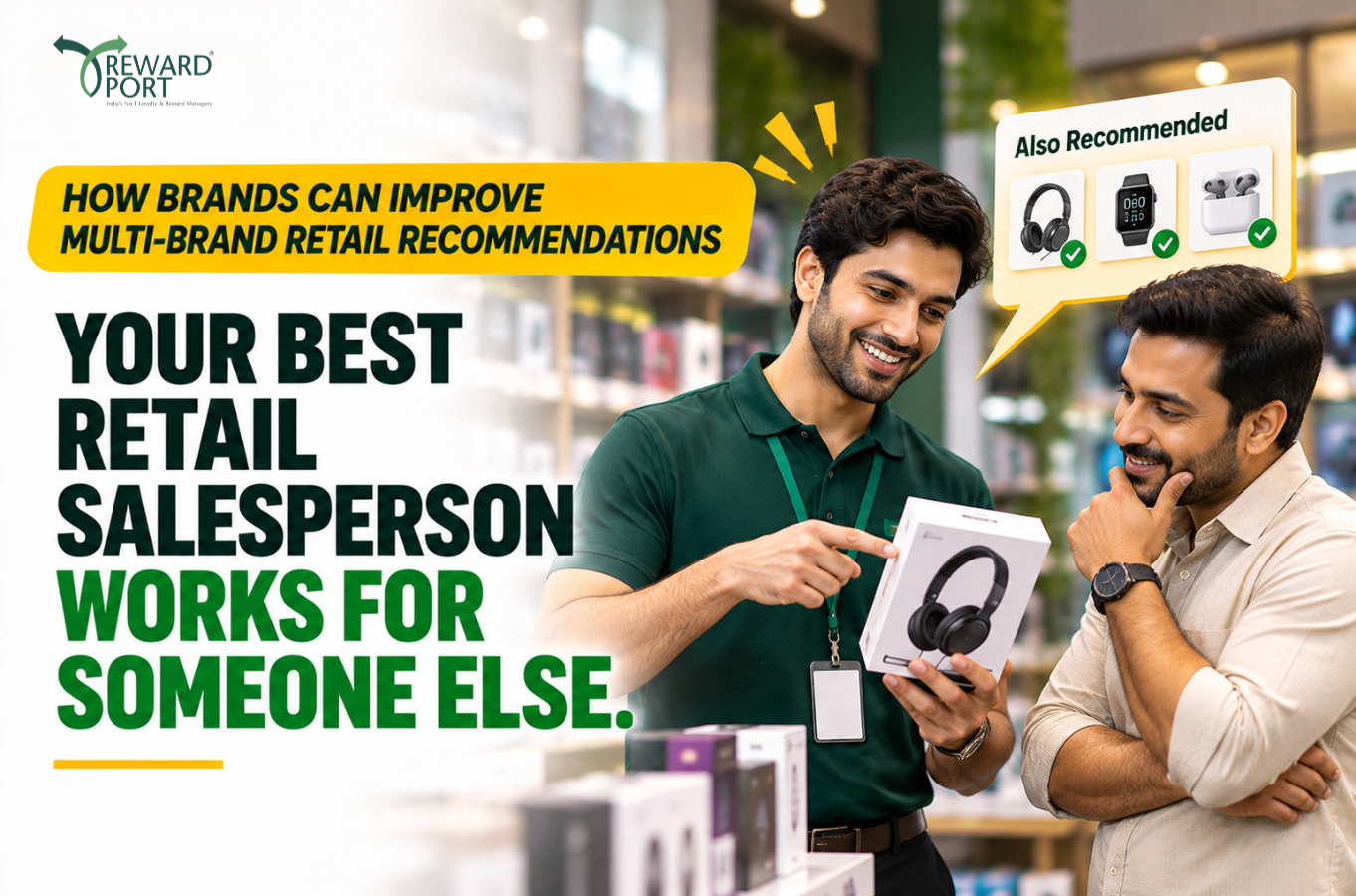
Saturday afternoon. Two TVs on the same wall. Both are showing the same waterfall.
A customer has been standing there long enough to know that water looks good on both.
Customer: “Which one would you buy?”
The following two conversations are fictional. The question is the one any brand selling through a retailer should be ready for.
First conversation
Associate: “This one is 4K. It has more features and a higher refresh rate. It’s also part of the offer this week.”
Customer: “They both say 4K.”
Associate: “Yes. This is the newer model.”
Customer: “Would I notice the difference at home?”
The associate checks the card again. The card has six logos on it. None of them knows where the customer’s sofa is.
In the margin: A product launch can equip associates with more information without helping them decide what to do with it. If a customer asks about fit, the associate needs a useful question and a quick way to show the difference.
Second conversation
Associate: “What do you watch most? And does the room get direct light in the afternoon?”
Customer: “Football on weekends. Films at night. The window is opposite the TV.”
Associate: “Let’s look at these from where your sofa would be. This screen costs more. I’d check the reflections first, then show you the same match clip on both. If you’re happy with the picture on the cheaper one, I’d save the money.”
The customer moves a few steps back. For the first time that afternoon, she has a way to make the decision.
In the margin: The associate asked two questions, picked a relevant demo and gave the shopper permission to choose. A manufacturer can teach that sequence, even when the associate works for a different business.
Samsung offers a real example of a brand investing in retail product knowledge. Its Samsung Elite app is designed for mobile sales reps and combines learning activities with points they can redeem. The TV scene above is unrelated to that programme. The public listing shows how a manufacturer can give reps a reason to keep learning about its products. Samsung Elite app listing
What would you put in the training brief?
Start with three questions associates hear on a busy shift. Ask store managers which ones slow people down, create doubt or lead to a poor-fit purchase. For a TV, it might be reflections, room size and sport. For skincare, it could be where a product fits in a routine and when to ask about sensitivity. For footwear, it might be how the customer will use the shoes and what feels comfortable after a few minutes on their feet.
Build one short practice scene per question. Let the associate practice it with a colleague and get quick feedback from the store lead. Give the associate one thing they can say, one thing they can show and one trade-off they should know. Make the practice easy to revisit on the floor, with the retailer’s approval.
For the TV example, the knowledge check could ask an associate to identify which two models to demonstrate to someone with a bright room and a fixed budget, and explain why. It is closer to the job than remembering how many feature badges were on a launch slide.
A scorecard the retailer can use
| Signal | What to observe | What to do with it |
|---|---|---|
| Product knowledge | Can the associate explain one difference in terms a shopper understands? | Coach the points people keep getting wrong. |
| Useful demo | Did the associate use the same clip or task on both products so the shopper could compare them? | Refine the demo for the way people actually shop. |
| Recommendation quality | Did the associate ask about use and budget and explain a real trade-off? | Review a small sample with the store manager. |
| Commercial outcome | What happened to conversion, returns and complaints about suitability? | Read the measures together and account for stock, price and promotions. |
Start with comparable stores or teams and agree what will be observed. Keep the first test small enough that managers can review it. A training completion rate shows who took the lesson. A supervised demo shows whether someone can use it. The sales and service data show what happened afterwards. If those signals disagree, take a closer look. A stronger conversion rate and more returns for poor fit is a reason to review what is being recommended.
This is where incentives can help if the brand and retailer agree on the behaviour first. Recognize a useful demonstration, a verified learning milestone or good team coaching. Keep any sales incentive within retailer policy and make clear who can approve it. Monitor repeat submissions and unusual claims if rewards depend on reported activity. The rule should make sense to the associate, the store manager and the shopper who relies on the advice.
If you sell through a retail network, ask a store manager for the three questions shoppers raise most often. That is enough to start a conversation with RewardPort about designing channel engagement around the advice customers actually need. RewardPort channel loyalty programmes
Frequently Asked Questions
Why should a manufacturer train staff employed by a retailer?
A retail associate often explains the differences between competing products at the moment of choice. With the retailer’s agreement, a brand can help that associate give clearer, more useful advice.
What should product training cover first?
Start with the questions customers actually ask. Teach associates how to diagnose the need, demonstrate a relevant difference and explain the trade-off in plain language.
Should a brand reward learning or sales?
Choose the behaviour the programme needs. Learning milestones and verified demos can encourage practice. Use sales measures with suitability signals such as returns or complaints, and agree all incentives with the retailer.
How can a brand measure recommendation quality?
Sample a short role-play or observed demo with the store manager. Check whether the associate asked about need and budget, demonstrated a useful difference and explained who each option suits.
Where should a multi-brand retailer start a pilot?
Pick one category, two or three customer questions and comparable stores or teams. Review learning and demo quality first, then examine sales and service outcomes over an agreed period.