
Explore why experiential dealer rewards outperform cash incentives in India’s 2026 loyalty landscape, driving deeper engagement and sustained channel success.
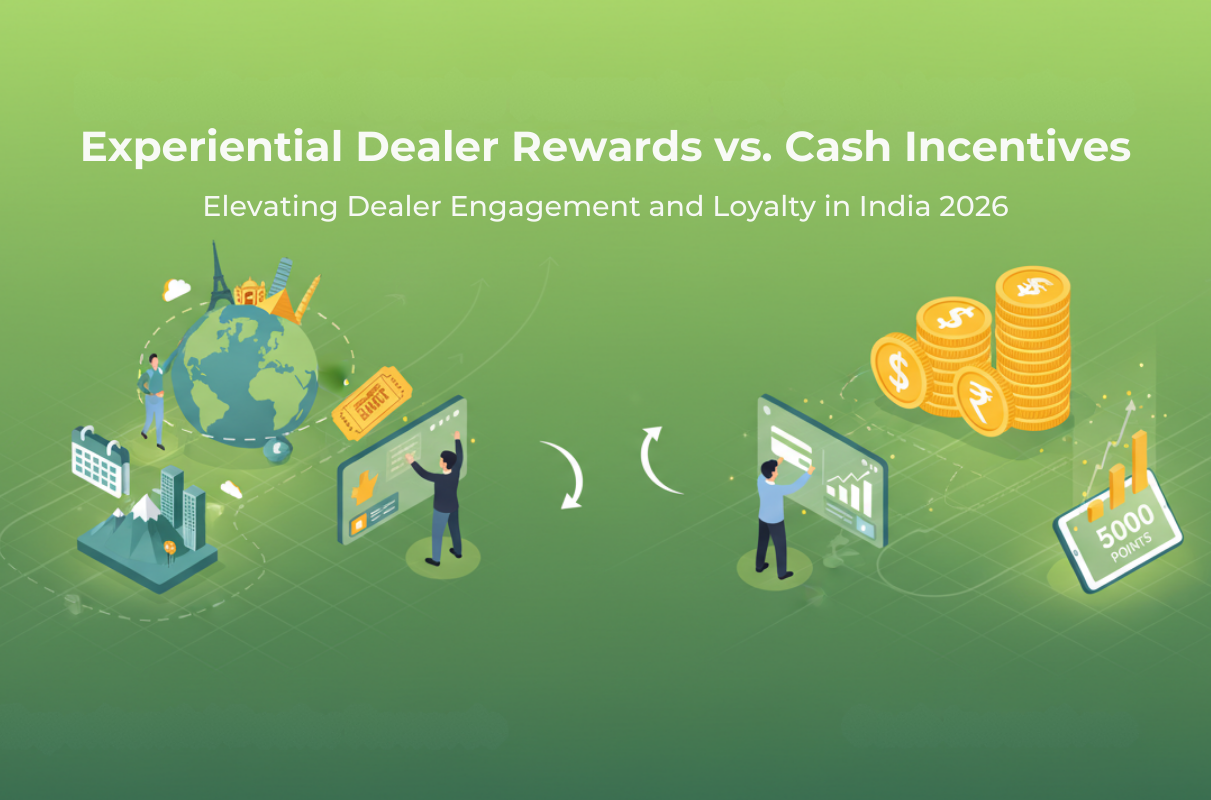
Experiential Dealer Rewards vs. Cash Incentives: Elevating Dealer Engagement and Loyalty in India 2026
As India’s loyalty programs market continues its robust expansion—from an estimated USD 3–4.3 billion in 2024–2025 to a projected USD 6.4 to 17.1 billion by 2035—marketers and channel leaders face a pivotal question: should dealer incentives be cash-based or experiential? Understanding the trade-offs is crucial to designing programs that maximize dealer motivation, brand advocacy, and sales growth in a competitive and evolving market.
The Rising Preference for Experiential Rewards Among Dealers
Recent trends show that dealers and channel partners in India increasingly prefer experiential rewards such as travel packages, wellness retreats, exclusive events, and unique lifestyle experiences over straightforward cash incentives. This shift aligns with evolving dealer aspirations for personalized, memorable rewards that foster emotional connections with the brand and provide social currency among their peers.
Experiential rewards create lasting memories and generate higher engagement levels. They foster loyalty beyond transactional gains and encourage advocacy, which is vital for sustained channel performance. Dealers rewarded with experiential incentives tend to demonstrate higher repeat sales and lower attrition. This pattern is consistent with urban Indian consumers’ broader preference for experiences over cash, reflecting a market-wide behavioral shift impacting both B2C and B2B channels.
Cash Incentives: Advantages and Limitations
Cash incentives still hold relevance, especially for instant gratification and quick performance boosts. They are simple to administer, offer immediate value, and appeal to dealers seeking liquidity and flexibility. In the digital payments era, instant UPI-based cashback or vouchers facilitate real-time rewards and are often integrated into hybrid programs.
However, cash incentives are largely transactional, with limited emotional engagement. Their effectiveness for building long-term loyalty and advocacy is comparatively lower. They also carry a higher risk of fraud and abuse if not properly linked to verified sales or performance metrics.
RewardPort Perspective: Harnessing the Power of Hybrid Incentive Models
At RewardPort, we help Indian brands leverage the strengths of both experiential and cash incentives through hybrid, ROI-driven reward programs tailored for dealers and channel partners. Our platform integrates gamification, AI-driven personalization, QR validation, and WhatsApp redemption flows to deliver compelling experiential rewards backed by digital immediacy where needed.
Our extensive rewards catalog includes travel solutions (VacPac, AirPac), wellness retreats, dining and entertainment vouchers, multi-brand gift cards, and tailored merchandise options. For instance, in automotive programs like the JK Tyre Advantage, tiered experiential rewards combined with points helped drive 80% of passenger car tire sales via engaged dealers, reducing attrition and boosting sell-out.
We also support dealer loyalty with instant UPI cashback and multipliers, ensuring that liquidity needs are met alongside aspirational experiences. This balanced approach maximizes dealer satisfaction and aligns incentives with brand and sales objectives.
Key Trends Shaping Dealer Incentives in 2026 India
- Personalization & Tech Integration: AI-powered reward personalization and gamified experiences are becoming standard to keep dealers motivated and engaged.
- Data-Driven ROI: Programs increasingly use validated sales data (via QR scans and UPI integrations) to ensure incentives drive true sell-out, not just transaction volume.
- Hybrid Models: Combining instant digital rewards with premium experiential elements offers the best of both worlds for India’s diverse dealer base.
- Focus on Emotional Engagement: Experiences create brand advocates and forge dealer loyalty more effectively than cash alone.
In India’s rapidly growing loyalty landscape for 2026 and beyond, experiential dealer rewards provide a compelling alternative to conventional cash incentives. By delivering memorable, aspirational rewards that foster emotional ties and advocacy, brands can achieve superior dealer engagement and sustained sales growth. Cash incentives remain important for immediacy but work best when integrated within hybrid models. RewardPort solutions and extensive catalog empower brands to design balanced incentive programs that reflect these trends, driving measurable ROI and channel success.
Frequently Asked Questions
What are experiential dealer rewards?
Experiential dealer rewards are non-cash incentives such as travel trips, wellness retreats, exclusive events, and lifestyle experiences designed to engage and motivate dealers emotionally beyond monetary value.
How do experiential rewards compare to cash incentives in driving dealer loyalty?
Experiential rewards typically generate higher emotional engagement, sustained motivation, and advocacy among dealers, leading to better repeat sales and lower attrition, whereas cash incentives offer immediate gratification but less long-term loyalty.
Can cash incentives still be effective for dealer programs?
Yes, cash incentives are effective for instant rewards and quick performance boosts but are best used alongside experiential rewards in hybrid programs to balance immediacy with emotional connection.
How does RewardPort support hybrid dealer incentive programs?
RewardPort offers technology-enabled integration of instant digital rewards (like UPI cashback) with aspirational experiential rewards through gamification, AI personalization, and a diverse rewards catalog, ensuring both quick gratification and long-term engagement.