
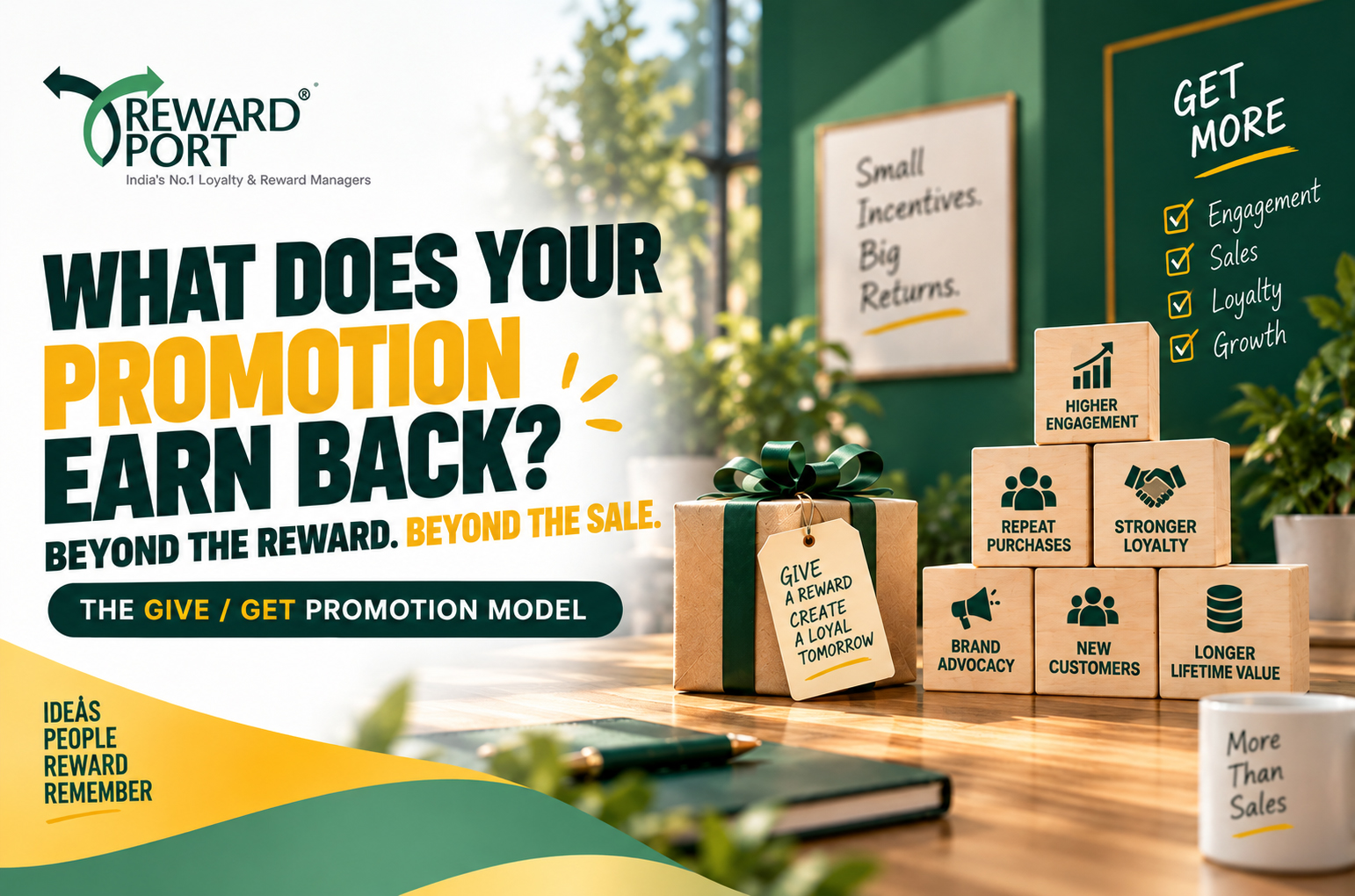
That “something” does not always have to be more sales immediately.
It could be a verified purchase, a second purchase, first-party data, a referral, product trial, permission to communicate, category discovery or simply a better understanding of who is actually buying.
The problem with many promotions is simpler:
The brand gives. The consumer takes. And the relationship ends there.
That is becoming an increasingly expensive way to do marketing.
The ₹100 Question
Imagine this.
A customer walks into a supermarket.
Your brand gives her ₹100 off.
She buys.
She leaves.
The campaign report shows:
- Coupon redeemed
- Unit sold
- ₹100 promotion cost
- Successful transaction
Everything looks fine.
Except for one question.
What did the brand learn or change?
Do you know who bought?
Was she already planning to buy?
Did she try the product for the first time?
Will she buy again?
Can you communicate with her?
Did she switch from a competitor?
Did she buy another SKU?
Did the discount actually create incremental behaviour?
If the answer to all of these is “we don’t know”, then the brand may have successfully subsidised a transaction without creating much beyond it.
Discounts are not the problem.
Giving them away without a strategic exchange is.
Consumer Promotions Are Changing
The traditional promotion model has often been built around broad offers:
- ₹20 off
- Buy one, get one
- 10% cashback
- Free gift inside
- Scratch and win
These mechanics are still useful.
What is changing is the intelligence around them.
McKinsey’s 2026 research on grocery retail found that grocers expect promotions to become significantly more targeted, digital, loyalty-integrated and focused on measurable effectiveness.
In its survey, the share of promotions expected to be fully personalised was projected to rise from about 35% today to 55% within two to three years. Between 88% and 94% of grocers said they expected to prioritise targeted offers, loyalty integration, digital promotions and greater focus on promotion effectiveness and ROI.
Source: https://www.mckinsey.com/industries/retail/our-insights/the-state-of-grocery-north-america
The direction is clear.
Promotions are moving from:
“What discount should we run this month?”
toward:
“What behaviour are we trying to create, for whom, and at what economic cost?”
That is a much more useful question.
The Give/Get Promotion Model
We use a simple way to think about modern consumer promotions.
Every promotion should answer two questions.
What Does the Customer Get?
Possibilities include:
- Cashback
- Discount
- Merchandise
- Voucher
- Free product
- Movie ticket
- Travel benefit
- Experience
- Access
- Recognition
- Chance to win
Then ask:
What Does the Brand Get?
Possibilities include:
- Product trial
- Verified purchase
- Consumer identity
- Permission to communicate
- First-party data
- Second purchase
- Increased frequency
- Larger basket
- Category trial
- Referral
- Product review
- Retailer visibility
- Preference information
- Measurable engagement
That is the Give/Get Promotion Model.
A useful promotion should create value on both sides.
Not because consumers owe brands their data.
They don’t.
But because a promotion should have a clearly defined commercial or behavioural purpose beyond simply distributing money.
Seven Things a Modern Promotion Can Earn Back
1. Identity
A surprisingly large number of brands still sell millions of products without knowing who their end customer actually is.
Distribution works.
Sales happen.
But the consumer remains anonymous.
A simple promotion can change that.
For example:
Purchase product → Scan QR → Verify → Register → Receive reward
Now a previously anonymous transaction can become a direct consumer relationship, subject to the appropriate consent and privacy requirements.
That does not mean asking for twenty fields of information.
Often, less is better.
The objective is not to create friction.
It is to begin a useful relationship.
2. Proof of Purchase
Promotions become far more powerful when brands can distinguish between:
Someone interested in the campaign
and
Someone who actually purchased.
Verification can happen in several ways depending on the category:
- Unique QR
- Alphanumeric code
- OTP
- Receipt upload
- Invoice validation
- OCR
- Transaction information
- Retailer validation
This is particularly important when the reward has meaningful value.
A campaign that cannot confidently determine who qualified can create leakage, fraud and poor economics.
Verification turns promotion participation into usable commercial information.
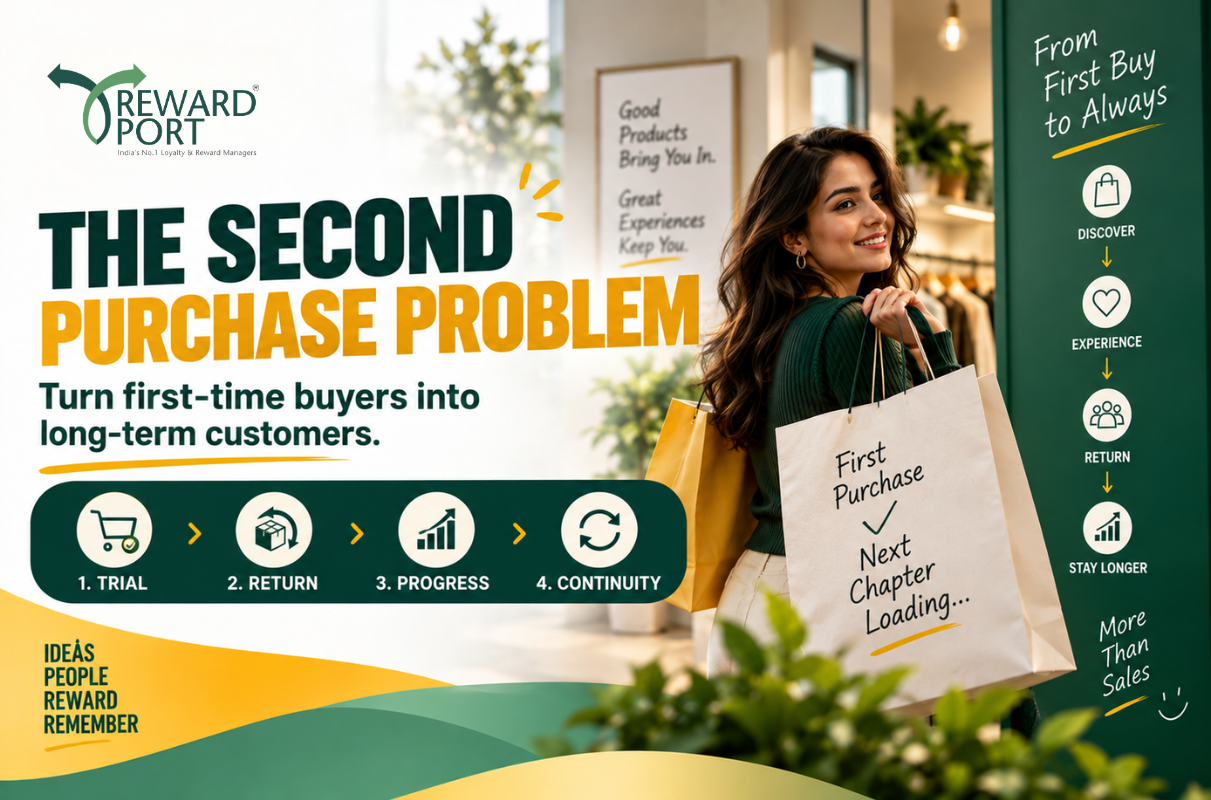
3. A Second Purchase
Brands spend enormous sums convincing people to make their first purchase.
But for many businesses, the second purchase is more strategically interesting.
Why?
Because one purchase may indicate curiosity.
Two purchases begin to indicate behaviour.
Instead of:
Buy today and get ₹100 back
consider:
Buy today and unlock ₹100 on your next verified purchase.
The promotional spend now has another job.
It is attempting to create repetition.
McKinsey’s research on targeted promotions describes exactly this shift toward promotions designed around lifecycle stages such as acquisition, repeat purchase, retention, cross-selling and churn prevention rather than simply mass discounting.
4. Product Discovery
Many brands have a range problem.
Consumers know one hero SKU but ignore the rest of the portfolio.
The obvious response is another discount.
But promotions can be designed more intelligently.
For example:
Buy product A → Discover B → Try B → Unlock reward
Or:
Buy any three different products from the range → Complete the collection → Unlock an experience
The promotion is not merely making an existing transaction cheaper.
It is helping the brand expand category penetration.
5. Referrals
There is a major difference between:
“Share this campaign on social media”
and:
“Bring us another genuine customer.”
Referral mechanics can turn promotion budgets toward acquisition.
For example:
Purchase → Refer → Friend purchases → Both unlock value
Now the incentive is tied to verified behaviour rather than generic sharing.
For high-consideration categories, this can become even more powerful.
Think appliances, consumer electronics, automobiles, education, financial products, travel or premium services.
A happy customer may be more persuasive than another advertisement.
6. Permission for an Ongoing Relationship
A transaction is a moment.
A relationship can be much more valuable.
Promotions can provide a legitimate reason for consumers to voluntarily enter an ongoing communication journey.
That might include:
- WhatsApp updates
- Loyalty participation
- Future offers
- New product discovery
- Contests
- Rewards
- Relevant content
The important word is voluntarily.
A badly designed promotion collects contact details because it can.
A better promotion explains the value exchange clearly.
Stay connected because there is something useful to stay connected for.
7. Learning
This is possibly the most underrated return from a promotion.
Every campaign should make the next campaign smarter.
Which reward produced more participation?
Did ₹50 cashback work better than a movie voucher?
Did first-time buyers respond differently from repeat buyers?
Which city produced greater trial?
Did a smaller guaranteed reward outperform a large chance-to-win prize?
Which SKU generated the most referrals?
How many consumers completed a second purchase?
The campaign itself becomes an experiment.
That means the value of a promotion is not just:
Sales generated today.
It is also:
What the brand knows tomorrow.
Old Promotion vs. Give/Get Promotion
| Traditional Promotion | Give/Get Version |
|---|---|
| ₹100 cashback | Verified purchase + ₹100 cashback |
| 20% off | Register and unlock a targeted offer |
| Free sample | Try + give feedback + unlock next benefit |
| Scratch and win | Verify purchase + play + enter relationship |
| Gift with purchase | Purchase + registration + relevant future offer |
| Generic coupon | Behaviour-based next-purchase incentive |
| Contest entry | Purchase or action + participation + measurable outcome |
| Referral code | Verified friend conversion + reward |
| Dealer payout | Verified sale + learning or target action + incentive |
The customer can receive exactly the same reward.
What changes is the intelligence and behavioural architecture surrounding it.
Personalisation Does Not Mean Sending More Offers
There is a danger here.
Once brands collect more data, the instinct is often:
Great. Now we can send people more promotions.
That is not the point.
Better data should allow a brand to send fewer, more relevant interventions.
McKinsey notes that broad promotion management is increasingly being replaced by targeted offers connected to specific customer stages and business objectives.
The most valuable promotion may sometimes be:
No promotion at all.
If a customer was going to buy anyway, why discount the transaction?
The incentive budget can be redirected toward someone whose behaviour can actually be changed.
The Promotion Exchange Test
Before launching a consumer promotion, ask five questions.
1. What Are We Giving?
Be precise.
₹100?
A movie?
A gift?
A chance to win?
Access?
An experience?
2. What Behaviour Are We Trying to Create?
Not “engagement”.
That is too vague.
Try:
- First purchase
- Second purchase
- Product trial
- Premium upgrade
- Larger basket
- Referral
- Registration
- Return visit
3. How Will We Verify It?
If you cannot verify the action, you may not be able to distinguish real performance from campaign activity.
4. What Reusable Value Do We Gain?
Consumer relationship?
Permission?
Behavioural insight?
New customer?
Cross-category adoption?
Repeat purchase?
5. How Will We Know Whether the Reward Caused the Behaviour?
This is the hardest question.
Many promotions generate redemptions.
That does not automatically mean they generated incremental sales.
McKinsey has previously observed that even sophisticated retailers can find 10% to 15% of promotions dilute sales and margins once factors such as stock-up, cannibalisation and halo effects are properly considered.
Source: https://www.mckinsey.com/industries/retail/our-insights/pushing-granular-decisions-through-analytics
That is why measuring promotion effectiveness matters.
A Promotion Should Create a Loop, Not a Dead End
Traditional Campaign
Advertisement → Discount → Purchase → Finished
Connected Promotion
Purchase → Verify → Reward → Understand → Next Relevant Action → Repeat or Referral → Measure → Improve
The first is a campaign.
The second starts becoming infrastructure.
If every campaign begins from zero, the brand keeps buying attention repeatedly.
If campaigns contribute to an ongoing consumer relationship, each intervention can make the next one more intelligent.
Does Every Consumer Need to Register?
No.
Forcing registration into every promotion can destroy participation.
Sometimes the commercially correct objective is simply:
Sell more products this weekend.
That is fine.
Promotions should not become over-engineered data traps.
The Give/Get principle is not:
“Always collect customer data.”
It is:
“Know what commercial value you expect in return for promotional spend.”
Sometimes that value is identity.
Sometimes trial.
Sometimes distribution.
Sometimes frequency.
Sometimes market share.
Sometimes simply incremental volume.
The important thing is that it is intentional.
Promotions Need Different Rewards for Different Jobs
Another common mistake is deciding the reward before deciding the behaviour.
“We’ll give cashback.”
“Let’s give Amazon vouchers.”
“Let’s do a lucky draw.”
That is backwards.
Start with the audience and objective.
Then select the reward.
A small instant cashback may work well when immediate comprehension matters.
A movie reward might create more perceived value in another context.
An experience could work for a high-value milestone.
A sweepstake may work when excitement and reach matter.
Travel or access can work where aspiration matters.
A micro-reward may be perfect for completing a small digital action.
There is no universally superior reward.
There is only a reward that is more or less appropriate for the behaviour you want.
How Should Consumer Promotion ROI Be Measured?
Do not stop at redemptions.
A modern consumer promotion dashboard can include four layers.
Participation
- Scans
- Registrations
- Claims
- Redemption
- Completion rate
Behaviour
- Verified purchases
- Repeat purchases
- Referrals
- Category trial
- Basket expansion
- Reactivation
Economics
- Incremental revenue
- Gross margin
- Reward cost
- Cost per verified action
- Cost per incremental customer
- Fraud leakage
- Fulfilment cost
Intelligence
- Known consumers created
- Consented relationships
- Preference signals
- Geographic patterns
- Reward preferences
- Product combinations
- Repeat behaviour
The final question is not:
“How many people participated?”
It is:
“What did the promotion change?”
What This Means for FMCG and Consumer Brands in India
The opportunity is particularly relevant in India because many brands still reach consumers through large distribution networks where the final buyer relationship traditionally belongs to the retailer.
A packaged-food brand can sell millions of units and still know comparatively little about individual end consumers.
Promotions create one of the rare moments when the consumer has a reason to identify themselves directly to the brand.
A pack.
A QR.
A receipt.
An invoice.
A WhatsApp journey.
A cashback claim.
A contest.
A referral.
Each can become a bridge between an offline transaction and a direct digital relationship.
That bridge becomes strategically useful only if brands design it deliberately.
Where RewardPort Fits
RewardPort approaches consumer promotions as a combination of:
Behaviour + Verification + Reward + Intelligence
The objective might be product trial, repeat purchase, referral, channel movement or another measurable action.
The qualifying behaviour can then be verified through mechanisms appropriate to the program, such as QR, OTP, invoice, receipt, OCR or approved transaction information.
Finally, the reward can be selected according to the audience and objective, ranging from cashback and vouchers to merchandise, movies, travel and experiences.
The important point is not the reward catalogue.
It is the loop:
Objective → Action → Verification → Reward → Data → Next Action
That is when a promotion starts creating value beyond a single redemption.
The New Rule for Consumer Promotions
The next time someone proposes:
“Let’s give customers ₹100 cashback.”
Do not immediately ask:
“Can we reduce it to ₹75?”
Ask something more important.
“What are we buying with that ₹100?”
A sale?
A second sale?
A new customer?
A referral?
Trial?
Identity?
Permission?
Learning?
If nobody can answer clearly, the promotion probably needs another round of thinking.
Because brands should absolutely keep giving customers reasons to choose them.
They should simply become much clearer about what that generosity is designed to create.
The best promotion is not the one that gives away the most.
It is the one where both sides walk away with something valuable.
Frequently Asked Questions
What Is a Consumer Promotion?
A consumer promotion is a limited or structured incentive designed to encourage a specific consumer action, such as purchase, trial, repeat purchase, referral or participation. Common formats include discounts, cashback, contests, gifts, loyalty rewards and experiential benefits.
What Makes a Consumer Promotion Effective?
An effective promotion connects a clearly defined business objective to a specific consumer behaviour, provides a relevant incentive, verifies the qualifying action where necessary and measures whether the campaign changed behaviour profitably.
How Can Consumer Promotions Collect First-Party Data?
Brands can invite consumers to voluntarily register or identify themselves while claiming a reward, scanning a code, uploading proof of purchase, joining a loyalty journey or entering a promotion. Data collection should be transparent, proportionate and consent-based.
Is Cashback a Good Consumer Promotion?
Yes. Cashback can be highly effective because its value is easy to understand. Its effectiveness depends on what behaviour it is being used to influence, the size of the incentive, verification controls and whether the resulting behaviour is incremental.
What Is the Difference Between a Promotion and a Loyalty Program?
A promotion often focuses on creating a specific short-term action. Loyalty programs are generally designed to build a longer-term relationship and encourage repeated behaviour. The two can work together, with a promotion becoming the entry point into loyalty.
How Can Brands Reduce Fraud in Promotional Campaigns?
Brands can use unique codes, QR validation, OTP, receipt or invoice verification, OCR, transaction rules, duplicate detection and other fraud controls appropriate to the campaign.
What Should Brands Measure in a Consumer Promotion?
Brands should measure participation, verified actions, incremental sales, repeat behaviour, reward cost, fraud, customer acquisition, referrals, first-party data created and the cost of achieving the intended behaviour.
Should Every Promotion Collect Consumer Data?
No. Data collection should serve a legitimate campaign purpose and create value for both sides. Some campaigns may focus primarily on incremental sales, trial or distribution rather than building a direct customer database.